Inflatable rentals can be fun but come with safety risks and legal responsibilities. Here’s what you need to know if you’re planning an event in South Carolina, especially Charleston:
- No statewide rules: South Carolina doesn’t have specific laws for inflatables like bounce houses. Safety depends on local regulations and voluntary compliance by rental companies.
- Local rules matter: Charleston requires permits for public events, proof of insurance, and safety measures like crowd control and emergency access.
- Risks are real: Over 30 children visit ERs daily due to inflatable-related injuries. Common issues include poor setup, lack of supervision, and weather risks.
- Insurance isn’t mandatory: Operators aren’t required to carry insurance, but responsible companies often do. Always ask for proof of coverage.
- Safety practices to follow: Anchor inflatables securely, supervise constantly, and avoid use in winds over 20 mph. Cleanliness and equipment inspections are key.
- Liability waivers: These protect both operators and renters but must be backed by following safety guidelines.
For a safer event, work with professional rental companies that prioritize safety and meet local requirements.
Regulatory Agencies and Local Guidelines
Understanding the agencies that oversee inflatable rental safety in South Carolina is crucial for event organizers trying to navigate the regulatory maze. Unlike states with more centralized rules for inflatables, South Carolina delegates much of the responsibility to local authorities and national safety guidelines.
State Safety Standards and Oversight
The South Carolina Department of Labor, Licensing and Regulation (SCLLR) is the primary agency responsible for safety standards related to inflatable rentals. This includes enforcing occupational safety and health regulations that cover amusement rides and temporary structures. However, South Carolina does not have specific statewide rules for inflatables like bounce houses.
Interestingly, portable slides are regulated, but inflatables are not. This creates a gap in oversight, leaving inflatables outside the scope of state-level safety requirements.
To fill this gap, national safety guidelines come into play. Organizations like the Consumer Product Safety Commission (CPSC) and the American Society for Testing and Materials (ASTM) provide standards that rental companies and event organizers are expected to follow.
South Carolina’s approach is noticeably different from other states. For example, operators are not required to carry insurance, and there are no mandatory annual inspections for inflatables like bounce houses or slides. This means the responsibility for safety largely falls on rental companies and event organizers, who must voluntarily uphold high standards. This state-level framework sets the stage for Charleston’s more specific local regulations.
Charleston Requirements and Local Rules
Charleston adds another layer of safety measures on top of the state framework. While the city doesn’t have specific ordinances targeting inflatable rentals, event organizers must comply with general safety codes and may need permits depending on the setup.
The Charleston Department of Livability and Tourism is the go-to agency for event organizers planning to use inflatables. For public events, organizers are required to obtain a special event permit. This permit process often includes requirements like safety perimeters, crowd management plans, emergency access, and proof of insurance.
Public events versus private events have different levels of scrutiny in Charleston. Public events held in parks or community spaces must go through the permitting process, which may include additional safety checks. On the other hand, private events, such as backyard parties, generally don’t face specific city ordinances but are still expected to adhere to national safety standards. Homeowner association rules may also apply in some cases.
Local authorities enforce safety through event permitting and inspections. For public events, adherence to national safety guidelines is often a condition of the permitting process. Inspections may also be conducted if safety concerns arise during the event.
Noncompliance with Charleston’s rules can lead to serious consequences. Violations, such as failing to secure permits or using unsafe equipment, may result in fines, removal of inflatables, or even the shutdown of the event. In cases where injuries occur due to negligence, organizers could face liability issues.
To avoid last-minute issues, event organizers should contact Charleston city officials ahead of time to confirm all permitting and safety requirements. Taking this proactive step ensures compliance with local rules and national standards, helping events run smoothly and safely.
Safety Practices for Inflatable Rentals
With South Carolina having minimal statewide regulations for inflatable rentals, it’s up to rental companies and event organizers to take proactive steps to ensure safety and reduce risks.
Anchor and Setup Requirements
Proper anchoring is key to preventing accidents with inflatables. Wind-related mishaps are among the most common causes of injuries, and the U.S. Consumer Product Safety Commission advises against using inflatables in winds over 15–20 mph. For outdoor setups, heavy-duty stakes should be used at every anchor point, while sandbags or weighted anchors are better suited for indoor or hard-surface setups. Keeping an eye on the weather is equally important. For instance, in June 2023, Jason’s Jump Castles from James Island set a strong example by refusing to install a bounce house when wind gusts exceeded 22 mph, stating:
if the wind is over 20 miles an hour we don’t put them up
Before each use, inspect the inflatable to ensure it’s securely anchored and inflated according to the manufacturer’s guidelines. Once the setup is confirmed to be safe, active supervision becomes essential to maintain safety throughout its use.
Supervision and Operating Rules
Constant adult supervision is non-negotiable when inflatables are in use. Supervisors need to enforce rules like age and size restrictions, as well as ensure participant limits are followed to prevent overcrowding, which can lead to collisions or equipment strain. Weather conditions should be monitored continuously, and operations should stop immediately in case of high winds, rain, or storms. Some companies, such as Bouncy Rentals USA, go the extra mile by providing trained staff to oversee the safe operation of their inflatables, ensuring all safety measures are followed.
Equipment Quality and Cleaning Standards
The quality and upkeep of the equipment are just as important as setup and supervision. Using materials that are fire-retardant and free of lead is essential to meet national safety standards, even though South Carolina doesn’t enforce specific material regulations. Reliable rental companies adhere to ASTM and Consumer Product Safety Commission guidelines by thoroughly inspecting inflatables before each rental. This includes checking seams, surfaces, and inflation systems to ensure everything is in proper working order. Any equipment showing signs of wear or damage should be taken out of service immediately. Cleanliness is another critical factor; inflatables should be disinfected thoroughly before each rental to prevent the spread of germs and allergens. Companies like Bouncy Rentals USA prioritize both cleanliness and regular inspections to maintain high safety standards.
Event Setup and Crowd Management
After addressing proper anchoring and equipment maintenance, event organizers must also focus on designing layouts that prevent overcrowding and ensure safe access. Creating a safe environment involves careful planning of the event space and implementing active crowd control measures. While South Carolina doesn’t enforce specific crowd management rules, thoughtful event setup can go a long way in preventing accidents and ensuring an enjoyable experience for everyone.
Setting Up Safety Perimeters
One of the most crucial steps in event preparation is establishing clear safety zones. Industry guidelines suggest creating a defined safety zone to not only provide equipment clearance but also allow for emergency accessibility. These zones are essential for preventing collisions, ensuring safe entry and exit, and facilitating emergency response if needed.
Barriers play a key role in marking these safety zones. Options like temporary fencing, stanchions with ropes, or safety cones can help define the inflation area. These barriers are effective in controlling the flow of participants, keeping unauthorized individuals out, and reducing the risk of unsupervised children entering the inflatable area.
When setting up inflatables, it’s important to position them away from high-traffic areas like food stands, parking lots, and stages to minimize collision risks. Placement should also account for factors like wind direction and avoid hazards such as overhead power lines, water features, or hard surfaces like concrete. To ensure proper supervision, inflatables should not be placed behind permanent structures or in areas with limited visibility.
Another critical aspect is maintaining unobstructed emergency access routes. Event layouts must include at least one clear path for emergency personnel and vehicles to quickly reach the inflatable area. Avoid placing inflatables near locked gates or in spaces with restricted exits. Staff should be briefed on emergency procedures and the location of access points before the event begins.
Once the safety perimeters are established, the next priority is effective crowd control.
Managing Crowds at Charleston Events
With safety zones in place, managing the crowd becomes essential to keeping events running smoothly. Assigning trained attendants to control access and enforce safety rules is a key part of this process. These attendants are responsible for monitoring behavior, managing lines, and responding to emergencies. They should also be trained to identify potential risks, such as overcrowding, rough play, or weather-related hazards like high winds.
For larger gatherings, consider using a check-in/out system and staggered usage to prevent overcrowding. Posting schedules can help regulate demand, especially at public events where inflatables tend to draw large crowds.
While Charleston doesn’t have specific ordinances for inflatable attractions, general public safety and crowd management guidelines must be followed, particularly for events requiring city permits. Events held on public property may also need to submit a site plan and emergency response plan for city approval.
A recent Charleston school carnival showcased effective crowd management strategies. Organizers used temporary fencing to create a 6-foot safety perimeter around each inflatable. Trained attendants managed entry points, checked wristbands to verify ages, and limited the number of children allowed inside at one time. Emergency access routes were clearly marked with signage, and a first aid station was conveniently located nearby. The event reported no injuries and received praise from parents and city officials for its well-organized approach to safety.
Weather monitoring is another critical aspect of crowd management. Staff should keep a close eye on changing conditions and be ready to deflate and secure inflatables immediately if wind speeds approach 20 mph. Practical indicators like swaying trees or moving traffic lights can signal that conditions are becoming unsafe.
Insurance and Liability Rules
Securing proper insurance and establishing clear liability agreements are critical steps to ensure legal protection when hosting events. In South Carolina, many inflatable rental operators operate without insurance, leaving both themselves and their customers financially vulnerable.
Insurance Coverage for Inflatable Rentals
South Carolina does not mandate inflatable rental operators to carry insurance for bounce houses or similar equipment. This lack of regulation means operators can legally rent out equipment without providing financial coverage for potential accidents. Given that over 113,000 inflatable-related injuries led to emergency room visits between 2003 and 2013, this gap poses significant risks. Injuries can result in hefty medical expenses, legal disputes, and property damage claims.
Many responsible operators opt for comprehensive insurance coverage despite the absence of legal requirements. Industry standards suggest that inflatable rental operators carry at least $1 million in liability insurance per occurrence. This level of coverage helps protect against medical expenses, legal costs, and claims for property damage that may arise during events.
For example, Bouncy Rentals USA exceeds state requirements by maintaining full insurance coverage for its equipment and operations. This proactive approach not only demonstrates professionalism but also provides event organizers with added reassurance.
When choosing a rental provider, always ask for a certificate of insurance (COI) before finalizing your booking. Trustworthy companies are transparent and will readily provide documentation showing their coverage details. If an operator hesitates or refuses to share proof of insurance, consider it a major warning sign.
Liability and Safety Agreements
Beyond insurance, liability waivers and safety agreements play a crucial role in protecting both operators and renters. These legal documents inform renters about the risks of using inflatable equipment and outline responsibilities for ensuring safe usage. A well-drafted liability waiver typically explains potential risks, releases the operator from responsibility for injuries caused by improper use, and confirms that the renter has received and understood all safety instructions. Most waivers also emphasize the need for adult supervision and include guidelines for weather-related precautions.
Renters are generally required to follow all safety guidelines provided by the operator. This includes ensuring adequate adult supervision, maintaining safe setup conditions, and adhering to weather policies. Liability agreements often state that renters are responsible for any damages resulting from misuse, encouraging careful handling of the equipment.
A recent incident at a church festival in South Carolina highlighted the importance of these measures. Strong winds lifted a bounce house with children inside, causing injuries. In this case, the operator’s insurance covered medical expenses and reduced legal liabilities, showcasing how proper preparation can protect everyone involved.
However, liability waivers are not foolproof. Their enforceability depends on factors like the specifics of the incident, local laws, and whether the operator followed all required safety protocols. By signing these agreements, renters accept responsibility for adhering to safety rules and acknowledge the risks involved. Failure to comply with the terms can shift liability to the renter.
Together, comprehensive insurance and well-defined liability agreements form a strong safety net for events, offering far better protection than the minimum requirements set by the state.
Bouncy Rentals USA Safety Standards
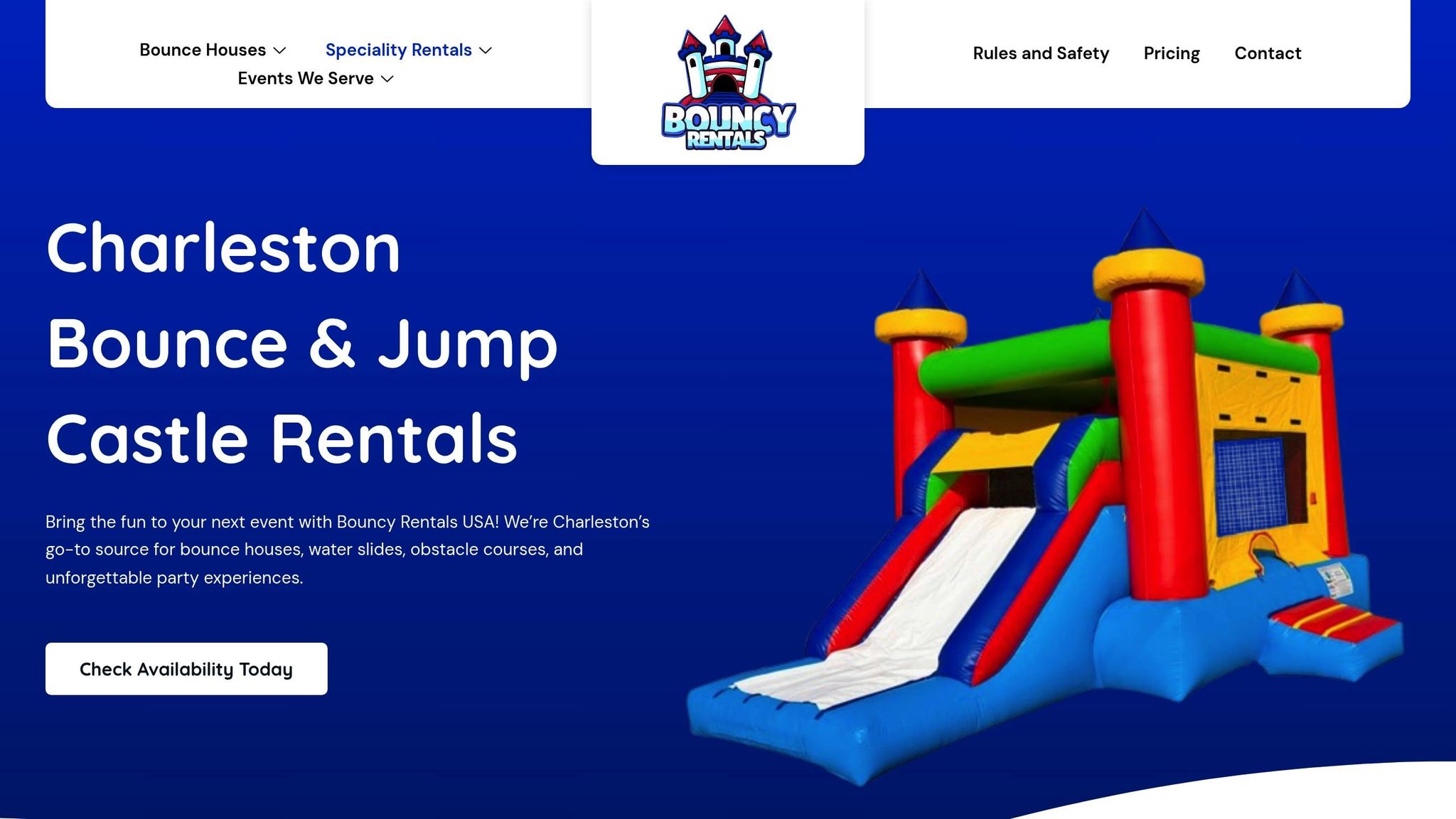
Even though South Carolina doesn’t mandate inflatable rental companies to carry insurance or follow specific safety rules, Bouncy Rentals USA goes above and beyond to ensure safety and quality. This dedication forms the foundation of their thorough approach to customer service.
Clean, Insured, and Inspected Equipment
Bouncy Rentals USA prioritizes safety and cleanliness by maintaining full insurance and conducting detailed inspections before and after every rental. Each inflatable is disinfected with EPA-approved, child-safe products and thoroughly checked for structural integrity, debris, and proper functionality. The team ensures that all equipment is anchored securely and can withstand wind speeds up to 20 mph. If conditions exceed this limit, setups are canceled to ensure safety.
The company also keeps meticulous inspection logs, documenting every step from cleaning to safety checks. These records, along with certificates of insurance and cleaning checklists, are readily available to meet venue or municipal requirements. This transparency builds trust and ensures compliance with local regulations.
Customer Dylan Hoy shared his experience:
I rented an inflatable bouncy castle for my young son Gabriel’s birthday, and it was a huge hit! The setup was quick, the castle was super clean, and the team at Bouncy Rentals USA was incredibly professional. Highly recommend them for any kids’ party in Charleston!
Complete Event Support
Bouncy Rentals USA’s commitment to safety extends beyond equipment to their event support services. Their trained delivery team manages every detail of setup and breakdown, using heavy-duty stakes or sandbags for secure anchoring based on the surface. Before the event begins, staff conduct safety walkthroughs with organizers, review operating guidelines, and ensure the setup area is free of hazards.
Customer Anthony Melendez noted:
The setup was easy. The kids loved it!
To ensure smooth operations, backup inflatables and equipment are always on hand to replace any malfunctioning units during an event. This proactive approach has proven especially valuable at larger gatherings.
The company’s staff undergo rigorous training in equipment handling, setup procedures, safety protocols, and customer communication. Training includes both classroom instruction and hands-on practice, with regular refreshers to stay updated on safety practices and local regulations. Additionally, team members are well-versed in Charleston-specific event requirements and crowd management strategies.
For larger or more complex events, Bouncy Rentals USA assigns a dedicated event coordinator to oversee logistics. This expert support covers everything from equipment selection and site preparation to post-event follow-ups, ensuring every detail is handled with care and professionalism.
Conclusion: Safe and Fun Events
Planning inflatable events in Charleston or anywhere in South Carolina means following local rules and ensuring a professional setup. For public gatherings, permits may be required, so touching base with local authorities early on can help you avoid any last-minute hiccups. Beyond regulations, partnering with a professional rental company plays a key role in pulling off a safe and successful event.
Even in the absence of state-enforced rules, sticking to proper setup and operational procedures greatly minimizes the risk of accidents. Companies that go the extra mile – carrying insurance, maintaining strict cleaning routines, and using trained crews for setup – show their dedication to safety and customer satisfaction. This proactive mindset not only protects event organizers and guests but also ensures the equipment runs smoothly throughout the celebration.
A serious incident at a church festival in South Carolina, where strong winds lifted a bounce house and injured five people, highlights why these precautions are non-negotiable. Companies like Bouncy Rentals USA stand out for prioritizing safety and exceeding basic standards. Their approach includes full insurance coverage, detailed sanitization, regular equipment checks, and professional setup services. Parents frequently commend their cleanliness, reliability, and professionalism, making them a trusted choice for family events.
FAQs
How can I make sure inflatable rentals are safe for my event in Charleston?
When planning an event in Charleston with inflatable rentals, safety should always come first. Start by working with a trusted company like Bouncy Rentals USA, known for providing fully insured and sanitized equipment to keep your guests safe and comfortable.
Ensure the inflatables are placed on a flat, stable surface, and always adhere to the recommended weight and occupancy limits. Most importantly, keep an eye on children at all times to avoid any mishaps. With these precautions in place, you can relax and enjoy a fun-filled, stress-free event!
Why should I choose an inflatable rental company with insurance, even if South Carolina doesn’t require it?
When choosing an inflatable rental company, opting for one that carries insurance is a wise move. It helps shield you from potential liability if any accidents or property damage occur during your event. While South Carolina doesn’t require inflatable rental companies to have insurance, working with one that does can provide an extra layer of security and peace of mind.
An insured company shows a level of professionalism and dedication to customer safety, making them a dependable option for your party or event. Prioritizing safety is key to creating a memorable and worry-free experience!
What are the best practices for ensuring safety and managing crowd control around inflatables at public events?
To maintain safety and manage crowds effectively around inflatables at public events, there are a few essential steps to keep in mind. Start by setting up a clearly defined safety perimeter around the inflatable. Use cones, ropes, or barriers to keep spectators and non-participants at a safe distance. This reduces the risk of overcrowding and accidental bumps or collisions.
It’s also crucial to have a responsible adult or trained supervisor on duty at all times. Their role includes enforcing capacity limits, ensuring the inflatable is used correctly, and addressing any issues that might come up. Lastly, always comply with local safety guidelines – this includes securely anchoring inflatables and avoiding their use in bad weather. These precautions help ensure a safe and fun event for everyone involved.