Weather-resistant bounce houses are fun but vulnerable to elements like rain and wind. Rain, wind, and sun can damage materials, create hazards, and shorten their lifespan. Here’s how to protect them:
- Wind: Secure with 18-inch stakes at a 45° angle. Evacuate if winds exceed 15–20 mph.
- Rain: Turn off blowers, cover with tarps, and dry thoroughly after use.
- Sun: Use UV-resistant sprays to prevent fading and cracking.
- Materials: PVC tarpaulin is durable but needs proper drying and seam care.
- Maintenance: Clean with water, vinegar, and mild soap to maintain hygiene and durability. Inspect for tears or mold.
- Storage: Keep in a cool, dry space above 40°F, and avoid airtight bags.
Bounce House Materials and Weather Resistance
How PVC Tarpaulin Provides Weather Protection
Commercial-grade bounce houses rely on PVC tarpaulin, a robust material designed to handle outdoor conditions. This fabric features a polyester base coated with multiple layers of polyvinyl chloride, making it both durable and waterproof. The material typically weighs between 15–22 oz/yd², ensuring it can withstand the rigors of frequent use.
PVC’s waterproof properties make it perfect for outdoor events. Unlike nylon, which can absorb moisture, PVC quickly repels water and is easy to clean. Commercial inflatables made with this material can support impressive weight limits – up to 2,000 lbs – far surpassing the 200–400 lbs capacity of residential nylon units. Additionally, PVC bounce houses meet important safety standards like ASTM F2374-22 and NFPA 701.
Blaine Ladd from BounceWave Inflatable Sales highlights the benefits of PVC:
"PVC bounce house material is the core textile used in commercial inflatables… delivering superior durability and weather protection compared to materials like nylon or oxford fabric".
Understanding the strengths of PVC tarpaulin is key to optimizing its weather resistance and durability.
Where Factory Materials Fall Short
Despite its toughness, PVC isn’t invincible. One common issue lies in the seams. While the vinyl itself is waterproof, the stitching creates tiny needle holes that can let water seep into the inflatable’s interior. Even with triple or quadruple stitching, thorough drying after exposure to moisture is critical to prevent internal damage.
Another challenge is UV exposure. Over time, sunlight can cause the vinyl to fade, lose flexibility, and eventually crack. Although commercial PVC offers better UV resistance than residential-grade materials, prolonged exposure still takes its toll. Abrasive surfaces like concrete or gravel also pose a risk, as they can create small tears in the material. Using a protective ground cover during setup can help minimize this issue.
To prolong the life of your bounce house, regularly inspect high-stress areas – such as corners and entry points – for signs of wear and seam damage. Addressing these vulnerabilities early can make a big difference in maintaining the structure’s durability.
How to Apply Weatherproofing Treatments
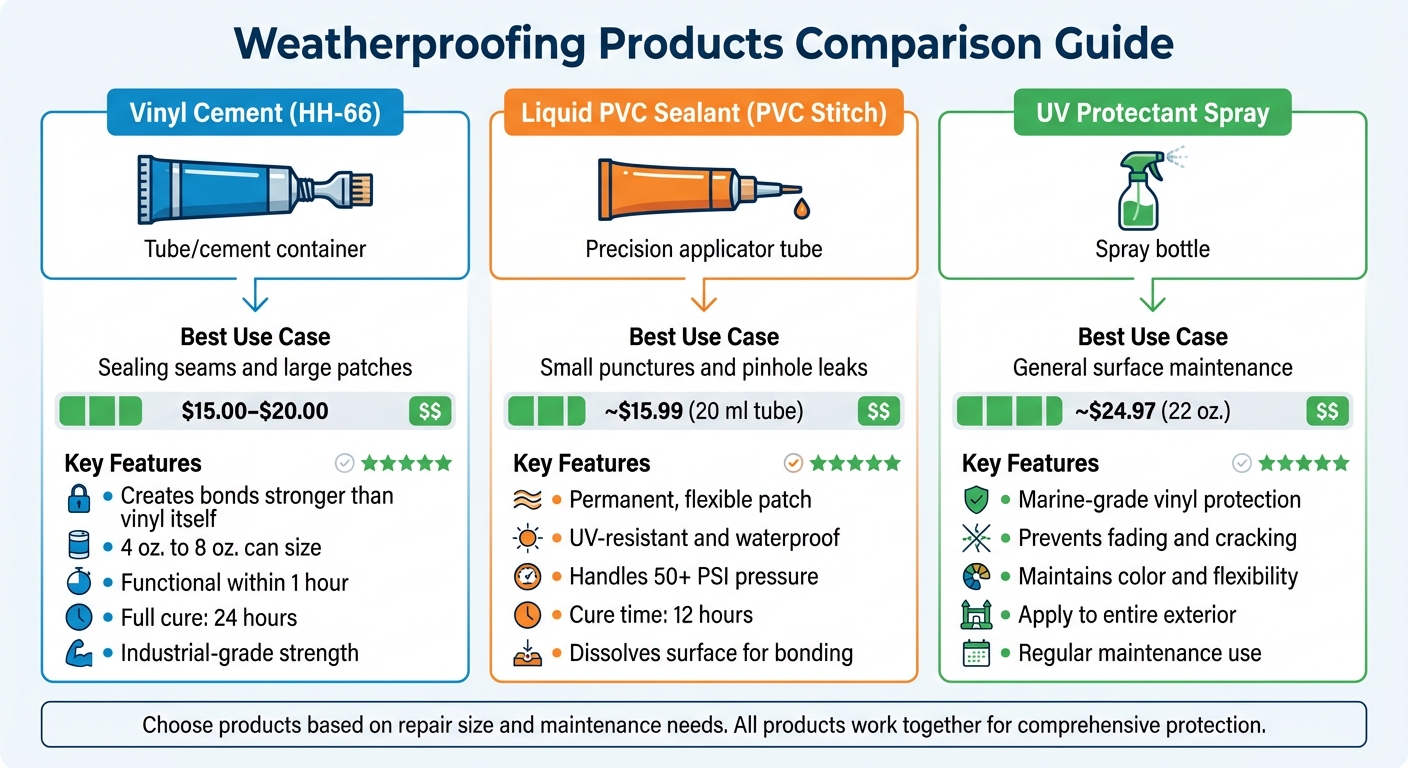
Weatherproofing Products for Bounce Houses: Comparison Guide
Selecting Waterproofing Products
Choosing the right products can make a big difference in extending the life of your bounce house. For larger repairs, industrial-grade vinyl cement like HH-66 is a solid choice. It creates a bond that’s even stronger than the vinyl itself, making it ideal for sealing seams and fixing bigger patches. A 4 oz. to 8 oz. can typically costs between $15.00 and $20.00.
For smaller fixes, such as tiny punctures or pinhole leaks, liquid PVC sealants are highly effective. PVC Stitch, for example, costs around $15.99 for a 20 ml tube. It works by dissolving a thin layer of the surface, forming a permanent, flexible, and UV-resistant patch of pure PVC. According to PVC Stitch:
"is a permanent patch that will remain flexible, UV-proof, water-proof, and pressure-proof for the entire life of your product".
These sealants cure in 12 hours and can handle pressures exceeding 50 PSI.
Don’t forget about UV protectant sprays. While PVC tarpaulin naturally resists UV rays, adding a marine-grade vinyl protectant (like McKee’s 37, priced at about $24.97 for 22 oz.) provides extra defense against sun damage and fading. This helps keep the material’s color and flexibility intact over time.
| Product Type | Best Use Case | Price Range |
|---|---|---|
| Vinyl Cement (HH-66) | Sealing seams and large patches | $15.00–$20.00 |
| Liquid PVC (PVC Stitch) | Small punctures and pinhole leaks | ~$15.99 |
| UV Protectant Sprays | General surface maintenance | ~$24.97 |
Cleaning Before Treatment
Once you’ve got the right products, prep work is key. Start by inflating the bounce house in a well-lit area to inspect every panel for tears, dirt, or mildew. Use a shop vacuum or leaf blower to remove loose debris like sand, grass, and dirt from seams and crevices.
Prepare a cleaning solution with three parts water, one part vinegar, and a few drops of Dawn dish soap. Clean one panel at a time to prevent water pooling in seams, which could encourage mold. Use a soft brush to scrub, focusing on dirt-prone areas. As The Backyartisan points out:
"Cleaning the dirt, dust, and other debris off your bounce house prevents mold and mildew from growing. The dirt also causes damage to the stitching and the vinyl fabric due to its abrasive nature".
After scrubbing, rinse or wipe each section with clean, wet towels to remove all soap residue. Any leftover film could interfere with bonding. For deeper cleaning in areas where vinyl cement will be applied, use HH-66 Thinner or a similar solvent to remove oils and dirt. Allow the bounce house to dry completely – this typically takes 3 to 5 hours in the sun, though cloudy days may take longer.
Applying Protective Coatings
Once the surface is clean and dry, you’re ready to apply the weatherproofing treatments. For vinyl cement, apply it to both surfaces that need bonding. Wait about two minutes until the adhesive becomes tacky, then press the surfaces firmly together. RH Adhesives highlights:
"HH-66 Vinyl Cement bonds fast, holds tight, and lasts for years… You get a permanent bond that withstands extreme conditions and constant use".
The bond will be functional within an hour but requires 24 hours to fully cure.
When applying liquid PVC sealants, spread the product evenly over the damaged area. Avoid creating an overly thin layer, as this can weaken the patch. Make sure to work in dry conditions for the best results.
Finally, apply a UV-resistant protectant spray to the entire exterior. This creates a barrier against sun damage while helping maintain the vinyl’s color and flexibility. Work in sections to ensure even coverage, and follow the manufacturer’s curing instructions before deflating, folding, or using the bounce house. These steps not only protect against UV and moisture but also extend the lifespan of your bounce house.
Securing Bounce Houses in Wind and Rain
Once you’ve applied protective treatments, the next step is to ensure your bounce house is properly secured against wind and rain. This is vital for both safety and durability.
Anchoring Methods for Stability
The most dependable way to anchor a bounce house is by using long metal stakes driven into grass or dirt. Emily Perkes, Owner of Bounce Insider, emphasizes:
"The best way to secure your bounce house is with long metal stakes hammered correctly and completely into grass or dirt".
For maximum stability, install stakes at a 45-degree angle, pointing away from the inflatable. Drive them at least 70% of their length into the ground, ensuring they’re flush with the surface to reduce tripping risks. If the stakes aren’t flush, cover any exposed areas with sandbags or cones for added safety.
When setting up on hard surfaces, place a tarp underneath the bounce house to prevent friction damage. Use durable tethers like 1/2-inch solid-braided polypropylene rope, which has a tensile strength of at least 3,700 lbs. Follow ASTM International guidelines by attaching only one rope tie-down to each ground anchor .
Once the bounce house is securely anchored, the next priority is safeguarding its electrical components.
Protecting Blowers and Electrical Parts
Electrical components can become hazardous during rain, so it’s essential to act promptly. At the first sign of rain, turn off and unplug the blower to prevent water from entering the motor, which could create an electrical hazard.
If the rain is light and expected to pass quickly, cover the blower with a waterproof tarp and monitor the situation closely. To further reduce risks, place the blower on flat ground and use a tarp to prevent water pooling. Most standard blowers for bounce houses ranging from 12 to 20 feet in diameter require about 1,200 watts (or 1 horsepower). After the rain stops, make sure the blower and all electrical connections are completely dry before plugging them back in.
When to Shut Down for Severe Weather
If the weather worsens quickly, shut down the bounce house as soon as rain begins. Wet surfaces can become slippery, and the blower may pose an electrical risk. In the case of thunderstorms, immediately evacuate participants and move them to a secure location, such as a building or vehicle. Inflatable Doctor underscores the danger:
"Thunderstorms and lightning are incredibly dangerous when using electrical equipment like bounce house blowers. In these conditions, it’s critical to act quickly".
Wait at least 30 minutes after hearing the last thunderclap before attempting to re-inflate the bounce house. Additionally, wind speeds between 15–20 mph can make the structure unstable or even airborne. Ensure all participants exit before turning off the blower to prevent an unexpected collapse. Finally, avoid use if temperatures exceed 90°F (risking burns) or drop below 40°F (which can make the vinyl brittle). Proper shutdown procedures are key to ensuring everyone’s safety and protecting the equipment.
Maintenance and Inspection After Weather Exposure
When a bounce house has faced rain or strong winds, giving it the care it needs afterward is essential to avoid long-term damage. Spending just 30 minutes drying an inflatable properly can extend its lifespan by years. Maintenance isn’t just about keeping it clean – it’s also about ensuring safety for kids and protecting your investment.
Drying and Cleaning After Use
Start by tilting the bounce house or using its drain valves to remove any standing water. For water trapped in seams or hidden areas, a wet/dry vacuum set to "wet mode" can be incredibly helpful. Once drained, reinflate the bounce house and let it dry in the sun for 4–5 hours. The UV rays not only dry the material but also help kill bacteria and prevent mold.
If water has seeped into the air chambers, keep the blower running for several hours to push out moisture through the material’s pores and seams. To speed up the process, you can use fans or a leaf blower underneath the unit to direct water toward one side for easy removal. Pay close attention to areas where moisture can hide, like behind flaps, inside tunnels, or within the maze-like sections of obstacle courses.
Never store a bounce house while it’s even slightly damp. This can lead to mold, unpleasant odors, and material degradation. If you spot mold, treat it with a vinegar solution to remove mold – let it sit for a couple of hours before scrubbing and rinsing. Avoid bleach, as it can weaken the material over time. Once the bounce house is completely dry and clean, it’s time for a thorough inspection.
Checking for Weather Damage
After drying, inspect the bounce house for any signs of damage caused by weather. Inflate it fully to check for leaks or structural issues. Carefully examine every seam and stitch for signs of stress caused by wind or the weight of pooled water. Pay attention to anchor points like D-rings, straps, and handles, ensuring they haven’t been worn down or loosened by wind strain.
Look for signs of UV damage, such as fading or reduced elasticity, and for cold-weather issues like cracks or brittleness. Inspect for tears, weak seams, or punctures before and after every use to catch problems early. Small holes can be patched immediately with a vinyl repair kit to prevent them from becoming larger issues. It’s also a good idea to photograph any damage for insurance purposes or maintenance records.
Storing Bounce Houses to Prevent Weather Damage
The way you store a bounce house plays a huge role in protecting it from weather-related wear and tear. Damp storage areas or improper folding can undo the material’s weatherproofing, leaving it vulnerable to damage.
Climate-Controlled Storage Requirements
Once you’ve inspected your bounce house, storing it correctly is essential to keep it in good shape for years to come.
Temperature and humidity are two major culprits when it comes to damaging stored inflatables. The best option is to store your bounce house in a cool, dry, and stable environment, like a basement or an insulated garage. Avoid places like uninsulated attics or sheds, where summer heat can skyrocket, and winter temperatures can plummet. As Big and Bright Inflatables puts it:
"Cold weather and moisture can make inflatables brittle and prone to cracks. If moisture seeps in, it can lead to mold and mildew, damaging the fabric and posing health risks".
It’s important to ensure the storage area stays above 40°F. Vinyl becomes less elastic in colder temperatures, increasing the risk of cracking. If you lack a suitable indoor space, renting a climate-controlled storage unit might be worth considering. To further protect your inflatable, toss desiccant packs into the storage bag to absorb any hidden moisture. Also, avoid placing the bounce house directly on concrete floors, as condensation can form and seep into the material. Instead, elevate it using wooden pallets, tarps, or shelves to allow air to circulate underneath.
How you pack the bounce house is just as important as where you store it – this is covered in the next section.
Proper Folding and Storage Techniques
When it comes to packing up your bounce house, rolling it is better than folding. Rolling reduces the chances of creating sharp creases that can weaken the PVC. Start by folding the inflatable lengthwise, carefully aligning the seams. Then, roll it tightly from one end to the other, pressing gently to push out any trapped air.
If rolling isn’t an option and you need to fold it, do so loosely and uniformly. Folding it the same way each time helps prevent random wrinkles from forming. Once packed, secure it with heavy-duty straps to keep it compact. Use a thick, breathable storage bag rather than an airtight plastic one. Airtight bags can trap moisture, creating the perfect environment for mold. Lastly, never stack heavy items on top of the bounce house. Excess weight can damage internal components and leave permanent indentations in the material.
Conclusion
Protecting a bounce house from weather-related damage is an ongoing effort that not only ensures user safety but also extends the life of the inflatable. Simple steps like applying UV-resistant sprays and securely anchoring the structure in windy conditions can make a big difference. Staying proactive is key – routine inspections help catch small issues, like minor tears or stressed seams, before they escalate into costly repairs. Additionally, proper drying and storage in a climate-controlled space can ward off mold and mildew, which are common culprits in damaging vinyl material.
Did you know that proper maintenance can help prevent up to 90% of incidents involving inflatables? Plus, with regular care, a commercial-grade bounce house can last anywhere from 5 to 7 years. Achieving that kind of durability is all about consistency. Wiping down surfaces after each use, ensuring the inflatable is completely dry before storing, and keeping it in a space warmer than 40°F are simple habits that go a long way. Industry professionals stress that these practices are essential for both safety and longevity.
The Safety in Inflatable Amusement Alliance emphasizes this point:
"Regular maintenance isn’t just about keeping your bounce house clean – it’s about ensuring the safety of children and protecting your investment".
While outdoor inflatables will inevitably face weather exposure, the damage doesn’t have to follow. By implementing the protective measures outlined here – like using the right coatings and knowing when to shut things down during bad weather – you can ensure your bounce house remains in great condition for years to come.
Taking steps like UV protection, secure anchoring, and consistent upkeep keeps your inflatable bright, safe, and ready for any occasion. These efforts not only reduce repair costs and extend the life of the unit but also provide peace of mind for event hosts and rental businesses alike. Treating weatherproofing as a priority ensures your bounce house is always ready to bring joy to the next celebration.
FAQs
How can I keep water from getting into a bounce house during outdoor use?
To prevent water from getting into a bounce house, start by applying a waterproofing spray to its surface. Then, place a protective tarp underneath before setting it up. This combination helps protect the inflatable from ground moisture and light rain. While it’s in use, keep an eye on the weather, and if heavy rain or strong winds approach, deflate the bounce house to avoid damage or safety issues.
Once the fun is over, ensure the bounce house is completely dry before storing it. This step helps avoid mold or water damage. Additionally, using stakes or sandbags to secure the inflatable can provide extra stability, especially in windy conditions.
How can I protect a bounce house from sun damage?
To keep a bounce house safe from sun damage, try setting it up in shaded spots, like under trees, canopies, or tents. Direct sunlight can fade the colors and weaken the material over time. If shade isn’t available, you can use a UV-protective spray made for inflatables to give it some extra protection. Also, regular upkeep and storing it in a cool, dry place when it’s not being used will help it last longer.
How can I store a bounce house to avoid mold and material damage?
To keep your bounce house in top shape, make it a habit to clean it thoroughly after every use. This helps remove dirt, debris, and any lingering moisture. Before putting it away, ensure it’s completely dry – any leftover moisture can lead to mold, which no one wants. Store it in a cool, dry spot, away from direct sunlight and high humidity, to protect the material from wear and tear. Taking these steps will keep your inflatable ready and safe for the next fun-filled event!