Planning a party and stuck between a bounce house or a water slide? Here’s the deal:
- Bounce houses are cheaper, averaging $150 per day, and work well for younger kids (ages 3–12). They require less space (15×15 feet), no water hookups, and can even be used in cooler weather or light rain.
- Water slides, costing $200–$400 per day, are perfect for summer events when temperatures hit 80–95°F. They’re ideal for older kids, teens, and even adults but need more setup time, space, and a water source.
For smaller budgets or year-round use, bounce houses are a solid choice. For summer fun or larger events, water slides are worth the extra cost. Check out our ultimate guide to inflatable water slides for more details. Keep reading for a detailed cost breakdown and tips to choose the best option for your event.
Bounce House Rental Costs
Average Rental Prices
Standard bounce houses generally cost between $100 and $250 per day, with the national average landing at about $202.83. If you’re comparing bounce house vs. combo unit costs—where units include added features like slides or climbing walls—prices jump to the $200 to $500 per day range. The higher price tag reflects the extra fun and the larger size of these units.
Prices can vary a lot depending on where you live. For example, a 15-foot bounce house costs around $100 in San Diego, $110 in Orlando, $128 in Dallas, $200 in the New York Metro area, and about $220 in Los Angeles. These regional differences highlight how location plays a big role in pricing.
What Affects Bounce House Costs
How long you rent the bounce house has a big impact on the cost. A 4-hour rental typically ranges from $120 to $300, while an 8-hour rental can cost between $200 and $500. If you need extra hours, expect to pay an additional $25 to $80 per hour.
Delivery fees can also add to your bill, especially if you’re outside the standard service area. Mileage charges can go up to $100. Themed bounce houses, like princess castles or superhero designs, usually cost $175 to $185, while basic models are more budget-friendly.
Seasonal demand is another factor. During the busy summer months (June through August), prices can climb by 20% to 30%. However, booking on weekdays – Tuesday through Thursday – might save you 15% to 25%. Extras like generators (around $75), table and chair bundles ($50), or concession machines ($50 to $100) can also increase your total cost. Knowing these details can help you decide if a bounce house fits your event and budget.
When to Choose a Bounce House
Bounce houses are a great choice if you’re working with a smaller budget or hosting an event for younger kids, typically ages 3 to 12. They’re perfect for backyard parties, requiring only a 15×15-foot area – a much smaller space than what water slides need.
They’re also a solid option in unpredictable weather. Unlike water slides, bounce houses can still be used in cooler temperatures or light rain, making them ideal for events where the weather might not cooperate. You’ll also avoid the hassle of wet clothes, muddy yards, and extra cleanup that comes with water-based inflatables. Whether it’s a spring birthday, a fall festival, or even an indoor event, bounce houses provide dependable, weather-friendly entertainment. Balancing cost and fun makes them a smart pick for many occasions.
Water Slide Rental Costs
Understanding the costs involved in renting a water slide can help you plan your event budget and compare it to other options, like bounce houses.
Average Rental Prices
Water slides typically cost more to rent than bounce houses. On average, you’ll spend between $175 and $425 per day for most top inflatable water slides across the U.S.. Smaller residential slides (10–14 feet tall) are priced around $150 to $225 per day, while larger commercial-grade slides (18–24 feet tall) range from $350 to $500 per day. For premium multi-lane slides, expect to pay as much as $1,500 or more per day.
Prices also vary by region. In California, where operational costs are higher, rentals average $250 to $450 per day, whereas in more affordable markets like Dallas or San Antonio, Texas, prices typically fall between $175 and $325. Generally, water slides cost 10% to 20% more than standard bounce houses. During the busy summer months (June through August), rental rates can increase by 20% to 30% due to heightened demand.
Extra Costs for Water Slides
Renting a water slide often comes with additional expenses beyond the base fee. For example:
- Water usage: You’ll need a water source nearby, and your yard should have proper drainage to avoid muddy patches or property damage.
- Power requirements: A 110V electrical outlet must be within 100 feet of the setup area. If none is available, you’ll need to rent a generator, which costs between $75 and $147.
- Delivery fees: Depending on your location, delivery charges may apply.
- Space requirements: Water slides need more room than bounce houses. A typical 16-foot slide requires about 30×20 feet of clear, level ground, while larger models may need up to 40×25 feet.
The setup process for water slides is more complex, which adds to the cost. Cleaning and maintaining these units is also labor-intensive. Unlike bounce houses, water slides must be thoroughly scrubbed and completely dried to prevent mold and mildew. This extra effort is one reason why rental companies charge higher rates for water slides.
When to Choose a Water Slide
With both the base price and extra costs in mind, water slides are an excellent choice for events where cooling off and having fun are priorities. They’re particularly ideal for summer gatherings, especially in July when temperatures often climb to 80°F–95°F. Not surprisingly, demand for water slides spikes by 45% in July compared to other months.
Water slides are especially appealing for older kids, teenagers, and adults, who may find bounce houses less engaging. Many adult-rated slides are built to handle weights of up to 250–300 pounds and typically cost 15% to 25% more than standard children’s units.
For large events like school functions, festivals, or corporate parties, water slides are a great option. Commercial-grade slides can handle 50 to 100 participants per hour, making them a practical choice for accommodating big crowds. Multi-lane slides are particularly popular for competitive activities, allowing guests to race each other and adding an extra layer of excitement to the event.
Cost Comparison: Bounce Houses vs. Water Slides
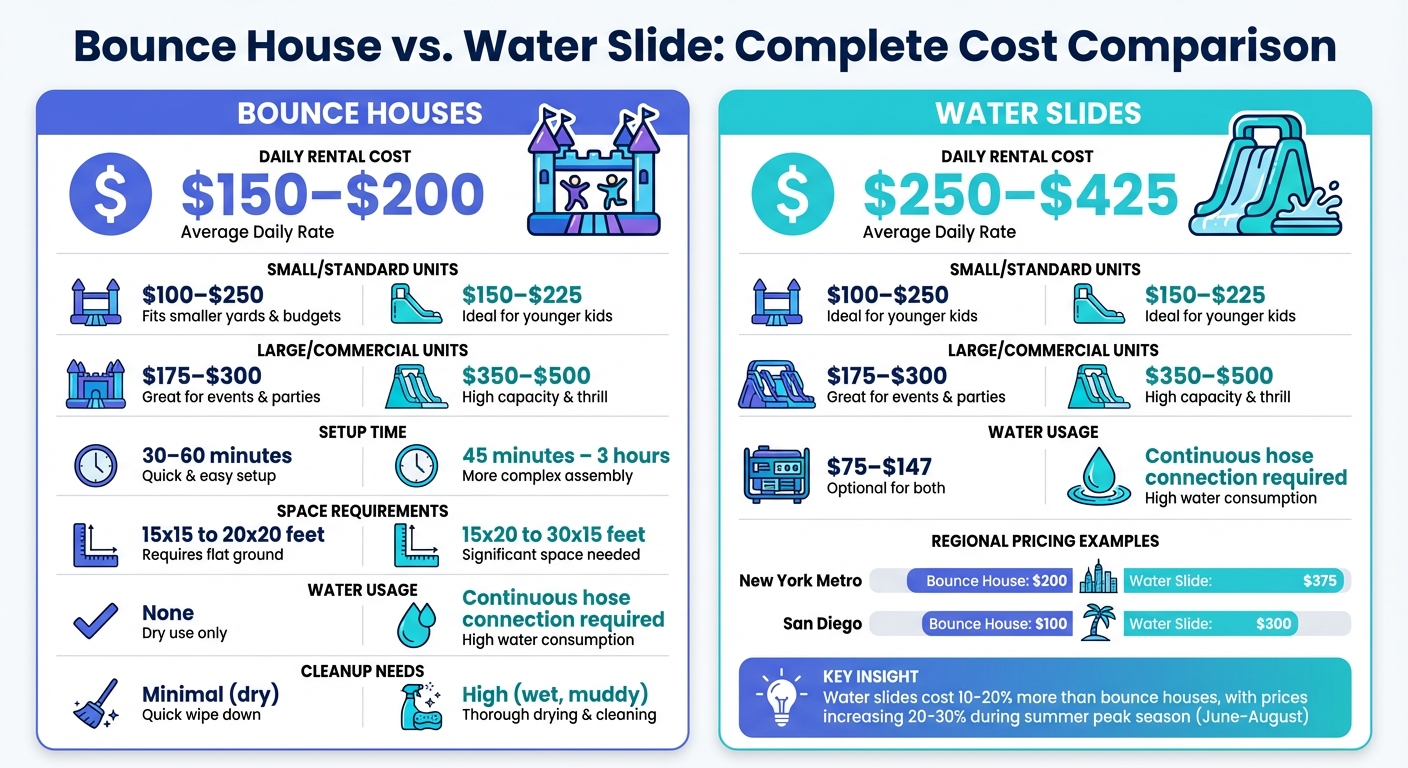
Bounce House vs Water Slide Rental Cost Comparison Chart
Price Comparison Table
Taking a closer look at the numbers helps clarify the cost differences between bounce houses and water slides. Here’s a breakdown:
| Feature | Bounce Houses | Water Slides |
|---|---|---|
| Daily Rental Cost | $150–$200 | $250–$425 |
| Small/Standard Units | $100–$250 | $150–$225 |
| Large/Commercial Units | $175–$300 | $350–$500 |
| Setup Time | 30–60 minutes | 45 minutes – 3 hours |
| Space Requirements | 15×15 to 20×20 feet | 15×20 to 30×15 feet |
| Generator Rental | $75–$147 | $75–$147 |
| Water Usage | None | Continuous hose connection |
| Cleanup Needs | Minimal (dry) | High (wet, muddy) |
Prices also vary by region. For example, in the New York Metro area, a standard bounce house costs about $200, while a water slide rental runs closer to $375. In San Diego, bounce house rentals are around $100, and water slides are approximately $300.
While the table gives a clear snapshot of the costs, additional factors like seasonal demand and operational needs can further influence pricing.
Main Cost Differences
Beyond the numbers, water slides generally come with higher costs compared to bounce houses, often ranging 10% to 20% more. This gap widens when you factor in water usage, setup time, and maintenance.
Water slides require a steady water supply throughout the event, as well as proper drainage to avoid flooding the area. Setup times for water slides vary depending on size, with smaller units taking 45–90 minutes and larger ones requiring up to 2–3 hours.
Cleanup is another area where water slides incur extra costs. Rental companies must thoroughly clean and dry the slides to prevent mold, and renters may face additional charges if the equipment is returned excessively dirty.
Seasonal demand also plays a role in pricing. During the summer months, especially from June to August, water slide rental prices can increase by 20% to 30% due to higher demand. July, in particular, sees a sharp spike in water slide rentals – approximately 45% – as temperatures soar between 80°F and 95°F. Bounce houses, on the other hand, maintain steady popularity throughout the year, resulting in smaller seasonal price fluctuations.
How to Choose Between Bounce Houses and Water Slides
After comparing rental costs, the next step is to consider how your budget, guest age, and available space will influence your choice.
Budget and Value
Start by assessing your budget. Bounce houses are generally more affordable than water slides, costing about 10–20% less because of their simpler setup and the lack of water requirements. That said, water slides can be a fantastic option during hot summer days, particularly when temperatures hover between 80°F and 95°F. For events held in cooler weather or year-round, bounce houses often make more sense – they’re not dependent on water hookups and can even be used in light rain.
Event Type and Guest Ages
The age range of your guests plays a big role in this decision. Bounce houses are perfect for younger kids (ages 3–12), offering a safe, enclosed space for jumping and hours of entertainment, especially at birthday parties. On the other hand, water slides are a hit with older children, teens, and even adults, thanks to the excitement they bring. Many commercial-grade water slides can handle adults weighing up to 250–300 lbs, making them ideal for larger gatherings like neighborhood block parties, family reunions, or corporate events. To keep everyone safe, it’s important to separate age groups during use, as mixing kids of vastly different sizes can increase the risk of injuries. Choosing the right inflatable for your audience ensures both fun and safety.
Space and Setup Needs
Before booking, measure your available space. Bounce houses generally need a flat area between 15×15 and 20×20 feet, while water slides require more room – typically 15×20 to 40×25 feet, plus an additional 10 feet of clearance for safety and splash zones. Water slides also come with extra requirements: they need a water source within 100 feet, a standard 110V outlet, and proper drainage to avoid mud buildup. Setup times differ as well, with water slides taking 1.5 to 3 hours compared to the quicker 45–60 minutes for bounce houses. Additionally, some parks restrict water slides, so be sure to check local regulations. For smaller backyards or venues with limited utilities, bounce houses are often the better choice. Ensuring your inflatable fits your venue’s dimensions will make setup hassle-free and keep guests happy.
Why Choose Bouncy Rentals USA
When planning an event, picking the right rental provider can make all the difference. Bouncy Rentals USA takes the stress out of party planning by handling delivery, setup, and takedown for you. This lets you focus on enjoying your celebration, while ensuring great service and value.
Wide Selection of Rentals
Bouncy Rentals USA has a variety of options to suit events of all sizes and themes. Their inventory includes bounce houses, water slides, combo units, and obstacle courses, catering to kids, teens, and even adults. To complete your party setup, they also offer extras like concession machines, tables, chairs, and generators. No matter the occasion, there’s something for everyone.
Easy Delivery and Setup
With Bouncy Rentals USA, delivery, professional setup, and takedown are all included in the rental price, making the process hassle-free. Their team arrives early to ensure everything is securely installed and ready to go. Rentals are available for up to 8 hours, giving you plenty of time to enjoy the fun. If your event is within 20 miles of Downtown Charleston, delivery is free. For locations beyond that, a small mileage fee applies. Securing your date is simple – just provide a $50 deposit, with the remaining balance due at delivery, payable by cash or card.
Safety and Quality Standards
Safety is a cornerstone of Bouncy Rentals USA’s service. Every inflatable is thoroughly sanitized, and the company is fully insured. Their professional setup ensures all equipment is securely anchored for safe use. With 18,000 inflatable-related injuries reported in 2023, choosing a provider with strict safety measures and insurance is key to preventing inflatable accidents and keeping your guests safe. This attention to safety allows everyone to enjoy the event worry-free, combining peace of mind with top-notch service.
Conclusion
Your decision ultimately hinges on your budget, the type of event, and your audience’s preferences. Bounce houses are generally more affordable, while water slides, costing an average of $308, come with higher expenses due to setup requirements and the need for water access.
Think about your guests and the time of year. For summer parties, a water slide offers a refreshing escape from the heat. On the other hand, bounce houses are a great year-round choice, especially for younger children or when working with a tighter budget. Keep in mind that water slides need a reliable water source and proper drainage, whereas bounce houses only require a flat surface and a power outlet.
Timing also plays a key role. Water slide demand jumps by 45% in July, with prices increasing by 20% to 30% during peak summer months. To avoid last-minute issues, book your rental 2 to 4 weeks in advance, particularly for events scheduled between June and August. Planning ahead ensures you get the best availability and pricing while aligning with your event needs.
Bouncy Rentals USA offers competitive pricing, with bounce houses starting at $150 and water slides at $225. Their service includes delivery, setup, and takedown, along with up to 8 hours of rental time, providing excellent value. Plus, their fully insured and well-maintained equipment lets you enjoy your event without worrying about logistics or safety concerns.
FAQs
What’s usually included in the rental price?
The rental fee usually includes delivery, setup, and takedown of the inflatable. Some companies might also cover cleaning and insurance as part of the package. It’s a good idea to confirm with your rental provider to understand exactly what’s included in the price.
Do I need a generator or special hookups at my venue?
To run a single bounce house fan, you’ll need a generator with at least 2,000 watts of power. If you’re planning to use multiple fans or other electrical devices, a 4,000-watt generator is a safer choice. Always check the power setup at your venue ahead of time to prevent any unexpected problems.
How far ahead should I book for summer weekends?
Planning ahead is key when it comes to inflatable rentals, especially for summer weekends. To ensure availability, aim to book at least 1–2 days in advance. Most rentals are delivered 1–2 days before your event, so reserving early helps you sidestep any last-minute scheduling headaches.