Inflatable relay races combine teamwork, fun, and physical challenges, making them a popular choice for events like birthdays, school carnivals, and corporate gatherings. These races involve navigating colorful, soft obstacle courses designed for safe and engaging activities. Here’s a quick overview of what you need to know:
- Equipment: Inflatable obstacle course rentals (30–60 feet long) are ideal for competitive racing. Options include wet/dry combos for summer events and modular designs for customization.
- Safety: Use high-pressure blowers, secure inflatables with stakes or sandbags, and provide safety mats. Supervision and clear rules are essential.
- Setup Tips: Choose a flat surface, allow space for movement, and test the course before the event.
- Game Formats: Popular options include side-by-side relays, sponge squeeze games, and multi-game circuits for diverse age groups.
- Extras: Add fun elements like dunk tanks, popcorn machines, or snow cone makers to enhance the experience.
Inflatable relay races are a great way to create memorable moments for all ages, provided you prioritize safety and proper planning.
Equipment Needed for Inflatable Relay Races
Inflatable Obstacle Course Size Guide for Different Events
Having the right gear is the backbone of a successful and fun inflatable relay race. From the inflatables themselves to safety essentials and event add-ons, everything plays a role in creating a memorable experience.
Inflatable Obstacle Courses and Race Combos
For relay races, dual-lane obstacle courses are a must. They let two participants race side-by-side, adding a competitive edge. These courses typically span 30–60 feet and feature crawl-through tunnels, climbing walls, and squeeze-through barriers. A compact option measures around 30 ft x 17 ft x 16 ft and finishes with double slides for an exciting end.
If you’re hosting in warm weather, wet/dry combo courses are a game-changer. They include water features like slides and splash zones, turning the race into a refreshing challenge. For even more customization, modular obstacle courses allow you to mix and match elements like tunnels, balance beams, and cargo nets. This flexibility lets you adjust the course length and difficulty to fit your space and participants.
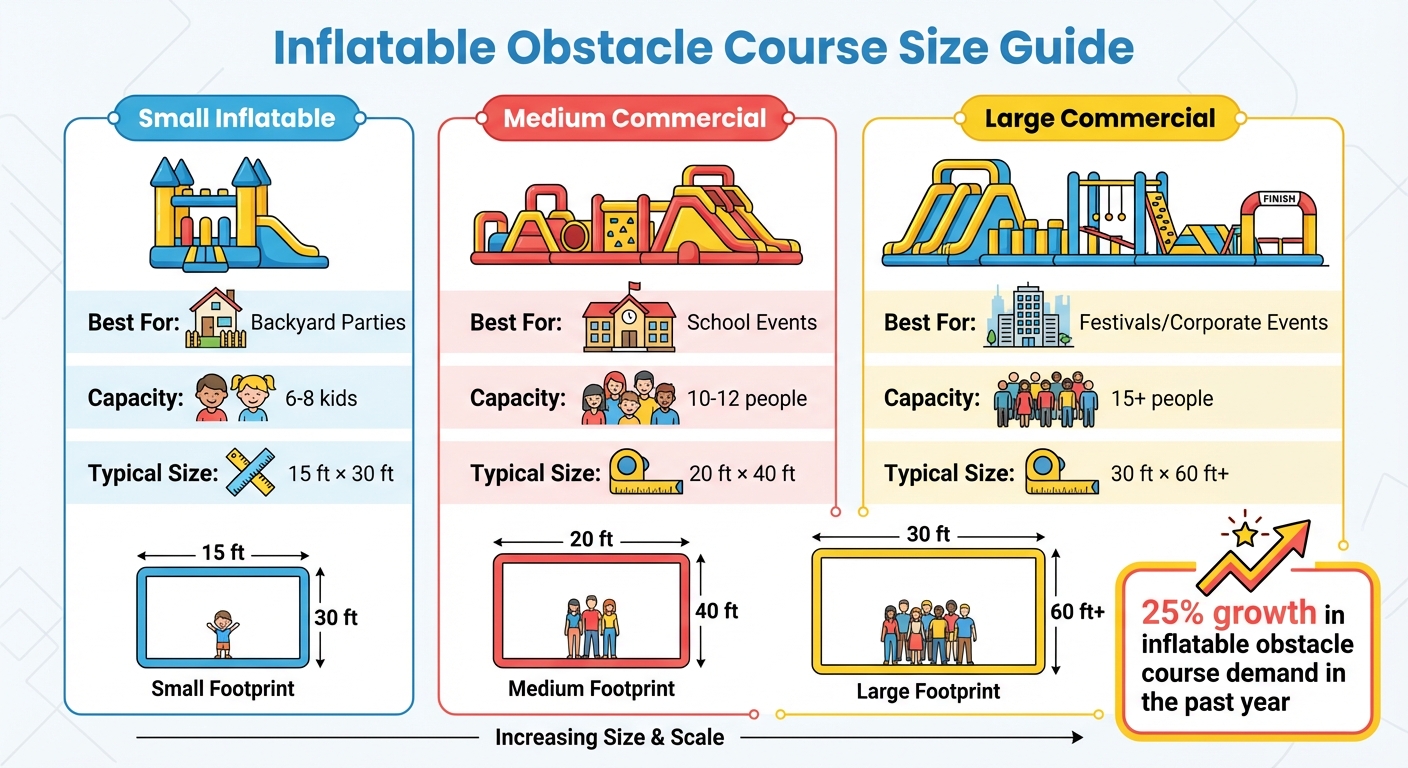
For something a little different, consider specialty inflatables. Bungee runs, which are 30 feet long, add a resistance element, while human foosball arenas require team coordination. The popularity of inflatable obstacle courses has surged, with a 25% growth in the past year. Companies like Bouncy Rentals USA offer a wide range of options, from compact backyard units to large commercial-grade courses for adults, school events, and corporate gatherings.
| Course Type | Best For | Typical Size |
|---|---|---|
| Small Inflatable | Backyard Parties (6–8 kids) | 15 ft x 30 ft |
| Medium Commercial | School Events (10–12 people) | 20 ft x 40 ft |
| Large Commercial | Festivals/Corporate (15+) | 30 ft x 60 ft+ |
These inflatables form the core of your event, but there’s more you can add to make the day even better.
Party Add-Ons to Enhance the Event
Beyond the obstacle courses, adding a few extras can take your event to the next level. Relay races can work up an appetite, so popcorn machines and cotton candy machines are perfect for serving fun, nostalgic snacks. For summer events, snow cone makers are a hit, offering a cool treat to help participants and spectators beat the heat.
Need something to keep the crowd entertained between races? Dunk tanks are always a crowd-pleaser, especially at fundraisers or school field days. These add-ons not only keep everyone engaged but also help fill the downtime between relay rounds.
Safety Gear and Setup Tools
Safety is key when working with inflatables. High-pressure blowers (usually 1.5HP) are necessary to keep the inflatables firm and stable throughout the event. These blowers require access to a 120-volt AC power source within 50 to 75 feet and typically use 1,000 to 1,500 watts.
For securing the inflatables, heavy-duty stakes work great on grass, while sandbags are essential for hard surfaces like concrete. Make sure there’s at least 5 feet of clearance on all sides for safety and ease of movement. It’s also smart to have on-site repair kits with patches and adhesive to handle minor tears or punctures during the event. Before inflating, unroll the unit and inspect it for any damage or debris that could pose a risk.
Other essentials include clear warning signs to display rules and capacity limits, plus tents or canopies to provide shaded areas for hydration and rest. With operating costs for electricity averaging just $5 to $10 per event, these safety measures are both practical and affordable, ensuring a smooth and secure event from start to finish.
How to Set Up Inflatable Relay Races
Getting ready for an inflatable relay race takes some planning, but it’s all about creating a safe and fun experience for everyone involved. With the right preparation, you can ensure everything runs smoothly from start to finish.
Preparing the Area and Layout
First, pick a flat surface free of anything sharp that could damage the best inflatable rentals for relay races. Grass works best, but concrete or asphalt can also do the job if you secure the inflatable properly. Make sure you know the size of your inflatable: small courses need about 15′ x 30′, medium ones require 20′ x 40′, and larger commercial units can take up 30′ x 60′ or more. Leave extra space around the inflatable for safe movement and emergency access.
Positioning and Anchoring Inflatables
Place the inflatable in its designated spot, ensuring the entry and exit points are easy to reach. Secure it firmly using stakes or sandbags, depending on the surface. For grass, drive heavy-duty stakes deep into the ground at all anchor points and check their stability regularly. On harder surfaces like concrete, sandbags are essential to keep the inflatable from shifting.
Once anchored, turn on the blower and let the inflatable fully expand. Walk around it to check for firmness – there shouldn’t be any sagging or soft areas. Add safety mats at the entry and exit points to cushion landings and reduce the risk of slipping.
When everything is secure and inflated, it’s time to set up the race lanes and give the course a trial run.
Marking Lanes and Testing Before the Event
Clearly mark each race lane with cones, ropes, or colorful tape so participants know where to go. Create a staging area nearby where teams can wait for their turn without crowding the course.
Before the event begins, test the course with adults or older kids. This helps you spot any issues, like unstable areas or tricky spots, and ensures the layout works as planned. Setting up an inflatable relay race typically takes 30 to 45 minutes, so include time for this important testing phase – it’s worth it to make sure everything is ready when the fun begins.
Rules and Formats for Inflatable Relay Races
Once the course is ready and safety measures are in place, it’s essential to establish clear rules for participants to ensure the event runs smoothly and safely. Everyone must remove shoes, jewelry, glasses, and sharp objects before entering the inflatable area. This helps avoid injuries and prevents damage to the equipment. Roughhousing, flips, somersaults, pushing, or wrestling are strictly off-limits.
Basic Rules for Safe Play
To minimize risks, group participants by age and size. Most inflatables accommodate 6–8 children at a time, and adult supervision is a must to enforce rules and manage entry and exit points. If wind speeds reach 15–20 mph or lightning is spotted, stop the activity immediately and deflate the inflatable for safety.
For water-based relay games, participants should wear water shoes or sneakers with good traction. Flip-flops or bare feet can lead to slips and falls. On hot days or during intense activities, schedule hydration breaks every 20–30 minutes to keep everyone safe and refreshed. Before kicking off the event, hold a safety briefing to go over the rules and point out emergency exits. These steps are vital to creating a fun and secure environment for everyone.
Common Relay Formats
There are a variety of relay formats to keep things exciting. Dual-lane relays are a popular choice, where participants race side-by-side through identical obstacle courses. For younger kids or summer events, try the Sponge Squeeze game. In this format, players soak a sponge, race to a bucket, and squeeze out the water, repeating until the bucket reaches a designated fill line.
For mixed-age groups or larger events, multi-game circuits work well. Teams rotate through stations featuring activities like basketball hoops, soccer darts, or even inflatable axe throwing. These setups keep everyone engaged and cater to different skill levels.
You can also adjust the difficulty to match your audience. For children, keep relay markers 15–20 feet apart. For teens and adults, increase the distance to 25 feet or more, incorporate challenges like leaky cups with pre-drilled holes, or introduce backward running. Another fun option is Human Foosball, where participants are tethered to poles and must coordinate movements as a team – perfect for corporate team-building events.
These formats are flexible and can be tailored to fit the vibe of your event. Focus on rewarding creativity and team spirit, not just speed, to make the experience enjoyable for everyone.
Safety Tips and Best Practices
Hosting a safe inflatable relay race takes more than just setting up the equipment and letting participants dive in. Beyond proper setup and clear rules, ensuring safety means focusing on supervision, regular inspections, and having solid emergency plans in place.
Supervision and Event Management
Assign at least one supervisor per inflatable to keep an eye on activity and enforce rules. This person should have a clear view of all entry and exit points and be ready to pause the action if things get too chaotic.
Keep an eye on the weather, too. Stop the event if wind speeds hit 15–25 mph or if thunderstorms roll in. On hot days, check the inflatable’s surface temperature regularly – direct sunlight can make it uncomfortably or even dangerously hot. Use canopies or shaded areas to help, and consider scheduling events during cooler parts of the day.
Additionally, combine supervision with routine equipment checks to keep everything running smoothly and safely.
Equipment Inspection and Maintenance
Before the event, inspect each inflatable for any rips, tears, or loose anchor points, and make sure blowers are working properly. According to Perfect Parties USA, it’s best to rent from providers who inspect and clean their inflatables before each event. High-quality obstacle courses made of commercial-grade materials will be sturdy and have safety features like enclosed walls or safety nets".
During the race, keep an eye on air pressure to ensure the inflatables stay fully inflated. Recheck anchor points, especially if the weather changes. If you notice any loss of air pressure or structural issues, stop the activity immediately and address the problem.
Handling Risks and Emergencies
When unexpected issues arise, having clear emergency protocols is key. Assign someone as the emergency coordinator, equipped with a first-aid kit and all relevant event details, who can call 911 if necessary. To avoid electrical problems, limit power usage to under 80% of a circuit’s capacity. If a power outage does occur, stay calm – most inflatables deflate slowly, giving you time to help participants exit safely.
To minimize risks, establish a one-way traffic flow through the obstacle course to avoid head-on collisions. If someone slips or falls, immediately stop the race to assess the situation before resuming. Also, keep pathways free of personal items, water bottles, or anything else that might cause trips or falls during the event.
Conclusion
Inflatable relay races bring energy, laughter, and excitement to events of all kinds and for all ages. Whether it’s selecting the perfect obstacle course or inflatable game or setting up clear rules and safety measures, every detail contributes to creating a memorable experience.
The popularity of inflatable obstacle courses has surged, with a 25% increase in demand over the past year. Their versatility makes them a go-to choice for everything from kids’ birthday parties to corporate team-building events. They don’t just add fun – they set the tone for a lively and engaging atmosphere, fueling the growing trend in inflatable entertainment.
To make your event a success, preparation is key. Be sure to measure your space with proper safety clearances, assign supervisors to oversee activities, inspect the equipment, and have emergency plans in place. These steps ensure a safe and enjoyable experience for everyone involved.
Bouncy Rentals USA simplifies the process by providing sanitized, fully insured equipment delivered right on time. Our team handles everything – from setup and safety checks to takedown – so you can relax and enjoy the fun. With options like classic obstacle courses, water slides, and party extras such as cotton candy machines and dunk tanks, we offer everything you need to create unforgettable memories.
FAQs
How many people do I need to run the race safely?
For an inflatable relay race to run safely, it’s best to have at least two adult supervisors. One person should focus on setting up the inflatable, keeping an eye on the activity, and making sure safety rules are followed. The other can manage participants and be ready to handle any emergencies. If the inflatable is large or has multiple sections, you might need extra staff to monitor specific areas and ensure everyone stays safe.
How much space and power does an inflatable relay setup require?
Inflatable relay setups usually require a space of 20 to 50+ feet in length and 10 to 15 feet in width, plus an additional 2 to 4-foot clear perimeter around the area for safety and supervision. When it comes to power, each blower needs its own dedicated 20-amp circuit located within 100 feet of the setup. If you’re working with water-based inflatables, make sure there’s easy access to a water source nearby.
What’s the best relay format for mixed ages or large groups?
For groups with mixed ages or larger gatherings, relay formats work well when they are engaging, adaptable, and safe. Inflatable games, such as water relays or obstacle courses, can be tailored to suit a range of ages and abilities. For instance, you could design obstacle courses with easier routes for children while including more challenging sections for adults. To keep everyone involved, set up multiple teams to compete at the same time and include a mix of inflatables to maximize the fun.