Cleaning inflatables may seem simple, but it comes with risks that can lead to costly repairs, safety hazards, and reduced equipment lifespan. From material damage to mold growth, improper cleaning practices can quickly turn a fun investment into a liability. Here’s what you need to know:
- Material Damage: Organic or harsh chemical cleaners like bleach or ammonia weaken seams, fade colors, and damage vinyl coatings, leading to repairs costing $1,500–$5,000 per unit.
- Mold Growth: Storing damp inflatables can result in mold within 24–48 hours, with remediation costs ranging from $200 to $500 per unit.
- Slip Hazards: Wet vinyl and trapped moisture pose risks to staff during cleaning, potentially causing injuries or equipment damage.
- Electrical Shocks: Wet blowers or damaged cords can create life-threatening hazards and expensive repairs.
- Chemical Fumes: Exposure to cleaning chemicals can cause respiratory issues, with some linked to long-term health problems.
To avoid these risks, use gentle cleaning methods, thoroughly dry inflatables, follow electrical safety steps, and opt for safer, well-ventilated cleaning practices. These precautions protect your equipment, staff, and customers while extending the lifespan of your inflatables.
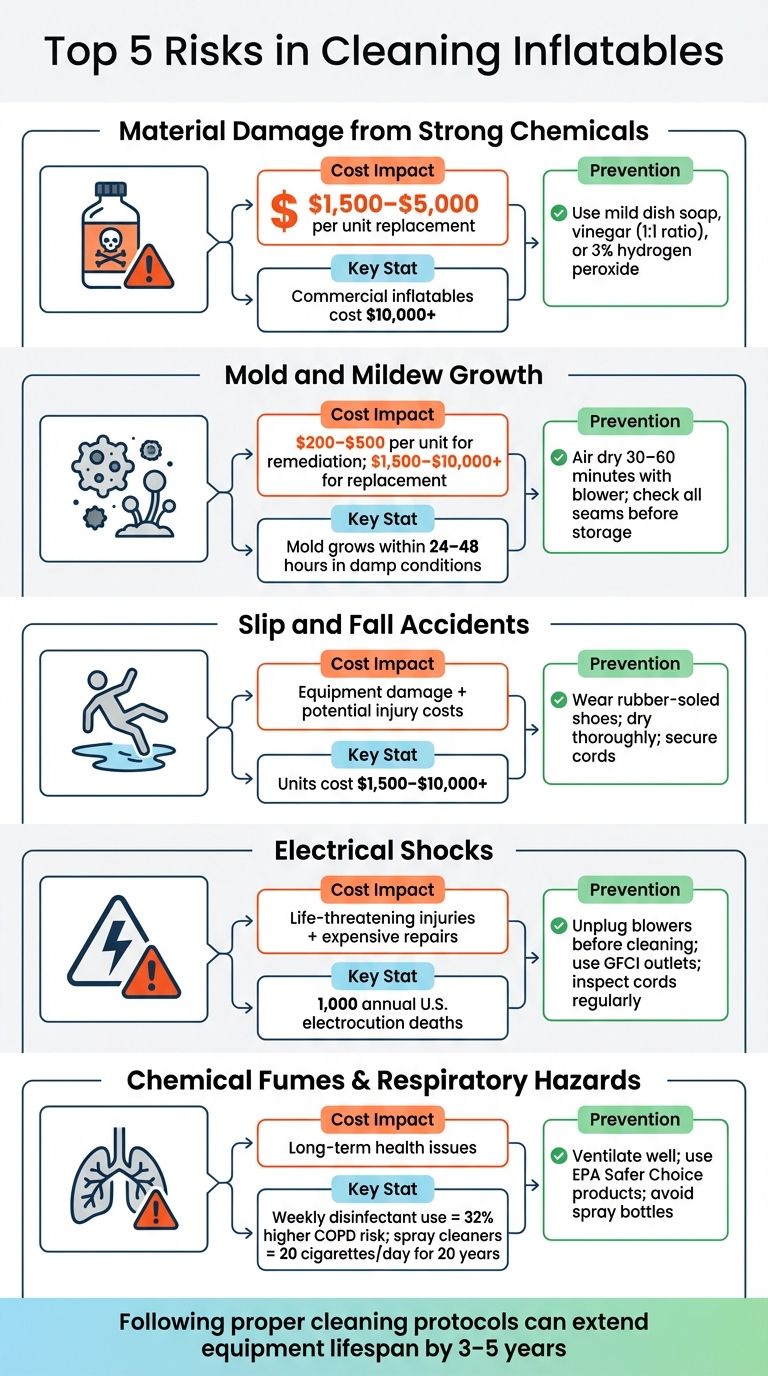
5 Inflatable Cleaning Risks: Costs and Prevention Guide
Risk 1: Material Damage from Strong Cleaning Chemicals
Bleach and ammonia-based cleaners can wreak havoc on inflatable materials. These harsh chemicals strip away protective vinyl coatings, fade colors, and weaken seams under stress. Considering that commercial inflatables can cost upwards of $10,000, avoiding this kind of damage is crucial to protecting your investment. Recognizing the dangers of improper cleaning highlights the importance of using safer cleaning methods.
Even tools like stiff-bristle brushes can cause harm by scratching the vinyl, which compromises its waterproofing and structural integrity. Similarly, mild soaps, if not thoroughly rinsed, can leave behind residues that attract dirt. Over time, body oils, food particles, and grass stains can also degrade the vinyl.
The financial consequences of these issues aren’t minor. Poor cleaning practices can lead to replacing equipment prematurely – costing anywhere from $1,500 to $5,000 per unit. Mold damage repairs alone can range from $200 to $500 per unit.
Safe Cleaning Methods
To keep your inflatables in top condition, it’s essential to use cleaning methods that are effective yet gentle:
- Mild dish soap and warm water: A small amount of soap (like Dawn) mixed with warm water can clean grime without harming the vinyl.
- Natural disinfectant: A 1:1 mixture of white vinegar and water works well to kill bacteria and mold.
- Stronger disinfectants: For tougher jobs, 3% hydrogen peroxide or isopropyl alcohol (70% or higher) are safe options. These agents either break down naturally or evaporate, leaving no harmful residue.
- Baking soda paste: For stubborn stains or odors, a paste made from baking soda offers a gentle abrasive that won’t damage the material.
- Diluted bleach: If bleach is necessary, dilute it at a maximum ratio of 10:1 (water to bleach). Be sure to rinse thoroughly until the water runs clear.
After cleaning, always allow the inflatable to dry completely before storing it. Mold can begin to grow within 24–48 hours if any moisture remains. These careful practices can save you from costly repairs and replacements while extending the life of your equipment.
Risk 2: Mold and Mildew Growth from Poor Drying
Packing up a damp bounce house is one of the fastest ways to invite mold and mildew into your equipment. If moisture gets trapped in a sealed storage bag, mold can start growing in as little as 24–48 hours. Once it seeps into the vinyl seams, it’s nearly impossible to fully remove, often leaving a stubborn musty smell that can ruin the customer experience.
The financial fallout can be steep. Professional mold remediation and odor treatments typically cost between $200 and $500 per unit. In more severe cases, you might need to replace the bounce house entirely, with costs ranging from $1,500 to $5,000 – or even over $10,000 for larger models. On top of that, complaints about musty-smelling equipment could lead to refunds or discounts of $50 to $300 per incident.
Certain areas, like seams and stitching, are especially prone to hidden moisture. When a damp unit is deflated, folds and creases can trap water, making it hard to spot during cleaning. Storing inflatables on bare concrete is another risk, as the surface can draw moisture upward, causing condensation under the vinyl.
Proper Drying Methods
Drying your bounce house thoroughly is key to avoiding costly repairs or replacements. After washing, leave the blower running for at least 30–60 minutes to keep air circulating through hard-to-reach areas. For areas like slide channels, corners, and seams, use clean, absorbent towels to soak up any pooled water. A high-powered leaf blower can also help push water out of tight spots.
Before storing, run your hand along all seams and stitching to check for dampness. If anything feels wet, the unit isn’t ready to be packed up. You can also pause mid-deflation to inspect folds and creases for hidden moisture. Whenever possible, dry the unit in direct sunlight – UV rays act as a natural disinfectant and help prevent mold growth.
When it’s time to store the inflatable, avoid placing it directly on bare concrete. Instead, use wooden or plastic pallets or heavy-duty tarps. Choose breathable storage bags like canvas or mesh, or leave vinyl bags slightly open to promote airflow. Adding silica gel or desiccant packs to the storage bag can absorb any lingering moisture. Keep storage conditions within 50–80°F and maintain relative humidity levels below 50%.
Risk 3: Slip and Fall Accidents During Cleaning
Wet vinyl can turn into a slip hazard, especially when soap residue or pooled water gathers in channels, corners, and seams. During deflation, moisture trapped in folds can create unexpected slippery areas, posing risks to staff walking on the unit to press out air.
To add to the stakes, commercial bounce houses often range from $1,500 to $5,000 each, while obstacle courses can surpass $10,000. A single slip that damages equipment or injures staff could lead to significant financial setbacks.
How to Prevent Slips and Falls
To minimize the risk of slips during cleaning, here are some cleaning and maintenance tips:
- Footwear matters: Staff should wear rubber-soled shoes with deep treads and low heels (under 1.5 inches). Avoid flip-flops or slippers, as they lack grip and stability.
- Rinse thoroughly: Make sure to rinse the inflatable until the water runs clear, ensuring no soap residue is left behind.
- Dry effectively: Use clean, absorbent towels to remove water from slide channels, corners, and other areas where water might pool. After cleaning, keep the blower running for 30–60 minutes to speed up drying. On humid days, consider using additional box fans to help the process along.
- Organize cords: Secure power cords with Velcro straps and keep them away from walkways to avoid trips.
- Use tarps: Lay heavy-duty tarps under the inflatable to prevent cleaning directly on wet surfaces like grass or concrete, which can draw in moisture and increase hazards.
- Inspect surfaces: Always ensure all surfaces are dry before stepping onto the unit.
These steps are part of a larger safety checklist designed to reduce risks and ensure cleaning is both safe and efficient. By taking these precautions, you can protect both your equipment and your team.
Risk 4: Electrical Shocks from Wet Equipment
Mixing water and electricity during cleaning can be extremely dangerous. Inflatable units rely on blowers that need continuous power to stay inflated, making these machines a key risk when cleaning solutions or water are introduced. As the Inflatable Doctor puts it: "Water and electricity don’t mix, and a wet blower can malfunction or create a shock hazard".
This isn’t just about equipment damage – it can be life-threatening. Around 1,000 people in the U.S. lose their lives to electrocution annually. When water comes into contact with live electrical parts, it can cause severe injuries like cardiac arrest, respiratory failure, or internal burns. The danger is even greater if operators are standing in water or working in damp conditions, as water is an excellent conductor of electricity.
Blower motors are especially at risk. If water seeps into the motor housing, it can lead to short circuits, overheating, or even total failure. Damaged power cords are another major hazard – tangled or worn cords can expose live wires, creating weak points where shocks or even fires can occur. Cracked or frayed extension cables combined with moisture can be a recipe for disaster.
Even one electrical mishap can result in expensive repairs and insurance headaches. That’s why following proper cleaning and safety measures is non-negotiable.
Electrical Safety Steps
- Unplug blowers before cleaning: Disconnect all power sources before using water. This simple step removes the immediate risk of electrical shock.
- Clean blowers separately: Avoid spraying or rinsing blowers. Instead, use a damp cloth to wipe the housing and a brush to remove debris from intake screens. This keeps water out of the motor and electrical components.
- Use GFCI outlets: Ground Fault Circuit Interrupter outlets are essential. They shut off power instantly if they detect ground faults, offering critical protection. If cleaning outdoors, keep blowers sheltered or covered with tarps to prevent moisture exposure.
- Inspect power cords regularly: Look for cracks, frays, or exposed wires, and replace any damaged cords immediately. Avoid tying cords in knots – use Velcro wraps instead to prevent insulation damage. Label cords by length and amperage to avoid overloading.
- Stay dry: Always dry your hands and surfaces before handling plugs or switches. Never stand in pooled water while working with electrical equipment. After cleaning the inflatable, run the blower for 30–60 minutes in a dry location to eliminate any lingering moisture.
Risk 5: Chemical Fumes and Respiratory Hazards
Chemical exposure during cleaning can pose serious health risks, often overlooked by many teams. Volatile Organic Compounds (VOCs) – found in products like chlorine bleach, ammonia-based cleaners, and aerosol sprays – are a major concern. These chemicals vaporize at room temperature and have been linked to respiratory issues. The American Lung Association states: "VOCs and other chemicals released when using cleaning supplies contribute to chronic respiratory problems, allergic reactions and headaches".
Breathing in these fumes can irritate the lungs, cause coughing, chest congestion, and even impact the heart and nervous system. A long-term study involving over 55,000 nurses revealed that using chemical disinfectants just once a week increased the risk of developing COPD by 32%. Even more shocking, frequent use of chemical cleaning sprays has been compared to the lung damage caused by smoking 20 cigarettes a day for 20 years.
Some chemical combinations are outright dangerous. For instance, mixing bleach with ammonia-based cleaners produces toxic gases that can lead to severe respiratory issues or even death. The American Lung Association warns: "Never mix bleach or any bleach-containing product with any cleaner containing ammonia". Adding to the challenge, U.S. manufacturers aren’t required to disclose all ingredients on cleaning product labels, making it harder to identify potential hazards.
How to Reduce Exposure
Minimizing exposure to these harmful fumes is critical for protecting your team. Here’s how you can do it:
- Prioritize ventilation. Always clean in well-ventilated areas. Open windows and doors, or use fans to improve airflow. In warehouses, ceiling fans and dehumidifiers can help maintain air quality. Portable ventilation units or box fans are also great for increasing air circulation during cleaning.
- Opt for eco-friendly cleaners. For vinyl inflatables, warm water and mild dish soap like Dawn often work just fine. For tougher stains, use baking soda with water for scrubbing or a water-and-vinegar mixture for disinfecting. Look for cleaning products certified by the EPA’s Safer Choice Standard or the Asthma and Allergy Foundation of America. Avoid spray bottles, as they create a mist that’s easily inhaled. Instead, apply cleaning solutions directly to a microfiber cloth or sponge. Choosing less harsh products also helps maintain the durability of your equipment.
- Stay alert to discomfort. If anyone experiences coughing, dizziness, headaches, or watery eyes, stop cleaning immediately. Move to a well-ventilated area for fresh air. For eye irritation, rinse with water for 15–20 minutes.
At Bouncy Rentals USA, we take these precautions seriously to safeguard both our team and equipment. By following these steps, you can protect against immediate harm and reduce the risk of long-term respiratory issues.
Safe Cleaning Checklist
Having a clear checklist simplifies the cleaning process and ensures nothing gets overlooked. Below is a detailed table outlining each task, how often it should be performed, the tools required, and the specific risks it helps minimize.
| Cleaning Task | Frequency | Tools Needed | Risks Addressed |
|---|---|---|---|
| Debris Removal | After every use | Blower, vacuum, or manual removal | Prevents material damage caused by grit buildup and abrasion |
| Surface Scrubbing | After every use | Mild soap (e.g., Dawn), soft-bristle brush, microfiber cloth | Reduces material damage from oils and dirt; eliminates slip hazards |
| Disinfecting | After every use | EPA-approved, vinyl-safe disinfectant spray or wipes | Mitigates chemical fumes and respiratory risks |
| Full Air Drying | After every wash or rain exposure | Blower (run 30–60 minutes), box fans, absorbent towels | Prevents mold and mildew growth |
| Seam & Fold Check | During deflation | Absorbent towels, manual inspection | Addresses trapped moisture to avoid mold |
| Blower Maintenance | After every use | Damp cloth, air filter replacement | Prevents electrical shocks and motor overheating |
| Cord Management | After every use | Velcro cable wraps (avoid knots) | Protects against electrical shocks from damaged wires |
| Zipper Lubrication | Monthly or after cleaning | Silicone spray | Prevents material damage caused by seized zippers tearing fabric |
| Storage Rotation | Every 2–3 months (off-season) | Manual repositioning on pallets or tarps | Avoids material damage from compression and moisture wicking |
This checklist ensures that every cleaning session addresses potential hazards like chemical exposure, moisture-related mold, and electrical issues, while also safeguarding your equipment.
Proper drying is critical – moisture left behind can lead to mold growth and costly repairs. Following the drying and inspection steps can extend the lifespan of your equipment by 3–5 years. Early detection of small issues is key to avoiding bigger, more expensive problems down the line.
At Bouncy Rentals USA, we rely on this checklist to maintain our equipment and prioritize customer safety. Consistently following these steps helps ensure safer cleaning practices and keeps inflatables in excellent condition for years to come.
Conclusion
Cleaning inflatables safely comes with challenges, including risks like material damage from harsh chemicals, mold due to incomplete drying, slip and fall hazards, electrical shocks from wet equipment, and exposure to chemical fumes. These risks can impact staff safety, customer health, and the longevity of your equipment.
By tackling these issues with the right precautions, you not only protect your team and customers but also ensure your equipment lasts longer. The strategies shared in this article – such as using gentle cleaning solutions, thoroughly air drying, prioritizing electrical safety, and maintaining proper ventilation – help safeguard your investment while reducing repair and replacement costs.
At Bouncy Rentals USA, we take these cleaning practices seriously. Every bounce house, water slide, and inflatable obstacle course we provide is carefully sanitized, inspected for structural integrity, and prepared to deliver hours of safe fun. Our cleaning protocols ensure that 99.9% of germs are eliminated, giving parents peace of mind about their children’s safety.
Following a post-cleanup checklist and safety measures not only protects your team but also boosts the reliability of your equipment. Safe cleaning practices are essential for running a professional rental business that prioritizes safety and quality every step of the way.
FAQs
What cleaners are safest for inflatable vinyl?
The best cleaners for inflatable vinyl are those that are water-based, solvent-free, and pH-neutral. A simple option is a mixture of white vinegar and water, which works well for cleaning. You can also use eco-certified vinyl cleaners made specifically for inflatables. These choices are gentle on the material but still do a great job of getting rid of dirt and grime.
How can I tell an inflatable is fully dry before storage?
To properly dry an inflatable before storing it, pay close attention to all areas, especially seams and folds, as these spots can trap moisture. Use towels to wipe down the surface and fans to help dry those harder-to-reach areas. Before packing it away, double-check for any lingering condensation. Moisture left behind can cause mold, mildew, or even damage during storage, so ensuring it’s completely dry is key to maintaining its condition.
What’s the safest way to clean around the blower and cords?
To clean around the blower and cords safely, steer clear of using water or cleaning solutions directly, as these can harm the electrical parts. Instead, take a dry or slightly damp cloth with just a touch of moisture to gently wipe the area. Be cautious to prevent any liquid from getting into the blower or electrical connections. Keeping these components clean and dry not only ensures safety but also helps extend the life of your equipment.