A water-themed treasure hunt is a fun, low-cost activity that combines solving clues with water-based games. It’s perfect for keeping kids engaged and entertained at parties. Here’s a quick breakdown of how to plan one:
- Materials Needed: Paper, markers, zip bags, painter’s tape, and a treasure box (filled with items like plastic coins or toys). Budget: $5–$45.
- Setup: Divide your space into zones (e.g., splash zone, treasure dig site) and decorate with water-themed props like seashells or toy fish.
- Clues: Use waterproof options like laminated cards or zip bags. Hide clues in creative spots like under towels or near water slides.
- Activities: Add water challenges like sponge tosses or inflatable obstacle course rentals.
- Safety: Assign adults to supervise water areas and follow local safety laws for inflatables (e.g., one person at a time on slides).
End the hunt with a shared treasure and optional treats like snow cones or popcorn. With a little prep, this activity can be set up in under 30 minutes for a memorable event.
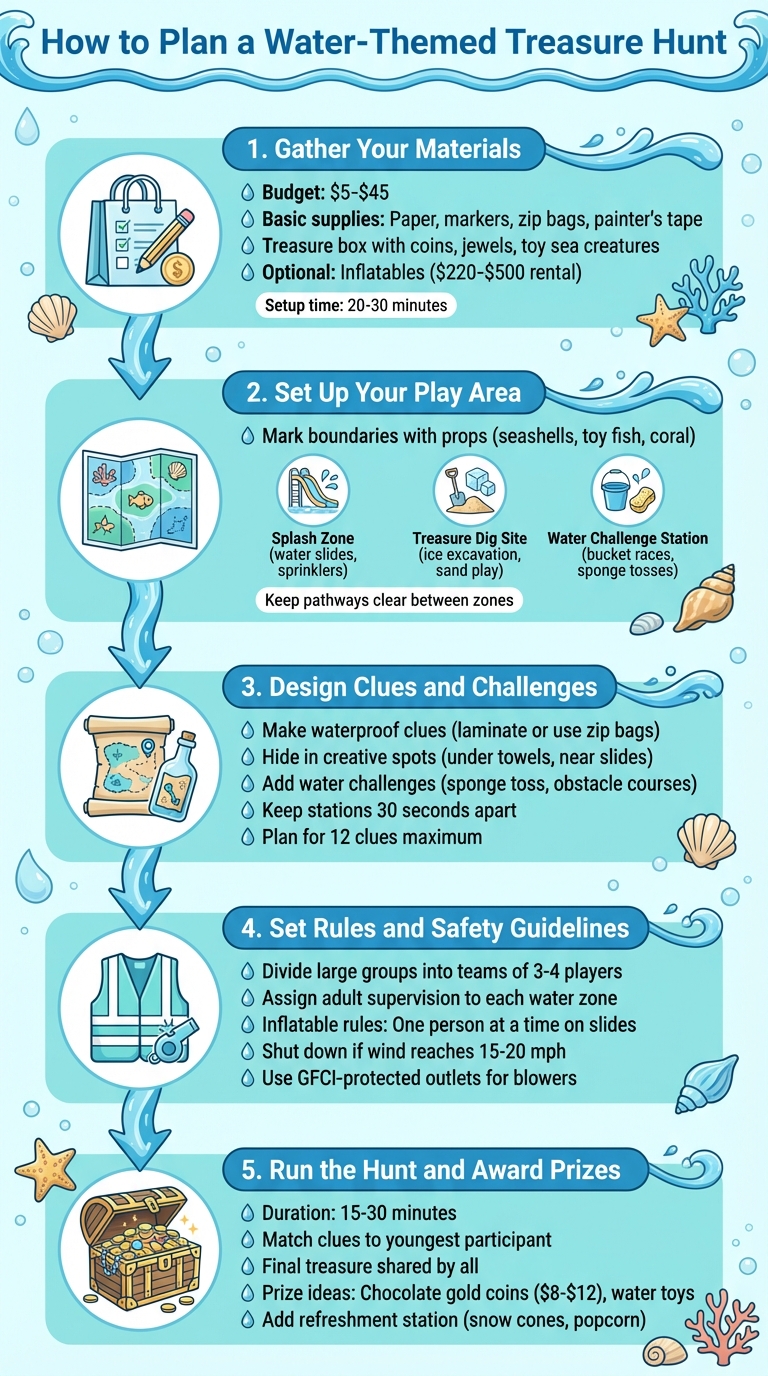
5 Steps to Plan a Water-Themed Treasure Hunt
Step 1: Gather Your Materials
Basic Supplies You’ll Need
Start with some affordable essentials. You’ll need paper or index cards, markers, small zip bags, and painter’s tape. Zip bags are great for keeping clues safe from water, and painter’s tape is gentle on surfaces, making it easy to remove without causing damage.
For the treasure, choose a lockable treasure box and fill it with fun items like plastic gold coins, jewels, and toy sea creatures. If you’re looking for convenience, the Sun Squad Kids’ Treasure Hunt Dive Set is a great option. It includes 30 pieces, such as coins and a treasure box, and costs around $12.00. Plus, it has an impressive 4.5-star rating from 278 customers. You can also add themed containers like sandbox buckets for collecting treasures or water play gear like dive rings, splash bombs, and swim toys to keep the fun going.
To take it up a notch, think about adding some inflatables.
Adding Inflatable Equipment
Inflatables can make the treasure hunt even more thrilling. Bouncy Rentals USA offers top inflatable water slides that pair perfectly with a water-themed treasure hunt. Rental prices range from $220 to $500, depending on the size and rental duration. For younger kids (ages 5–10), a 10-foot slide works well in a 20×20-ft space. For teens, larger slides over 20 feet long need about 40×40 ft.
Obstacle courses are another fantastic addition, creating physical challenges that can double as tasks to earn the next clue. Just make sure to allow for a safety buffer – most 13×13-ft units need about 17×17 ft of flat, clear space. Also, check that your gate is wide enough for delivery and that you have outdoor water spigots available for water slides.
Once your equipment is sorted, think about extras to keep guests energized.
Party Add-Ons for Extra Fun
Keep the energy up with fun add-ons like snow cone makers or cotton candy machines; ask Bouncy Rentals USA about concession machines when you request a quote. These stations offer quick refreshment breaks between solving clues, while pop-up tents provide shade from the sun or shelter in case of unexpected rain. These small touches can make a big difference in ensuring everyone has a great time.
Step 2: Set Up Your Play Area
Mark Boundaries and Add Decorations
Start by surveying your space to identify natural hiding spots like bushes, low-hanging tree branches, coiled hoses, or mulch. These can double as great locations for clues or help guide guests through the area. If you’re working with a water theme, use props like seashells, toy fish, plastic coral, and large stones to create an ocean-inspired vibe. For outdoor setups, water slides or bounce houses can help mark boundaries. Indoors or under tents, try using blue and green lighting to mimic an underwater atmosphere.
Clearly marking boundaries is crucial, especially in large or public spaces, to ensure kids stay safe. Pop-up tents can serve as boundary markers while also offering some shade.
Once you’ve established boundaries and added themed decorations, you’ll have a well-organized space ready for activities.
Create Different Game Zones
With your boundaries and decorations in place, divide the area into themed zones to keep gameplay organized and safe. This also helps balance high-energy and calmer activities while allowing for easy supervision.
Set up a Splash Zone for energetic activities like water slides and sprinklers. For quieter fun, create a Treasure Dig Site with activities such as ice excavation or sand play. Include a Water Challenge Station for games like bucket races or sponge tosses. Make sure pathways between zones are clear to avoid trips over hoses or equipment, and place water slides or inflatables away from food and seating areas to minimize slipping hazards.
For younger children, consider setting up gentle activity zones with options like water bead bins or toy washing stations. Ensure all zones are visible from a central supervision point, and assign an adult to monitor each water area for added safety. By keeping zones well-defined and thoughtfully arranged, you’ll create a safe and fun environment for everyone.
Step 3: Design Clues and Challenges
Make Waterproof Clues
Water and paper are not exactly best friends, so keeping your clues safe from moisture is a must. Laminating your clues is a great way to protect them from getting soaked. If you don’t have a laminator handy, zip-top bags are a simple, budget-friendly alternative – just slip the clue inside, seal it, and you’re good to go.
"Grab tape and small zip bags – tape for sticking clues in place, bags for outdoor clues that might get damp" – Baljeet Aulakh, Co-founder, Party Genius AI
For areas that are extra wet, consider doubling up. Place your laminated clues inside another waterproof container, like a plastic Easter egg or a small jar. If you’re hiding clues near ice buckets or coolers, seal them in a bag to keep condensation at bay. Creative hiding spots could include watering cans, under beach towels, behind shower curtains, or even in the splash zone of a water slide.
Once your clues are protected, it’s time to think about adding some water-themed excitement to your hunt.
Set Up Water Challenges
Incorporating water challenges is a fantastic way to keep the hunt lively and engaging. You can build on earlier ideas, like inflatables, and add elements such as water slides or obstacle courses. Dual-lane water slides are perfect for races – participants can slide down and grab their next clue at the bottom. Inflatable obstacle courses, like those from Bouncy Rentals USA, offer a fun and safe way for kids to navigate through clue stations.
Make sure your challenges match the age group. For younger kids, simple tasks like retrieving floating toys or tossing wet sponges at targets work well. Older kids can take on more complex challenges, such as navigating obstacle courses or using water pistols to release hidden clues. Keep the stations close – about 30 seconds apart on foot – to maintain the hunt’s momentum and keep the energy high. And don’t forget to assign an adult to supervise each water challenge area, especially around slides or splash zones, to ensure everyone stays safe while having fun.
Step 4: Set Rules and Safety Guidelines
Before kicking off your treasure hunt, take a moment to explain the objectives, how the clues work, and identify any restricted zones. These might include areas like deep water, electrical outlets, or slippery surfaces. For younger participants who aren’t able to read yet, you can assign a "clue helper" at each station to read the instructions aloud. Once these basics are addressed, you can dive into the detailed game rules and water-specific safety measures outlined below.
Game Rules for Players
The size of your group will determine how you organize the hunt. If you have a smaller group of 3–6 participants, they can stay together as one team. For larger groups of 7–15, divide them into smaller teams of 3–4 players, and give each team a distinct set of colored clues. To maintain order, you might want to establish a progression rule – like having the birthday child or a designated team leader read each clue first.
"We stay together – no running ahead" – Baljeet Aulakh, Co-founder, Party Genius AI
Fair play is key to keeping the game enjoyable. Make it clear that if a team stumbles upon a clue that isn’t theirs, they should leave it exactly where they found it. Also, let everyone know upfront that the final treasure is meant to be shared by the whole group. This can help avoid any disputes when the big prize is revealed. Most treasure hunts keep kids engaged for about 15–30 minutes, but interest often begins to wane after about 12 clues.
Water Safety Precautions
If your treasure hunt includes water activities, safety becomes even more critical. Assign an adult to supervise each water zone, and inspect all inflatables for damage and cleanliness before the event begins. For rented equipment, companies like Bouncy Rentals USA ensure their inflatables and water slides are properly inspected, sanitized, and well-maintained.
Make sure to set clear rules for inflatables: only one person should be allowed on a slide at a time, and the landing area must be clear before the next person goes. Limit entries and exits to one at a time, and prohibit flipping, somersaults, or any roughhousing. Also, remind participants that shoes, sharp objects, food, and drinks are not allowed in these areas.
To minimize slipping risks, place towels at entry points and use a welcome mat to trap dirt before participants step onto inflatables. If the wind picks up to 15–20 mph or if there’s sudden rain or lightning, shut down all inflatables immediately. Use a clear signal to stop play in such situations. Additionally, to avoid electrocution hazards, ensure blowers are plugged into GFCI-protected outlets and kept away from any standing water.
Step 5: Run the Hunt and Award Prizes
Start and Monitor the Activity
Before diving into the treasure hunt, gather everyone together for a quick introduction. Set the scene with a fun story – maybe a pirate’s search for lost treasure or an explorer’s water adventure. Then, lay out the ground rules: stick with your group, let the guest of honor read the first clue, don’t tamper with other teams’ clues, and share the final prize. Hand the first clue to the guest of honor to get things started.
Stick to the team setup and rules you planned in Step 4. Keep hiding spots fairly close – no more than 30 seconds apart – to keep the energy high, and aim for the hunt to last about 15–30 minutes. If you’re working with a mix of ages, let the older kids read the clues while the younger ones take charge of finding the hiding spots.
"Match your clues to your youngest participant, not your oldest – because if the youngest kids can’t play, they’ll cry, and crying is the treasure hunt’s only real enemy." – Baljeet Aulakh, Co-founder, Party Genius AI
Once the hunt begins and the clues start getting solved, get ready for the big finale.
Reveal the Final Treasure
When the final clue is cracked, guide the group to the ultimate prize. Make this moment special by using a decorated treasure chest or container to hold the prizes. This adds a sense of drama and excitement as the kids reach the finish line. For younger participants, you might want to hide small prizes at each clue location to keep their enthusiasm up. If you’re including snacks or candy, double-check for any food allergies beforehand.
The final prize should be something everyone can enjoy together. Ideas like chocolate gold coins (priced around $8–$12), water-themed toys, or individual prize bags are great options. For an extra touch, ask Bouncy Rentals USA about party extras such as a snow cone machine or popcorn maker. These can double as a celebratory refreshment station, offering a cool treat after the “water adventure”. This setup naturally transitions the group to the next part of the party – whether that’s cutting the birthday cake or heading back to the water slides.
Conclusion
Pulling off a water-themed treasure hunt comes down to five key steps: gathering materials, setting up the play area, designing waterproof clues, establishing safety rules, and wrapping it all up with a memorable finale. With a little preparation, you can have everything ready in about 20–30 minutes, and keeping the hunt itself to 15–30 minutes ensures everyone stays engaged. Plus, the cost for supplies usually falls between $5 and $45.
To make the hunt a hit, design clues that suit your youngest participants and mix things up with a reverse-hiding strategy – keeping each clue’s location a fun surprise.
Want to take it up a notch? Add excitement with water slides, dunk tanks, or inflatable obstacle courses from Bouncy Rentals USA. These inflatables double as challenge zones where kids can tackle water-themed tasks between clues, keeping the energy high even after the treasure is found. And since their equipment is sanitized, insured, and delivered on time, you can relax and enjoy the event without stressing over logistics.
For an extra touch, set up a refreshment station at the finish line with fun add-ons like snow cone makers or popcorn machines. It’s the perfect way to cool down after the hunt and transition smoothly to the next part of your celebration.
With thoughtful planning and the right extras, every detail of your water-themed treasure hunt comes together to create an adventure kids will talk about long after the party ends. It’s all about keeping them active, engaged, and, most importantly, having fun.
FAQs
How do I adapt the hunt for different age groups?
Planning a water-themed treasure hunt? The key is to tweak the clues, hiding spots, and challenges based on the age group.
For younger kids (ages 4-6), keep it simple and visual. Use picture-based clues or straightforward instructions, and hide treasures in obvious spots – like near a favorite water toy or under a bucket. The goal is to make it fun and easy for them to follow along.
For older kids (ages 7-12), step up the challenge with riddles, puzzles, or even small tasks they need to complete to find the next clue. Hide items in more creative or harder-to-spot locations, like under a pool float or behind a garden hose. Make sure the hunt is long enough to keep them engaged but not so complex that they lose interest.
By matching the activity to their age and attention span, you can create an adventure that’s both exciting and memorable.
What’s the easiest way to waterproof clues?
The easiest way to protect clues for a water-themed treasure hunt is by using materials that can withstand moisture or protective covers. You can place the clues in plastic zip-lock bags, sealable plastic envelopes, or small waterproof boxes. These options shield the clues from water damage while still making them simple for players to retrieve.
How can I keep the hunt safe around water and inflatables?
To keep everyone safe during a water-themed treasure hunt with inflatables, supervision is key – especially when kids are involved. Make sure participants are using equipment suited for their age, and set firm rules like no running or roughhousing. Check the area for potential hazards and ensure inflatables are securely anchored and in good shape. A combination of attentive supervision, clear guidelines, and a well-prepared setup will help create a safe and enjoyable experience for all.
Related Blog Posts
- Ultimate Guide to Water Relay Challenges
- Best DIY Pool Party Games for Kids
- Checklist for Hosting a Water Gun Party
- How to Plan Water Science Activities for Kids