
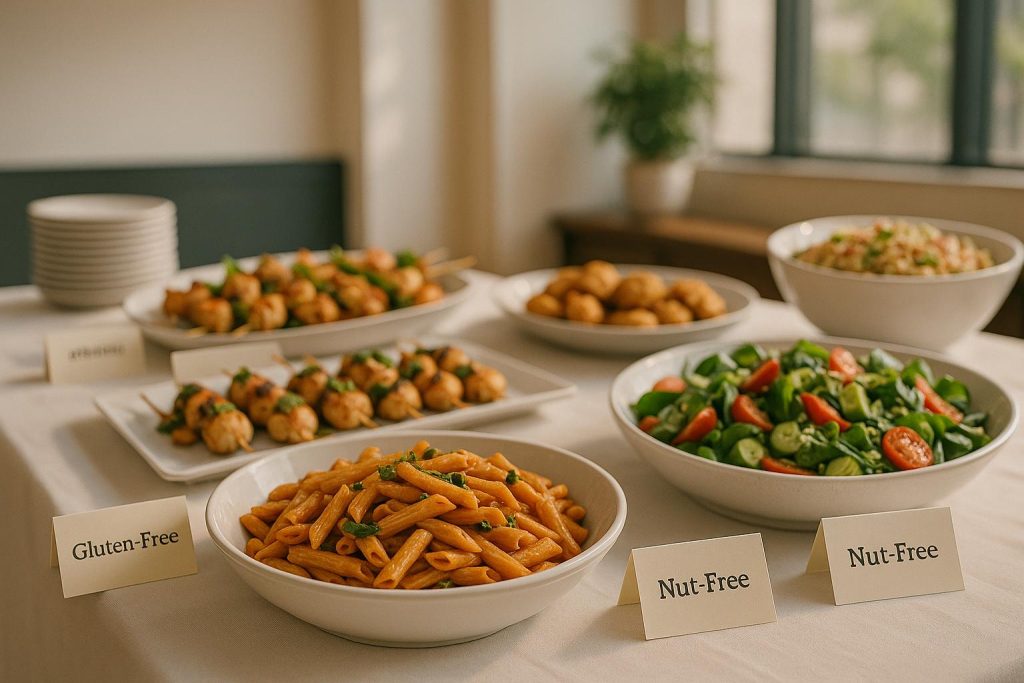
Planning menus for events requires more than just selecting dishes – it’s about ensuring everyone can eat safely. With over 32 million Americans living with food allergies, including 5.6 million children, it’s likely some guests will need special accommodations. The most common allergens include gluten, dairy, peanuts, tree nuts, soy, shellfish, eggs, and sesame. Even small traces can trigger severe reactions, so careful planning is essential.
Here’s a quick guide to creating allergy-friendly menus:
- Collect guest dietary information early: Use RSVP forms to ask about allergies, severity, and preferences.
- Work with caterers: Share allergy details, confirm safety protocols, and request separate preparation areas.
- Design a safe menu: Include gluten-free, dairy-free, and nut-free options, plus naturally allergen-free dishes.
- Label clearly: Use color coding and ingredient cards or QR codes for transparency.
- Prepare for emergencies: Stock epinephrine auto-injectors, train staff, and have a response plan.
- Offer safe entertainment: Consider non-food activities and allergen-free treat stations.
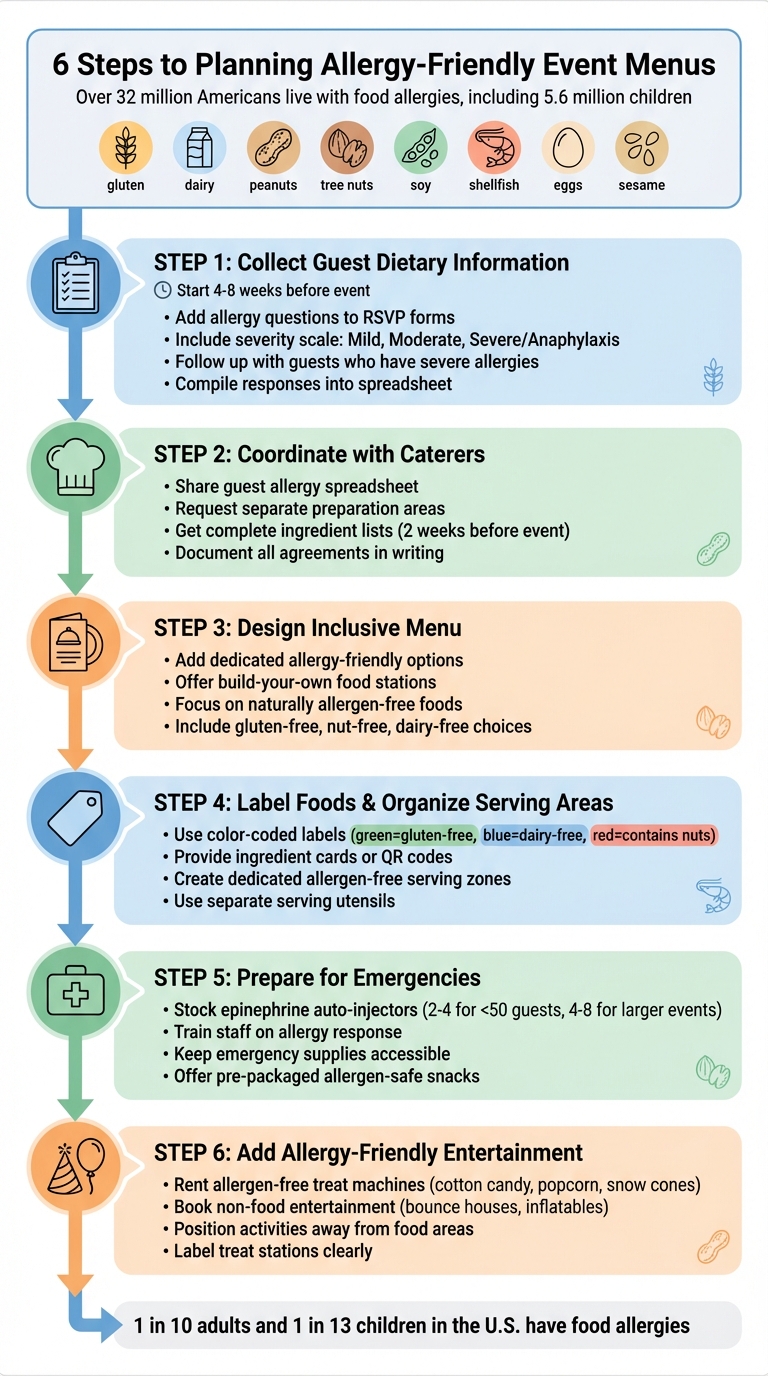
6-Step Guide to Planning Allergy-Friendly Event Menus
Step 1: Collect Guest Dietary Information
Start by gathering dietary restrictions for all your guests. Ideally, begin this process as soon as invitations or registration opens – usually 4 to 8 weeks before the event. This timeline allows plenty of room to coordinate with caterers and finalize menu adjustments. Incorporate detailed allergy and dietary questions into your registration forms to collect this information early.
Add Allergy Questions to Registration Forms
Make allergy-related questions a required part of your RSVP forms. Include checkboxes for common allergens like peanuts, tree nuts, dairy, eggs, wheat/gluten, soy, fish, shellfish, and sesame, along with an "Other (please specify)" option. To better assess the severity of allergies, add a scale with options such as "Mild", "Moderate", or "Severe / Risk of anaphylaxis / Cannot have any cross-contact." This helps you understand how carefully meals need to be prepared.
Don’t forget to ask about other dietary preferences or restrictions, such as vegan, vegetarian, kosher, halal, low-sodium, or diabetic-friendly options. Provide a free-text box for guests to share additional details.
For accurate and organized data collection, use online registration platforms. For smaller gatherings, paper forms or phone calls can work as alternatives. Ensure all fields are mandatory to avoid surprises closer to the event.
To reassure your guests, include a note like:
"We collaborate closely with our caterers to accommodate allergies and dietary needs. While we cannot guarantee a completely allergen-free environment, we will make every effort to provide safe options if you share your needs with us in advance."
Follow Up for Additional Details
Once you’ve collected the initial responses, reach out to guests with severe allergies or unclear answers. Contact them via phone or email to clarify their needs. Ask specific questions, such as whether they need to avoid all tree nuts or just certain types, if cross-contact is a concern, or if they’ve safely eaten catered food in the past.
Keep these conversations empathetic and focused. Avoid guaranteeing that food will be "100% allergen-free", especially if the venue handles the allergen in question. Document these details and share them with your caterer to ensure they can prepare suitable options.
For events involving children, gather information directly from parents or guardians. Ask if they’d prefer to send their own food, which is often the safest option for kids with multiple severe allergies.
Finally, compile all responses into a simple spreadsheet. Include each guest’s name, seating or table assignment, allergy type, severity, and details about safe or unsafe foods. Group guests with similar restrictions to help caterers estimate the number of special meals required. Share this organized data with your caterer and key venue staff well ahead of the event, and update it as needed if guests RSVP late or change their details.
Step 2: Coordinate with Caterers on Allergy Safety
Now that you’ve gathered guest dietary information, it’s time to work closely with your caterer to ensure allergen-safe food preparation. This step is crucial for reducing the risk of allergic reactions and making all guests feel comfortable and cared for.
Share Guest Allergy Information
Start by providing your caterer with the full spreadsheet you created in Step 1. This should include details like common allergens (refer to the introduction for the complete list), the severity of reactions, and the number of guests affected. Schedule a meeting with the caterer to go over this information and confirm their allergy safety measures. Ask about their current protocols for handling food allergies and whether their staff has undergone specialized training in this area. It’s also helpful to request examples of similar events they’ve managed successfully. Make sure all agreed-upon accommodations are documented in writing, whether via email or as part of the contract.
Once you’ve confirmed their ability to handle allergens safely, the next step is to ensure their kitchen setup avoids cross-contamination.
Request Separate Preparation Areas
Even tiny traces of allergens can cause severe reactions, so it’s essential to have designated preparation zones. Ask the caterer to use color-coded cutting boards, utensils, and equipment specifically for allergen-free meals. Establish strict cleaning protocols between these areas to prevent cross-contact. If possible, visit the kitchen before the event to make sure these measures are being followed.
With preparation areas sorted, focus on transparency about what’s in the food being served.
Get Complete Ingredient Lists
Knowing exactly what’s in the food is key to keeping guests safe. Request detailed ingredient lists that include any potential cross-contamination warnings. Aim to have these lists ready at least two weeks before the event. To make this information easily accessible, consider offering digital versions via QR codes that guests can scan at the event.
Step 3: Design a Menu That Works for Everyone
With safety measures in place, it’s time to craft a menu that caters to allergies while still offering dishes that appeal to all your guests. Here are some practical ways to make that happen.
Add Allergy-Friendly Options
Make sure your menu includes dedicated choices for guests with allergies. For example, gluten-free, nut-free, and dairy-free options should be available. A quinoa salad with fresh herbs can serve as a flavorful gluten-free side, while roasted vegetables seasoned with olive oil and spices can meet multiple dietary needs at once. For desserts, think about incorporating treats made with coconut milk or, if nuts aren’t a concern, almond milk. These dishes focus on simple, clear ingredients, reducing the chances of cross-contamination while still being delicious.
Offer Build-Your-Own Food Stations
Interactive food stations give guests the power to tailor their meals, which can ease concerns about hidden allergens. For example, a taco bar could feature gluten-free tortillas, grilled chicken, dairy-free cheese, fresh veggies, and nut-free salsas – all kept in separate containers to avoid mixing. Similarly, a salad bar can be organized with allergen-free items like vegetables and quinoa at one end, while toppings like croutons and dressings that may contain allergens are placed at the other. This approach not only allows for customization but also ensures clear ingredient separation.
Focus on Naturally Allergen-Free Foods
Base your menu on whole, unprocessed foods that are naturally free of common allergens. A fruit platter with apple slices, berries, and grapes requires minimal preparation and is universally appealing. Grilled meats or fish (without nut-based sauces), steamed vegetables, and sides like rice or quinoa are inherently safe for most dietary restrictions, as they’re free from gluten, dairy, nuts, soy, and shellfish. These kinds of dishes don’t need substitutions and ensure your menu feels plentiful rather than limited. By starting with these basics, you can create a menu that’s both inclusive and satisfying for all your guests. Thoughtful food labeling and well-organized serving areas can further enhance the dining experience.
Step 4: Label Foods and Organize Serving Areas
Once your inclusive menu is set, the next step is to clearly label foods and arrange serving areas to minimize the risk of cross-contamination.
Use Color-Coded Labels
A simple color-coding system can make a big difference in helping guests quickly identify safe food options. For example, you can use green labels for gluten-free dishes, blue for dairy-free items, and red for foods containing nuts. Apply these labels consistently across serving trays, food cards, and utensils. Keeping the same color system throughout the event ensures guests don’t have to figure it out repeatedly at different stations.
Provide Ingredient Details with Printed Cards or QR Codes
Detailed ingredient information helps guests make informed choices. Place printed cards next to each dish that list all ingredients, including any cross-contamination warnings like "prepared in a facility that processes nuts." Want a tech-friendly option? Add QR codes to table tents that link to a mobile-friendly page with a full allergen breakdown. Test your QR codes in advance to ensure they work, and always have printed ingredient lists available for guests who don’t have smartphones. These steps create a more inclusive and safer dining experience.
Create Allergen-Free Serving Areas
Take extra precautions by setting up a dedicated section for allergen-free dishes. Place this area at the start of your buffet line and clearly mark it with signs like "Allergen-Free Zone" or "Gluten-Free, Nut-Free, Dairy-Free Options." Use separate serving utensils for these dishes and keep them physically separated from items containing common allergens. This separation reduces the risk of accidental mixing and offers peace of mind to guests with severe allergies. Make sure your serving staff understands the importance of maintaining this separation and designate a chef or manager to answer ingredient-related questions. Their knowledge can help ensure everyone feels safe and included.
Step 5: Prepare for Food Safety and Emergencies
After organizing and labeling food clearly, the next step is to be ready for potential allergic emergencies. Even with precautions in place, having an emergency response plan is crucial to ensure everyone’s safety.
Keep Emergency Supplies on Hand
Make sure to stock epinephrine auto-injectors in clearly labeled, unlocked containers stored at room temperature. For smaller events with fewer than 50 guests, keep 2–4 auto-injectors available. For larger gatherings or venues with multiple rooms, aim for 4–8 devices, strategically placed in food service areas, the main event control point, and any kids’ zones. Alongside these, have non-drowsy antihistamines, a first-aid kit, disposable gloves, a CPR mask, and a fully charged cell phone ready. Use bold signage, such as "Allergy Emergency Kit", and ensure the locations of these supplies are marked on a simple venue map distributed to all staff. During your pre-event walkthrough, show staff exactly where these supplies are stored.
Train Staff on Allergy Response
Make sure your staff is familiar with the signs of an allergic reaction before the event begins. Mild symptoms might include hives, itching, or stomach discomfort. However, anaphylaxis – a severe reaction – can involve difficulty breathing, throat tightness, wheezing, repeated vomiting, dizziness, or even loss of consciousness. Train staff to call 911 immediately, administer epinephrine, position the guest appropriately unless contraindicated, and stay with them until professional help arrives. To keep everyone prepared, schedule a focused 20–30 minute allergy safety review before major events and provide in-depth annual training for regular team members. Designate an "allergy lead", such as your head chef or banquet captain, to handle questions and coordinate responses in case of an emergency.
Offer Pre-Packaged Allergy-Safe Snacks
Provide pre-packaged, allergen-free snack options for guests with severe allergies. Stock items like nut-free granola bars, gluten-free crackers, plain popcorn, rice cakes, applesauce pouches, and certified allergen-free cookies. Carefully check U.S. Nutrition Facts labels for the "Contains" statement, which identifies allergens like milk, eggs, wheat, soy, peanuts, tree nuts, sesame, fish, and shellfish, as well as any "may contain" warnings. Keep these snacks in their original sealed packaging, store them separately from other food items, and label them with clear signage, such as "Pre-Packaged Allergy-Friendly Options – Peanut- and Tree Nut–Free". Place these snacks at registration tables, kids’ activity zones, and hospitality areas. Train staff to point out these options to guests, ensuring they feel comfortable and cared for.
Step 6: Add Allergy-Friendly Party Entertainment
Creating a safe and enjoyable atmosphere goes beyond just planning the menu – it’s also about offering entertainment that everyone can enjoy without worry. Incorporating allergy-friendly entertainment ensures your guests, especially kids, can have fun without stressing over food-related concerns. Pairing safe snacks with engaging activities is a great way to make your event truly inclusive.
Rent Treat Machines for Allergen-Free Snacks
Bouncy Rentals USA offers treat machines designed to produce allergen-friendly snacks. For instance, cotton candy made with pure cane sugar can be a safe option when prepared using a dedicated machine, free from dairy, nuts, and gluten. Popcorn machines are another excellent choice – just ensure you use gluten-free kernels, nut-free oils like sunflower or canola, and seasonings such as sea salt or herb blends that don’t contain dairy. Snow cones are another crowd-pleaser; they’re made from shaved ice and can be flavored with simple syrups crafted from 100% fruit juice concentrates or a mix of sugar, water, and fresh fruit.
Set up these treat stations in clearly marked zones to maintain ingredient safety. Use signs to label each station with detailed ingredient information (e.g., “Popcorn – Gluten-Free, Nut-Free, Dairy-Free”) and source all ingredients from suppliers who guarantee no cross-contact. To ensure everything runs smoothly, test small batches before the event.
Book Party Entertainment from Bouncy Rentals USA
Non-food entertainment like bounce houses, inflatable obstacle courses, water slides, and dunk tanks can add high-energy fun while keeping things allergy-safe. Considering that food allergies affect 1 in 10 adults and 1 in 13 children in the U.S., offering activities that don’t involve food is a smart way to make everyone feel included. Position inflatables away from food areas and schedule active play during meal times to minimize any risk of cross-contact.
Bouncy Rentals USA provides clean, well-maintained, and fully insured equipment, delivered on time for events ranging from birthday parties to school carnivals. As one happy customer, Dylan Hoy, shared:
"The setup was quick, the castle was super clean, and the team at Bouncy Rentals USA was incredibly professional".
Conclusion
Planning an allergy-friendly event menu doesn’t have to feel like an impossible task. By following a structured approach, you can ensure your event is both inclusive and safe. Start by gathering detailed dietary needs from your guests well in advance. Work closely with caterers who understand how to prevent cross-contamination, and create a menu that offers choices everyone can enjoy. Add clear labels, set up designated serving areas, and prepare for emergencies to build a strong foundation for success.
With food allergies affecting so many people today, thoughtful planning is more than just considerate – it’s essential. Taking these precautions helps every guest feel comfortable and valued, turning what could be a stressful situation into a joyful celebration.
Once the menu is sorted, think about the event as a whole. Beyond food, consider entertainment options that are allergy-friendly. For example, Bouncy Rentals USA offers sanitized bounce houses, water slides, and obstacle courses that bring energy and fun without food-related worries. Pair your safe menu with allergen-free treat machines and engaging activities to create a seamless and inclusive event.
The ultimate goal? To ensure no one feels excluded or overlooked. When allergen-free options are just as appealing as traditional ones, everyone can relax and enjoy themselves. Whether it’s a birthday party, school event, or neighborhood gathering, combining safe food practices with worry-free entertainment guarantees lasting memories for guests of all ages.
Take the extra steps to plan an inclusive event – your guests will notice and appreciate the effort.
FAQs
How do I make sure caterers stick to allergy-safe practices?
To make sure your caterers handle allergies properly, start by sharing a clear list of all known allergies and dietary needs. Be specific about ingredients to avoid and ask them to explain their allergen-free preparation methods.
It’s a good idea to request a separate workspace for preparing allergen-free dishes to reduce the risk of cross-contamination. You can also ask for a clearly labeled allergen-safe menu and review their food handling practices during a pre-event walkthrough. These precautions can help ensure a safer dining experience for everyone attending.
What are some naturally allergy-friendly foods to serve at events?
When planning for guests with dietary restrictions, naturally allergy-friendly foods are a safe and thoughtful choice. Simple options like fresh fruits, raw or roasted vegetables (without seasoning), plain popcorn, rice cakes, and basic crackers are generally free from common allergens like gluten, nuts, and dairy.
These choices aren’t just safe for most people – they’re also quick to prepare and serve, making them perfect for gatherings of any size. Just be sure to check ingredient labels carefully to avoid any hidden allergens, and aim to provide a mix of options to cater to different preferences.
What should I do to prepare for allergy emergencies during an event?
When planning for potential allergy emergencies, it’s crucial to have a clear, actionable plan in place. If you know of specific allergies, always have an epinephrine auto-injector readily available and ensure that staff or volunteers are trained to identify symptoms and respond promptly. Keep emergency contact details visible and easy to find, and assign someone to take charge of medical situations. Taking these steps ahead of time can help create a safer and more enjoyable experience for everyone involved.
