
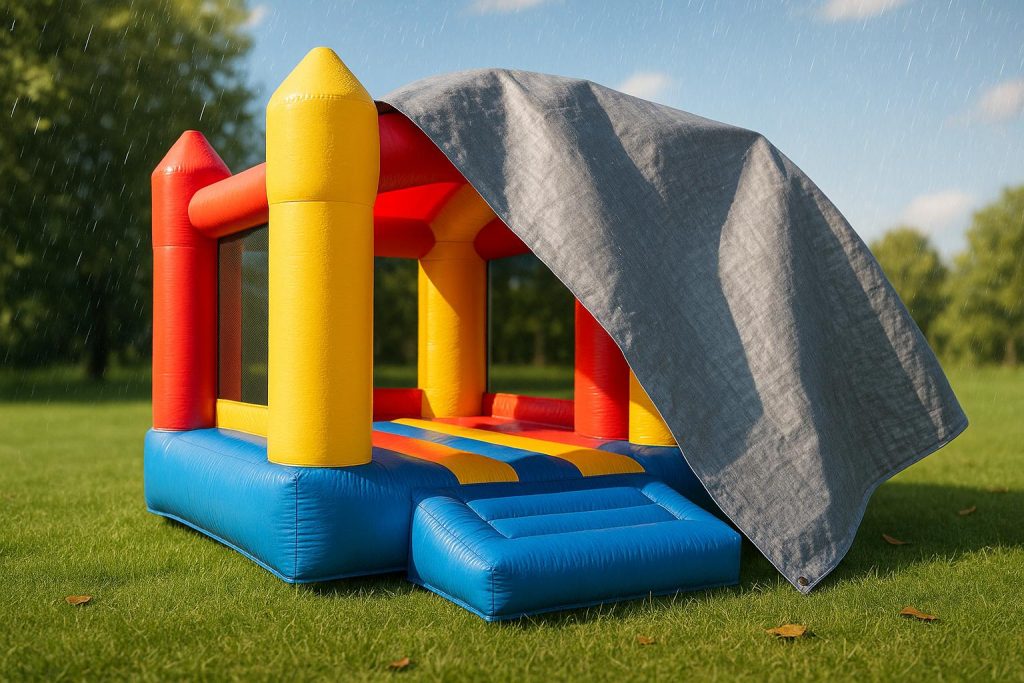
Bounce houses face constant wear from weather, UV rays, and debris, which can lead to damage like fading, punctures, and mold. Protective covers are a simple way to extend their lifespan, reduce maintenance costs, and keep them in good condition. Whether you’re a rental business or a homeowner, choosing the right cover depends on factors like material, weather resistance, and size.
Here’s a quick breakdown of the top materials:
- PVC Tarpaulin: The most durable option, lasting 5–10 years. Fully waterproof and UV-resistant, ideal for heavy-duty use. Costs $0.47–$1.86 per square foot.
- Oxford Fabric: Lightweight and affordable, lasting 2–5 years. Best for temporary or custom covers but may require extra waterproofing. Costs $0.19–$0.93 per square foot.
- Polyethylene Tarps: Budget-friendly with good water resistance. Great for ground protection but less durable in heavy rain. Costs $0.19–$0.74 per square foot.
Quick Tip: Measure your bounce house and choose a cover 2–3 feet larger on all sides for full protection.
A well-chosen cover not only protects your investment but also keeps your bounce house safe and ready for use. Read on for details on selecting and maintaining the best cover for your needs.
How to Choose the Right Protective Cover
Selecting the right protective cover for your bounce house involves considering material, weather resistance, and size. These factors play a key role in keeping your equipment in good shape and reducing long-term costs.
Material Options
The material of your protective cover is crucial, as each option offers specific benefits depending on your budget and needs.
PVC tarpaulin is the go-to choice for commercial use and harsh weather conditions. Priced between $5 and $20 per square meter (around $0.47–$1.86 per square foot), this material boasts a lifespan of 5–10 years. Its high tensile strength makes it capable of withstanding strong winds and heavy loads, making it perfect for rental businesses that prioritize durability and reliability.
Oxford fabric is a more affordable option, costing $2–$10 per square meter (approximately $0.19–$0.93 per square foot). It typically lasts 2–5 years and is lightweight, featuring a polyurethane coating. This material is ideal for temporary events or custom-branded covers. However, it may require additional waterproofing treatments to ensure complete protection.
Polyethylene tarps strike a balance between cost and performance. These tarps are well-suited for a variety of weather conditions and general ground protection. They offer solid water resistance and are especially useful in hot climates, as mesh varieties can help reduce heat buildup under the bounce house. However, they are less effective in heavy rain.
| Material | Cost (approx.) | Lifespan | Best Use Case |
|---|---|---|---|
| PVC Tarpaulin | $5–$20 per m² (≈ $0.47–$1.86 per ft²) | 5–10 years | Extreme weather, heavy-duty use |
| Oxford Fabric | $2–$10 per m² (≈ $0.19–$0.93 per ft²) | 2–5 years | Lightweight, custom designs |
| Polyethylene | $2–$8 per m² (≈ $0.19–$0.74 per ft²) | Moderate | General use, ground protection |
Weather Protection Features
When choosing a cover, consider its ability to handle your local climate conditions.
PVC tarpaulin is fully waterproof, making it an excellent choice for areas with heavy rain or snow. Oxford fabric and polyethylene tarps, on the other hand, offer water resistance, though Oxford fabric may need extra treatment for complete waterproofing.
UV resistance is another important factor, especially for bounce houses exposed to direct sunlight. PVC tarpaulin provides superior UV protection, while Oxford fabric also offers UV resistance but may not last as long under prolonged sun exposure. UV-treated covers can help preserve the cover’s appearance and protect the bounce house from structural damage caused by sun exposure.
The thickness and tensile strength of the material also matter. PVC tarpaulin, with its higher tensile strength, is better equipped to handle high winds and extreme weather, reducing maintenance costs and preventing damage to your equipment.
Size and Installation
Getting the right size and ensuring proper installation are key to effective protection.
Measure your bounce house and select a cover that extends 2–3 feet beyond each side. This extra coverage helps shield the inflatable from debris, moisture, and wear in high-traffic areas.
Look for covers with reinforced edges and grommets for secure anchoring. Commercial-grade covers often feature thicker materials and reinforced edges, designed to handle frequent setup and takedown without compromising performance. A non-slip, textured surface can also improve safety by providing better traction in damp conditions.
For businesses managing multiple bounce houses of different sizes, opting for slightly larger covers can offer flexibility and ensure comprehensive protection across all equipment. Next, we’ll explore some top-rated protective cover options that meet these standards.
Best Cover Materials
Selecting the right material for your bounce house cover is crucial for ensuring proper protection and durability. Each option has its strengths, catering to different needs, budgets, and usage scenarios. Below, we break down the key features, benefits, and limitations of popular materials used for bounce house covers.
PVC Tarpaulin
PVC tarpaulin stands out for its excellent waterproofing, UV protection, and resistance to tears. It completely blocks moisture, safeguarding your bounce house from water damage and mold buildup. Additionally, its UV-resistant coating helps prevent fading and brittleness from prolonged sun exposure.
One of PVC’s most impressive features is its tear resistance of 6.24 N/mm, making it highly durable against punctures and rough handling. This makes it a top choice for commercial-grade use, particularly for rental businesses that require long-lasting, dependable protection.
On the downside, PVC tarpaulin is heavier than other materials, which can make transporting and setting it up more challenging. However, its durability and extended lifespan often outweigh these drawbacks, especially for frequent users who prioritize longevity and reduced maintenance costs.
Oxford Fabric
Oxford fabric is a lightweight, versatile material that’s easy to handle, making it ideal for quick setups and takedowns. It’s particularly appealing for solo operators or smaller events, as it can be customized to fit specific dimensions or display branding and colors for a polished, professional look.
While its water resistance is moderate, it provides adequate protection for most weather conditions. However, it doesn’t match the complete waterproofing capabilities of PVC and often requires additional coatings, which can degrade over time with sun exposure.
Oxford fabric’s shorter lifespan means it may need replacing more frequently, which could offset its lower initial cost. It’s best suited for indoor events, short-term outdoor use, or situations where portability and easy handling are more important than maximum durability.
Polyethylene Tarps
Polyethylene tarps offer an affordable and straightforward solution for protecting bounce houses. They provide good water resistance, making them suitable for various weather conditions, though they’re less effective during heavy rain compared to PVC. These tarps are also excellent for ground protection, shielding bounce houses from abrasive surfaces and reducing heat transfer from hot ground.
One of polyethylene’s advantages is its ease of installation, requiring minimal effort to set up and secure. It also offers some cushioning, helping to prevent punctures and abrasions.
However, polyethylene tarps have a shorter lifespan and lack the advanced UV protection found in premium materials, making them more prone to sun-related wear over time. Despite these limitations, they remain a popular choice for budget-conscious buyers and party rental businesses aiming to protect equipment between uses.
The table below provides a quick comparison of the materials based on key factors:
| Material | Tear Resistance | Waterproofing | Weight | Price Range | Best For |
|---|---|---|---|---|---|
| PVC Tarpaulin | 6.24 N/mm | Excellent | Heavy | $100–$250 | Commercial use, harsh weather |
| Oxford Fabric | Moderate | Moderate | Light | $40–$90 | Custom designs, portability |
| Polyethylene | Good | Good | Light/Medium | $60–$80 | Ground protection, budget-conscious |
Top Protective Cover Products
Let’s dive into some top-tier protective covers that showcase the benefits of PVC, Oxford, and polyethylene materials. These products are designed to protect your bounce house investment while addressing durability, weather resistance, and practicality.
Commercial-Grade PVC Covers
If you’re looking for the ultimate protection, commercial-grade PVC covers are the way to go. These covers are especially popular among rental businesses that need their equipment to handle constant use and unpredictable weather. While the price ranges from $5–$20 per square meter (a 20’x20′ cover typically costs $200–$400), their 5–10 year lifespan makes them a worthwhile long-term investment when properly maintained.
What makes these covers so reliable? For starters, they boast tear resistance of 6.24 N/mm, meaning they can withstand punctures and rough handling with ease. Reinforced seams prevent stress-related tearing, and sturdy grommets ensure a secure tie-down. Plus, they come in a variety of sizes to fit different bounce house models.
On top of that, these covers are completely waterproof and offer strong UV resistance, keeping your bounce house dry and safe from sun damage. This is particularly important for businesses in areas prone to heavy rain or intense sunlight. Companies like Bouncy Rentals USA have found that using these covers not only extends the life of their equipment but also reduces maintenance costs significantly.
Heavy-Duty Ground Tarps
Protecting the base of your bounce house is just as critical as covering the top, and heavy-duty ground tarps are up to the task. These tarps provide a barrier against moisture, abrasions, and uneven terrain. With a 12 mil thickness and 14×14 mesh weave, they strike a balance between durability and manageable weight.
Priced around $40–$80 for a 20’x20′ size, ground tarps are an affordable way to add years to your bounce house’s lifespan. Look for features like heat-sealed seams and rust-resistant grommets spaced every 3 feet, which ensure secure installation and long-term reliability.
One standout feature of premium tarps is their arctic flexibility, which prevents cracking in cold weather, making them suitable for year-round use. The Moose Supply Heavy Duty Poly Tarp is a favorite among users for its reinforced corners and mildew resistance, earning praise for its durability and adaptability in various setups.
For the best results, choose a tarp that extends 2–3 feet beyond the bounce house base on all sides. This extra coverage helps keep high-traffic areas like entrances and exits clean and protected.
Custom-Fit Oxford Covers
Oxford fabric covers bring a unique combination of lightweight portability and branding opportunities, making them a great choice for businesses focused on visibility. At $2–$10 per square meter, these covers are the most budget-friendly option for custom protection.
Their biggest advantage? Customization. Many rental companies use Oxford covers to display their logos and branding, creating a professional look at events. Their lightweight design makes them easy to handle, which is perfect for solo operators or setups requiring frequent adjustments.
However, there are trade-offs. These covers typically last 2–5 years, considerably less than PVC options. They offer moderate water resistance but may need additional waterproofing for heavy rain. Despite these limitations, their branding potential and ease of use make them ideal for temporary protection or indoor storage.
For businesses that prioritize marketing impact over extreme durability, Oxford covers strike a good balance between practicality and presentation.
| Cover Type | Price Range | Lifespan | Best For | Key Features |
|---|---|---|---|---|
| Commercial PVC | $200–$400 (20’x20′) | 5–10 years | Rental businesses, harsh weather | Full waterproofing, reinforced seams, UV resistance |
| Ground Tarps | $40–$80 (20’x20′) | Varies | Base protection, all setups | 12 mil thickness, arctic flexibility, mildew resistance |
| Custom Oxford | $80–$400 (20’x20′) | 2–5 years | Branding, temporary use | Lightweight, customizable, moderate water resistance |
These options provide a range of solutions tailored to different needs, whether you’re focused on durability, branding, or versatility. Next, we’ll explore how to maintain these covers to maximize their lifespan.
Cover Maintenance and Usage Tips
Taking care of your bounce house covers is just as important as choosing the right material. Whether you’ve gone with heavy-duty PVC or a more budget-friendly Oxford fabric, proper maintenance can significantly extend the life of your covers and keep your equipment in top shape all year.
Measuring and Fitting
Getting the right fit starts with accurate measurements. Measure the base footprint of your bounce house while it’s deflated and lying flat on the ground, not just the inflated dimensions. This ensures the cover will shield the entire surface and prevent dirt or debris from sneaking underneath.
For the best protection, pick a cover that extends 2-3 feet beyond the bounce house’s edges, especially around entrances and exits where foot traffic is heavy. For instance, a 20′ x 20′ bounce house would need a cover measuring at least 24′ x 24′ to ensure proper overlap.
Don’t forget to account for features like entrance ramps, anchor points, or ground stakes that stick out from the main structure. Taking these into consideration when measuring can save you from the headache of realizing your cover is too small when you need it most.
Once you’ve got the right size, maintaining it through proper cleaning and storage will help keep it working effectively.
Cleaning and Storage
Different materials require different cleaning approaches. Polyethylene and PVC tarps can handle tougher cleaning methods. Use mild soap and water to scrub away dirt, then let them air-dry completely before storing to avoid mold or mildew. These materials are durable enough to withstand a bit of scrubbing when needed.
With Oxford fabric covers, you’ll need to be more careful. Clean them gently and ensure they dry thoroughly in a well-ventilated space. Harsh cleaning can damage the fabric or its waterproof coating, so go easy on them.
Before putting your cover away, inspect it for debris and make sure it’s completely dry. Even a little trapped moisture can lead to mold or mildew problems over time. Store your covers in a cool, dry place out of direct sunlight to prevent UV damage and material breakdown. If you’re dealing with heavier commercial-grade tarps – some weighing up to 18 pounds for a 20′ x 20′ size – consider using hooks or racks to keep them organized and reduce wear from unnecessary handling.
When storing, fold or roll the covers neatly to avoid creases that could weaken the seams. A climate-controlled space like a garage or shed is ideal for long-term storage, as it protects against outdoor elements.
Regular Inspections
Routine inspections are key to catching wear and tear before it becomes a bigger issue. Pay close attention to seams and heat-sealed edges, as they’re often the first areas to show signs of stress or failure.
Check the grommets – those metal rings used for anchoring – for rust, corrosion, or other damage that might weaken their hold. Rust-resistant grommets, spaced about every 3 feet, should be clean and functional to ensure the cover stays securely in place.
Inspect the surface for tears, punctures, or abrasions, especially around high-stress areas like corners and reinforced hems. For polyethylene tarps, make sure the 14 x 14 weave structure is intact and hasn’t started to break down.
Another important test is water resistance. If water stops beading on the surface and starts soaking in, it’s a sign that the protective coating has worn off, and the cover may need replacing.
Environmental conditions also play a role in how often you should inspect your covers. High humidity, frequent rain, or strong sun exposure can speed up wear and tear, while coastal areas may require extra rinsing to remove salt that can corrode grommets and weaken the material.
If you spot irreparable damage – like large tears, persistent water leaks, or seams that can’t be resealed – it’s time to replace the cover. Oxford fabric covers typically last 2-5 years, while PVC tarpaulin covers can last 5-10 years. If your cover is reaching the end of its lifespan and showing multiple signs of wear, replacing it is usually more cost-effective than trying to patch it up.
About Bouncy Rentals USA
At Bouncy Rentals USA, maintaining rental equipment isn’t just about saving money – it’s about ensuring safe and dependable fun for every event. The company has earned its reputation by keeping bounce houses and inflatables in excellent condition through diligent upkeep and the smart use of protective covers. This dedication is evident in every step of their maintenance process.
The team relies heavily on commercial-grade PVC tarpaulin and polyethylene tarps because of their durability, water resistance, and UV protection. PVC tarpaulin is particularly effective in handling extreme weather, while polyethylene tarps perform well in colder conditions, where materials are prone to becoming brittle. To ensure a secure fit, all covers are carefully sized and feature reinforced edges and rust-resistant grommets, making them ideal for storage and transportation.
Beyond these covers, Bouncy Rentals USA also uses ground tarps to protect inflatables from abrasive surfaces during setup. For windy days, they add sandbag or water bag covers to keep everything stable. For instance, after a rainy weekend event, their water-resistant tarps helped prevent moisture from collecting under stored bounce houses, reducing the risk of mold and ensuring the equipment was ready for the next rental without delays.
Routine inspections play a key role in upholding the company’s high standards. Every piece of equipment is thoroughly sanitized, fully insured, and delivered on time. By investing in top-tier protective covers and sticking to strict maintenance routines, Bouncy Rentals USA ensures customers receive clean, safe rentals for all kinds of events – whether it’s a child’s birthday party, a school carnival, a neighborhood block party, or even an adult gathering.
This attention to detail doesn’t stop with bounce houses. Inflatable obstacle courses, water slides, cotton candy machines, popcorn machines, and dunk tanks all receive the same level of care. It’s this thoughtful approach to equipment maintenance that sets Bouncy Rentals USA apart, delivering a seamless and professional experience for every customer.
Conclusion
Picking the right protective cover is key to keeping your equipment safe and ensuring it lasts longer. The material you choose plays a big role in how well it protects and how much value it delivers over time.
Let’s break it down: PVC tarpaulin stands out as a top-tier option. It’s fully waterproof, incredibly durable, and lasts 5–10 years. Though it costs around $0.47–$1.86 per square foot, it can save you money in the long run by cutting down on replacement and maintenance expenses.
If you’re looking for something lighter and easier on the wallet, Oxford fabric is a great alternative. It’s priced at about $0.19–$0.93 per square foot and offers a lifespan of 2–5 years. For ground protection and mold resistance, polyethylene tarps are another strong contender.
To get the most out of your investment, choose covers that match your specific needs. Look for features like reinforced corners and rust-resistant grommets to handle tough conditions and repeated use.
FAQs
What should I look for when choosing a protective cover for a bounce house?
When choosing a cover to protect your bounce house, it’s important to focus on durability, weather resistance, and UV protection. A well-made cover can shield your inflatable from intense sunlight, rain, and debris, helping it last longer and stay in top shape.
Opt for covers made with waterproof materials to guard against moisture damage and UV-resistant fabrics to prevent fading or weakening caused by prolonged sun exposure. Make sure the cover fits snugly over your bounce house and is easy to secure, so it stays effective in protecting your investment.
If you’re renting a bounce house, companies like Bouncy Rentals USA typically provide well-maintained equipment, allowing you to enjoy your event without worry. However, if you own a bounce house, investing in a dependable cover is a smart move to ensure it stays in great condition over time.
What are the differences between PVC tarpaulin, Oxford fabric, and polyethylene tarps for protecting bounce houses?
When picking a protective cover for your bounce house, the material you choose can make a huge difference in how well it holds up against wear and weather. PVC tarpaulin stands out as a top option – it’s tough, waterproof, and shields against UV rays, making it ideal for keeping your bounce house safe outdoors for extended periods. If you’re after something lighter, Oxford fabric might work, as it’s often treated to resist water. However, it’s not the best choice for handling harsh weather. On the more affordable side, polyethylene tarps offer solid protection from rain and sun and are waterproof, but they’re more prone to tearing compared to PVC tarpaulin.
To make the right choice, think about your local weather and how often you’ll be using the cover. Need bounce house rentals or accessories? Check out Bouncy Rentals USA – they’ve got everything to keep your party going strong!
How can I maintain bounce house covers to make them last longer and provide reliable protection?
To keep your bounce house covers in great shape and ensure they continue to protect effectively, a little routine care goes a long way. Start with regular cleaning – use mild soap, water, and a soft brush to gently scrub away dirt, stains, and debris. Once cleaned, make sure the cover is completely air-dried before storing it. This helps prevent mold and mildew from forming.
When you’re not using the cover, store it in a cool, dry spot, away from direct sunlight. Prolonged exposure to UV rays can weaken the material and cause it to break down over time. It’s also a good idea to check the cover now and then for any signs of wear or small tears. If you spot damage, repair it quickly to keep the cover working as it should.
With these simple steps, you can help your bounce house covers stay durable and reliable for years.
