
If you own or rent out bounce houses, keeping them in top condition is essential for safety, durability, and customer satisfaction. Poor maintenance can lead to costly repairs, replacements, or even safety hazards. Here’s what you need to know:
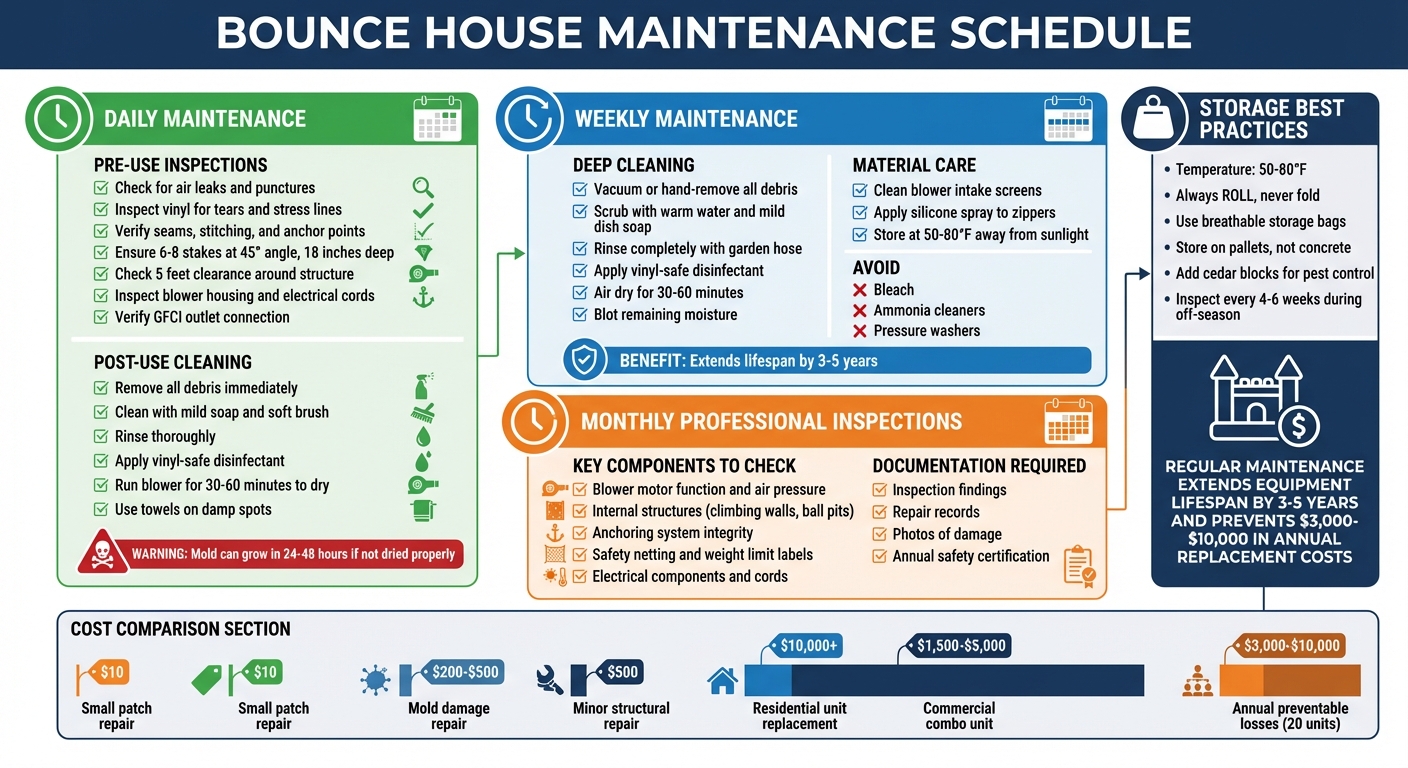
- Daily Tasks: Inspect for air leaks, punctures, or loose seams before and after use. Clean surfaces with mild soap and ensure the unit is completely dry to avoid mold.
- Weekly Deep Cleaning: Remove debris, scrub with vinyl-safe products, and disinfect. Avoid harsh chemicals like bleach or pressure washers.
- Monthly Professional Inspections: Check blowers, seams, anchors, and safety labels for hidden issues. Document findings for warranty and liability purposes.
- Proper Storage: Always store in a cool, dry place after thoroughly drying. Roll instead of folding to avoid creases, and use pest deterrents like cedar blocks.
Skipping these steps can lead to mold growth in just 24–48 hours, damage that costs $200–$500 to fix, or even full replacements ranging from $1,500 to $10,000+. Regular care extends the lifespan of your equipment by 3–5 years and ensures a safe, enjoyable experience for users.
Start with a maintenance log to track inspections, cleaning, and repairs. This small effort saves money and builds trust with customers.
Bounce House Maintenance Schedule: Daily, Weekly, and Monthly Tasks
Daily Maintenance Tasks
Keeping up with daily maintenance isn’t just about preserving your equipment – it’s about protecting your investment and ensuring customer safety. A quick inspection during setup and takedown can help you avoid costly repairs and reduce the risk of accidents.
Pre-Use Inspections
Before anyone hops in, take a walk around the fully inflated unit and listen closely for air leaks. Make sure the bounce house is on a flat, level surface, free from debris or sharp objects. There should be at least 5 feet of clearance around the entire structure, with no overhead hazards like tree branches or power lines.
Look over the vinyl for any punctures, tears, or white stress lines around folds – these are early signs of material fatigue and potential leaks. Pay attention to seams, stitching, and anchor points like D-rings, straps, and stakes. Watch for fraying, stretching, or signs of metal wear. If you’re using ground stakes, ensure you have 6–8 stakes driven at a 45-degree angle, at least 18 inches deep. For setups on hard surfaces, double-check that sandbags or weights are securely in place.
Inspect the blower housing for cracks and clear away any grass or debris from the intake screens. Check electrical cords for wear and tear, and make sure the plugs are in good condition. Always connect to a grounded power source or GFCI outlet. As Titan Inflatables emphasizes:
Safety is the cornerstone of a successful inflatable rental business.
Once the day’s fun is over, it’s time to clean and inspect the unit again.
Post-Use Cleaning and Checks
After use, follow steps for cleaning bounce houses immediately to prevent damage. Remove all debris, including grass, dirt, and food residue, as organic material can weaken vinyl over time. Use warm water mixed with mild dish soap (like Dawn) and a soft-bristled brush or microfiber cloth to scrub the surface. Rinse thoroughly to remove all soap, as leftover residue can attract dirt and harm the material. Follow up with a vinyl-safe disinfectant spray.
Drying is critical. Run the blower for 30–60 minutes after cleaning to circulate air through the seams and interior. Use clean towels to absorb any remaining water in slide channels, corners, and other hard-to-dry areas. If you find damp spots, keep the blower running until everything is completely dry. As Reservety warns:
Deflating a wet bounce house is the single most common cause of mold.
Mold can start growing in as little as 24–48 hours.
During your post-use inspection, mark any tears or loose stitching with painter’s tape so you can easily find them for repairs later. Also, clean the blower intake vents and apply a silicone spray to zippers on blower tubes and access panels to keep them functioning smoothly.
Weekly Maintenance Procedures
Set aside time each week for a more thorough cleaning and inspection routine to keep your bounce house in top condition. This deeper maintenance helps you spot potential problems early, avoiding expensive repairs down the line. It builds on your daily care efforts, ensuring that no debris or residue can shorten the unit’s lifespan.
Deep Cleaning
Start by removing any debris from inside the bounce house, either by hand or with a vacuum. Use warm water mixed with mild dish soap (like Dawn) and scrub all vinyl surfaces with a soft-bristle brush or microfiber cloth. Pay close attention to areas with tough stains caused by grass, markers, or food coloring. For particularly stubborn spots, use a vinyl-safe cleaning product.
Rinse the entire unit thoroughly with a garden hose until no soap remains. This step is crucial because leftover soap can attract dirt and degrade the vinyl over time. Once rinsed, spray a vinyl-safe disinfectant over all surfaces, including hard-to-reach corners, and let it sit for the recommended time. Inflate the bounce house and allow it to air dry for 30–60 minutes. Use towels to blot any lingering moisture, and keep the blower running until the unit is completely dry.
Avoid using bleach, ammonia-based cleaners, or pressure washers. These can damage the vinyl, weaken seams, and strip colors. If you must use bleach for heavy disinfection, dilute it with water at a 10:1 ratio and rinse thoroughly afterward. Always clean and fold the bounce house on a clean tarp to prevent dirt and abrasion – never directly on concrete or asphalt.
Lubrication and Material Care
After cleaning, focus on maintaining the mechanical components and materials. Wipe down the blower housing and clean the intake screens to reduce the risk of motor overheating. Store the bounce house in a cool, dry environment between 50–80°F, away from direct sunlight, to prevent UV damage and material wear.
With proper care, you can extend the lifespan of your bounce house by 3 to 5 years. Considering that commercial units range from $1,500 to $5,000 – and combo units can cost over $10,000 – this weekly maintenance is a small effort to protect your investment. Regular deep cleaning and upkeep not only save you money but also ensure a safe and enjoyable experience for every event.
At Bouncy Rentals USA, we follow these maintenance practices to keep our bounce houses safe, durable, and event-ready.
Monthly Professional Inspections
In addition to your daily and weekly maintenance, monthly professional inspections are crucial for identifying hidden issues. While routine checks handle surface-level concerns, professional inspections dive deeper, addressing potential problems that might go unnoticed. As Hero Kiddo Inflatables explains, "Experts spot issues you might miss during regular cleaning". These inspections help prevent minor wear from escalating into major hazards.
Here’s a checklist to guide a detailed monthly review of key components.
Inspection Checklist
When conducting a monthly inspection, prioritize the following areas:
- Blower Motor: Ensure the blower motor is functioning correctly and maintaining proper air pressure. Hero Kiddo Inflatables emphasizes, "A struggling blower can’t properly inflate your inflatable castle, creating safety risks". Professionals should also clean the intake screens and check for any signs of motor strain.
- Internal Structures: Inspect climbing walls, ball pit areas, and interactive game elements – sections that are hard to monitor during daily use. Pay close attention to double-stitched seams and bonding areas, especially in high-stress zones like corners and entrances, looking for loose threads, gaps, or thinning material.
- Anchoring System: Test the anchoring system to ensure it can handle environmental stresses effectively. This is a critical step when setting up a safety perimeter for your unit.
- Safety Netting and Labels: Verify that safety netting is securely attached and free of sagging. Also, check that weight limit tags and safety labels are intact and clearly visible.
- Electrical Components: Inspect cords, plugs, and any integrated features like lights or basketball hoops for wear or damage. For inflatables exposed to direct sunlight, monitor surface temperatures to prevent burns.
Professional Servicing Recommendations
For serious structural concerns, contact the manufacturer or an authorized service center immediately. It’s worth noting that many manufacturers require repairs to be handled by authorized technicians to maintain warranty coverage. Always check your purchase agreement before seeking third-party assistance.
Documenting inspections and repairs is essential. It not only protects you from liability but also helps track the equipment’s condition over time. Additionally, schedule an annual safety certification renewal to ensure your unit complies with current safety standards.
If you encounter severe issues like mold damage, professional cleaning and sanitizing services typically range from $200 to $500 per unit. While this may seem like a significant expense, it’s far less than the cost of replacing a unit, which can range from $1,500 to over $10,000.
Finally, adjust your inspection schedule if the inflatable has been exposed to extreme weather, such as heavy storms or intense heat, or if it has been used beyond its rated weight capacity. By incorporating these inspections into your maintenance routine, you can extend the life of your equipment and ensure continued safety.
Storage and Repair Best Practices
Taking care of your bounce house doesn’t stop at daily and weekly maintenance. Proper storage plays a huge role in protecting your investment, potentially extending its lifespan by 3–5 years. As Reservety points out:
Most inflatable damage does not happen during use. It happens during storage.
Proper Storage Techniques
First things first: make sure the bounce house is completely dry before storing it. Run the blower for 30–60 minutes, and use towels to blot seams, creases, and slide channels. Remember, mold can start forming in as little as 24–48 hours.
When it’s time to pack up, always roll – don’t fold. Folding along the same lines repeatedly can create sharp creases, weakening the vinyl and leading to leaks over time. Lay a tarp on the ground before deflating to protect the material from scratches or tears. Then, roll the unit tightly toward the blower tube to push out trapped air. For larger inflatables (over 15×15 feet), a vacuum deflator can make the process quicker and more efficient.
Where you store your bounce house matters just as much as how you pack it. Keep storage areas between 50–80°F, as extreme temperatures can damage the vinyl – cold makes it brittle, while heat softens it and weakens adhesives. Avoid placing the unit directly on concrete floors, which can trap moisture. Instead, use wooden or plastic pallets or heavy-duty tarps as a protective layer. Opt for breathable canvas or mesh storage bags instead of airtight plastic ones, which can trap moisture and lead to mold. To keep pests like mice at bay, place cedar blocks or peppermint oil sachets in the storage area. Don’t forget to inspect your bounce house every 4–6 weeks during the off-season.
Store accessories like metal stakes, sandbags, and blowers in separate, labeled bags to avoid accidental punctures. For zippers and blower tubes, a quick spray of silicone lubricant can prevent them from sticking or tearing the fabric.
Once storage is squared away, minor damages should be tackled right away to keep your bounce house in top shape.
Basic Repair Tips
Catching and fixing small issues early can save you from expensive repairs later. For example, a small puncture might cost just $10 to patch, but ignoring it could lead to a problem requiring $500 in repairs.
Start by marking the damaged area and cleaning it with rubbing alcohol to prepare the surface for a patch. Use a commercial vinyl patch kit made specifically for inflatables. These kits come with vinyl patches and strong adhesive. Apply the adhesive to the patch, press it firmly over the hole, and smooth out any air bubbles. Be patient – let the patch cure for a full 24 hours before inflating the bounce house or putting it back into storage.
For more serious structural problems, it’s best to contact the manufacturer or an authorized service center. Many manufacturers require authorized technicians to handle repairs to keep the warranty intact, so double-check your purchase agreement before going to a third party.
Creating a Maintenance Log and Checklist
Once repairs and storage are handled, consistent documentation becomes the next line of defense for protecting your equipment. A well-maintained log can stop a small $10 fix from turning into a costly $500 repair later on. Keeping detailed records not only ensures accountability but also helps identify wear-and-tear trends and provides critical evidence for warranty or insurance claims. For example, a rental business managing 20 units without proper documentation could face $3,000–$10,000 annually in preventable replacement expenses.
Designing the Maintenance Log
A comprehensive maintenance log captures every detail, from unit-specific information to repair records. Start with unit identification – include the name, ID number, dimensions, purchase date, and manufacturer. Add a section for usage tracking, noting rental dates, customer names, and the total number of rentals to monitor each unit’s lifespan. Record inspection findings such as seam conditions, anchor point integrity, and blower performance, along with inspection dates and initials of the inspector. Don’t overlook cleaning records, which should include the cleaning date, method used, and drying time. For repair history, log the date, damage description, materials used, and the outcome of the repair. Finally, track storage details, including storage location, pest or moisture check dates, and desiccant replacements.
| Log Category | Essential Data Points to Track |
|---|---|
| Unit Profile | Unit Name, ID, Dimensions, Purchase Date, Manufacturer |
| Usage Log | Rental Date, Customer Name, Total Rental Count, Setup Location |
| Inspection | Date, Inspector Initials, Seam Condition, Anchor Point Integrity, Blower Function |
| Cleaning | Date Cleaned, method used (top cleaning agents like soap or disinfectant), Drying Time |
| Repairs | Date of Repair, Description of Damage, Materials Used (Patch/Adhesive), Outcome |
| Storage | Storage Date, Location, Pest/Moisture Check Date, Desiccant Replacement |
This log acts as a vital tool, working alongside regular maintenance to help identify and prevent potential breakdowns before they happen.
Using the Checklist Effectively
To streamline processes, attach a laminated checklist to each unit’s storage bag. This ensures field staff always have it on hand during setup and teardown. Digital rental management software can also simplify the process by setting automated maintenance reminders and flagging units that need attention before their next booking. For added documentation, take photos of damage before and after repairs to create a visual record. Finally, train your team on all inspection points and proper folding techniques to ensure the checklist is consistently and accurately completed.
Conclusion
Keeping a consistent maintenance routine is key to getting the most out of your bounce houses and ensuring they last as long as possible. For example, storing them properly can make a big difference. If you skip drying them out, mold can develop in just 24–48 hours, leading to avoidable damage. Catching small issues early can save you money – what might start as a quick patch job can turn into a pricey repair or even a complete replacement if left unchecked.
Beyond the financial side, regular upkeep also helps maintain safety and strengthens customer trust. Inspections can catch problems like seam tears or loose anchors before they become safety hazards. Plus, clean and well-maintained inflatables show professionalism, reassuring customers that they’re getting high-quality rentals for their events.
To protect both your equipment and your reputation, stick to a solid maintenance plan. For more complex issues like structural repairs, deep cleaning, or annual safety checks, consider professional services like those offered by Bouncy Rentals USA. Their trained technicians can handle specialized repairs, such as blower maintenance or mold removal, and can identify wear and tear that might go unnoticed during routine checks.
Start by keeping a detailed maintenance log and training your team to follow daily, weekly, and monthly care routines. Taking these steps ensures your equipment stays in great shape and ready for rental, while also keeping your customers happy and confident in your service.
FAQs
What cleaning products are safe for bounce house vinyl?
When it comes to cleaning bounce house vinyl, it’s important to use gentle products that won’t harm the material. Mild soap mixed with warm water is a simple and effective choice. You can also go for vinyl-safe cleaners or those specifically made for inflatables. Avoid using harsh chemicals like bleach or abrasive cleaners, as they can cause damage over time.
For a convenient option, Windex® Ammonia-Free Glass Cleaner works well on vinyl surfaces. Always stick to pH-neutral or specially formulated products to keep the vinyl in good condition and extend its lifespan.
How can I tell if a small leak or seam issue needs a pro repair?
To figure out if a small leak or seam issue needs professional attention, start by identifying the problem. Listen for any hissing sounds or look for spots that deflate faster than others. Small punctures or minor tears in seams can usually be handled with a patch kit. However, if the damage is more extensive or you’re not confident in assessing the issue, reaching out to a professional is the safest way to ensure long-term durability and safety.
What should I include in a bounce house maintenance log?
Keeping a bounce house in great condition requires diligent record-keeping. Here’s what your maintenance log should cover:
- Cleaning Records: Track each cleaning session, including the cleaning agents used (like mild soap and warm water) and confirm the bounce house was completely dried before being stored.
- Inspection Notes: Document inspections during setup and takedown, noting any signs of damage, wear, or potential issues.
- Repairs and Maintenance: Record any repairs or maintenance work, including dates and specific details about what was done.
- Storage Conditions: Verify that the bounce house was properly dried and stored in a way that prevents mold growth or other damage.
Keeping comprehensive records helps maintain safety, cleanliness, and extends the lifespan of your bounce house.
