
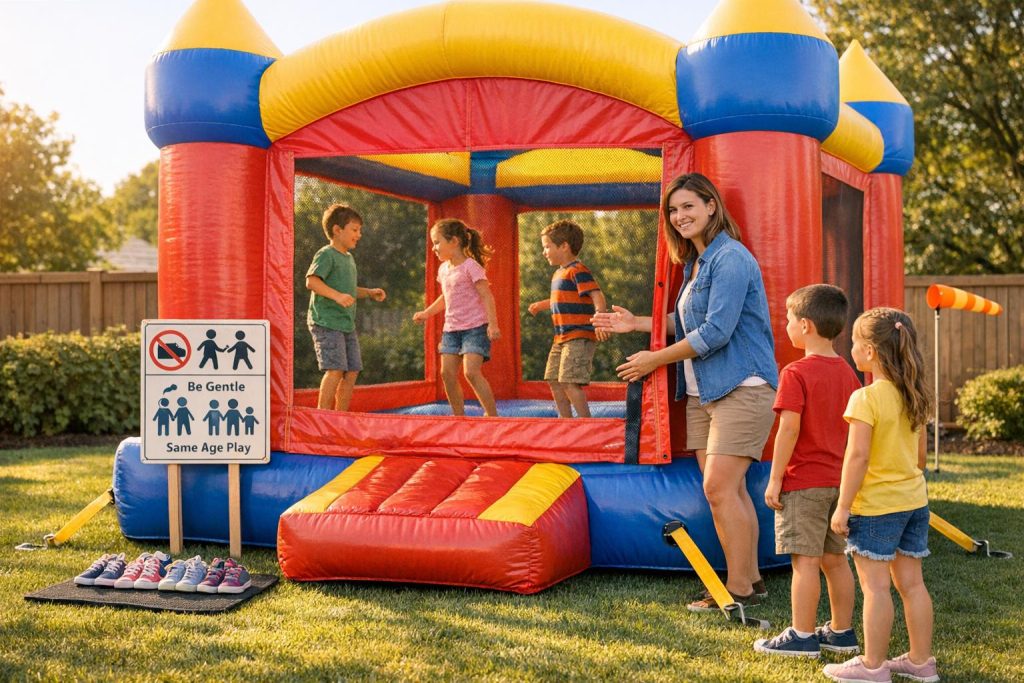
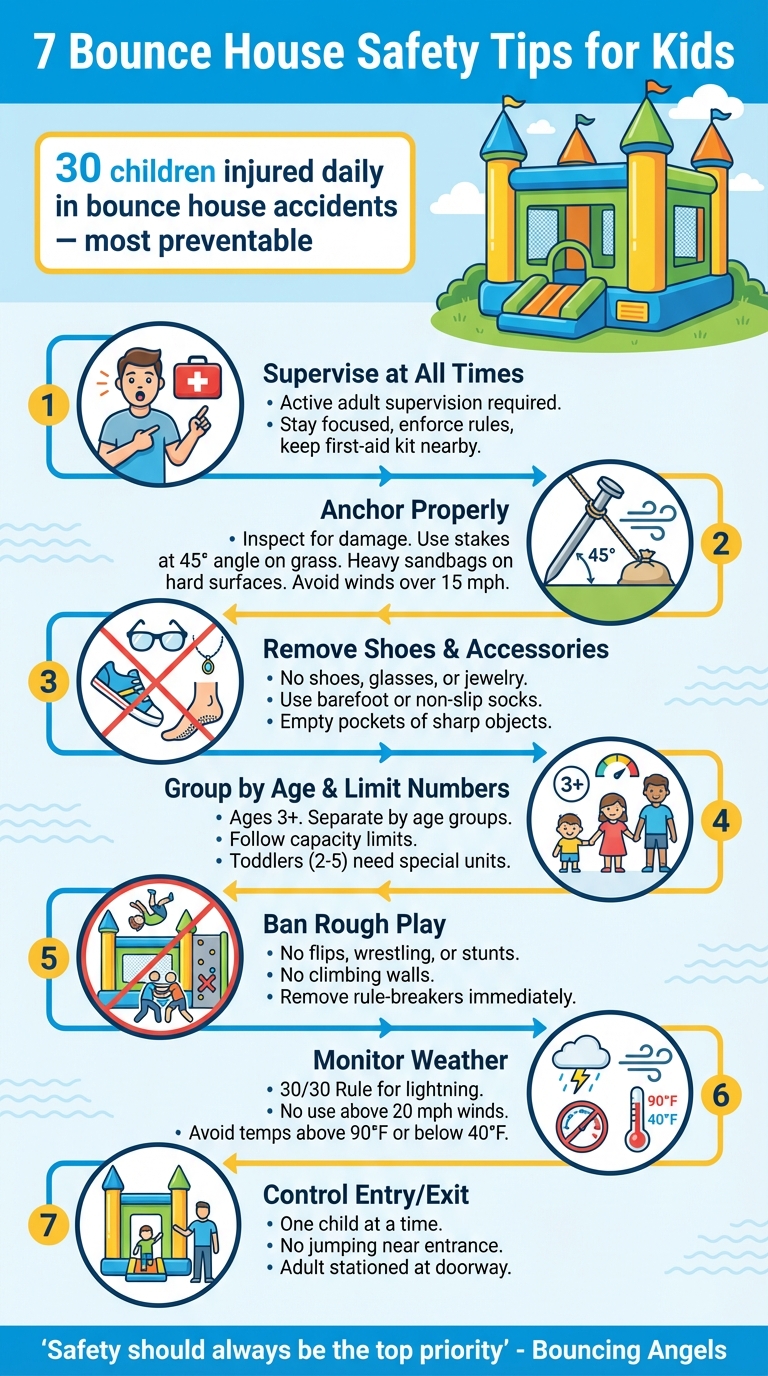
Bounce houses are fun but can pose risks if safety isn’t prioritized. Every day, around 30 children are injured in bounce house-related accidents, with most injuries being preventable. To keep kids safe, follow these 7 essential safety tips:
- Supervise at All Times: An adult should actively monitor play and enforce rules.
- Anchor Properly: Check for damage and secure the bounce house with stakes or weights.
- Remove Shoes and Accessories: Kids should take off shoes, glasses, and jewelry to avoid injuries or damage.
- Group by Age: Separate kids by age and size to reduce collision risks.
- Ban Rough Play: No flips, wrestling, or risky stunts inside the bounce house.
- Monitor Weather: Avoid use in strong winds, rain, or extreme temperatures.
- Control Entry/Exit: Allow one child at a time to enter or exit to prevent falls or collisions.
7 Essential Bounce House Safety Tips for Kids
1. Keep an Adult Watching at All Times
Having an adult supervise at all times is the best way to prevent injuries in a bounce house. Someone needs to be actively watching and ready to step in if needed.
Position yourself where you can see the entire bounce house, including the entrance and exit. This way, you can quickly spot issues like overcrowding, risky behavior (like flips), or a child who looks tired. Bouncing Angels emphasizes the importance of this role: supervisors "should ensure that children follow the rules and guidelines for safe play and intervene if any unsafe behavior is observed".
Stay focused – put your phone away and avoid distractions like long conversations. If you need to leave, hand over responsibility to another adult immediately.
Before kids start playing, go over the safety rules. These should include limits on how many can play at once, no roughhousing, and taking turns. Keep a first-aid kit nearby and know how to deflate the bounce house quickly if bad weather rolls in.
Speaking of weather, keep an eye on it. If things take a turn – like strong winds, rain, or lightning – get all the kids out and deflate the bounce house right away. Staying alert not only helps you prevent accidents but also ensures you’re ready to handle unexpected hazards.
Once supervision is covered, the next step is making sure the bounce house is anchored properly.
2. Check and Anchor the Bounce House Properly
Once an adult is actively supervising, the next important step is making sure the bounce house is safe and secure.
Start by carefully inspecting the bounce house for any signs of damage. Look for rips, holes, or worn-out areas in the inflatable material, as these can compromise its stability. Pay special attention to the seams, as they hold the structure together and can weaken over time. Check the netting and walls for small tears that could snag fingers or clothing, and examine all anchoring points to ensure they’re intact and not frayed. As Bouncing Angels highlights:
Regularly inspect and maintain your inflatable bounce houses. Check for wear and tear, clean them as needed, and repair any damage promptly.
Once the inspection is complete, securely anchor the bounce house. On grassy areas, use stakes driven into the ground at a 45-degree angle. For hard surfaces, heavy sandbags work well to keep the structure stable. This step is especially crucial in windy conditions – wind speeds over 15 mph can make a bounce house unsafe. Check the anchors periodically during the event, as they can loosen due to jumping or changes in the ground. Make sure the blower remains securely attached to the air tube and that the air supply is unobstructed. Always set up on flat, firm ground, as uneven or sloped surfaces can increase the risk of tipping. If you spot any damage, fix it immediately using materials recommended by the manufacturer.
At Bouncy Rentals USA, we make safety a top priority by thoroughly inspecting and anchoring our bounce houses and ensuring they’re set up on level ground.
Once the bounce house is properly anchored, you can shift your focus to ensuring safe play attire and behavior.
3. Take Off Shoes, Glasses, and Jewelry
Before stepping into the inflatable, make it a rule for kids to remove their shoes, glasses, and jewelry. This simple step not only protects the children but also helps keep the inflatable in good condition.
Shoes can scratch or even puncture the vinyl surface, and if left on, they could turn into dangerous projectiles. Playing barefoot or wearing non-slip socks is a safer option, offering better grip and reducing the chance of injuries. Glasses, on the other hand, can break upon impact, potentially causing harm. Similarly, jewelry can get caught in the netting, leading to accidents.
To keep things organized, set up a designated shoe-free zone near the entrance. Use clearly labeled bins for shoes, glasses, and jewelry. It’s a good idea to have an adult stationed there to ensure all kids follow the rule before entering. Also, remind children to empty their pockets of sharp objects like keys or pens and to remove items like hair accessories or belts that could pose a risk.
At Bouncy Rentals USA, we prioritize safety and cleanliness. Following these precautions is part of ensuring a secure and enjoyable experience for everyone. Once personal items are safely stored, you can move on to grouping kids by age and keeping the number of participants manageable for added safety.
4. Group Kids by Age and Limit Numbers
Mixing kids of widely different ages in a single bounce house can significantly increase the risk of injuries. When a bigger, older child bumps into or falls on a much smaller one, the difference in size and weight can lead to serious accidents . To keep things safe, group children by similar ages and stick to the bounce house’s capacity limits. This straightforward approach helps reduce injuries and ensures safer playtime.
Most commercial bounce houses are intended for kids aged 3 and older. For younger children, toddler-specific units (designed for ages 2–5) come with lower walls and softer materials, making them ideal for gentler play. On the other hand, inflatables for older kids (ages 11 and up) are built with higher walls and reinforced structures to handle more energetic activity. These features, like wall height and mesh strength, are tailored to the age group for added safety .
"Mixing different age groups in the same inflatable can pose safety risks." – Bouncing Angels
To avoid overcrowding, rotate groups of similar-aged children through the bounce house. Always follow the occupancy limits provided by the manufacturer or rental company, as these limits are based on the unit’s design and size. Just as proper anchoring and clear rules are critical, grouping kids by age adds another layer of protection, with adults keeping a close eye on the age groupings.
At Bouncy Rentals USA, we make these guidelines easy to follow by including clear capacity instructions with every rental. By grouping kids thoughtfully and respecting capacity limits, you can minimize collisions and keep the fun going strong.
5. Set Rules Against Rough Play and Flips
In addition to supervising play and ensuring equipment is safe, it’s crucial to establish firm boundaries for how children interact in a bounce house. Before anyone starts playing, lay down the law: no roughhousing, flips, or stunts. These activities can lead to serious injuries. Awkward landings from flips or excessive rough play can result in sprains, strains, or even broken bones. Smaller kids are especially at risk of being accidentally thrown or knocked over.
Every day in the U.S., emergency rooms treat about 30 children for injuries related to bounce houses. These injuries range from broken bones and sprains to cuts and concussions.
Dr. Gary Smith, Director of the Center for Injury Research and Policy at Nationwide Children’s Hospital, remarked, "I was surprised by the number, especially by the rapid increase in the number of injuries".
"Bouncers should be prohibited from doing flips and purposefully colliding with others." – National Association of Amusement Ride Safety Officials
Be sure to communicate these rules clearly to both the kids and any supervising adults before the fun begins. Prohibit flips, somersaults, climbing on walls or netting, wrestling, and intentional bumping. If unsafe behavior starts, step in immediately. For kids who repeatedly break the rules, remove them from the bounce house until they agree to follow the guidelines.
At Bouncy Rentals USA, we include detailed safety instructions with every rental to make enforcing these rules easier. Enforcing strict rules about risky behavior works hand-in-hand with proper supervision and equipment checks to keep everyone safe.
6. Watch the Weather and Setup Location
Weather can turn a fun day with a bounce house into a risky situation if not monitored closely. High winds pose the greatest danger – watch for signs like swaying trees or the edges of the inflatable lifting. If you notice these, deflate the bounce house immediately.
"Do not operate bounce houses or any inflatable equipment if winds exceed 20 mph." – 3 Monkeys Inflatables
Be mindful of storms, too. Follow the 30/30 Rule: if you hear thunder within 30 seconds of seeing lightning, evacuate the bounce house and turn off the blower. Wait at least 30 minutes after the last thunderclap before resuming use. Rain is another hazard – it makes the vinyl slippery and can damage the blower’s electrical parts. In wet conditions, unplug the blower and cover it with a waterproof tarp until the weather clears.
Temperature is another factor to consider. On hot days above 90°F, the vinyl surface can heat up enough to cause burns, while in temperatures below 40°F, the material may become brittle and lose air pressure, compromising the bounce house’s stability. To check for safety, touch the surface – if it feels too hot for your hand, it’s not safe for kids to play.
Picking the right setup location is just as important as monitoring the weather. Start by choosing flat, stable ground and clearing the area of rocks, sticks, or sharp objects that could damage the bounce house or hurt kids. Avoid placing it near overhead power lines or low-hanging branches. Proper anchoring is critical – use stakes that are 15–18 inches long and 1 inch wide at all six anchor points. If you’re setting up on a hard surface like concrete, use at least 360 lbs of ballast weight at each anchor point.
Bouncy Rentals USA ensures proper setup and anchoring, but it’s always a good idea to double-check conditions both before and during use to keep everyone safe.
7. Use Safe Entry and Exit Methods
To round out your safety plan, managing how kids enter and exit the bounce house is key to keeping them safe as they transition between the play area and the inflatable.
The doorway of a bounce house tends to be a busy spot, making it prone to collisions and falls. To avoid accidents, kids should enter and exit one at a time. This not only prevents bumping into each other on the narrow entry ramp but also helps maintain proper age grouping and occupancy limits.
Another important rule: no jumping near the entrance. Kids often get carried away and start bouncing right at the doorway, which increases the risk of falling out or colliding with someone trying to get in. Make sure this rule is clear before they start playing. Having a responsible adult stationed at the entrance can help manage the flow and enforce these safety guidelines.
It’s also a good idea to have kids wear socks – they provide better grip on the vinyl surface and keep little feet comfortable. Additionally, ensure the area outside the entrance is clear of obstacles to prevent trips or falls. Assign an adult to oversee these transitions and keep things running smoothly.
Beyond preventing falls, controlling entry and exit points allows you to group kids by similar ages and sizes. This reduces the likelihood of injuries caused by uneven play. By staying vigilant about how kids come in and out, you’re reinforcing the safety measures established in earlier steps.
Conclusion
Bounce houses add excitement and energy to kids’ parties, but safety should always come first. By sticking to these seven key tips – ensuring adult supervision, securely anchoring the inflatable, removing shoes and accessories, grouping children by age, enforcing no-roughhousing rules, keeping an eye on the weather, and managing entry and exit – you create a safe space where kids can enjoy themselves without unnecessary risks.
"Safety should always be the top priority, and with the right precautions in place, bounce houses can provide hours of fun while keeping everyone protected." – Bouncing Angels
These guidelines not only help prevent injuries but also encourage responsible play. By consistently applying these precautions, you’re helping kids understand how to have fun while staying safe.
At Bouncy Rentals USA, we prioritize safety in every aspect. Our inflatables are regularly inspected and thoroughly cleaned before every event, so you can focus on celebrating without worry.
When safety is handled, party planning becomes much easier. By following these tips, you ensure a safe and enjoyable environment, creating joyful memories that will last long after the party ends. Your thoughtful preparation ensures that the only thing bouncing is laughter!
FAQs
What’s the safest age for kids to use a bounce house?
The safest age for kids to start using a bounce house is typically around 3 years old. For younger toddlers, smaller bounce houses designed specifically for their age group can be a good option, but only if extra safety measures are in place. Always prioritize precautions to keep little ones safe while they play.
How do I know if a bounce house is anchored securely?
To keep a bounce house securely in place, make sure it’s anchored using strong stakes or heavy sandbags that are firmly driven into the ground. Double-check that all anchors are installed correctly and remain in good condition. During use, routinely inspect them to ensure they haven’t loosened or worn out. Secure anchoring is key to maintaining stability and ensuring everyone’s safety.
When should I shut down a bounce house for weather?
If wind speeds hit 15-20 mph, it’s time to shut down the bounce house. Stronger winds can make it dangerous to use, posing serious safety risks. Always keep a close eye on weather conditions during outdoor events to ensure everyone’s safety.
