

Planning a winter party indoors? Bounce houses and inflatable slides are two great options to keep kids entertained when outdoor play isn’t feasible. Here’s the gist:
- Bounce Houses: Perfect for younger kids (2–12 years), these require less space (15×15 ft) and lower ceilings (10–14 ft). They cost around $150–$300 for 4–6 hours and can handle about 36 kids per hour.
- Inflatable Slides: Better for older kids and teens, slides need larger venues with higher ceilings (15+ ft). They cost $200–$400 and accommodate over 200 kids per hour. Dry slides are ideal for winter to avoid water-related risks.
Quick Comparison
| Factor | Bounce Houses | Inflatable Slides |
|---|---|---|
| Space Needed | Smaller (13×13 to 15×15 ft) | Larger with safety zones |
| Ceiling Height | 10–14 ft | 15+ ft |
| Age Range | 2–12 years | 8+ years (teens & adults) (see our guide on bounce houses for adult events) |
| Capacity | ~36 kids/hour | 200+ kids/hour |
| Cost | $150–$300 | $200–$400 |
Bounce houses are great for smaller venues and younger kids, while slides work best for larger spaces and older age groups. For mixed ages, consider a combo unit with both features. Renting indoors ensures safety and avoids weather-related issues like freezing temperatures or slippery surfaces.
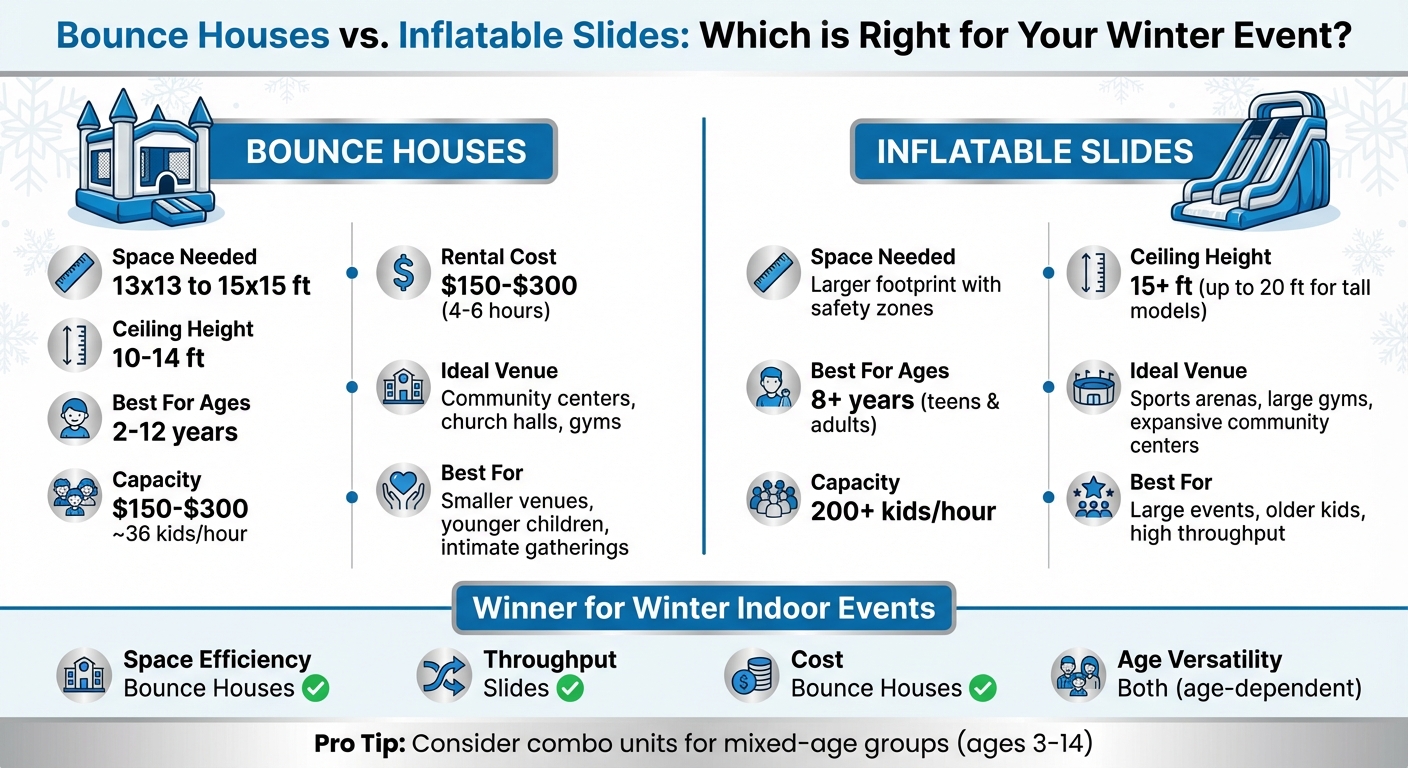
Bounce Houses vs Inflatable Slides: Winter Event Comparison Chart
Bounce Houses for Winter Events
Bounce houses are a fantastic way to keep kids active and entertained indoors when cold weather keeps them from playing outside. They offer a safe, contained space where children can jump, play, and burn off energy without disrupting the rest of the venue or party.
Fits in Smaller Indoor Spaces
Thanks to their compact design, bounce houses are a great fit for most indoor venues. The standard size is 15×15 ft, with heights ranging from 10 to 14 ft. This makes them suitable for spaces like church fellowship halls, school multipurpose rooms, or community centers. Many models are specifically built to accommodate standard indoor ceiling heights, so they can even work in gyms, large garages, or some basements.
Safe and Easy for Young Children
Bounce houses are perfect for kids between 2 and 12 years old. They come with soft floors and netted walls, ensuring a safe environment where parents can keep an eye on their children while they play. Controlled entry and exit points help maintain order and prevent kids from running wild throughout the venue. On average, a standard bounce house can handle about 36 children per hour, making it a great option for events with lots of guests. To ensure safety and comfort, have kids remove bulky winter coats before jumping.
Holiday and Winter Themes Available
Winter-themed bounce houses can add a festive touch to any indoor event. Designs featuring snowflakes, Winter Wonderland scenes, or holiday graphics can serve as a centerpiece, brightening up the space and creating a magical atmosphere for birthdays or seasonal celebrations. To keep the jumping surface dry and safe, set up a shoe-removal station with mats near the entrance to prevent winter slush or moisture from being tracked inside.
Inflatable Slides for Winter Events
Bounce houses might be a go-to for younger kids and tight spaces, but inflatable slides bring a whole new level of energy to winter parties. They’re perfect for keeping older kids and even teens entertained, offering an adrenaline-packed alternative. With their steep angles and slick vinyl surfaces, slides deliver a fast-paced ride that appeals to a wider age group – from toddlers as young as 2.5 years to adults.
A Bigger Thrill for Older Kids
Unlike bounce houses, inflatable slides are designed to amp up the excitement, especially for older children. Multi-lane slides let tweens and teens race against each other, adding a competitive edge that keeps them engaged. Indoor dry slides can range from 13 feet to over 35 feet tall, and when comparing options, it’s worth checking the height of the landing pad – the point where participants climb – since that’s where the real thrill kicks in.
Ideal for Larger Indoor Venues
Inflatable slides require more space than bounce houses, both in height and footprint. To set one up safely, you’ll need a venue with ceilings at least 15 feet high – possibly up to 20 feet for taller models. Locations like sports arenas, community centers, schools, and church halls are great options. You’ll also need a flat, open area that accommodates the slide’s base, plus at least 5 feet of clearance on all sides. The payoff? Slides can handle over 200 kids per hour, far outpacing the 36-per-hour capacity of standard bounce houses.
Combo Units for Extra Fun
If you’re looking for even more variety, combo units are a fantastic choice. These combine a slide with other features like climbing walls, basketball hoops, or even a mini bounce area, making them perfect for mixed-age groups. Younger kids can enjoy the bounce section, while older ones race down the slide. For indoor winter events, dry slides are the easiest option, cutting down on setup time and maintenance. This versatility makes them a standout choice for any winter gathering. If you are transitioning from the warmer months, you might also consider planning fall parties with inflatable games to keep the momentum going.
Bounce Houses vs. Slides: Direct Comparison
When deciding between bounce houses and inflatable slides, the choice often comes down to the size of your venue and the type of event you’re hosting.
Bounce houses are perfect for smaller indoor spaces like community centers or church halls. With a compact footprint of about 13′ x 13′, they can easily fit into venues with ceiling heights ranging from 10 to 14 feet. On the other hand, inflatable slides demand more space. They not only require a longer horizontal area for slide lanes but also need ceilings at least 15 feet high, making them a better fit for larger venues like sports arenas or expansive gyms. For even larger crowds, inflatable obstacle course rentals provide another high-capacity alternative.
In terms of capacity, slides can handle over 200 kids per hour, which makes them a fantastic choice for large events where you want to keep the lines moving. Bounce houses, however, accommodate around 36 kids per hour, making them more suitable for smaller, more intimate gatherings. The table below breaks down these differences for a quick side-by-side comparison.
Comparison Table
| Factor | Bounce Houses | Inflatable Slides | Winner for Winter |
|---|---|---|---|
| Space Requirements | Compact; 13′ x 13′ to 15′ x 15′ footprint | Larger footprint; requires long exit lane | Bounce Houses |
| Age Suitability | Best for younger kids (toddlers to age 8) | Ideal for older kids (age 8+) and teens | Both (age-dependent) |
| Indoor Setup | Fits most gyms and halls; 10–14′ ceilings | Requires high-clearance venues (15’+ ceilings) | Bounce Houses |
| Throughput | ~36 kids per hour | 200+ kids per hour | Slides |
| Average Rental Cost | ~$300 per day | ~$300+ per day | Bounce Houses |
Safety and Weather Factors
Cold Weather Safety Features
Winter weather brings unique challenges when using inflatable equipment. Materials like vinyl and PVC work best in temperatures of 60°F or higher. Once the temperature drops to around 40°F, these materials can stiffen and become brittle, making them prone to cracks or tears during use.
"At 40°F, the vinyl doesn’t just stiffen but also turns more brittle. If someone is bouncing inside, the vinyl may crack, which causes permanent damage to the overall structure."
– Gary Simon, Jungle Jumps
Dry slides are a safer option for winter events since they eliminate the risks associated with water, like slipping or hypothermia. However, even without water, moisture from dew, frost, or light rain can make surfaces slick, especially at entry points. To minimize risks, use heavy-duty tarps under the inflatable and place safety mats at entrances. If you’re setting up on frozen ground, avoid using standard stakes, as they may not hold properly. Instead, opt for weighted sandbags or water barrels.
These considerations highlight the importance of adhering to temperature guidelines during setup.
Temperature Limits and Indoor Setup
Most rental companies advise against outdoor use when temperatures fall below 30°F to 40°F. At these lower temperatures, the material’s flexibility diminishes, and blowers must work harder to maintain inflation due to denser cold air – potentially compromising the unit’s stability.
"When it gets colder than 30°F, the inflatable material can become brittle, and the bounce house might not hold up well under normal use."
– 3 Monkeys Inflatables
Indoor venues like gyms, community centers, or church halls provide a controlled environment where the vinyl stays flexible, and the equipment retains its bounce. These venues also eliminate issues like unpredictable wind gusts, which can force evacuation if they exceed 15 mph, and reduce the need for constant weather monitoring. If you must set up outdoors, keep a thermometer on hand and be ready to deflate the unit if temperatures approach unsafe levels. Additionally, ensure children wear fitted layers to prevent entanglement.
How to Choose for Your Winter Party
Before booking your equipment, make sure to measure your venue carefully. Check both the floor space and ceiling height – this is especially important for indoor setups. Bounce houses typically fit well in standard gyms or community halls, while inflatable slides often need larger spaces with higher ceilings or outdoor areas. Also, confirm that the setup area is free of obstructions. Once you’ve secured the right space, think about the age range of your guests.
When deciding between bounce houses and slides, age is a key factor. Bounce houses are generally ideal for kids aged 2 to 12. On the other hand, inflatable slides offer more excitement for older kids, teenagers, and even adults. If your guest list includes a mix of ages, consider a combo unit. These include both a bouncing area and a slide, making them suitable for ages 3 to 14.
If you’re hosting indoors, you’ll also sidestep any worries about unpredictable winter weather. To keep things tidy and safe, set up a designated shoe-off area with mats near the entrance – this helps prevent winter slush from creating slippery surfaces.
Encourage guests to dress in light layers and remove bulky coats, scarves, and gloves before using the equipment. Separating children by age and size can also help reduce the risk of collisions.
For a stress-free experience, book with Bouncy Rentals USA. They offer sanitized, fully insured equipment and guarantee on-time delivery by experienced professionals. Whether you’re planning a small indoor gathering with a bounce house or a larger event with an inflatable slide, their team handles setup, safety checks, and takedown – leaving you free to focus on hosting.
FAQs
How do I know if my venue has enough power for an inflatable?
Most bounce houses require a dedicated 20-amp circuit located within 50 feet of where the bounce house will be set up. Long extension cords should be avoided since they can pose fire risks or damage the blower. If the venue’s outlets can’t support the required load (typically 800–1500 watts per blower), you might need a generator capable of supplying at least 2000 watts per blower. It’s always a good idea to check with your rental company or an electrician to guarantee everything is set up safely.
How many kids can use it at once without long lines?
The number of children a bounce house can handle comfortably depends on its size and the kids’ ages. Here’s a quick breakdown:
- Small (10’x10’): Fits 4–5 toddlers (ages 2–4)
- Medium (13’x13’): Suitable for 6–8 kids (ages 5–9)
- Large (15’x15’): Can hold 8–10 kids (ages 5–12)
Stick to these capacity limits to keep things safe and ensure everyone has a good time.
What should kids wear for safe indoor play in winter?
For safe indoor play during winter, it’s important that kids dress in comfortable, layered clothing. Begin with a moisture-wicking base layer to keep them dry, followed by insulating layers to maintain warmth. Closed-toe shoes with sturdy grip are a must to prevent slips. Steer clear of loose clothing, jewelry, or accessories that might cause tripping or get snagged on equipment. The right outfit ensures kids stay warm, dry, and safe while enjoying activities like bounce houses or inflatable slides.
