

Planning entertainment for an all-ages event can feel overwhelming, but the secret lies in selecting performers who resonate with diverse age groups while ensuring smooth logistics. Here’s the key takeaway: Know your audience, match performers to their preferences, and prepare your venue to support the act. This guide dives into practical steps to help you make informed decisions, from understanding your audience to managing budgets and evaluating performers.
Key Points:
- Understand Your Audience: Identify age groups and their preferences (e.g., Gen Z loves interactive DJs, while Boomers enjoy timeless classics).
- Venue Readiness: Ensure your venue accommodates technical needs like sound, lighting, and space.
- Budget Wisely: Allocate 10-20% of your event budget to entertainment, including performer fees, travel, and equipment rentals.
- Choose Suitable Performers:
- Interactive acts like magicians, balloon artists, and face painters.
- Live performers, including musicians or hybrid DJ acts, that appeal across generations.
- Specialty acts like jugglers, stilt walkers, and costumed characters for visual appeal.
- Evaluate Performers: Review portfolios, watch performance videos, and check references to ensure quality and reliability.
- Plan Event Flow: Combine live acts with interactive rentals (e.g., inflatable games for families or obstacle courses) to maintain engagement.
By following these steps, you can create a well-rounded event that keeps all age groups entertained and engaged.
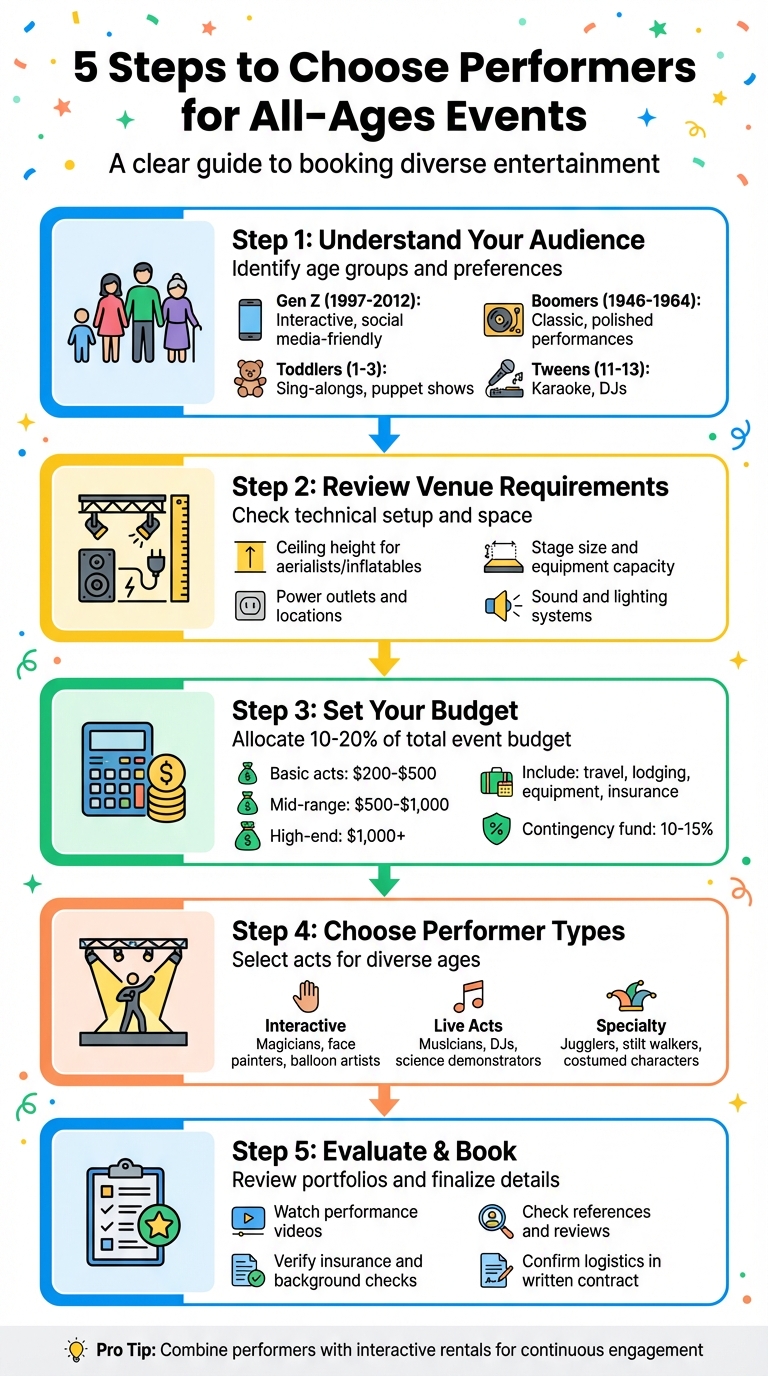
5-Step Guide to Choosing Performers for All-Ages Events
Assess Your Event’s Audience and Requirements
Identify Your Audience Age Ranges
Take a deep dive into your guest list to understand what will resonate with your audience. Different age groups have distinct preferences. For example, Gen Z attendees (born 1997–2012) gravitate toward high-energy, interactive entertainment that’s perfect for sharing on social media. Meanwhile, Boomers (born 1946–1964) often prefer classic, polished performances with controlled sound levels. For toddlers (ages 1–3), simple routines like sing-alongs or puppet shows work best, whereas tweens (ages 11–13) enjoy more sophisticated options like karaoke or DJs.
"Understanding your target audience is crucial when hiring entertainment for live events. Personalizing the experience by incorporating elements that may resonate with your target audience’s interests is so important." – Julie Pulewitz
Gathering feedback through surveys or past event reviews can help identify what has worked well before. To cover a broader range of tastes, consider hiring “bridge” performers – artists like Stevie Wonder, Earth, Wind & Fire, or Bruno Mars – who can connect with multiple generations without excluding anyone.
Once you’ve nailed down your audience’s preferences, it’s time to ensure the venue is equipped to handle your entertainment choices.
Review Venue Size and Technical Setup
Your venue’s physical and technical capabilities can make or break a performance. Check the ceiling height for acts like aerialists or inflatables, and measure the stage to ensure it accommodates the performers’ equipment and props. A small venue can feel overwhelmed by a large-stage act, while a massive hall may diminish the impact of close-up magic.
Take inventory of power outlets and their locations, and assess whether the venue’s sound and lighting systems meet professional standards. If they don’t, you may need to rent additional equipment. Performers typically provide a technical rider outlining their exact requirements, such as power, sound, and lighting needs – share this with the venue manager to avoid last-minute issues. Also, factor in setup times, as some acts may need several hours for load-in and soundchecks.
"Addressing these logistical details in advance will prevent any last-minute surprises and ensure a smooth and successful performance." – Dennis Meyers, Event Planner
With both audience preferences and venue logistics squared away, the next step is to determine a practical entertainment budget.
Set Your Budget
Use your audience and venue insights to guide your entertainment spending. A good rule of thumb is to allocate 10-20% of your total event budget to entertainment. But don’t stop at the performer’s fee – include costs like travel, lodging, equipment rentals, insurance, and tips. To stay prepared, set aside 10-15% of your entertainment budget as a contingency fund for unexpected issues, such as equipment failures or last-minute changes.
Get quotes from at least three performers and track all costs – deposits, balances, and rentals – in a spreadsheet for easy reference. Research typical rates to avoid surprises: basic children’s entertainment like face painting or simple magic usually costs $200–$500, mid-range acts like experienced magicians range from $500–$1,000, and elaborate high-end shows start at $1,000 and up. If you’re looking to save on travel and lodging, hiring local talent can be a cost-effective solution without sacrificing quality.
"A good rule of thumb is to set aside 10-15% of your entertainment budget as a contingency. This will give you peace of mind knowing you have a cushion in case something goes wrong." – Dennis Meyers, Professional Event Planner
Explore Performer Types That Work for All Ages
Now that you’ve sorted out your audience, venue, and budget, it’s time to dive into the types of performers that can entertain guests across all age groups. Let’s break down some categories that cater to a wide range of preferences.
Interactive Performers
Interactive performers bring energy and connection by actively involving the audience, rather than just putting on a show. Magicians, face painters, and balloon artists are fantastic choices for events with mixed-age guests. For example, family magic shows use layered humor and sophisticated illusions to keep both kids and adults entertained. Close-up magicians are ideal for smaller, intimate settings, while stage magicians with grand illusions shine in larger venues like community events.
"They’re the magicians, clowns, musicians, and other entertainers who go beyond simply performing; they actively engage the children, making them part of the show. They create an experience, not just a spectacle." – Dennis Meyers, Event Planner
Face painters and balloon artists also add a creative, hands-on element that appeals to kids as young as three – and even adults enjoy taking home a fun, personalized souvenir.
Live Performance Acts
Live acts have the flexibility to adapt to the mood and tastes of a diverse audience. Musicians, for instance, can adjust their energy to match audience reactions in real-time. Hybrid acts, like DJs paired with live instruments (think horns or percussion), blend a broad song selection with dynamic performances, making them a hit for events with both teens and adults. Performers who cover "bridge artists" such as Stevie Wonder, Prince, or Bruno Mars often resonate with guests across multiple generations, from Boomers to Gen Z.
Science demonstrators bring another layer of engagement by using captivating experiments to explain scientific concepts. These demonstrations create "wow" moments that appeal to both curious adults and elementary-aged kids. Meanwhile, storytellers and puppeteers offer something for everyone: simple puppet shows delight the youngest attendees, while more elaborate storytelling draws in older children and adults, transporting them into imaginative worlds.
Costumed Characters and Specialty Acts
Costumed characters can connect with audiences of all ages when performed authentically. Superheroes, princesses, and other beloved characters often captivate preschoolers and elementary-aged children while sparking nostalgia for adults. The key is hiring performers who can fully embody the character and interact naturally with guests.
Specialty acts like jugglers, stilt walkers, fire performers, and aerialists bring a universal "wow factor." Because they rely on visual spectacle rather than language or specific cultural references, these acts appeal to everyone. They’re especially effective at large outdoor events or festivals, where their dramatic presence creates memorable photo opportunities and adds excitement to the atmosphere.
Research and Evaluate Performers
Once you’ve identified the type of performers that align with your event, it’s time to dig deeper. This step ensures you’re hiring someone who can deliver a memorable experience for a diverse audience.
Review Online Portfolios and Customer Feedback
Start by exploring the performer’s website and social media profiles. Look for evidence that their acts align with your audience’s age group. For example, simple, interactive routines are great for toddlers, while pre-teens and adults often enjoy more sophisticated performances like illusions. Also, check if they can adapt to both small, intimate settings and larger venues.
When reading testimonials, don’t just glance over the surface. Focus on recurring themes in reviews, especially regarding punctuality, reliability, and their ability to entertain mixed-age crowds. It’s also essential to confirm that they have liability insurance and have undergone background checks – especially if children will be present. Additionally, ensure their technical requirements match your venue’s capabilities.
After this initial online research, move on to evaluating their actual performance quality.
Request Performance Videos and References
Ask for unedited performance videos to get an authentic sense of how they interact with live audiences and maintain energy throughout their act. These videos should showcase them engaging with audiences similar to your event’s demographic.
"A skilled and engaging entertainer, even with a simpler act, can be more effective than a pricey but less talented performer." – Dennis Meyers, Professional Event Planner
Reach out to past clients for references. Ask how the performer handled unexpected challenges, like technical issues or restless audience members. If possible, attend one of their live shows to get a firsthand look at their personality and stage presence.
Once you’re satisfied with their performance quality, it’s time to lock in the details.
Discuss Logistics and Expectations Upfront
Before finalizing the booking, iron out all logistical details. Confirm specifics like the performance duration, setup and breakdown times, and who will provide essential equipment like sound systems, props, or lighting. If your event has a theme, discuss how they can tailor their act to fit it. These conversations ensure the performance aligns with your event’s needs.
"A written contract is crucial for protecting both you and the performer. It should clearly outline all the details, including the price, performance time, duration of the show, cancellation policy, and any special requests." – Edrian A
Be upfront about any additional costs, such as travel fees or equipment rentals, to avoid surprises. If you are planning an outdoor event, consider weather-resistant bounce houses to ensure the fun continues regardless of the forecast. Assign someone to greet the performer on the event day, show them around, and assist with any immediate needs. If your venue has specific restrictions, like noise limits, make sure these are communicated well in advance.
Add Complementary Entertainment Options
Once you’ve locked in your specialty performers, think about adding extra entertainment to keep the energy flowing throughout the event. Combining live performances with interactive activities can help maintain momentum during transitions. By layering in complementary rentals, you can ensure the event stays lively from start to finish.
Include Interactive Rentals
Interactive rentals like bounce houses, obstacle courses, and water slides are great for keeping guests engaged between acts. For toddlers (ages 2–4), pair activities like puppet shows or sing-alongs with smaller bouncers under 42 inches to create a safe and fun play area. School-aged kids (6–9) often enjoy magicians or balloon artists stationed near combo inflatables with basketball hoops, while teens and older kids are drawn to obstacle courses for adults and dunk tanks, especially when paired with DJs or live music.
To keep things moving smoothly, set up face painters and balloon artists near inflatables to entertain guests waiting in line. This reduces the perception of delays and keeps the excitement going. Be sure to maintain at least 16 feet of clearance around inflatables to provide performers with a clean, stable area away from the action. Adding fun extras like cotton candy machines, popcorn stations, or snow cone makers from Bouncy Rentals can also create natural gathering spots, encouraging guests to mingle and enjoy themselves between performances.
Coordinate Performers with Other Activities
Once your interactive rentals are set up, plan their timing alongside live performances to maximize audience engagement. Try implementing 10–15 minute rotations for popular inflatables. Schedule live acts, like magicians or bands, during these rotation breaks to avoid competing for attention with the inflatables.
"Rather than thinking of entertainment as a single decision, consider how energy should flow throughout your event." – Dennis Smith Entertainment
Design your event flow strategically. Start with background music or activities like face painting as guests arrive. Move into main performances, such as magic shows or live bands, during peak energy periods. Wrap things up with high-energy activities like inflatables and interactive games. If you’re using a DJ alongside inflatables, opt for music that appeals to a wide age range to keep the atmosphere inclusive for everyone, from Gen Z to Boomers. Finally, coordinate the arrival times of performers and equipment deliveries to avoid any setup conflicts.
Conclusion
Pulling off a successful all-ages event means knowing your audience, blending diverse entertainment, and planning with precision. Start by identifying the age groups attending and choose acts that resonate across generations. Double-check that your venue and budget can support the performers’ needs.
"Choosing entertainment without a clear vision is like navigating without a map – you might end up somewhere interesting, but it might not be your desired destination." – Dennis Meyers, Event Planner
Once you’ve nailed down the basics, focus on the details. Review performers’ portfolios, videos, and references to ensure they align with your vision. Then, finalize agreements with clear, written terms to avoid surprises. On event day, assign a point person to greet performers, handle their technical requirements, and manage any last-minute updates.
The best all-ages events don’t rely on one act to carry the show. Instead, they carefully plan the energy flow: background music or entertainment during arrivals, standout performances at peak times, and interactive activities like inflatables to keep the momentum going during transitions. By combining professional performers with engaging rentals, you create a space where everyone feels involved and valued.
"The goal isn’t to make every guest love every moment. It’s to design an experience that makes everyone feel included, seen, and connected." – Dennis Smith Entertainment
When you follow the steps in this guide – balancing thoughtful planning with seamless execution – you set the stage for an event that captivates every guest. With the right mix of preparation and creativity, your event will leave kids, teens, and adults entertained and connected from start to finish.
FAQs
How do I pick one act that works for kids and adults?
When selecting performers, aim for those who are engaging and flexible, capable of connecting with a wide range of age groups. For instance, magicians or musicians are great options – they can balance visual, straightforward tricks or tunes for kids with more refined, entertaining elements for adults. Choose entertainers who actively involve the audience and adjust their performance to captivate both children and adults, ensuring everyone enjoys a memorable shared experience.
What should I confirm in a performer’s contract?
When going through a performer’s contract, make sure it covers all the essential details. This includes the names of the parties involved, the scope of services, and the performance date, time, and duration. Payment terms should also be clearly outlined.
Additionally, check for specifics about performance requirements, security arrangements, and provisions for equipment damage. The contract should also include clauses addressing the possibility of halting services if necessary. Covering these points ensures everyone is on the same page and helps prevent potential disputes or legal problems during the event.
How do I schedule performers around inflatables?
To keep everything running smoothly with performers and inflatables, planning ahead is key. Start by setting up inflatables first so there’s enough time for safety checks and adjustments. Then, schedule performances during less busy times for the inflatables or after peak activity to avoid overcrowding. Clear communication with both your rental provider and performers is essential – confirm timing with everyone involved. Adding a little extra time for setup and transitions can make a big difference, ensuring guests can enjoy all the fun without any hiccups.
