
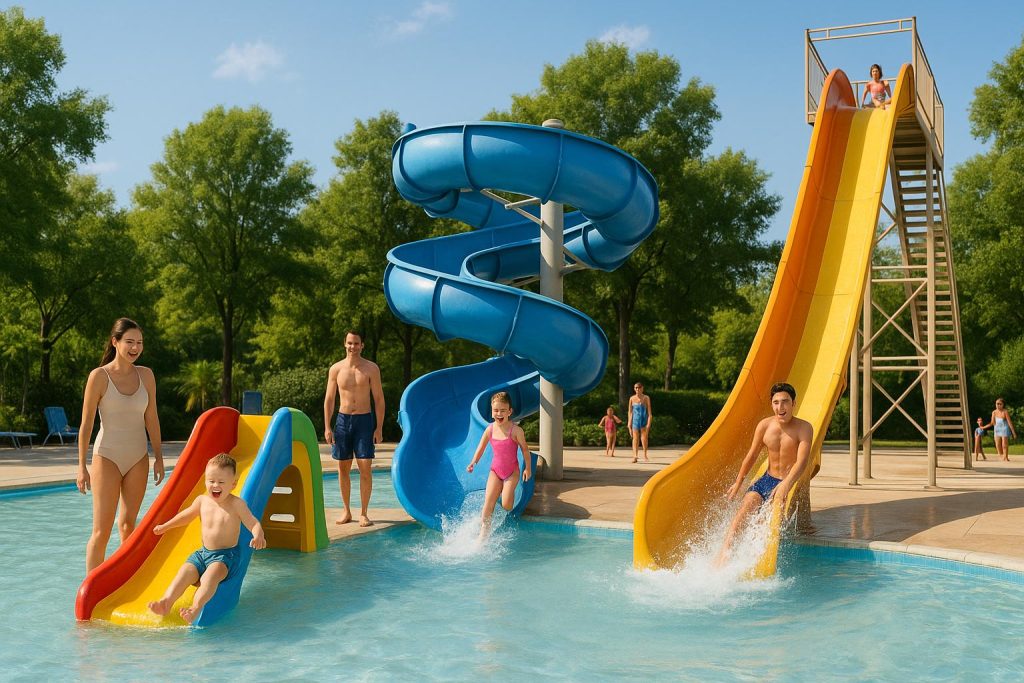
Selecting the right water slide for your event depends on the age and abilities of your guests. Here’s a quick guide to help you make a safe and fun choice:
- Toddlers (2–5 years): Opt for slides no taller than 10–13 feet with gentle slopes, shallow splash zones, and safety features like enclosed climbing areas and padded landings. These slides should be simple and inviting, with themes that encourage confidence in young kids.
- Elementary-aged kids (6–12 years): Choose mid-sized slides (13–18 feet tall) with steeper drops, dual lanes for racing, climbing walls, and larger splash pools. These features match their energy and coordination while ensuring safety.
- Teens and adults (13+ years): Go for taller slides (18–22 feet or more) with faster descents, larger splash zones, and interactive elements like water cannons. Be mindful of weight limits and ensure proper supervision to prevent risky behavior.
Space and setup tips: Ensure a flat area (25–35 ft long, 10–15 ft wide, and 15–20 ft tall) with 5 ft of clearance on all sides. Use secure anchors, check for obstacles, and ensure access to power and water connections.
For mixed-age events, consider separate slides for different age groups or schedule time slots to keep everyone safe. Companies like Bouncy Rentals USA can help you find sanitized, insured slides tailored to your needs.
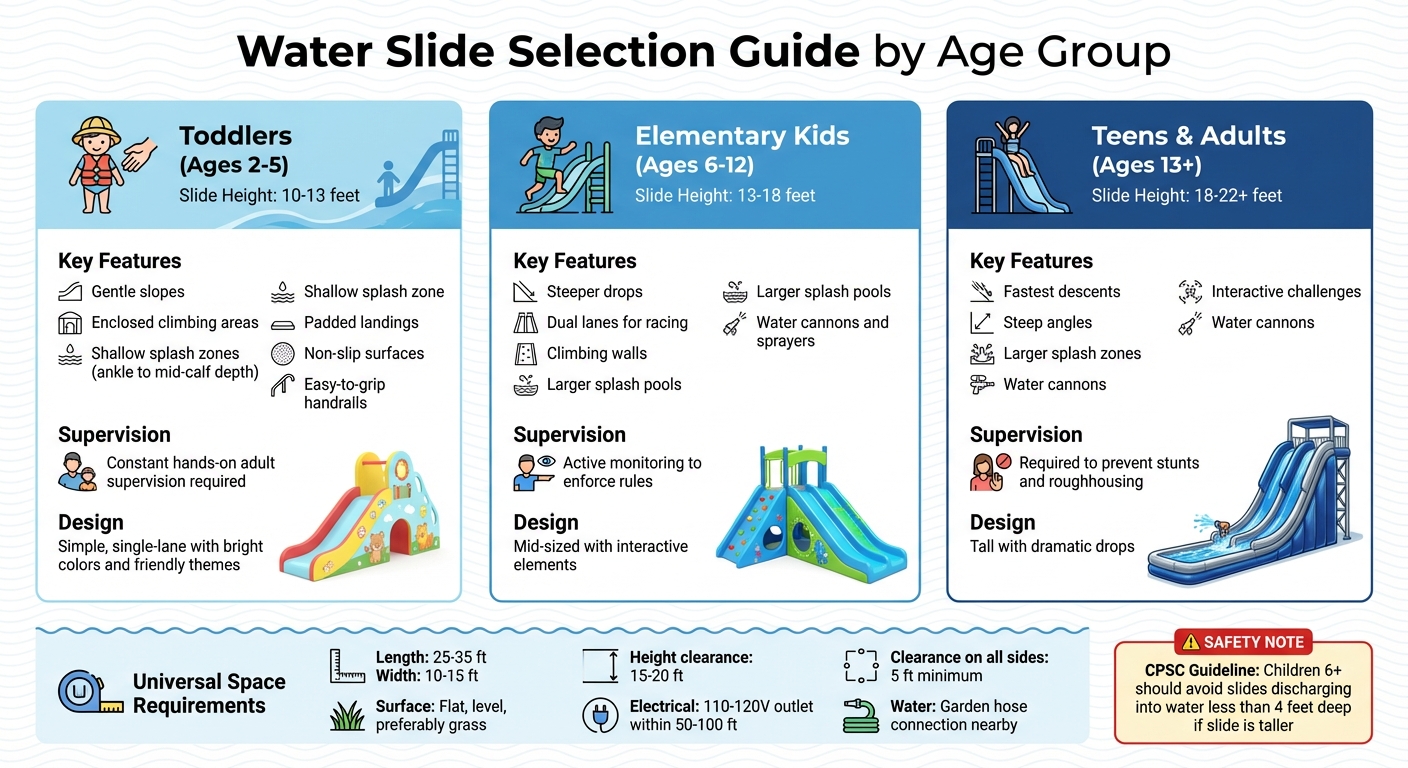
Water Slide Selection Guide by Age Group: Heights, Features, and Safety Requirements
Why Age Matters When Choosing Water Slides
Water slides are designed with specific age groups in mind, ensuring they align with physical abilities and developmental stages. Choosing the right slide for the right age keeps everyone safe and makes the experience more enjoyable. Mismatched slides can lead to issues – oversized slides might cause fast impacts, falls, or difficulty climbing for younger kids, while older kids on smaller slides might get bored and take unnecessary risks, like sliding headfirst or engaging in rough play. That’s why slides need to cater to the unique needs of each age group, both in design and supervision.
Matching Slides to Physical Abilities
Water slides include features tailored to specific age ranges. For toddlers and preschoolers (ages 2–5), slides are typically 10–13 feet tall with gentle slopes, low entry points, and shallow splash zones. These designs help control speed and minimize falls. Elementary-aged kids (ages 6–12) can handle 13–18 foot slides, which often include steeper drops, larger splash pools, dual lanes for racing, and extras like climbing walls or water cannons. Their improved coordination and ability to follow rules make these more dynamic slides a good fit. Teens and adults, with their greater strength and appetite for thrills, are best suited for the tallest and fastest slides – 18–22 feet or more – featuring steep drops, extended tracks, and larger splash zones.
Safety guidelines also reflect these age-related differences. According to the U.S. Consumer Product Safety Commission, children 6 years and older should avoid slides that discharge into water less than 4 feet deep if the slide is taller. This rule helps prevent injuries from hitting the pool bottom, showing how slide height, water depth, and age-specific safety are interconnected.
Supervision Requirements by Age Group
While slide designs are critical, proper supervision is just as important. Supervision needs vary depending on the user’s age and the slide’s complexity. For toddlers and young kids (ages 2–5), constant, hands-on supervision is essential. An adult should assist at the slide entrance, ensuring kids climb safely, slide feet-first while seated, and avoid overcrowding in the splash zone.
Elementary-aged children (ages 6–12) still require active monitoring to enforce safety rules and discourage risky behavior. Teens and adults, even on the tallest and fastest slides, need supervision to prevent stunts, headfirst sliding, or roughhousing. During events with mixed age groups, extra vigilance is crucial to separate younger children from older, more energetic users while ensuring everyone sticks to the safety rules. Without proper supervision, the risk of collisions and falls increases significantly.
Water Slides for Toddlers and Preschoolers (Ages 2–5)
When designing water slides for toddlers, it’s all about balancing safety with fun. Slides should match their size and abilities, ensuring a secure environment while encouraging their first steps into water play.
Safety Features for Young Children
For toddlers, safety is non-negotiable. Stick to slides that are no taller than 10–13 feet, with a gentle slope to keep speeds manageable and minimize impact.
Climbing areas should be enclosed or have high sides, paired with easy-to-grip handrails. Wide, low steps with non-slip surfaces are a must for safe climbing. Features like bumpers and no-jump indicators at the top are also important – they help prevent little ones from standing or jumping off the platform.
The splash zone is another key safety area. Opt for slides with shallow splash zones, ranging from ankle to mid-calf depth, and ensure padded areas are in place to soften landings and keep kids from sliding off the sides.
Make sure the slide comes with clear age and weight guidelines from the manufacturer. Providers like Bouncy Rentals USA often handle setup, ensuring the slide is placed on level, soft ground, securely anchored, sanitized, and fully insured for young users.
Designs That Build Confidence
Safety is the foundation, but the design is what draws toddlers in. Friendly, inviting themes – think bright colors, animals, unicorns, dinosaurs, or cartoon castles – can turn nervousness into excitement.
Simple, single-lane slides are ideal. When toddlers can see the path to climb, the slide down, and the exit, they feel more in control and less intimidated. Shorter slides are particularly effective, as they allow toddlers to see the entire experience at a glance, which helps them feel secure and encourages repeated play.
These thoughtful details not only make water play fun but also help toddlers build confidence, laying the groundwork for more adventurous slides as they grow.
Water Slides for Elementary-Aged Children (Ages 6–12)
Elementary-aged kids are at a stage where they crave a bit more adventure, but safety is still a top priority. Mid-sized slides, standing between 13–18 feet tall, strike the perfect balance – challenging enough to keep them engaged while ensuring they stay safe.
Features That Encourage Active Play
Slides designed for this age group are all about keeping kids moving and having fun while supporting their physical development.
- Dual-lane slides allow kids to race side by side, adding a competitive twist while cutting down on wait times. These typically fit within spaces measuring 25–35 feet by 10–15 feet.
- Climbing walls with sturdy handholds and side barriers give kids a chance to test their grip strength and balance before reaching the top.
- Larger splash pools slow down their speed at the bottom and double as extra play areas.
- Water cannons and sprayers keep the energy high and help spread out the crowd at the ladder, reducing bottlenecks.
As one parent, Jenna Cameron, put it, her "7-year-olds spent hours jumping, sliding, and laughing among the inflatable rentals." Clearly, these features make a big impact on keeping kids entertained.
Why Elementary-Aged Kids Love More Complex Slides
By the time kids reach 6–12 years old, they’ve developed the coordination, balance, and confidence to take on steeper slides and faster speeds. Unlike younger children, they can climb independently, follow multi-step safety instructions, and recover quickly if they lose their footing on the ladder. For them, a 15-foot slide isn’t just fun – it feels like a real achievement without being intimidating.
The trick is to match the slide’s design to their abilities while keeping safety front and center. Having an adult supervise each lane ensures kids stick to single-rider rules and maintain proper sliding posture. Companies like Bouncy Rentals USA offer slides in this size range, complete with expert setup and safety tips, making them a hit for school-aged children.
Water Slides for Teens and Mixed-Age Events (Ages 13+)
When it comes to older kids and events with a mix of age groups, water slides need to step up their game. Teens are all about speed, thrills, and a touch of adventure, so these slides are designed to deliver excitement while keeping safety a priority.
For teens, it’s not just about sliding down – it’s about the whole experience. These slides often feature steeper angles, faster descents, and larger splash zones. Many even include extra challenges like climbing walls or water cannons, transforming a simple slide into an action-packed adventure.
Features for Older Users
To keep teens entertained, taller slides with dramatic drops and higher speeds are a must. The splash pools are built to handle the momentum of heavier riders safely, ensuring a smooth landing every time. Some models go the extra mile by adding interactive elements, like water cannons or climbing sections, to keep the fun going.
Before renting, make sure the slide is rated for teens and adults. Look for slides that meet CPSC standards, which include features like proper pool depth and low-angle water entry to reduce injury risks. Keep in mind that these larger slides need plenty of space – typically 25–35 feet in length, 10–15 feet in width, and 15–20 feet in height. Don’t forget about clearance either; you’ll need at least 5 feet of open space on all sides to avoid hazards like fences or trees.
Managing Safety at Mixed-Age Events
When hosting an event with a mix of ages, safety becomes even more critical. Assign at least one adult to supervise the slide area. Their job? Enforce a strict one-at-a-time rule and keep an eye out for risky behavior.
To avoid collisions, make sure riders exit the splash pool immediately after their turn. If your event includes a wide range of ages, consider scheduling time slots for different groups or designating specific slides for certain age ranges. For example, never let toddlers and teens use the same slide – it’s a recipe for accidents. Communication is key: go over the rules with both kids and parents before the fun begins. Cover everything from no headfirst sliding to weight limits to ensure everyone stays safe.
For added peace of mind, companies like Bouncy Rentals USA can help. They offer professional guidance on choosing the right slides, along with fully insured, sanitized equipment and expert setup, making it easier to manage safety at mixed-age events.
Lastly, double-check your event space to confirm there’s enough room for safe installation and operation.
Space and Safety Requirements
Setting up your inflatable slide correctly is key to avoiding hazards and ensuring everyone has a safe, enjoyable time.
Measuring Your Event Space
You’ll need a flat area measuring 25–35 ft in length, 10–15 ft in width, and 15–20 ft in height, with an extra 5 ft of clearance on all sides. This buffer zone keeps kids away from fences, trees, and buildings, while giving supervisors enough room to move around safely.
Check above the slide for any potential obstacles like tree branches, power lines, or overhangs. It’s a good idea to walk your yard and take photos from different angles. Sharing these with Bouncy Rentals USA can help them recommend the best slide for your space and the ages of your guests.
You’ll also need proper electrical and water connections. Make sure there’s a 110–120V outlet within 50–100 ft of the setup area and a garden hose connection nearby. Use outdoor-rated extension cords and route them away from the slide’s exit to avoid tripping hazards.
Once your space is measured and prepared, follow these safety tips to keep everything running smoothly.
Safety Guidelines and Precautions
After confirming the space, make sure the setup area is completely clear. Remove rocks, sticks, toys, furniture, pet waste, and any sharp objects, including exposed sprinkler heads or stakes. The surface should be flat, level, and firm. Grass works best because it provides a softer landing and allows for secure anchoring. If you’re setting up on concrete or asphalt, ask your rental company about adding padding or mats for the entrance, exit, and splash pool areas.
Anchor the slide securely by using stakes on grass or sandbags on harder surfaces. Check that the blower is functioning properly, the slide is fully inflated, and all seams are intact. Periodically recheck these during use. If it starts to rain, winds pick up to 15–20 mph or more, or the slide begins to deflate, stop using it immediately for safety.
Other Factors to Consider
Weight Limits and Guest Mix
Water slides are designed with specific maximum rider weight, total weight capacity, and user limits set by the manufacturer. For instance, a slide designed for younger children might accommodate riders up to 120–150 lb and allow 2–3 kids at a time. In contrast, slides meant for teens or adults may handle individual weights of 200–250 lb but allow fewer simultaneous users to stay within the total weight limit. These restrictions are vital for ensuring safety and determining whether a slide fits your event.
If your event includes a mix of age groups, consider scheduling separate time slots for different ages. For example, designate blocks for ages 2–5, 6–12, and 13+ to prevent smaller, less coordinated children from sharing the slide with older, faster riders. Many hosts also provide a second, smaller slide or toddler play area specifically for ages 2–5. This way, younger kids have a safe, age-appropriate option without competing with older children.
These considerations complement earlier safety guidelines, ensuring the slide aligns with your event’s unique requirements.
Material Quality and Construction
The best slides are made from commercial-grade PVC or vinyl, usually 0.4–0.6 mm thick or more, with reinforced stitching or heat-welded seams at stress points like steps, anchor points, and lane junctions. Strong materials and well-constructed seams minimize the chances of tears, air leaks, or sudden collapses, even when multiple riders are using the slide. Additionally, high-quality slides feature durable anchor rings, non-slip climbing areas, and guard rails for added safety.
Before allowing guests to use the slide, inspect it thoroughly. Check that the material feels thick and the seams are secure, confirm all anchor stakes or sandbags are properly placed, verify the blower is attached without any kinks, and ensure the slide is fully inflated with no sagging sections. In the U.S., look for slides that meet ASTM (American Society for Testing and Materials) and CPSC (Consumer Product Safety Commission) standards, which cover materials, design, and labeling for slides and similar equipment.
Getting Expert Recommendations
The team at Bouncy Rentals USA can help you select the right slide by evaluating your guest demographics, expected attendance, and the mix of kids, teens, and adults. They’ll recommend slides that balance safety and efficiency, keeping lines manageable while adhering to weight and capacity limits. They also take into account your yard’s dimensions, access pathways, and surface type – whether grass or concrete – to ensure the slide fits comfortably with enough room for stakes, blowers, and splash zones. Their expertise ensures the slide integrates smoothly with your event setup and overall safety plan.
Conclusion
Selecting the perfect water slide for your event means aligning the slide’s size and features with the age groups of your guests. Equally important is prioritizing safety and ensuring your venue is ready for the setup.
Provide supervision tailored to the needs of each age group to keep everyone safe throughout the event. Before the big day, double-check that your space meets the slide’s setup and safety guidelines. These simple steps can help minimize risks and keep everything running smoothly.
Once you have a clear idea of your guests’ ages, estimated headcount, and yard dimensions, reach out to Bouncy Rentals USA. Their team specializes in helping families and event organizers choose insured, sanitized, and age-appropriate slides for birthdays, school events, and neighborhood parties. They’ll guide you through setup requirements and share safety tips so you’re fully prepared for a fun and stress-free event. With their expert support, your celebration can be both unforgettable and safe.
FAQs
What should I consider to ensure a water slide is safe for toddlers at my event?
When picking a water slide for toddlers, go for one made specifically for their age. These slides usually have lower heights and gentler slopes, making them safer for little ones. Always keep an eye on the kids while they play, and double-check that the area around the slide is free of any obstacles.
Setting up the slide correctly is key. Make sure it’s securely in place and that there’s a soft landing surface to minimize the chance of injuries. Also, clean and sanitize the slide thoroughly before your event to ensure a safe and fun time for everyone.
What should I consider when choosing a water slide for elementary school kids?
When picking a water slide for elementary-aged kids, it’s important to balance fun and safety. Choose one with slip-resistant surfaces to reduce the risk of falls, and make sure the slide’s size and height match their age and comfort level. Safety barriers or netting are also a must to keep kids secure while they play. Lastly, go for slides made from sturdy, long-lasting materials that can handle plenty of energetic use. These details will help ensure the kids have a blast while staying safe.
How can I safely manage water slides for guests of all ages at my event?
To ensure water slides are safe and enjoyable for guests of all ages, consider setting up designated times or areas for different age groups. This approach helps avoid overcrowding and allows younger children to play in a safe environment without interference from older, more active participants. Supervision is essential – assign adults or attendants to oversee the activity and enforce rules like no running, roughhousing, or overcrowding on the slides.
If feasible, opt for slides designed for various age groups or provide separate slides for younger kids and older guests. Make sure to clearly explain the rules to everyone before the event begins to create a safe and enjoyable experience for all.
