
Keeping custom-printed inflatables clean is essential to maintaining their appearance and extending their lifespan. However, cleaning them comes with challenges, such as protecting the printed artwork from fading, avoiding damage from abrasive tools, and preventing mold caused by moisture. Using gentle cleaners, soft tools, and proper drying techniques can help avoid costly repairs or replacements, which can range from $200 to $10,000. Regular maintenance, including inspections and a structured cleaning schedule, ensures inflatables remain safe, visually appealing, and ready for use.
Key Points:
- Avoid Harsh Cleaners: Bleach and ammonia fade prints and damage materials.
- Use Soft Tools: Microfiber cloths and soft brushes protect designs.
- Prevent Mold: Thorough drying prevents costly damage in just 24–48 hours.
- Routine Maintenance: Clean after each use, deep clean weekly, and sanitize monthly.
By following these steps, you can protect your investment and keep inflatables event-ready for years.
Common Cleaning Challenges
Cleaning custom-printed inflatables involves some tricky challenges that, if mishandled, could lead to costly damage. To protect your investment, it’s crucial to understand how cleaning methods impact both the material and the printed artwork. Each issue requires careful attention to maintain the look and durability of your inflatable.
Ink Fading from Strong Chemicals
Harsh chemicals like chlorine-based cleaners (e.g., bleach) and ammonia-based detergents are notorious for causing ink to fade. These substances can break down the vinyl coating and inks, leading to dull or altered colors.
"Avoid using chlorine-based cleaners as they can damage the material." – Landmark Creations
UV exposure during cleaning or drying only makes things worse. Prolonged exposure to sunlight not only speeds up color fading but can also make the material brittle over time. Combining strong chemicals with UV exposure can significantly reduce the lifespan and visual appeal of your inflatable.
Print Damage from Rough Cleaning Tools
Using abrasive tools like stiff-bristled brushes or high-pressure washers can physically harm the printed designs. These tools can scratch the vinyl surface, strip away the ink, and even compromise the waterproofing of the material.
"Commercial machines are not recommended for washing inflatables with elaborate artwork. Some artwork has been known to chip, peel, or melt in the machine washing process." – Landmark Creations
Even small particles of dirt can act as abrasives, scratching the design during cleaning. To avoid visible damage, always test new cleaning methods on a hidden area first.
Moisture Trapping and Bubbling
Moisture is another major concern. Water trapped between material layers or within seams can lead to mold, bubbling, or peeling of printed designs. Mold can begin to grow within just 24–48 hours.
"Deflating a wet bounce house is the single most common cause of mold." – Reservety
The financial consequences of mold damage can be steep. Repairs for mold issues typically range from $200 to $500, but severe cases might require replacing the entire inflatable, which could cost anywhere from $1,500 to $10,000 or more. Following proper folding and storage steps is essential, as storing inflatables on concrete floors can draw moisture into the material, even if the unit seemed dry at the time.
Understanding these challenges is key to developing safe and effective cleaning practices that protect both the material and the artwork.
How to Clean Custom-Printed Inflatables Safely
Keeping custom-printed inflatables clean without damaging their prints requires a careful approach. Using the right cleaning products and tools ensures your inflatables stay in great condition while protecting your investment.
Use Gentle, Print-Safe Cleaners
For routine cleaning, opt for mild dish soap mixed with warm water. If you’re dealing with mildew or strong odors, diluted white vinegar (equal parts vinegar and water) works well. For tougher stains, a paste made from baking soda can help. Commercial options like Simple Green and OdoBan are also effective when properly diluted. To sanitize high-touch areas, use 70% isopropyl alcohol – it evaporates quickly and leaves no residue.
"Bleach, ammonia-based cleaners, and pressure washers damage vinyl coatings, strip colors, and weaken seams. Stick to mild soap and vinyl-specific products." – Reservety
Before applying any cleaner to printed areas, test it on a hidden spot, like the underside of a seam. After cleaning, consider applying a vinyl protectant, such as Meguiar’s Natural Shine, to guard against UV damage and cracking.
Choose Soft Cleaning Tools
Start by vacuuming loose debris using a handheld or shop vacuum with a soft brush attachment. This step prevents dirt from becoming abrasive when wet. For cleaning prints, use microfiber cloths and soft brushes or non-abrasive sponges. Avoid stiff brushes, as they can scratch the vinyl coating and compromise its waterproofing. If debris is stuck, use a plastic scraper or your fingernail – never metal tools, which can puncture the material. For delicate printed areas, gently spot-clean with a soft cloth to avoid fading or chipping the ink.
Proper drying and inspection after cleaning are just as important to maintain your inflatable’s integrity.
Dry Completely and Inspect Before Storage
Thorough drying prevents mold growth and material damage. After cleaning, keep the inflatable running with its blower for 30–60 minutes to circulate air and evaporate hidden moisture. Open vents or zippers opposite the blower to improve airflow. Use clean towels to soak up water from slide channels, corners, and seams. You can also tilt the inflatable using a chair or dolly to drain pooled water and expose the bottom to airflow.
Before storing, inspect the inflatable carefully. Check seams, folds, and creases for trapped moisture, and mark any tears or worn areas with painter’s tape for future repairs. Always store inflatables on pallets or tarps, not directly on concrete, as it can draw moisture back into the material.
Treat Stains Without Damaging Prints
For stains, start by vacuuming loose dirt. Apply a print-safe degreaser, like diluted Simple Green or a baking soda paste, directly to the stained area. Let it sit for 2–3 minutes, then gently rub it in using a soft cloth and circular motions. Rinse thoroughly with clean water and blot dry immediately. For specific materials, vinyl-coated nylon responds well to mild detergent and warm water, while polyester can be treated with Tide Pens or Mr. Clean Magic Erasers.
Avoid using chlorine bleach or ammonia-based cleaners on stains, as they can strip colors faster than they clean. If a stain is particularly stubborn, it’s better to leave it than risk damaging the print permanently.
Adding Cleaning to Your Maintenance Schedule
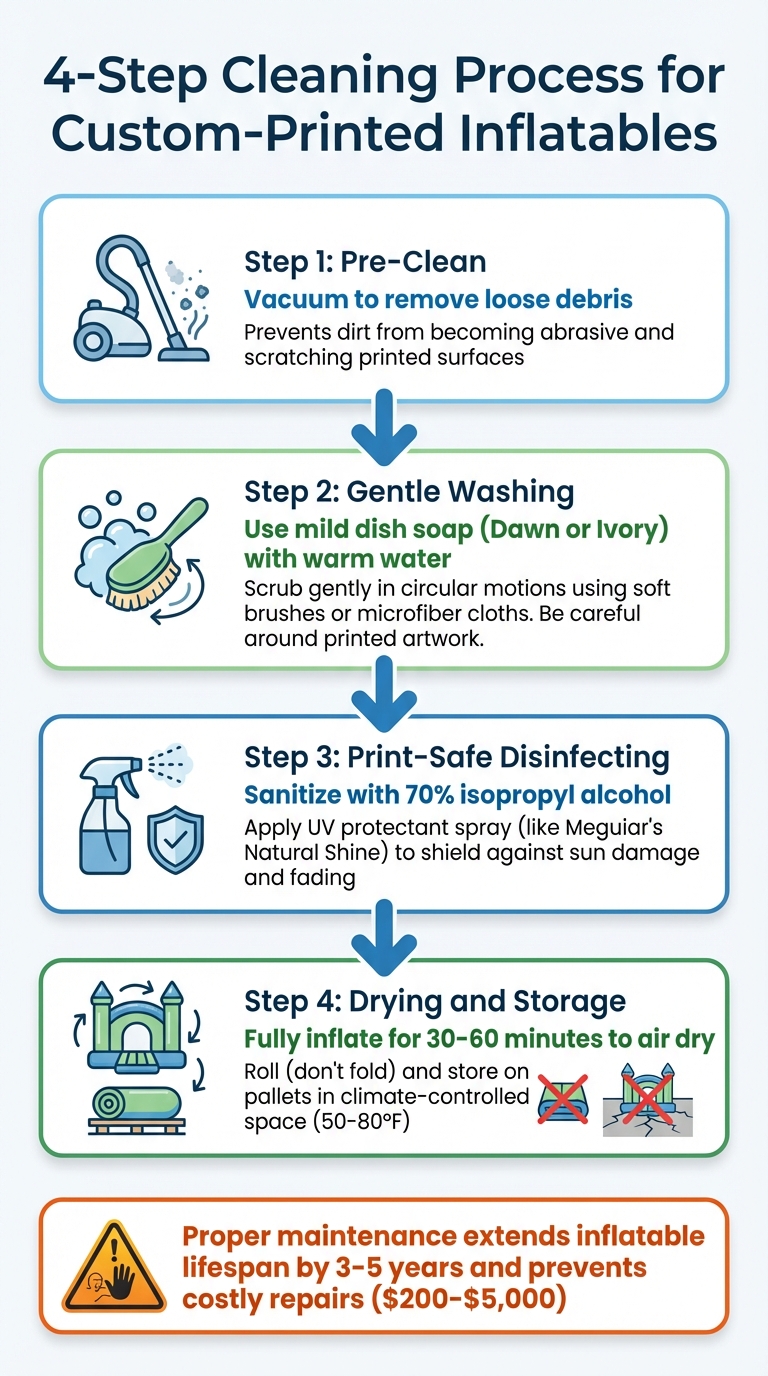
4-Step Process for Cleaning Custom-Printed Inflatables Safely
Keeping a consistent cleaning schedule – wiping down after each use, deep cleaning weekly, and sanitizing monthly – can help maintain both the quality of your prints and the lifespan of your equipment. This routine prevents dirt from sticking to the vinyl and can extend the life of your inflatable by 3–5 years.
To stay organized, try using a color-coded tag system. For example:
- Green: Clean and ready-to-use units
- Yellow: Units that need cleaning
- Blue: Wet units requiring drying
- Red: Damaged equipment needing repairs
This visual system ensures no unit is stored dirty or damp – conditions that can lead to mold growth within just 24–48 hours. Pairing this system with a cleaning process for bounce houses can help protect your custom prints and simplify maintenance.
4-Step Cleaning Process
Incorporate these four steps into your routine to keep your inflatables in top shape:
1. Pre-Clean: Start by vacuuming to remove loose debris. This prevents dirt from becoming abrasive when wet, which could scratch printed surfaces during washing.
2. Gentle Washing: Use a mild dish soap like Dawn or Ivory mixed with warm water. Scrub the surface gently in circular motions using soft brushes or microfiber cloths. Be careful around printed artwork, as aggressive scrubbing can cause fading over time.
3. Print-Safe Disinfecting: For high-touch areas, sanitize with 70% isopropyl alcohol. It dries quickly and leaves no residue. After cleaning, apply a UV protectant spray – like Meguiar’s Natural Shine – to shield against sun damage and fading.
4. Drying and Storage: Fully inflate the unit for 30–60 minutes to air dry. Open vent zippers to check for hidden moisture. Instead of folding, roll the unit correctly to avoid creating permanent creases or stress lines, which can lead to leaks over time. For storage, place the unit on pallets in a climate-controlled space (50–80°F) to prevent moisture absorption from concrete floors.
Cleaner Comparison
Here’s a quick guide to the best cleaning products for your custom-printed inflatables:
| Cleaner Type | Safe for Custom Prints? | Key Benefit |
|---|---|---|
| Mild Dish Soap | Yes | Removes dirt gently without harming prints |
| UV Protectant Spray | Yes | Protects against sun damage and fading |
| 70% Isopropyl Alcohol | Yes | Provides fast, residue-free sanitization |
Skipping maintenance can lead to costly repairs. Mold remediation alone can cost $200–$500 per unit, while replacing a damaged commercial inflatable might set you back as much as $5,000. By following these steps, you’ll not only keep your inflatables looking great, but you’ll also protect your investment for years to come. At Bouncy Rentals USA, our strict cleaning procedures ensure every inflatable stays safe, vibrant, and event-ready.
Conclusion
Cleaning custom-printed inflatables requires a thoughtful approach to maintain both their design and durability. These inflatables come with unique challenges, from protecting intricate artwork from fading or chipping to preventing mold that can permanently damage vinyl surfaces. To tackle these issues, use gentle, print-safe cleaners like mild dish soap, soft microfiber cloths, and always ensure the inflatable is completely dry before storing it. As Reservety highlights, "Most inflatable damage does not happen during use. It happens during storage".
A consistent cleaning routine is key. Wiping down after each use, deep cleaning weekly, and sanitizing monthly can extend the lifespan of your inflatables by 3–5 years. Additionally, always roll – rather than fold – your inflatables to avoid permanent creases.
Drying thoroughly after cleaning is crucial, as mold can develop in as little as 24–48 hours. Neglecting proper care can lead to expensive repairs, ranging from $200–$500 for mold remediation to as much as $5,000 for replacements. By investing in the right cleaning products and following a structured maintenance schedule, you can avoid these costly outcomes.
At Bouncy Rentals USA, we understand that clean, vibrant inflatables not only protect your investment but also leave a lasting impression on clients, encouraging repeat business. By addressing issues like ink fading, abrasive damage, and moisture retention, you ensure your inflatables remain safe, visually appealing, and ready to provide fun at every event.
FAQs
What’s the safest way to disinfect a printed inflatable?
To clean and disinfect a printed inflatable safely, start by vacuuming the surface to remove any loose debris. Next, use a mild soap solution or a cleaner recommended by the manufacturer, applying it with microfiber cloths to avoid damage. For disinfection, choose an EPA-registered disinfectant that’s safe for vinyl or the specific material of the inflatable. Follow the instructions for the required contact time to ensure proper disinfection. Finally, allow the inflatable to dry completely before storing or using it again to avoid mold or mildew.
How can I tell if an inflatable is fully dry before storage?
To properly dry an inflatable before storing it, inspect every surface carefully, paying extra attention to seams and crevices where moisture might hide. Use towels or air blowers to eliminate any remaining dampness. Ensure the inflatable feels completely dry before folding and putting it away. This step is crucial to avoid mold, mildew, and potential damage, keeping the inflatable in good shape for future use.
What should I do if mold starts to form on a printed area?
To remove mold from a printed area on a custom inflatable, use a gentle, non-abrasive cleaner. A mix of warm water and dish soap works well, or you can opt for a solution like Formula 409. Stay away from chlorine-based cleaners, as they can harm the material. Once cleaned, make sure to dry the area completely to stop mold from coming back. Regular checks and quick cleanups can help keep your inflatable looking great and lasting longer.
