
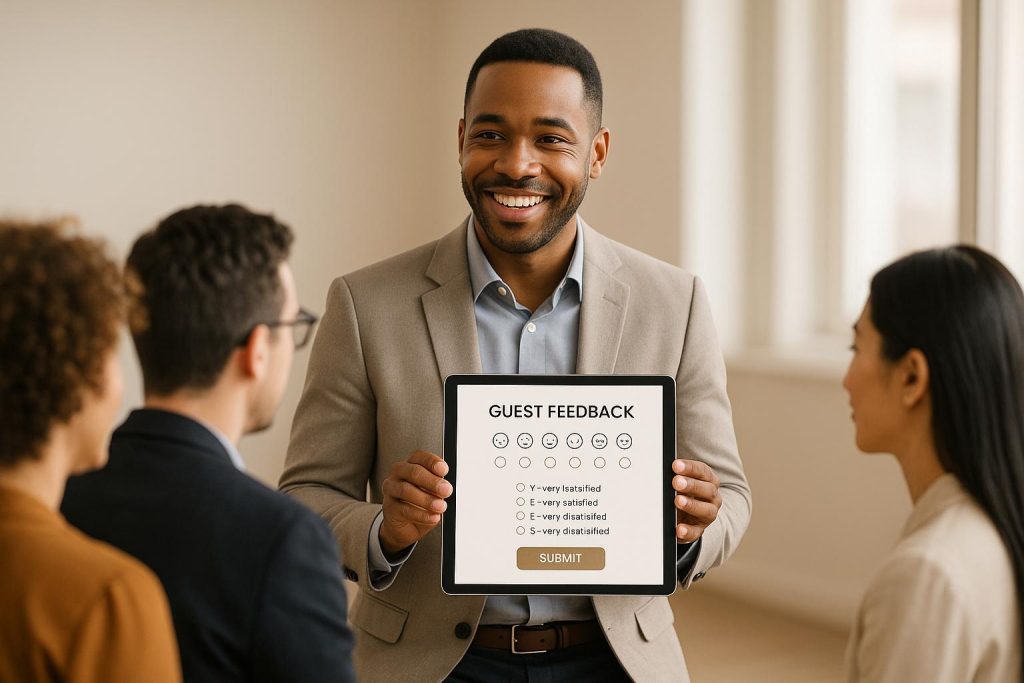
Collecting and using guest feedback after an event is critical for improving services, ensuring safety, and boosting customer satisfaction. For companies like Bouncy Rentals USA, this means addressing everything from equipment cleanliness and delivery punctuality to staff professionalism and overall event enjoyment. By planning feedback collection in advance, using tools like surveys, QR codes, and social media monitoring, and acting on the insights gathered, businesses can refine their operations and create better experiences for future events.
Key Takeaways:
- Plan Ahead: Set clear feedback goals, choose collection methods like QR codes or email surveys, and train your team to encourage responses.
- Act Quickly: Gather feedback within 24 hours through short, mobile-friendly surveys or social media monitoring.
- Ask the Right Questions: Focus on booking ease, delivery timeliness, equipment condition, and staff interactions.
- Use Feedback Effectively: Categorize responses to spot patterns, address recurring issues, and make specific improvements to your services.
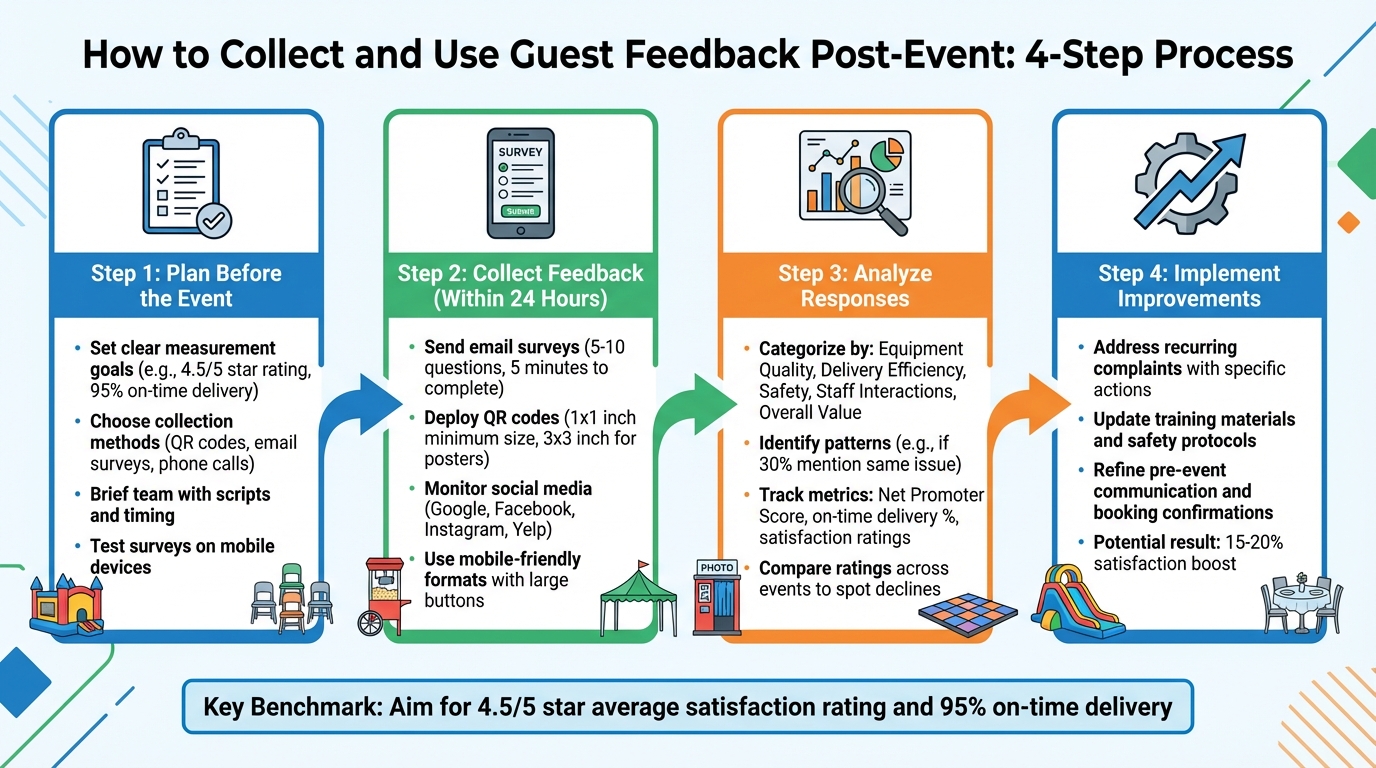
4-Step Guest Feedback Collection Process for Event Rental Businesses
Planning for Feedback Before the Event
Great feedback doesn’t just happen – it’s something you need to plan for. By weaving feedback collection into your event preparation, you can gather more responses and gain valuable insights. For businesses like Bouncy Rentals USA, this means considering feedback goals during the booking process, not scrambling to figure it out after the event. A little foresight goes a long way in setting up an effective system for collecting post-event feedback.
Set Clear Goals for What to Measure
Decide on specific areas to focus on for every event. For bounce house and water slide rentals, key areas often include equipment condition and cleanliness, delivery and pickup timeliness, staff professionalism, ease of booking and payment, and overall enjoyment of the event. Establish clear benchmarks to measure success – such as aiming for an average satisfaction rating of 4.5 out of 5 stars, ensuring 95% of deliveries are on time, or improving your Net Promoter Score beyond its current level. When your goals are clearly defined, every survey question you create will directly tie back to meaningful business outcomes.
Choose Your Feedback Collection Methods
Pick feedback tools that match the event type and your customers’ preferences. For larger events, use QR codes on signage near inflatables or concession stands. Parents can quickly scan and share their thoughts while their kids are playing. For smaller, private events like birthday parties, send a brief email or text survey to the host within 24 to 48 hours, while their experience is still fresh. For high-value or repeat customers, consider a personal follow-up call to gather detailed feedback and strengthen your relationship. Planning these methods ahead of time lets you prepare everything – forms, QR codes, and automated emails – well in advance. Always test your surveys on both phones and tablets to ensure they’re easy to use. Once your methods are finalized, make sure your team is ready to carry out the plan.
Brief Your Team on Feedback Collection
Your team members, especially drivers and attendants, play a big role in gathering feedback. Equip them with a simple, natural script. For example, after setting up, they could say: “If you have a moment later, we’d love to hear your feedback. There’s a QR code on your receipt and on the bounce house sign. Your input helps us keep everything safe and fun for families.” Train your team to know when to mention feedback (like during drop-off or pickup) and when to hold back if the host seems busy. Before each event, double-check that client contact details are accurate so post-event surveys reach the right person at the right time. Assign someone to oversee survey scheduling and ensure responses are logged properly after every rental.
Collecting Guest Feedback After the Event
Getting feedback within 24 hours is crucial for capturing fresh impressions. The easier you make it for guests to share their thoughts – whether through a quick email survey, a QR code, or a social media comment – the more likely they are to respond. These insights are invaluable for improving future events.
Send Post-Event Surveys
Email surveys are one of the most effective ways to gather feedback. Send your survey within 24 hours to ensure you’re getting immediate impressions. Use a clear and inviting subject line, like "We’d love your feedback – 2-minute survey," to encourage guests to open it. Make sure the survey is mobile-friendly with large buttons and minimal scrolling, so it’s easy to complete on a smartphone.
Keep it short and to the point – 5 to 10 questions that take about 5 minutes to complete is ideal. Use a mix of question types to gather both numerical ratings and written insights. Start with broad questions like, "How would you rate your overall experience?" or "How likely are you to recommend Bouncy Rentals USA to a friend?" Then, dive into specifics like booking ease, delivery timeliness, equipment cleanliness, and staff friendliness. Wrap up with open-ended questions such as, "What did you enjoy most?" or "What could we improve for next time?" To encourage participation, offer a small incentive like a chance to win a gift card or a discount on their next rental.
Use QR Codes and Receipt Links
QR codes are a simple yet powerful way to gather feedback. Add them to printed materials like rental agreements, invoices, equipment tags, or on-site signage. A quick call to action, such as "Scan to rate your experience and enjoy 10% off your next party," can drive engagement. For digital receipts or booking confirmations, include both clickable links and QR codes for easy access.
Place QR codes in high-traffic areas where guests naturally pause, such as near the bounce house entrance, on concession stands, or at exit points where families gather their belongings. Ensure the QR code is large enough to scan easily – at least 1 x 1 inch on smaller materials or around 3 x 3 inches on posters. The linked form should be short, with only 3 to 5 questions that can be completed in under two minutes while the event is still fresh in their minds.
Track Social Media and Online Reviews
Not all guests will fill out a survey – some might share their feedback on social media instead. Regularly check platforms like Google Business, Facebook, Instagram, and Yelp to catch this unprompted feedback. Set up alerts for new reviews or mentions so you can respond quickly and spot trends early.
Look for recurring themes. For instance, if multiple reviews mention "super clean equipment" or "delivery was late," those comments can highlight both strengths and areas for improvement. Pay attention to photos and videos shared by guests as well – they can reveal which rentals were the most popular and spark ideas for future marketing. When responding to feedback, thank guests for their positive comments and address any concerns professionally. Acknowledge any issues and offer to resolve them offline. This approach shows that you value guest satisfaction and take reliability and safety seriously, which builds trust with future customers.
Designing Feedback Questions That Work
The difference between gathering useful feedback and wasting time often boils down to how you phrase your questions. Clear, well-thought-out questions provide actionable insights to improve your service, while vague or confusing ones leave you with responses that aren’t helpful.
Ask About Key Event Aspects
Focus on the areas that directly impact your guests’ experience. For instance, ask about the booking process with a question like, "How easy was it to book your rentals online or by phone?" using a 1-5 rating scale. For delivery and setup, try, "Was delivery and setup on time and professional?" with a yes/no option and space for additional comments. To address equipment quality, you could ask, "How would you rate the cleanliness and condition of the bounce house or water slide?" on a 1-5 scale. And don’t overlook staff interactions – questions such as "How satisfied were you with the friendliness and professionalism of our team?" can provide valuable insights. These targeted questions allow you to pinpoint specific strengths and weaknesses, such as consistently high ratings for equipment cleanliness or recurring issues with setup delays.
Keep Questions Simple and Quick
Limit your survey to 5-10 questions that take no more than 5-10 minutes to complete. Use a mix of formats, such as rating scales (e.g., 1-5 stars or emoji sliders), yes/no questions ("Did our team clearly explain the safety rules?"), and a couple of short open-text prompts like, "What could we improve for next time?" This variety keeps respondents engaged while giving you both measurable data and detailed feedback. Keeping the survey concise not only boosts completion rates but also encourages honest and thoughtful responses.
Make It Easy to Share Honest Opinions
To encourage candid feedback, use a neutral and welcoming tone in your questions. Instead of asking, "What went wrong?" try, "Was there anything that didn’t go as expected?" Use positive framing, such as, "What did you enjoy most about your event?" followed by, "What’s one thing we could improve for next time?" Reinforce the importance of their input with statements like, "Your honest feedback helps us improve future events." For more sensitive topics, consider offering anonymous responses, which can help guests feel more comfortable sharing their true thoughts. Avoid leading language like, "How amazing were our staff?" and stick to straightforward phrasing, such as, "How would you rate our staff?" for unbiased answers.
Using Feedback to Improve Future Events
Feedback is only valuable if it leads to action. By analyzing guest input and making targeted improvements, you can enhance your service, encourage repeat customers, and generate positive word-of-mouth.
Spot Patterns and Recurring Issues
Start by organizing feedback into clear categories to identify recurring problems. For example, you might group comments under headings like equipment quality (e.g., cleanliness of bounce houses or water slide conditions), delivery efficiency (timeliness and setup speed), safety concerns (anchor stability and safety guidelines), staff interactions (friendliness and professionalism), and overall value. Once categorized, look for trends. If 30% of guests mention slippery slides or multiple customers report delays of two hours or more, it’s clear there’s a problem that needs attention.
Compare average ratings across events to spot declines. For instance, if delivery ratings drop from 4.7 to 3.9 over a season, it might signal issues like new staffing challenges, inefficient routes, or an overloaded schedule. Metrics like Net Promoter Score (the classic "Would you recommend us?" question) and on-time delivery percentages can help you track whether these issues are improving or worsening over time. These insights allow you to focus on the areas that need the most attention.
Make Changes Based on Feedback
Recurring complaints should lead to specific, measurable actions. For instance, if 20% of feedback mentions issues with anchoring or setup, consider scheduling staff training sessions to reinforce proper installation techniques. Supplement this training with photo checklists to ensure safety standards are consistently met.
If delivery delays are a frequent complaint, solutions like adding GPS tracking to your vehicles could help streamline operations. For equipment-related concerns, prioritize replacing worn-out items and improving cleaning protocols. Investing in new equipment and refining training materials could boost satisfaction by as much as 15–20%. Incorporate these updates into your event planning processes to ensure long-term improvements.
Update Your Event Planning Resources
Guest feedback can also help you refine pre-event communication, setting clearer expectations for future customers. For example, if guests often express confusion about space requirements, update your booking confirmations and website with specific details like: “Ensure a 20×20 ft area with 10 ft of clearance on all sides” or “Provide a dedicated 20-amp outlet within 50 ft of the setup location.”
If safety rules are a common point of confusion, create a simple, photo-based guide that covers key points like supervision requirements, capacity limits, and weather considerations. Sending these updated resources via email after booking ensures everyone is well-prepared from the start.
Treat your internal planning documents as works in progress, evolving based on customer input. For example, if multiple families express uncertainty about wind limits for water slides, add a weather policy section to your setup checklist. This commitment to continuous improvement ensures each event builds on the lessons of the past, enhancing both safety and customer satisfaction over time.
Conclusion
Guest feedback plays a key role in creating safer, more enjoyable events that keep customers coming back. Paying attention to comments about equipment cleanliness and delivery timing helps identify and address potential issues before they turn into recurring problems. This not only resolves concerns but also shows guests that their opinions truly matter. When paired with well-thought-out feedback strategies, these insights pave the way for ongoing improvements in event planning and execution.
For Bouncy Rentals USA, this approach does more than just refine service quality – it strengthens their position as a market leader. Guest feedback becomes a powerful tool for growth. Positive reviews about team professionalism and well-maintained equipment highlight existing strengths, while constructive criticism around setup delays or safety measures points to areas for improvement. Together, these insights help enhance safety, boost customer satisfaction, and ensure every event outshines the last.
FAQs
What’s the best way to gather guest feedback after an event?
To gather useful feedback after your event, make the process straightforward and inviting. Send a personalized follow-up message shortly after the event while the experience is still fresh in attendees’ minds. Include a short online survey or provide several response options, like email or phone, to make it convenient for everyone. Emphasize how their feedback contributes to improving future events, and consider sweetening the deal with a small incentive, such as a discount on a future booking or a chance to win a prize, to boost participation.
What are the best ways to create effective event feedback surveys?
When creating event feedback surveys, it’s important to keep the questions simple and straightforward so respondents can easily follow along. Use a combination of closed-ended questions – like multiple-choice or rating scales – for quick data collection, and open-ended questions to capture more detailed thoughts and opinions. Focus on specific elements of the event, such as how satisfied guests were, the quality of services provided, or the entertainment options available.
To get more responses, keep the survey brief and accessible, whether it’s shared online or handed out in print. The feedback you gather can highlight areas that need improvement, helping you fine-tune future events and services. For instance, learning more about guest preferences can guide Bouncy Rentals in tailoring its offerings to create even more unforgettable experiences.
How can I use guest feedback to make future events better?
Start by thoroughly examining all feedback to spot patterns or recurring suggestions. Prioritize addressing the most pressing issues and focus on changes that will have the greatest effect on guest satisfaction. For instance, if several guests highlight a particular activity or rental item as a favorite, think about expanding similar offerings in the future.
After implementing changes, share the news with your guests to show them that their input matters – this helps build trust and encourages them to share feedback again. Make it a habit to review feedback regularly to monitor progress and fine-tune your event planning. Whether it’s upgrading equipment or enhancing customer service, thoughtful improvements driven by guest insights can elevate every event to the next level!
