
Keeping inflatables clean is vital for safety, durability, and hygiene. Improper cleaning can lead to mold, odors, weakened seams, and even health risks like infections. Here are five common mistakes to avoid:
- Using harsh chemicals: Strong cleaners like bleach or MEK can damage vinyl and cause discoloration. Stick to gentle, bleach-free solutions like diluted vinegar or Simple Green.
- Storing while wet: Moisture leads to mold and weakens material. Always dry inflatables thoroughly, especially seams and crevices, before storage.
- Skipping rinsing: Residual soap or bleach can stain, irritate skin, or attract dirt. Rinse thoroughly to remove all cleaning agents.
- Neglecting crevices and high-touch areas: Dirt and bacteria hide in seams, corners, and frequently touched spots like ladders or entrances. Clean these areas carefully with soft tools or vacuums.
- Using abrasive tools or pressure washers: Wire brushes or high-pressure water can damage vinyl and seams. Use soft cloths or sponges instead.
Proper care ensures your inflatable stays safe, clean, and lasts longer. Whether you own or rent, following these tips will help protect users and your investment.
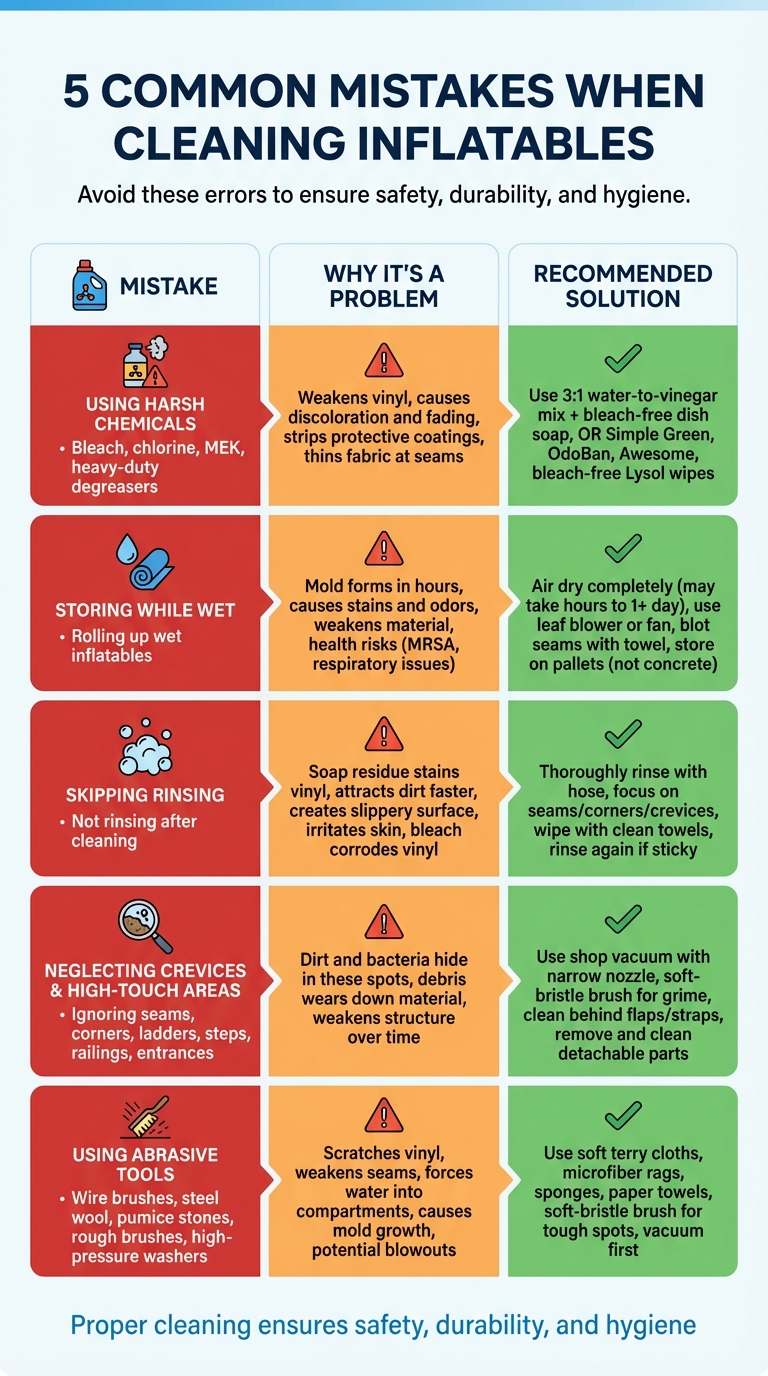
5 Common Inflatable Cleaning Mistakes and Solutions
1. Using Harsh Chemicals
It might be tempting to grab strong cleaning products to sanitize an inflatable quickly, but doing so can cause permanent damage to the vinyl. Chemicals like bleach, chlorine, or Methyl Ethyl Ketone (MEK) can weaken the fabric, leading to discoloration and fading over time.
Emily Perkes, the Owner of Bounce Insider, emphasizes:
"Avoid any cleaners with bleach, chlorine or Methyl Ethyl Ketone (MEK) that can weaken the vinyl."
Harsh substances such as heavy-duty degreasers or bathroom solvents can strip away protective coatings, leaving the material more vulnerable to wear and tear. Over time, these chemicals can thin the fabric, especially around seams, which compromises both safety and durability.
For safer cleaning, try a simple DIY mix: combine three parts water with one part white vinegar and add a few drops of bleach-free dish soap (like Dawn). You can also use diluted commercial options like Simple Green, OdoBan, or Awesome. Bleach-free disinfecting wipes or sprays (such as Lysol‘s bleach-free versions) are also great for sanitizing without harming the vinyl. Just be sure to rinse thoroughly afterward to remove any residue that might stain, weaken the material, or irritate the skin.
Up next, let’s talk about another frequent mistake: storing inflatables while they’re still wet.
2. Storing Inflatables While Wet
Moisture is the biggest enemy of inflatables. Rolling up a wet inflatable traps water, which can lead to mold and mildew forming in just a few hours. This not only causes unpleasant stains and odors but also makes cleaning a much bigger challenge.
The damage from moisture goes beyond surface issues – it can weaken the material over time, especially when combined with dirt or debris. Even small amounts of debris can wear down seams and fabric, shortening the inflatable’s lifespan. Additionally, improper drying can pose health risks, exposing users to infections like MRSA or respiratory problems caused by mold.
Emily Perkes, the owner of Bounce Insider, emphasizes the importance of drying:
"No matter how pristine it was, if you put the bounce house away while it was still wet then it could be full of filth and mold the next time you bring it out."
Drying inflatables thoroughly is trickier than it seems. Areas like seams, straps, and reinforced sections take much longer to dry than flat vinyl surfaces. Even if the walls feel dry to the touch, moisture can linger in folds and crevices. To tackle these hidden spots, blot them with a towel or chamois, and use a fan or leaf blower to speed up the drying process. Depending on the inflatable’s size and the humidity level, drying completely might take a few hours – or even more than a day.
Before deflating, check seams and crevices to ensure every part is dry. This step protects both the material and the health of future users. Once dry, store the inflatable in a cool, dry space. Placing it on pallets or wooden stands instead of directly on concrete can help prevent condensation and moisture buildup. These simple measures go a long way in keeping your inflatable free from mold and odors during storage.
At Bouncy Rentals USA, we take these steps seriously to make sure every inflatable is clean, safe, and ready to shine at your next event.
3. Skipping Thorough Rinsing
After cleaning an inflatable, skipping a full rinse can leave behind soap residue, which can cause problems for both the inflatable and its users. A proper rinse is crucial to prevent these issues.
Leftover cleaning products can create permanent stains or discolor the vinyl surface. Additionally, soap residue attracts dirt and debris, making a freshly cleaned inflatable dirty again much faster. Beyond aesthetics, this residue can create a slippery surface, which is particularly unsafe for children.
Residual cleaning solutions can also irritate the skin, especially for kids, and may gradually weaken the vinyl material. If you’ve used bleach-water mixtures to tackle mold, rinsing becomes even more important. Any leftover bleach can corrode the vinyl over time, causing significant damage.
Pay special attention to seams, corners, and crevices where soap tends to accumulate. Use a water hose to thoroughly flush out all cleaning agents, and follow up by wiping the surfaces with clean towels to catch any lingering residue. If the vinyl still feels sticky or filmy, rinse it again. This extra effort helps protect your equipment and ensures a safer experience for families.
4. Neglecting High-Touch and Crevice Areas
When cleaning an inflatable, it’s easy to focus on the large, obvious surfaces and forget about the smaller spaces where dirt and bacteria love to hide. Seams, corners, and high-touch areas are often overlooked but are critical zones that need extra care.
High-touch areas include ladders, steps, side rails, railings, and entrance or exit points. These spots are frequently handled, making them potential hotspots for germs and viruses. As one cleaning guide points out:
"The logic at this stage is that if there’s a reasonable chance human hands have touched any part of your bounce house, it needs to be disinfected."
Crevices and seams are another trouble area. Sand, dirt, and debris can build up in these tight spaces, acting like grit that slowly wears down the material. Over time, this can weaken the inflatable’s structure if not addressed.
To tackle these hard-to-reach zones, consider these tips:
- Use a shop vacuum with a narrow nozzle or brush attachment to remove debris from seams and corners.
- A soft-bristle brush is ideal for loosening stubborn grime without damaging the vinyl.
- Check behind flaps, under straps, and inside hidden nooks where dirt might collect.
- If your inflatable has detachable parts like art panels or slides, remove them and clean them separately.
Finally, don’t forget the underside of the inflatable. This area often traps dirt and moisture, creating a prime environment for mold. Pay special attention to thicker sections like straps and reinforced seams, as they take longer to dry than flat vinyl. Always ensure these areas are completely dry before storing the inflatable to prevent long-term damage.
5. Using Abrasive Tools or Pressure Washers
Harsh cleaning methods can be just as damaging as using the wrong chemicals or drying techniques. Tools like wire brushes, steel wool, pumice stones, or even rough-bristled brushes can scratch and wear down vinyl surfaces, weakening the seams over time. Emily Perkes, Owner of Bounce Insider, emphasizes this point:
"Never scrub your bounce house with a pumice stone, thick, rough bristled brushes, wire brush or steel wool. Only use soft terry cloth, paper towel or wipes."
High-pressure water can also be problematic. Pressure washers, while effective for many cleaning tasks, can strain seams and vinyl fabric, leading to potential blowouts. They may also force water into seams, zippers, or compartments, creating the perfect conditions for mold and mildew to grow. If you must use a pressure washer, stick to a low-pressure setting and maintain a distance of at least 3 feet. Prioritize gentler cleaning methods to ensure your inflatable stays in good shape.
Stick to soft cleaning tools for the best results. Use terry cloths, microfiber rags, sponges, or paper towels to wipe down surfaces. For tough dirt in hard-to-reach areas, a soft-bristle brush or even a toothbrush works well. Before using any wet cleaning methods, vacuum up loose sand and debris with a brush attachment to avoid scratching the vinyl.
Best Practices Overview
Here’s a quick guide to help you avoid common cleaning mistakes and keep your equipment in excellent condition.
| Cleaning Mistake | Why It’s a Problem | Recommended Solution |
|---|---|---|
| Using Harsh Chemicals | Bleach and solvents can weaken vinyl and damage seams. | Opt for bleach-free, non-abrasive cleaners like Simple Green or a 3:1 water-to-vinegar mix. |
| Storing While Wet | Moisture leads to mold, mildew, and unpleasant odors. | Always air dry completely; use a leaf blower to speed up the process. |
| Skipping Rinsing | Leftover chemical residues may stain or irritate skin. | Rinse thoroughly with a hose to remove all cleaning agents. |
| Neglecting Crevices | Dirt and debris in corners can cause friction and wear down the fabric over time. | Use a shop vacuum to clean out dirt, sand, and leaves from corners and flaps. |
| Using Abrasive Tools | Wire brushes or power washers can damage the vinyl surface. | Stick to soft rags, sponges, or soft-bristle brushes for scrubbing. |
At Bouncy Rentals USA, we take these cleaning practices seriously. Every bounce house, water slide, and inflatable obstacle course is carefully cleaned and sanitized between rentals. This ensures your guests always have a safe and hygienic experience.
Conclusion
Taking care of your inflatables the right way ensures they remain safe to use and last longer. Regular cleaning not only protects your investment but also keeps users safe by removing harmful bacteria and preventing wear and tear. Even tiny bits of dirt can act like sandpaper, slowly wearing down the vinyl and weakening seams. Consistent upkeep prevents mold, extends the lifespan of your equipment, and keeps everyone safe from dangerous germs.
Cleaning also doubles as an inspection opportunity. While scrubbing, you might notice small tears or loose seams – catching these early can save you from costly repairs later. By following the steps outlined earlier, like using gentle cleaners, thoroughly drying the inflatable before storing it, rinsing hidden areas, and avoiding harsh tools, you can keep your equipment in excellent shape for years.
For those who rent inflatables, companies like Bouncy Rentals USA make it easy. They deliver inflatables that are professionally cleaned and sanitized, following strict protocols after every use. Whether it’s a bounce house, water slide, or obstacle course, you can trust their equipment to arrive spotless and ready for fun. With these practices, you can maintain your inflatables or enjoy a worry-free rental experience, ensuring a safe and memorable event for everyone.
FAQs
What cleaning solutions are safe to use on inflatables?
To clean inflatables safely without risking damage, stick to gentle cleaning solutions. A simple mix of water and white vinegar or diluted mild dish soap works well. These options not only clean off dirt but also help prevent mold and mildew, all while being gentle on the material.
Steer clear of harsh chemicals, bleach, or abrasive cleaners, as they can break down the surface and reduce the lifespan of the inflatable. Before applying any cleaning solution, test it on a small, hidden spot to make sure it won’t harm the material.
What’s the best way to make sure my inflatable is completely dry before storing it?
To make sure your inflatable is dry before storing it, inflate it in a well-ventilated space and let it air dry completely. This allows any hidden moisture to evaporate. If you want to speed up the process, grab some clean towels and wipe down surfaces, especially those tricky corners where water can pool. Taking the time to dry it properly is essential to avoid mold, mildew, and odors while it’s in storage. Don’t rush – ensure every spot is dry.
Why shouldn’t you use a pressure washer to clean inflatables?
Using a pressure washer on inflatables might seem like a quick solution, but it can actually do more harm than good. The intense spray can push water into seams or tiny openings, which could weaken the material and lead to leaks or other damage. On top of that, it might strip away protective coatings, shortening the lifespan of your inflatable.
Instead, stick to gentler cleaning methods. A mix of mild soap, water, and a soft cloth or sponge is all you need. This approach keeps your inflatable clean while preserving its durability and appearance, without risking unnecessary damage.
