

Looking for a simple way to keep everyone entertained this summer? Water balloon games are a budget-friendly activity that works for all ages. With just $50–$100, some balloons, and basic supplies, you can create hours of fun for birthdays, block parties, school events, or holiday gatherings. Here’s what you need to know:
- Supplies: Biodegradable balloons, garden hose, buckets, and optional extras like cones or markers.
- Game Ideas: Dodgeball, toss challenges, relays, and even "Capture the Flag" with a water twist.
- Safety: Play on grass, avoid sharp objects, supervise kids, and encourage proper footwear.
- Preparation: Fill balloons just before the event, store in shaded areas, and plan for 20–50 balloons per player per hour.
- Cleanup: Use trash bags for balloon pieces, rinse surfaces gently, and reward helpers to make tidying up fun.
Whether you’re hosting a small backyard bash or a larger event, these games are easy to organize and guarantee plenty of laughs. Keep reading for tips, setup advice, and creative ways to make your water balloon day unforgettable.
Water Balloon Party Planning Guide: Supplies, Quantities, and Budget Breakdown
Supplies and Preparation
Materials Checklist
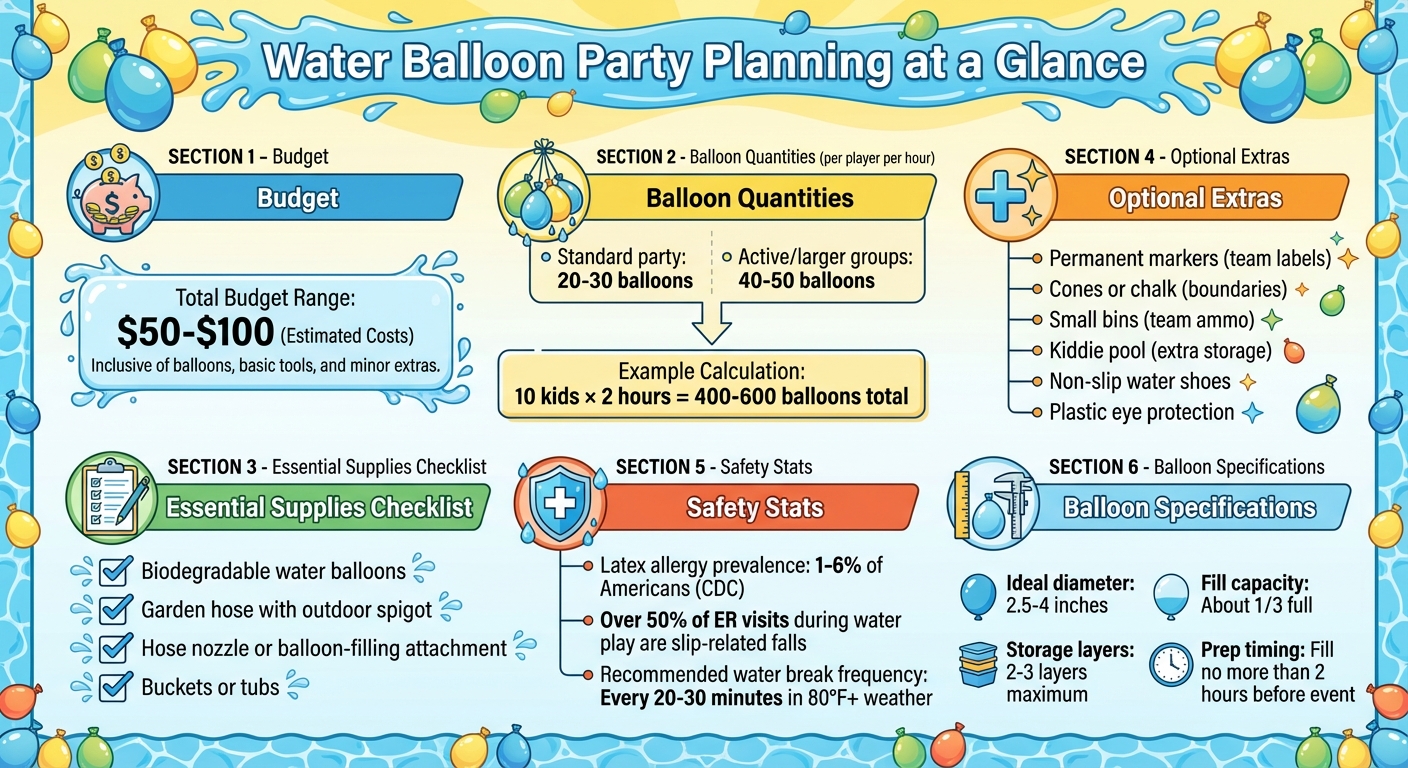
To get started, you’ll need the essentials: biodegradable water balloons, a garden hose with an outdoor spigot, a hose nozzle or a balloon-filling attachment, and buckets or tubs. For a typical backyard party, plan for 20–30 balloons per player per hour to keep the action going without constant refills. If your group is larger or more active, consider upping that to 40–50 balloons per player per hour. For example, hosting 10 kids for a 2-hour event means you’ll need about 400–600 balloons. Using biodegradable balloons makes cleanup easier and is kinder to the environment.
If you want to step things up, consider adding extras like permanent markers to label balloons by team or score, cones or chalk to mark boundaries, small bins for team "ammo", and a kiddie pool for extra filled balloons. Safety gear like non-slip water shoes and plastic eye protection can make intense games safer. For bigger events, such as school field days or block parties, rentals from Bouncy Rentals USA – like bounce houses, inflatable obstacle courses, or water slides – can transform a simple balloon day into a full-blown water festival. They even handle delivery, sanitization, and setup.
Filling and Storing Balloons
To fill balloons quickly, attach a balloon filler or multi-balloon filling system to your garden hose. These tools can fill dozens of balloons at once and even seal them automatically. If you don’t have one, a twist-adjustable hose nozzle works well – just set it to a gentle stream, slip the balloon over the nozzle, and hold it snug while filling. Aim to fill balloons to about 2.5–4 inches in diameter for a balance of durability and elasticity.
Tie a tight knot close to the neck of each balloon, being careful not to overstretch the latex. Place filled balloons gently into your buckets or tubs, adding a little water or a damp towel at the bottom to cushion them and reduce friction. Avoid stacking them too deeply – stick to two or three layers – and keep them away from sharp objects like rocks or sticks to prevent accidental popping.
Store the balloons in a cool, shaded spot to keep them from overheating and bursting. Use a canopy, large tree, patio cover, or pop-up tent for shade, and line your containers with a few inches of cool tap water to maintain an even temperature. For the best results, fill balloons no more than a couple of hours before the event, as longer storage increases the risk of leaks or thinning. If you’re prepping for a large group, set up multiple filling stations to speed up the process.
Setting Up Your Play Area
With your supplies ready, focus on creating a safe and organized play zone. Choose an area with flat, even ground, like grass, which offers better traction and softer landings. Avoid places with steep slopes, loose gravel, exposed roots, or cracked concrete to reduce the risk of slips and falls. Make sure there’s easy access to a water source for refills and enough space to separate "throwing zones" from spectators or food areas. Clear away any hazards, and use cones, flags, or chalk lines to mark boundaries and safe zones so players know where they can run, throw, or slow down near fences or patios.
Bright markers like cones, yard flags, pool noodles, or thick chalk lines help players stay within the game area. For team games, assign each team a bucket in their designated color zone, and use colored balloons or marker stripes to differentiate teams. Clearly label safe zones – like the refill station or spectator areas – and explain these rules before the games begin. Signs with labels like "Safe Zone" or "Start Line" can help younger players follow the rules more easily.
Before starting, make sure players wear closed-toe shoes or water shoes with good traction to prevent slips on wet surfaces. Lightweight clothing that can get wet is ideal, and swim goggles can help protect sensitive eyes. Keep a basic first-aid kit nearby for minor injuries, and provide sunscreen and shade for protection from the midday sun. To keep cleanup manageable, set out trash bags or buckets for broken balloon pieces near the play area. Using biodegradable balloons and assigning cleanup helpers will keep the yard safe and tidy when the fun is over.
Water Balloon Game Ideas
Once you’ve got your supplies and play area ready, it’s time to dive into some fun! Here are a few exciting water balloon games to try out:
Water Balloon Dodgeball
Create a court using chalk, cones, or rope to mark a centerline. Aim for dimensions around 30–50 feet long and 20 feet wide, adjusting based on your group size. Divide players into two teams, each starting behind their baseline with a stash of at least 100 balloons. When the game begins, players throw balloons at opponents across the line. A direct hit eliminates the player, sending them to a sideline "soak zone." Catching a balloon eliminates the thrower instead. For younger kids (ages 5–8), shrink the court and encourage softer throws. Teens and adults can ramp up the intensity with larger courts and headshots allowed.
Water Balloon Toss
Pair players up and have them stand 5–10 feet apart (closer for younger kids). After every successful toss and catch, the players step back 2–3 feet. The game continues until the balloon bursts, eliminating that pair. The last pair standing with an unbroken balloon wins. For birthday parties, you can organize a tournament-style bracket where winners advance. At block parties, mix all ages and stick to underhand tosses to keep it friendly for everyone.
Fill the Bucket Race
Each team or player gets a large bucket – 5-gallon buckets work great – with a fill line marked at about 2 gallons. Provide a pile of at least 50 water balloons per group. Players pop balloons over their bucket, racing to fill it to the line as fast as possible. For a team relay, one player at a time works to pop balloons until the bucket is full. If you’re working with smaller groups, make it an individual race. Larger events can spice things up with obstacles like cones to navigate.
Back-to-Back Balloon Relay
Form teams of pairs, with each duo holding a water balloon between their backs – no hands allowed! On the signal, pairs race 20–30 yards to a finish line or cone, then tag the next pair. If the balloon pops, they must return to the start for a new one. For kids, shorten the distance to about 10 yards. Adults can add a zig-zag course for more of a challenge. Pre-fill three balloons per player to keep the game moving smoothly.
Capture the Flag with Balloons
Divide a field into two halves, approximately 40 by 20 yards, with a centerline. Place a flag – or a cluster of balloons – in each team’s back zone, guarded by water balloons. The goal is to steal the other team’s flag and bring it back to your side without getting tagged by a thrown water balloon. Tagged players go to a "dunk jail" until teammates free them with a balloon toss. For family events, avoid headshots and encourage gentle throws. This game is best for ages 8 and up, but younger kids can join in by playing at a slower pace.
Safety Tips and Game Variations
Safety Precautions
When it comes to water balloon games, adult supervision is a must, especially with younger children. Having an adult present ensures that rules are followed, and they can quickly step in if something goes wrong. According to the U.S. Consumer Product Safety Commission, broken balloon pieces pose a choking hazard, so cleaning up any burst balloons immediately is crucial.
To minimize injuries, establish a "no-face" rule – players should aim below the shoulders to avoid eye injuries. Also, check for latex allergies before starting. Around 1 to 6 percent of Americans have latex sensitivities, based on CDC data. If anyone in your group is affected, opt for reusable silicone balloons or other non-latex options. For added safety, choose soft grass as your play area instead of hard surfaces like concrete or decking, and keep games away from streets, driveways, and pools.
Slips are one of the most common injuries during water play, with over half of ER visits linked to falls. Encourage players to wear proper footwear and keep dry towels handy for quick cleanups. When filling balloons, aim for about one-third capacity to make them easier to handle and less likely to burst prematurely. If you’re playing in hot weather (above 80°F), set up shaded areas, schedule water breaks every 20–30 minutes, and apply waterproof sunscreen to protect everyone from the sun.
Once safety measures are in place, you can tweak the games to suit the group’s abilities and preferences.
Game Modifications and Alternatives
Adjusting water balloon games to fit the ages and abilities of your group can make the experience more enjoyable for everyone. For kids under 8, stick to gentle activities like spoon relays or back-to-back walks. Keep distances short – around 10 feet – to reduce the chance of falls and ensure softer throws. Older kids (ages 8 to 12) can handle more dynamic challenges, such as simple obstacle courses or timed games. Teens and adults often enjoy more competitive twists, like longer toss distances, blindfolded relays, or even water balloon volleyball, where towels are used to sling the balloons over a net.
To cut down on waste and avoid sharp latex fragments, consider using silicone or fabric balloons. These reusable options are easy to refill with a hose and work perfectly for toss games, dodgeball, or relays. For players with mobility challenges, seated versions of games – where participants pop balloons from chairs – or assigning roles like timekeeping and scorekeeping can make the experience inclusive.
Want to turn the fun into a learning moment? Incorporate STEM elements by measuring toss distances to explore concepts like trajectory and gravity. You could also experiment with different balloon sizes to discuss how pressure and volume affect when they pop. Hosting a larger event? Combine water balloon games with other attractions like inflatable water slides or dunk tanks. Companies like Bouncy Rentals USA offer rentals that can help spread kids across multiple activities, making it easier for adults to supervise and manage the fun.
Clean-Up and Storage
Post-Game Cleanup
Right after the fun wraps up, assign cleanup tasks to everyone. Kids can gather balloon pieces, while adults focus on inspecting the area for hazards. Place trash bags in convenient spots to make disposal easier. Walk through the play area to pinpoint spots with the most balloon debris – typically near buckets, start and finish lines, under trees, or around slides and inflatables. Having trash bags readily available in these zones means no one has to go far to toss their findings.
Start by picking up visible balloon pieces by hand. For hard surfaces, use a broom and dustpan to sweep up fragments, then rinse gently with water. Pay extra attention to tricky spots like drains, flower beds, and along fences, where small pieces often hide. Balloon fragments can be harmful to the environment, so it’s important to collect every piece, including broken rubber bands and other non-biodegradable bits. Use a strong trash bag, tie it securely, and dispose of it with your regular household trash.
Once you’ve collected the debris, rinse hard surfaces lightly, directing water away from doors and low-lying areas. Be cautious about sending water toward storm drains, as they can carry leftover debris. Sweep up as much as possible before rinsing. On grassy areas, only rinse if absolutely necessary – too much water can create muddy patches or damage the lawn, especially if it’s already damp. If you rented equipment like water slides or dunk tanks from companies such as Bouncy Rentals USA, inspect the entire setup. Collect any balloon pieces, tape, or loose items, focusing on seams, anchor points, and the base of slides, as these areas can trap debris.
To make cleanup fun and engaging for kids, turn it into a game. Set a 5-minute timer and offer a small prize to the child who collects the most balloon pieces. Alternatively, challenge everyone to clear the yard before the timer runs out. For younger kids, give them small buckets and ask them to search for balloon pieces of specific colors – it’s a simple way to teach environmental responsibility while keeping them entertained.
Once the area is clean, you’re ready to pack away any leftover supplies.
Storing Unused Supplies
Proper cleanup makes it easier to jump back into water games next time. Sort any unused balloons by type and store them in airtight, labeled containers. Keep these containers in a cool, dry spot indoors – away from direct sunlight, heaters, or extreme temperature changes, which can weaken latex and cause balloons to crack or stick together. Avoid storing them in garages or cars, especially during hot U.S. summers. If balloons feel brittle or powdery the next time you use them, it’s best to discard them to avoid unexpected breakage.
For reusable water balloons, buckets, and filling nozzles, rinse everything thoroughly to remove grass, dirt, or leftover balloon fragments. Let them air-dry completely on a towel or drying rack to prevent mold or mildew. Once dry, organize items by purpose: store reusable balloons in a breathable fabric bag or small container, keep hose attachments and nozzles together in a labeled zip-top bag, and nest buckets or tubs to save space. Place everything on a shelf or in a lidded bin in a dry, indoor area – avoid leaving them directly on a damp garage floor.
Conclusion
DIY water balloon games bring affordable and easy-to-set-up fun for all ages. Whether you’re planning a cozy backyard birthday or a larger school event, games like water balloon toss, dodgeball, relay races, and bucket challenges can be tailored to fit your space and group size. With the supplies already outlined earlier, you’re ready to create unforgettable summer memories.
To keep things running smoothly, focus on planning ahead. Pick two to four games that suit your group, prepare around 20–30 balloons per person for a one- to two-hour event, and delegate tasks to helpers. Safety is key: stick to the rules mentioned earlier, watch out for slippery surfaces, and make sure everyone stays hydrated, especially in warmer weather (temperatures often range from 80–95°F in many parts of the U.S.).
For larger gatherings, adding professional rentals can take the fun to another level. Companies like Bouncy Rentals USA provide insured, sanitized options such as water slides, dunk tanks, bounce houses, and even treats like cotton candy and snow cone machines. These rentals pair perfectly with water balloon games for events like kids’ birthdays, neighborhood parties, or school carnivals. Dylan Hoy, who rented an inflatable for his son Gabriel’s birthday, shared his experience:
"The setup was quick, the castle was super clean, and the team at Bouncy Rentals USA was incredibly professional. Highly recommend them for any kids’ party."
The best summer memories come from simple, creative games that bring people together – whether it’s turning a lawn chair into a balloon-popping station, marking boundaries with a rope, or hosting a quick toss game in the driveway. Save this guide, tweak the rules to fit your group, and get ready to enjoy a splash-filled day of laughter and fun.
FAQs
What are the best ways to keep young children safe during water balloon games?
To ensure water balloon games are both fun and safe for young children, close supervision is a must. Stick to soft, non-toxic, and age-appropriate balloons to minimize risks. Establish clear ground rules, like no aiming for faces or heads, and promote gentle play to keep things enjoyable for everyone. Keeping the group size manageable can also help reduce the chances of accidents, and always check that the play area is free of sharp objects or slippery spots.
After the games, make sure to dry the kids off to avoid chills and keep them hydrated, especially if it’s a hot day. If you want to add an extra layer of excitement while prioritizing safety, consider inflatable water slides or obstacle courses specifically designed for children.
How can I store and reuse leftover water balloons creatively?
To save and reuse leftover water balloons, place them in a resealable container filled with water to help them stay stretchy and usable. Another option is to store them in a mesh bag or a plastic storage bin with a lid to keep them tidy and safe. Be sure to keep them in a cool, shaded spot to avoid drying out or damage. That way, they’ll be good to go for the next fun-filled activity!
How can I make water balloon games educational and fun?
You can turn water balloon games into a blend of fun and learning by adding activities that spark curiosity and problem-solving. For instance, try a water balloon trivia game where players earn a shot at a target by answering questions correctly. Another idea is to set up relay races that include teamwork or puzzle-solving tasks to keep things engaging.
Want to sneak in a bit of science? Use the games to explore topics like the physics behind splash impacts, the water cycle, or even simple ways to conserve water. These activities not only keep kids entertained but also offer a chance to learn something new while soaking up some outdoor fun.
