
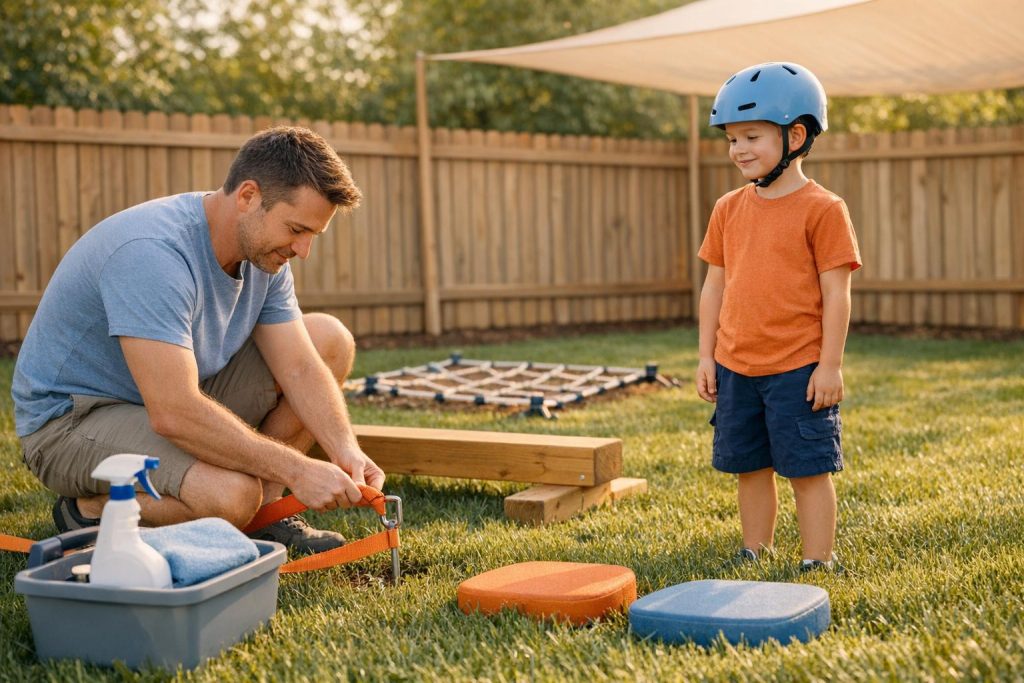
Creating a safe obstacle course at home requires careful preparation, proper setup, and active supervision. Accidents can happen if equipment isn’t secured, surfaces aren’t safe, or rules aren’t enforced. Here’s what you need to know:
- Location: Use a flat, open area with no overhead hazards. Grass is ideal, but hard surfaces need extra padding and proper anchoring.
- Anchoring: Follow manufacturer guidelines to secure inflatables and ensure stability.
- Supervision: Always have adults monitoring play to enforce rules and handle emergencies.
- Rules: Limit group sizes, separate kids by age/size, and ban roughhousing.
- Weather: Avoid use in winds over 15 mph, rain, or extreme temperatures.
- Maintenance: Inspect equipment for damage and clean thoroughly after use.
Safety starts with preparation, from choosing the right spot to setting clear rules. With these precautions, you can create a fun, worry-free environment for kids to enjoy.
Preparing Your Backyard for an Obstacle Course
Choosing the Right Location
Start by selecting a flat, level area in your backyard. Walk through the space to spot and address any uneven patches that might affect stability.
For a standard 40-foot obstacle course, you’ll need at least 40 feet in length and 10–15 feet in width, plus some extra clearance for safe entry and exit. Establishing a safety perimeter ensures that participants have enough room to move without hitting obstacles. If you’re planning a larger setup, make sure to allocate even more space. Don’t forget to check for overhead clearance – steer clear of low-hanging tree branches, power lines, or nearby fences that could interfere with the course’s setup or safety.
If you’re setting up an open-top course for toddlers, pick a shaded area. Direct sunlight can heat vinyl surfaces, making them uncomfortable or unsafe for little ones.
Once you’ve nailed down the spot, it’s time to ensure the surface is suitable.
Inspecting the Surface
With your location set, focus on the ground’s safety and stability. Grass is often the best choice for obstacle courses – it provides natural cushioning and makes it easy to secure stakes. Before setup, mow the grass and ensure the ground is firm and dry.
If grass isn’t an option, hard surfaces like concrete or asphalt can work too. However, these surfaces require different anchoring methods, such as sandbags or water weights, since stakes can’t be used. Keep in mind that hard surfaces don’t offer much cushioning if someone falls, so adding protective mats near entry and exit points is a smart move for extra safety.
Once the surface is ready, take the time to clear the space of any hazards.
Removing Obstacles and Hazards
Clear the area of anything that could pose a risk or damage the obstacle course. This includes rocks, sticks, garden tools, sprinkler heads, yard decorations, exposed tree roots, ant hills, or any other potential tripping hazards.
You’ll also want to create a clear path from your driveway or street to the setup location. Delivery teams need unobstructed access to safely transport and position the equipment.
Setting Up the Obstacle Course Safely
Once your backyard is cleared and ready, the next step is to ensure everything is set up securely by following safety tips for inflatable obstacle course rentals.
Anchoring the Equipment
Follow the manufacturer’s instructions to anchor the equipment properly and comply with national safety standards like ASTM F2729 (revised in 2018). Secure anchoring is essential to prevent accidents caused by wind or movement while the obstacle course is in use.
Conducting a Pre-Use Inspection
Before anyone starts playing, inspect the equipment carefully. Check for any tears, loose seams, or signs of wear on the material. Ensure all netting and mesh barriers are intact – quality inflatables are made with reinforced nylon and mesh netting that should also be phthalate-free and flame-resistant. On sunny days, touch the surface of the inflatable to check its temperature, as vinyl can heat up quickly in direct sunlight. If it feels too hot, it’s not safe for bare skin. Additionally, confirm that the blower is functioning properly and that the inflatable is fully inflated before allowing participants to use it.
Establishing Clear Entry and Exit Points
Mark entry and exit points clearly to prevent congestion and reduce the chance of collisions. Assign an adult to monitor the entrance, ensuring participants follow safety rules like removing shoes, jewelry, and sharp objects before entering. Keep the area around the entry and exit points flat, open, and free of any obstacles. Position the entrance away from hazards like fences, trees, or power lines to lower the risk of injury. As Jumperbee explains:
"Making sure the entrance is open also prevents access issues if an injury occurs or if a child simply wants to exit."
Having clear and accessible entry and exit points not only reduces congestion but also ensures quick assistance can be provided if needed.
Supervising Participants During Play
Keeping an eye on kids during obstacle course play isn’t just a good idea – it’s a must. In 2018 alone, U.S. hospital emergency departments treated over 18,000 injuries linked to bounce houses. Having responsible adults actively supervise can go a long way in preventing accidents. This hands-on approach works hand-in-hand with proper setup and clear rules.
Assigning Supervisors
Make sure at least one adult is dedicated to watching the obstacle course at all times. Their job? Spot unsafe behavior, enforce the rules, and act quickly if something goes wrong. It’s also important to keep kids away from hazards like gas generators, air pumps, and electrical cords.
Establishing Rules for Participants
Set ground rules before the fun begins. No roughhousing, pushing, or horseplay should be allowed. Participants should wait their turn and enter one at a time. For courses with dual lanes, remind kids to stay in their assigned lanes to avoid collisions. You might want to post these rules near the entrance or go over them with everyone before the party starts.
Managing Group Sizes
Keeping the number of participants in check is key to avoiding overcrowding and reducing the risk of injuries. Ann Marie Buerkle, Acting Chairman of the U.S. Consumer Product Safety Commission, offers this advice:
"Only children about the same age and size should be jumping at one time; and always observe the maximum occupancy limit".
Grouping kids by age and size can make a big difference in preventing accidents. Many dual-lane obstacle courses naturally help manage group sizes by letting only two participants race at a time while others wait their turn. For toddler-friendly courses, the capacity is usually capped at around eight children at once.
Weather Considerations for Outdoor Obstacle Courses
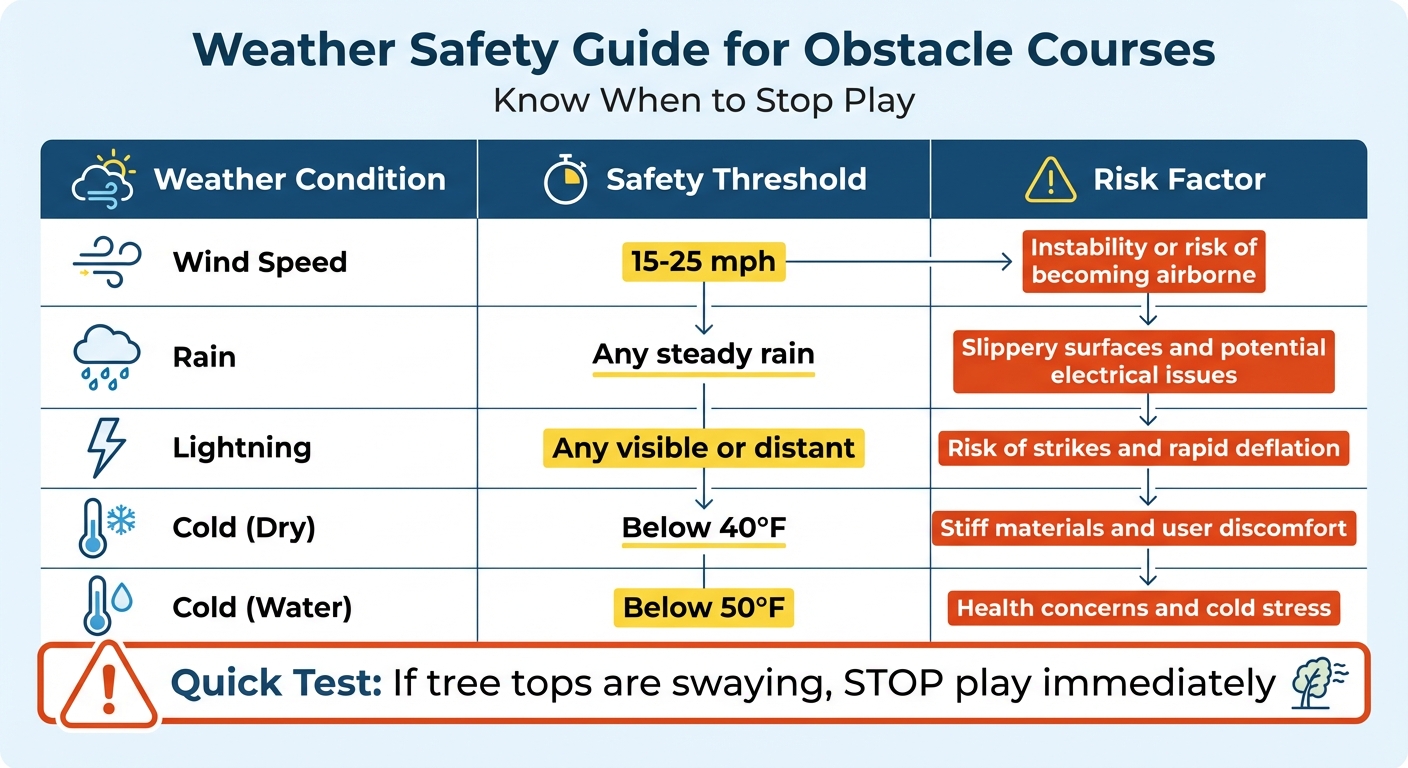
Weather Safety Thresholds for Outdoor Obstacle Courses
Even with your equipment securely anchored and closely monitored, weather conditions play a huge role in ensuring safety. Keeping an eye on the forecast and continuously assessing conditions during your event is a must. The weather directly impacts the stability and safe operation of your obstacle course, so it’s not something to overlook.
Avoiding Use in High Winds or Rain
Wind is one of the biggest dangers to inflatable obstacle courses. Even when properly secured, strong winds can make these structures unstable – or worse, send them airborne with kids inside. As mentioned earlier, poor anchoring combined with high winds can lead to serious accidents.
The general safety limit for wind speeds is between 15–25 mph. If you don’t have a wind gauge handy, try the tree-top test: if the tops of nearby trees are swaying, it’s time to shut things down. Rain is another red flag. It makes surfaces slippery and increases the risk of electrical hazards around blowers and cords. Any steady rain is your cue to pause the activities.
| Weather Condition | Safety Threshold | Risk Factor |
|---|---|---|
| Wind Speed | 15–25 mph | Instability or risk of becoming airborne |
| Rain | Any steady rain | Slippery surfaces and potential electrical issues |
| Lightning | Any visible or distant | Risk of strikes and rapid deflation |
| Cold (Dry) | Below 40°F | Stiff materials and user discomfort |
| Cold (Water) | Below 50°F | Health concerns and cold stress |
This table offers a quick guide for deciding when weather conditions make it unsafe to continue.
Temperature Considerations
Hot weather can bring a different set of challenges. On sunny days, the surfaces of open-top obstacle courses can heat up to uncomfortable – or even dangerous – temperatures. To keep things safe, set up in shaded areas or use portable covers, and make sure water is readily available. Sunscreen, hats, and sunglasses are also essential. Scheduling more frequent breaks can help prevent overheating and keep everyone comfortable.
Maintaining and Cleaning Rental Equipment
Taking care of rental equipment isn’t just about keeping it in good condition – it’s about ensuring the safety of every child who uses it. Regular maintenance helps catch minor issues before they become hazards, while thorough cleaning stops germs from spreading between events.
Inspecting for Wear and Tear
Before and after each use, give the entire unit a detailed visual inspection. Look for tears, loose seams, or other signs of damage. Pay extra attention to high-stress areas like anchoring points and entry/exit zones, as zippers and seams in these spots can wear out faster. Don’t forget to check the blower, ensuring it’s running smoothly without unusual vibrations, and inspect electrical cords for any fraying or exposed wiring during routine maintenance.
On a monthly basis, take time to examine stitching, zippers, and anchoring tools more thoroughly. Replace any worn or damaged parts immediately to avoid bigger problems down the road. It’s also a good idea to schedule a professional inspection annually to identify structural issues that might not be visible during routine checks.
Once any necessary repairs are made, the next step is cleaning the equipment to keep it safe and ready for storage.
Cleaning the Equipment After Use
After inspecting for damage, cleaning the equipment is essential to prevent wear and eliminate germs.
Start by removing debris with a soft-bristle brush before deflating the unit. This simple step keeps dirt from embedding into the vinyl during storage. For spot cleaning, use a damp cloth with mild dish soap and warm water to wipe away grime.
If the equipment sees frequent use, aim for a weekly deep clean. Mix a solution of three parts water, one part vinegar, and a small amount of dish soap to scrub all surfaces. Afterward, apply a vinyl-safe disinfectant, such as Lysol, to tackle germs like MRSA and flu viruses. Be cautious with bleach – it can damage vinyl and cause fading.
The most important step? Let it dry completely. Storing equipment while it’s still damp creates the perfect environment for mold and mildew, which can start growing within 24 to 48 hours. Speed up the drying process with a leaf blower, ensuring every surface is completely dry before folding and storing the unit.
Conclusion
Creating a safe obstacle course is simple when you follow a few key precautions. Secure anchoring, careful placement away from hazards, and consistent adult supervision are the cornerstones of a safe play area. Adding thoughtful participant management – like grouping children by age and size and enforcing rules against flips or roughhousing – further minimizes the chance of injuries. Each step, from setup to supervision, plays a critical role in ensuring everyone’s safety.
Past incidents serve as a reminder of why these precautions matter. Various weather conditions, in particular, can present unexpected risks. For instance, wind speeds between 15–25 mph are generally considered unsafe. A quick visual check – if you notice the tops of nearby trees swaying – it’s best to pause activities. Simple, proactive measures like this can prevent potential accidents.
FAQs
How can I make sure the obstacle course is safe for kids of all ages?
To ensure the obstacle course is safe and enjoyable for kids of all ages, focus on three key aspects: age-appropriate design, active supervision, and proper setup.
Start by selecting an obstacle course that aligns with the physical abilities of the participants. If possible, create separate areas or schedule specific time slots for different age groups. This helps prevent overcrowding and avoids situations where younger kids might feel overwhelmed by older, more skilled participants.
Supervision is crucial. Make sure adults are on hand to monitor the activity, step in if needed, and assist younger children with sections that may be more difficult for them. A watchful eye can go a long way in preventing risky behavior and ensuring everyone plays safely.
When setting up the course, choose a soft, impact-absorbing surface like grass or padded mats to minimize the risk of injuries from falls. Before the kids dive in, take a moment to inspect the course. Check that all components are securely in place and in good condition. Always follow the manufacturer’s guidelines for age recommendations and maximum occupancy to keep the experience both safe and fun!
What should I do if the weather suddenly changes while kids are playing?
If the weather suddenly changes, the first thing to do is halt all activities on the obstacle course right away. Strong winds or heavy rain can make inflatables dangerous, as they might collapse or shift without warning. To ensure safety, inflatables should never be used in winds over 25 mph or during severe weather.
Stay updated on the forecast throughout the event. If conditions worsen, guide everyone to a safe indoor area until the weather improves. Safety should always come first – wait until the weather clears up completely before allowing play to resume.
How often should I check and clean the obstacle course equipment?
Before using obstacle course equipment, it’s crucial to inspect it thoroughly to ensure it’s safe and in proper working order. Check for wear and tear, loose components, or any damage that might create a safety hazard.
Beyond these routine checks, make it a habit to clean the equipment after each use. This not only keeps it hygienic but also helps maintain its condition. For a more detailed assessment, schedule a professional annual inspection to confirm everything aligns with safety standards. Taking these steps will not only prolong the life of your equipment but also ensure a safe and enjoyable experience for everyone.
