

Renting concession equipment for events means prioritizing food safety to protect your guests and comply with health regulations. Neglecting proper hygiene, food storage, or cleaning can lead to serious health risks, fines, and damage to your reputation. Here’s what you need to know:
- Permits: Obtain the correct permits for your event, such as Temporary Food Service Establishment (TFSE) or Mobile Food Vendor (MFV) permits. Notify your local health department in advance and ensure all approvals are in place.
- Food Handler Certification: Anyone handling unpackaged food must complete training and hold valid certifications. Keep records on-site for inspections.
- Cleaning & Sanitization: Use a three-compartment sink for washing, rinsing, and sanitizing equipment. Follow strict cleaning protocols for machines like popcorn makers, cotton candy machines, and snow cone makers.
- Temperature Control: Keep cold foods at 41°F or below and hot foods at 135°F or above. Use thermometers accurate to ±2°F to monitor food temperatures.
- Equipment Maintenance: Inspect rental equipment for damage, ensure proper drainage, and manage waste responsibly to prevent contamination.
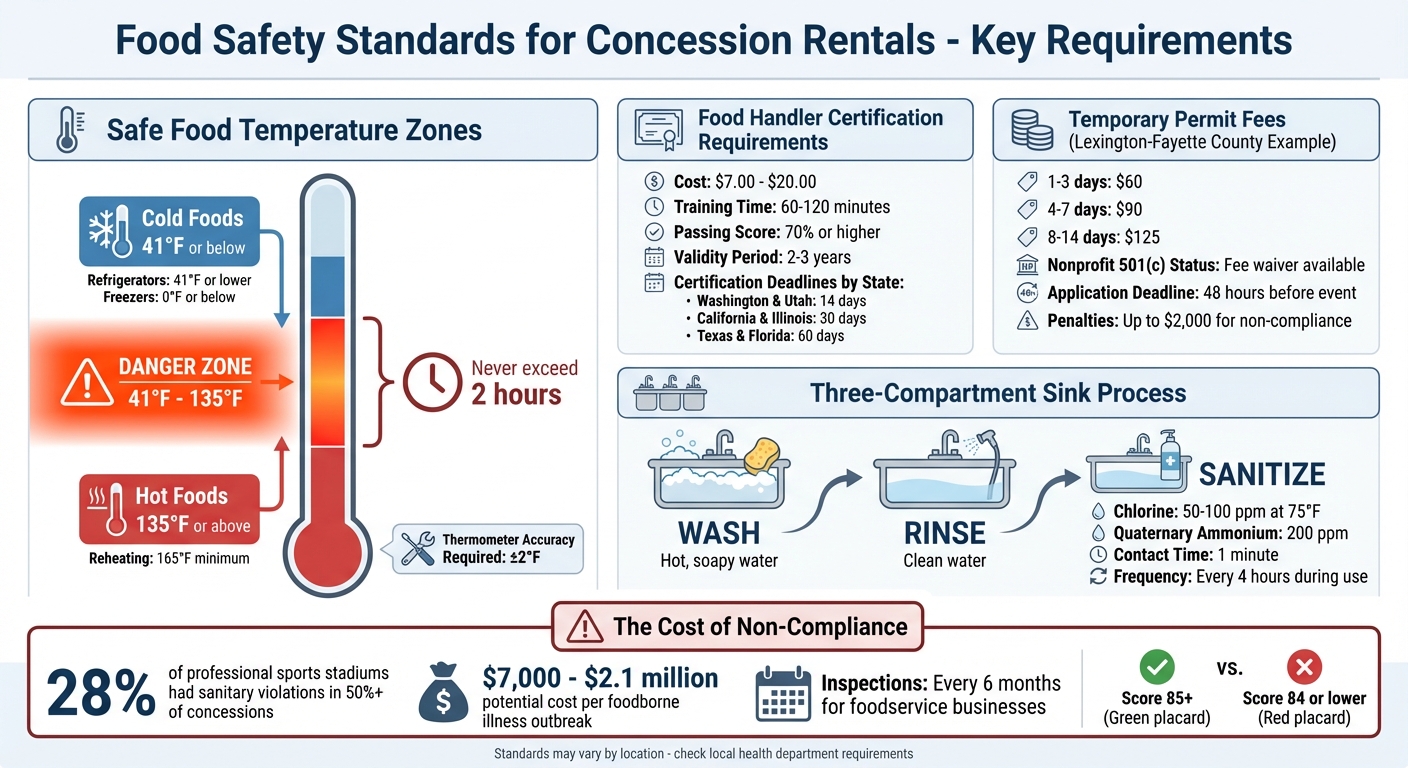
Food Safety Temperature Guidelines and Certification Requirements for Concession Rentals
Required Licenses and Permits
Before running any concession equipment, make sure you have the proper permits in place – penalties can be steep, reaching up to $2,000 in some areas like New York. The exact permits you’ll need depend on your setup and location.
For short-term events, like school fairs or community festivals, you’ll likely need a Temporary Food Service Establishment (TFSE) Permit. This permit generally covers events lasting up to 14 days or recurring events held three days a week or less. In New York City, organizers must notify the Health Department at least 30 days in advance of the event. If you’re operating a food truck, cart, or trailer, a Mobile Food Vendor (MFV) Permit is required. In some cases, an existing restaurant permit may suffice for event operations.
Most areas also mandate a Public Health Permit for any food vehicle to legally sell to the public. If you’re using new or custom-built equipment, you may need to go through a Plan Check Approval process, where health officials inspect your setup before issuing permits. Additionally, many mobile and temporary vendors must secure a Commissary Agreement, which is a contract with a licensed facility for storing equipment, cleaning, and waste disposal. Once permits are in hand, you’ll need health department approvals to ensure full compliance.
Health Department Approvals
Applications to the health department should be submitted at least 48 hours before your event. Temporary permits in Lexington-Fayette County, for instance, cost $60 for 1–3 days, $90 for 4–7 days, and $125 for 8–14 days. Nonprofits with valid 501(c) status may qualify for a fee waiver.
If you’re setting up a new or remodeled concession operation, you’ll need to submit construction plans – complete with scaled kitchen layouts, equipment placement, and plumbing details – before starting construction. Once operational, foodservice businesses are typically inspected every six months. Facilities scoring 85 or higher with no priority violations receive a green placard, while those scoring 84 or lower or with serious violations get a red placard. In Los Angeles County, high-risk mobile food vendors are inspected twice annually, while lower-risk units are inspected once a year.
Rental equipment must also meet specific standards. For example, machines serving potentially hazardous foods should include thermostatic controls and automatic shut-off features that activate during power outages or temperature fluctuations. Additionally, vending machines must clearly display your company’s name, address, phone number, and health department permit number.
Food Handler Certifications
Anyone handling unpackaged food must have a valid Food Handler Card. These cards typically cost $7.00 to $20.00, require 60–120 minutes of training, and a passing score of 70% or higher. For operations involving potentially hazardous foods, at least one person – either the owner or an employee – must hold a Certified Food Protection Manager (CFPM) credential. According to TSC Associates:
Obtaining Food Handler Certification is imperative to protect your customers and employees from food-borne illnesses.
Deadlines for certification vary by state. For example, California and Illinois require certification within 30 days of hiring, Texas and Florida allow up to 60 days, while Washington and Utah require it within 14 days. Food handler cards are usually valid for two to three years before renewal is needed. Always ensure your training provider is accredited by the ANSI National Accreditation Board (ANAB) or approved by your local health department. Certifications from unapproved providers won’t fulfill legal requirements. Keep copies of all employee certifications on-site, either as hard copies or digital files, for health inspections. Be aware that certifications are generally not transferable between states. In California, Senate Bill 476 requires employers to pay for food handler training and compensate employees for the time spent taking the course.
Following these licensing and certification rules is key to ensuring food safety and keeping your operation running smoothly.
Cleaning and Sanitization Standards
Keeping equipment clean and sanitized is critical for food safety and compliance. Cleaning removes visible debris like oil, sugar, and food particles, while sanitization targets bacteria and viruses. Together, these steps ensure food preparation remains safe and hygienic.
Concession stands must use a three-compartment sink for cleaning equipment. The process involves washing in hot, soapy water, rinsing with clean water, and sanitizing with an approved solution. For sanitization, options include chlorine (50–100 ppm at 75°F) or quaternary ammonium (200 ppm). Use test strips to confirm sanitizer strength and replace the solution when it weakens. Equipment and utensils should be sanitized every four hours during use and thoroughly cleaned after each event.
Equipment Cleaning Protocols
- Popcorn Machines:
Start by wiping the exterior and emptying leftover kernels. Scrub the interior with a non-abrasive pad, rinse thoroughly, and let it air-dry. For a deeper clean, disassemble removable parts weekly and soak them in a bleach solution (1 tablespoon per gallon of water at 75°F for one minute). - Cotton Candy Machines:
Once cooled, remove the spinner head and bowl. Wash these parts in hot, soapy water to remove sugar buildup, rinse, and sanitize with a 200 ppm quaternary ammonium solution. Air-dry completely to avoid mold. Weekly deep cleaning with high-temperature steam is recommended if available. Store parts in covered cabinets to keep them contamination-free. - Snow Cone Makers:
Disassemble the unit and clean the shaving blade and hopper with hot, soapy water. Rinse and sanitize all surfaces. Ensure blades remain sharp to prevent bacteria from getting trapped. Clean more frequently when syrups are involved, and use closable cabinets to protect preparation areas.
After cleaning, follow up with sanitization to eliminate pathogens and ensure safety.
Sanitization Procedures
Once equipment is cleaned, apply an approved sanitizer (chlorine at 50–100 ppm or quaternary ammonium at 200 ppm) with a one-minute contact time, then let the equipment air-dry. Some sanitizers may require rinsing after use – always check the product label for instructions. To avoid contamination, wear gloves when handling sanitized equipment.
For mobile units, pre-cleaned supplies may be used if approved by the health department. However, these units must still have hot water (at least 110°F) and proper drainage at their base of operation. Keep records of all cleaning and sanitization activities to meet health inspection requirements and identify any protocol gaps.
Cleaning Methods Comparison
| Cleaning Method | Purpose | Frequency | Examples |
|---|---|---|---|
| Manual Washing | Removes visible debris | After every use | Popcorn kettles, scoops |
| Chemical Sanitizing | Kills bacteria and viruses | After each event | Surfaces of snow cone makers |
| High-Temperature Cleaning | Deep clean using heat | Weekly or as needed | Cotton candy spinner bowls |
Each method serves a specific purpose. Manual washing clears visible debris but doesn’t kill microbes, taking about 5–10 minutes per item. Chemical sanitizing follows washing and eliminates 99.99% of bacteria and viruses when used correctly with a one-minute contact time. High-temperature cleaning, using steam (212°F) or hot water (at least 170°F for 30 seconds), is ideal for heat-safe parts, as it kills pathogens without leaving chemical residue. However, it’s unsuitable for plastic components.
Common mistakes include skipping the rinse step after sanitizing (which can leave harmful residue), air-drying on contaminated surfaces, and neglecting to clean non-food-contact areas like exteriors. To avoid cross-contamination, use color-coded brushes and check sanitizer strength daily with test kits. If renting equipment from companies like Bouncy Rentals USA, follow their sanitization logs and inspect machines before and after use.
Following these cleaning and sanitization standards ensures safer food preparation and demonstrates a strong commitment to food safety.
Temperature Control and Food Storage
Keeping food at the right temperature is just as important as maintaining strict cleaning routines. Proper temperature control is key to stopping bacteria from multiplying. Food should never stay in the Danger Zone – between 41°F and 135°F – for more than two hours. Why? Because bacteria thrive in this temperature range. Julie A. Albrecht, an Extension Food Specialist at the University of Nebraska–Lincoln, puts it plainly:
"Food-borne microorganisms grow best at temperatures between 41°F and 135°F. Food left at room temperature for more than two hours provides the ideal conditions for microorganisms to multiply rapidly."
Hot and Cold Holding Guidelines
To keep food safe, hot items need to stay at 135°F or higher, while cold items should be kept at 41°F or below. Some places, like New York State, allow cold storage up to 45°F. Use a calibrated food thermometer to check temperatures every two hours.
Refrigerators should operate at 41°F or lower, and freezers need to stay at 0°F or below. Placing thermometers inside your coolers and refrigeration units ensures you’re always monitoring properly. If you have leftovers, reheat them to 165°F to kill bacteria. Preparing food in smaller batches can also help maintain safe temperatures during service.
Transportation and Storage Solutions
When moving concession equipment or perishable food, insulated containers are a must. These containers keep hot food above 140°F and cold food below 40°F during transport . The New York State Department of Health emphasizes this by stating:
"A food thermometer (accurate to ±2°F) must be on site and used to check cooking temperatures and hot/cold holding temperatures."
Once you arrive at your destination, double-check food temperatures and quickly transfer items to proper storage. Transport vehicles should be kept clean, and food must be separated from any potential contaminants. Always store food containers at least 6 inches off the ground to avoid contamination and allow for air circulation.
When cooling hot food for storage, use shallow containers or ice baths – never leave it out at room temperature before refrigerating. And remember, ice used for chilling must never be served in drinks. If hot food falls below 140°F for more than two hours during transport, it’s safer to discard it. However, if it’s been less than two hours, reheat it to 165°F before serving.
At Bouncy Rentals, we take these guidelines seriously. Our commitment to food safety extends to every piece of concession equipment we offer, ensuring that temperature control aligns perfectly with our maintenance standards.
Equipment Maintenance and Compliance
Maintaining concession equipment isn’t just about keeping things running smoothly – it’s a key part of meeting food safety regulations. While effective cleaning and temperature control are vital, regular equipment upkeep ensures compliance with health codes, prevents unexpected breakdowns during events, and reduces the risk of contamination or penalties from health department inspections.
Routine Equipment Inspections
Before every rental, inspect all concession equipment for damage, such as cracks, rust, or worn seals, particularly on food-contact surfaces like warming trays, popcorn kettles, and cotton candy machine bowls. If you spot any wear or damage, repair or replace the equipment right away to avoid potential safety hazards.
Pay close attention to drainage systems, ensuring they are fully functional and self-draining. Equipment should also be properly leveled to prevent issues like standing water or backflow. For refrigeration units, check that drain lines include the correct air gap or a check valve to block contaminated water from flowing back into the system.
Once the equipment is in good working order, managing waste and grease properly is the next step in maintaining food safety.
Waste and Grease Disposal
Proper waste disposal isn’t just about cleanliness – it’s a critical public health measure. Federal regulations, including 21 CFR § 1250.39, emphasize the importance of using suitable containers:
"Watertight, readily cleanable nonabsorbent containers with close-fitting covers shall be used to receive and store garbage."
To meet these standards, use durable, non-porous bins with tight-sealing lids for food waste. Empty these containers frequently to maintain sanitary conditions. Additionally, make sure to discharge greywater and grease only in approved servicing areas. Dumping wastewater on grass, parking lots, or into storm drains is strictly prohibited.
Refrigeration and ice-handling equipment also require special attention. Per 21 CFR § 1250.34:
"Waste water drains from ice boxes, refrigerating equipment, and refrigerated spaces shall be so installed as to prevent backflow of contaminating liquids."
This ensures that contaminated water doesn’t flow back into areas where food is stored or prepared, safeguarding both the equipment and the food.
At Bouncy Rentals USA, we take pride in thorough equipment inspections and responsible waste management practices, ensuring every rental adheres to the highest food safety standards.
Conclusion
Safe concession operations hinge on three essential practices: maintaining strict temperature control, thorough cleaning, and ensuring proper equipment maintenance. Keeping cold foods at or below 41°F and hot foods at or above 135°F prevents bacteria from thriving in the "Danger Zone".
To minimize contamination risks, sanitize food-contact surfaces every four hours and follow the three-sink method for cleaning.
The stakes are high when it comes to food safety. According to ESPN’s "Outside the Lines", 28% of professional sports stadiums had sanitary violations in half or more of their concession businesses. The financial impact of a single foodborne illness outbreak can range from $7,000 to $2.1 million, factoring in fines, legal fees, and claims. These numbers highlight why prevention is not just safer but also far more cost-effective.
A few straightforward practices can make all the difference:
- Use a digital thin-probe thermometer with ±2°F accuracy.
- Set up a dedicated handwashing station with water between 100°F and 120°F.
- Store food at least six inches off the ground.
- Assign a certified Food Worker to oversee safety protocols.
At Bouncy Rentals USA, we take these standards seriously. Every piece of equipment is carefully sanitized and inspected before delivery, so you can focus on hosting unforgettable events. From school carnivals to neighborhood block parties, our equipment is designed to meet the highest food safety standards.
FAQs
Which permit do I need for my event?
To legally serve food at your event, you’ll need to obtain a temporary food permit from your local health department. The rules and requirements can differ depending on where you’re located, so it’s important to contact your local authority for detailed guidelines and application instructions.
What do I do if food hits the danger zone?
If food falls into the temperature "danger zone" – between 41°F and 135°F – you need to act fast. Either cool it down or heat it up to a safe temperature right away to stop bacteria from multiplying. If the food has been sitting in this range for too long, it’s best to throw it out, as it may no longer be safe to consume.
What sanitation setup is required on-site?
To maintain hygiene and meet food safety standards, an on-site sanitation setup should include a dedicated hand-washing sink equipped with hot and cold running water, hand soap, and paper towels. A three-compartment sink is also essential for cleaning and sanitizing equipment properly. Additionally, having appropriate waste disposal containers is crucial. These elements work together to create a clean and safe environment for concession operations.
