
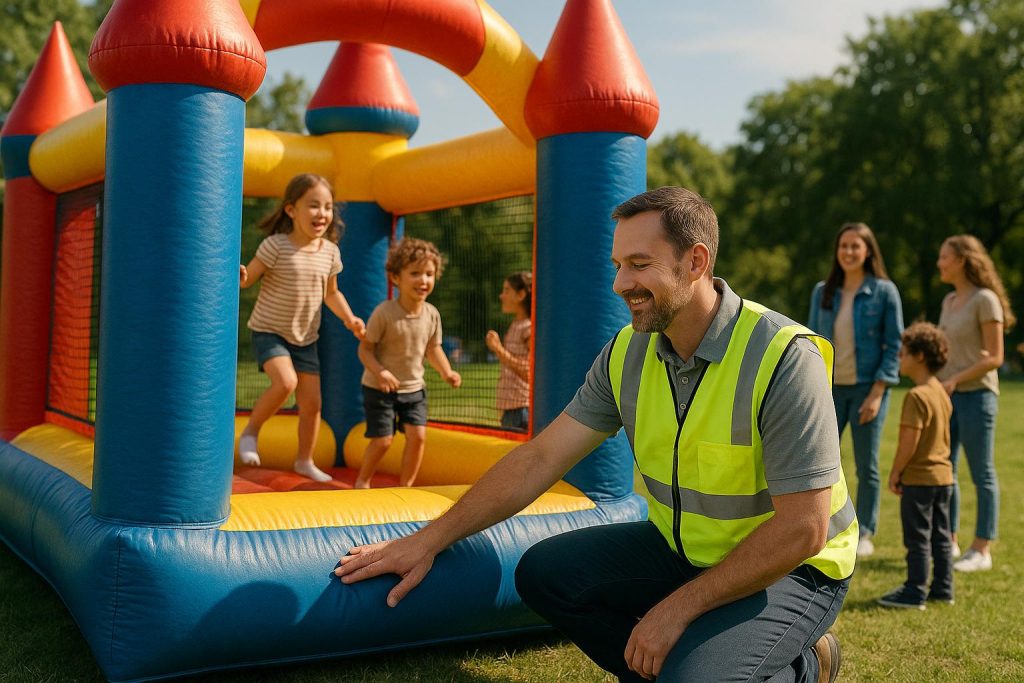
Inflatable attractions like bounce houses and water slides are fun but come with risks. From 2003 to 2013, over 113,000 injuries in the U.S. were linked to inflatables, with 93% involving bounce houses. Most injuries happen at private events, especially during party season (May–October). Common issues include overcrowding, equipment failure, and wind-related accidents, which have caused 479 injuries and 28 deaths worldwide since 2000.
Key Safety Tips:
- Inspect inflatables for damage, secure all seams, and anchor properly.
- Avoid overcrowding and group participants by age and size.
- Monitor weather conditions; evacuate and deflate during high winds.
- Supervise actively and enforce rules like no rough play or flips.
- For water inflatables, provide life vests and keep emergency flotation devices nearby.
Emergency Response:
- Stop activity immediately during accidents or severe weather.
- Evacuate safely, call 911 for serious injuries, and administer first aid.
- Document incidents thoroughly for follow-up.
Partnering with professional rental companies like Bouncy Rentals USA ensures proper setup, sanitized equipment, and safer events for everyone.
Common Inflatable Accidents
Understanding the patterns behind inflatable-related accidents can help parents and event organizers anticipate and address potential dangers before they escalate.
Overcrowding and Collision Injuries
Overcrowding significantly raises the risk of collisions. When too many children use a bounce house simultaneously, they often bounce at different speeds and heights, increasing the chances of mid-air collisions. These impacts can lead to falls and injuries severe enough to require emergency medical attention.
Boys are more frequently injured than girls, representing 53.9% of reported cases compared to 46.1% for girls. Among all injuries, the legs and feet are the most commonly affected areas, accounting for about 34% of cases. Injuries to the arms and hands make up roughly 32%, while head and face injuries occur in about 15% of incidents. Concussions, although less common, are more prevalent in older children. Kids over the age of 6 experience concussions 86% more often than younger children, with rates of 2.9% versus 1.6%.
Aside from overcrowding, problems with the equipment itself often play a major role in these accidents.
Equipment Failure and Structural Problems
Equipment malfunctions can turn a fun activity into a dangerous situation in seconds. Between 2003 and 2013, the Consumer Product Safety Commission recorded 12 fatalities linked to inflatable amusements. Causes ranged from head and neck injuries to suffocation and traumatic brain injuries. Improper anchoring is one of the most critical hazards. Since 2000, bounce houses carried away by wind have caused at least 479 injuries and 28 deaths globally. Alarmingly, over one-third of these incidents occurred in wind speeds of 0–20 mph – conditions many might not consider hazardous. In one Southern California case, a bounce house was lifted by the wind and dropped onto a highway, with a child still inside.
Deflation poses a serious suffocation risk. When inflatables collapse, children can become trapped under the material. Moon bounce-style inflatables were involved in four deaths during the 2003–2013 period, with suffocation listed as a contributing factor. Structural damage, such as seam tears, also increases the risk of injury. Inflatable slides were specifically linked to five fatalities during the same timeframe, resulting in injuries like traumatic brain damage, closed head injuries, and blunt cervical spine trauma.
Water features on inflatables add another layer of potential danger.
Water-Related Accidents
Inflatables with water features come with a heightened risk of drowning. Between 2003 and 2013, drowning incidents were reported on both moon bounce-style inflatables and inflatable slides. These tragedies often occur when water features are added to bounce houses or when inflatable slides empty into pools.
Wet surfaces also make inflatables more slippery, increasing the likelihood of falls. The combination of bouncing and water can make it harder for children to keep their footing during play. Supervision becomes even more challenging around water inflatables, as splashing noises can drown out distress calls, and visibility may be limited. Additionally, if water inflatables are not properly sanitized between uses, they can lead to outbreaks of illness due to poor water quality.
How to Prevent Inflatable Accidents
The key to avoiding inflatable-related accidents lies in proper planning, careful setup, and constant supervision.
Setup and Maintenance Best Practices
Before every use, thoroughly inspect the inflatable for any signs of wear or damage. Pay close attention to holes, loose seams, and weak anchoring points, particularly around entry and exit areas.
Proper anchoring is non-negotiable. Since 2000, inadequate anchoring of bounce houses has led to at least 479 injuries and 28 deaths worldwide. Alarmingly, more than one-third of wind-related incidents occurred in wind speeds between 0–20 mph – conditions many might not see as risky. Always follow the manufacturer’s anchoring instructions, using stakes or sandbags as recommended. Throughout your event, periodically check that the anchoring remains secure.
Inflation levels also matter. Over-inflation puts stress on seams and can cause sudden deflation, while under-inflation creates unstable surfaces, increasing the risk of falls. Ensure the blower is functioning correctly and connected to a ground-fault circuit interrupter for safety.
Here’s a quick pre-event checklist:
- Inspect the inflatable for damage and secure all seams.
- Anchor it on level ground, far from obstacles and overhead power lines.
- Verify proper inflation levels and blower operation.
- Keep exits clear and review all manufacturer guidelines.
Once everything is set up, supervision becomes your next line of defense.
Supervision and Rule Enforcement
Active adult supervision is crucial for preventing accidents. Supervisors should enforce safety rules consistently and step in immediately if unsafe behavior or overcrowding occurs.
Establish clear safety rules and make sure everyone understands them:
- No rough play, flips, or somersaults.
- Remove shoes, glasses, jewelry, and sharp objects before entering.
- Group participants by age and size to avoid collisions.
- Never exceed the manufacturer’s capacity limits.
- Prohibit food, drinks, or gum inside the inflatable.
- Ensure exits remain unobstructed at all times.
Safe Environment and Safety Equipment
Creating a safe environment around the inflatable is just as important as setting it up correctly. Clear the surrounding area of hazards like rocks, sticks, or furniture, and establish a padded safety zone of at least two feet around the inflatable. Whenever possible, place it on soft, level ground like grass. Avoid hard surfaces like concrete or asphalt, which can lead to more serious injuries if falls occur.
Keep an eye on the weather throughout the event. Using a wind meter can help you decide if conditions are safe or if the inflatable should be deflated.
For water inflatables, additional precautions are necessary. Provide life vests for all participants, have an adult supervise water activities at all times, and keep emergency flotation devices within reach. Set up water inflatables away from deep water or strong currents, and remember that wet surfaces make inflatables more slippery. In these cases, stricter capacity limits and closer supervision are essential.
Hiring professionals for the setup can also make a big difference. Companies like Bouncy Rentals USA provide fully insured inflatables that are regularly sanitized and installed by trained teams. Their expertise in proper anchoring and safety checks significantly reduces the likelihood of setup-related mishaps.
How to Respond to Inflatable Accidents
Even with thorough safety measures in place, accidents can still happen. When they do, a quick and organized response can make all the difference in minimizing the impact.
Emergency Protocols and Communication
When an incident occurs, the first step is to stop all activity immediately and safely evacuate everyone from the inflatable. Focus on getting participants to a secure area before assessing any injuries. In situations like equipment failure or severe weather, turn off the blower and guide everyone to a safe, hazard-free location.
If someone is seriously injured, assign an adult to call 911 right away. Be prepared to provide emergency services with critical details, such as the exact address (including nearby cross streets), a description of what happened, the number of injured individuals, their conditions, and any immediate dangers like electrical risks or worsening weather.
In the case of severe weather, evacuate the inflatable immediately and deflate it to prevent it from becoming airborne. Past incidents highlight how crucial it is to act quickly in such scenarios to avoid further harm.
Clear communication among staff is essential during emergencies. Use tools like two-way radios or cell phones to coordinate efforts. Post emergency contact numbers in visible locations and assign someone to meet first responders and direct them to the scene. Having local hospital information on hand can also save valuable time.
After everyone is safe, document the incident thoroughly. Include the date, time, location, a description of the event, details of any injuries, witness statements, and photos. This documentation will be important for insurance claims and improving safety measures in the future.
Once emergency communication is handled, providing immediate first aid becomes the next priority.
First Aid Readiness
Every inflatable event should have a well-stocked first aid kit and at least one adult trained in basic first aid and CPR. Injuries like fractures, strains, and bruises are among the most common, so being prepared is key.
A first aid kit should include:
- Adhesive bandages
- Sterile gauze
- Antiseptic wipes
- Instant ice packs
- Elastic bandages
- Scissors and tweezers
- Disposable gloves
- A CPR mask
Also, keep a first aid manual and an emergency contact list in an accessible location, and ensure all staff know where to find them.
For minor injuries, clean wounds with antiseptic wipes, apply bandages, and use ice packs on bruises or sprains for 15–20 minutes at a time. If you suspect a fracture, immobilize the area with elastic bandages or splints, and avoid moving the injured person unnecessarily.
Head, neck, or back injuries require extra caution. Avoid moving anyone with a suspected spinal injury unless they are in immediate danger. Keep them as still and comfortable as possible while waiting for emergency responders. Watch for signs of a concussion, such as confusion, dizziness, nausea, or loss of consciousness.
It’s equally important to communicate clearly with parents during an incident. Designate a calm staff member to provide factual updates about what happened, the child’s condition, and the steps being taken. Record all first aid actions promptly for follow-up.
With over 18,000 emergency room visits annually in the U.S. related to inflatable amusements, preparation is critical. While 96% of these cases are treated and released, the remaining 3% can involve complications that require hospitalization.
Professional rental companies like Bouncy Rentals USA can help boost your event’s safety. They provide insured, sanitized equipment and trained staff who understand emergency protocols and safe operation procedures. Their expertise can help organizers implement effective safety measures, ensuring everyone knows how to respond if something goes wrong.
Ultimately, how you handle an accident affects not just the injured individual but everyone at the event. Stay calm, stick to your protocols, and prioritize safety. Quick, organized actions and proper first aid can make a challenging situation manageable.
Conclusion: Put Safety First for Maximum Fun
In the U.S., inflatable-related incidents result in over 18,000 emergency room visits each year, with injury rates climbing significantly in recent decades. While these statistics highlight the risks, the positive takeaway is that most accidents can be avoided with proper planning, regular maintenance, and attentive supervision. This makes safety measures not just important but essential for ensuring enjoyable and worry-free events.
The secret to a successful inflatable event is understanding that safety and fun go hand in hand. By securing inflatables properly, supervising activities diligently, and following manufacturer guidelines, you create a space where kids can jump, slide, and laugh for hours without unnecessary risks. When these precautions are in place, every bounce becomes a memory worth cherishing.
Weather conditions, particularly wind, are a critical yet often overlooked factor. Wind-related accidents have caused injuries and even fatalities worldwide, emphasizing the importance of monitoring weather conditions closely and evacuating promptly when necessary. Since there are no federal safety regulations governing inflatable use, the responsibility rests with event organizers and rental companies to prioritize safety and maintain high standards.
Selecting the right rental company can make all the difference. Reputable providers, like Bouncy Rentals USA, go beyond simply delivering equipment. They ensure peace of mind by offering sanitized, fully insured inflatables and trained staff who handle setup with safety in mind. As customer Dylan Hoy shared:
"I rented an inflatable bouncy castle for my young son Gabriel’s birthday, and it was a huge hit! The setup was quick, the castle was super clean, and the team at Bouncy Rentals USA was incredibly professional. Highly recommend them for any kids’ party in Charleston!"
Parents feel at ease when they see secure equipment, proper supervision, and clear safety protocols. This allows children to fully immerse themselves in the fun. Jenna Cameron, another satisfied customer, summed it up perfectly:
"The bouncy castle rental from Bouncy Rentals USA was delightful, providing an incredibly lively and carefree experience for our kids – the bounce houses really bounced with plenty of spring in them. Our 7-year-olds spent hours jumping, sliding, and laughing among the inflatable rentals, making our party a wonderful and memorable celebration."
These testimonials highlight the value of choosing professional, safety-conscious rental companies that prioritize both fun and well-being.
Safety doesn’t stop once the inflatable is set up. Ongoing supervision and strict adherence to safety protocols are crucial, especially during busy event seasons, to minimize risks and keep everyone safe.
When safety takes center stage, the fun can flow uninterrupted. Guests will leave with memories of laughter and excitement – not worry – and that’s exactly how every event should be.
FAQs
What are the most common causes of injuries on inflatable attractions, and how can they be avoided?
Injuries on inflatable attractions often happen because of improper setup, overcrowding, lack of supervision, or unsafe behavior like roughhousing. These problems can lead to falls, collisions, or even cause the inflatable to become unstable.
To reduce the risk of accidents, make sure inflatables are placed on a flat, debris-free surface and are securely anchored. Always follow the manufacturer’s guidelines for the number of participants, and consider grouping users by size or age to minimize collisions. Supervision is essential – assign an adult to keep an eye on the activity at all times and enforce safety rules, such as no flips or rough play. Additionally, inspect the equipment for any signs of damage or wear before use.
If you’re hosting an event, Bouncy Rentals USA offers top-notch, thoroughly cleaned inflatables that are professionally set up to prioritize safety. By taking the right precautions and using reliable equipment, you can create a safe and enjoyable experience for everyone!
How can event organizers prepare inflatable attractions for severe weather and ensure guest safety?
To keep everyone safe during severe weather, event organizers should stay updated on local weather forecasts before and throughout the event. If there’s a forecast for high winds, heavy rain, or lightning, it’s essential to immediately deflate and secure all inflatable attractions. Operating inflatables in winds over 15-20 mph is extremely dangerous and should always be avoided.
When setting up inflatables, choose a flat, dry surface and anchor them firmly using stakes or sandbags, following the manufacturer’s instructions. It’s also important to have a clear plan in place for evacuating guests swiftly and safely if conditions take a turn for the worse. Taking these precautions can make a big difference in preventing accidents and ensuring everyone’s safety.
What safety precautions should I follow when setting up and supervising inflatables with water features to avoid accidents?
To keep inflatable water features safe and enjoyable, it’s essential to set them up correctly. Choose a flat, dry surface free of sharp objects or debris. Use the provided anchors or stakes to secure the inflatable firmly, and double-check that all water connections are sealed properly to avoid leaks or creating slippery spots.
Supervision is a must. A responsible adult should always be present to enforce rules like no roughhousing, no diving, and avoiding overcrowding. Make sure kids are using inflatables suited for their age and size, and watch for signs of fatigue or overheating, especially on hot days. A little caution goes a long way in ensuring everyone has a great time while staying safe!
