
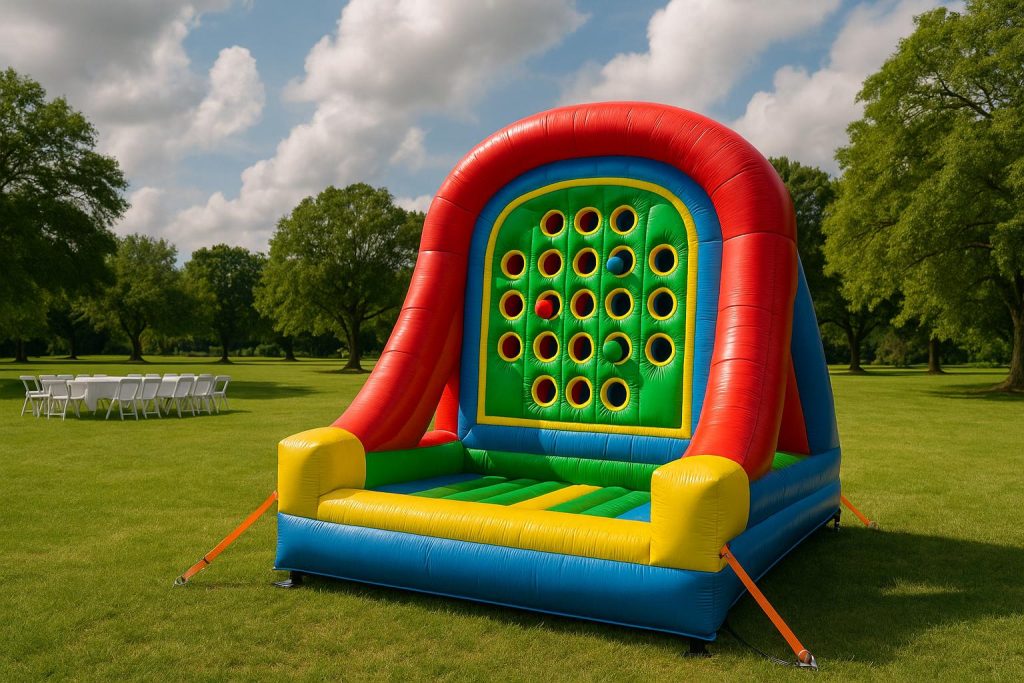
Setting up inflatable games in South Carolina requires careful planning due to unpredictable weather conditions. Here’s what you need to know:
- Heat & Humidity: High temperatures can make inflatables hot to touch and impact air pressure. Use UV-resistant materials and consider water-based options like slides or dunk tanks.
- Rain & Thunderstorms: Sudden rain creates slippery surfaces and risks water damage. Always deflate during storms and ensure proper drying to prevent mold.
- Wind: Wind speeds over 15–20 mph can destabilize inflatables. Secure with ground stakes or sandbags and monitor conditions closely.
Key Tips:
- Choose durable, weather-resistant inflatables.
- Anchor securely based on surface type.
- Monitor weather updates and have a backup plan.
- Prioritize safety with adult supervision and clear rules.
For a seamless experience, consider professional rental services like Bouncy Rentals USA, which provide reliable equipment and handle setup, safety, and weather concerns for you.
How South Carolina Weather Affects Inflatable Game Setups
Planning an event with inflatable games in South Carolina means understanding how the state’s weather can impact your equipment and your guests’ safety. The region’s climate poses unique challenges, and knowing what to expect can help you avoid issues and keep the fun going.
Heat and Humidity
South Carolina summers are no joke, with temperatures often soaring above 90°F and humidity levels to match. This combination can take a toll on inflatable equipment. Prolonged exposure to UV rays can cause cheaper materials to fade, crack, or become brittle. That’s why using UV-resistant materials is a smart choice for inflatables that will be outdoors regularly. Dark-colored inflatables can also absorb heat, making them uncomfortable for users. To beat the heat, many event organizers in places like Charleston opt for water-based inflatables such as water slides or dunk tanks – perfect for cooling off during those sweltering summer days.
But summer heat isn’t the only concern. Sudden storms can roll in, bringing an entirely different set of challenges.
Rain and Thunderstorms
South Carolina weather is unpredictable, especially in the summer, when clear skies can quickly give way to thunderstorms. Even a light drizzle can make vinyl surfaces slippery, creating safety hazards. Worse, water can seep into seams, potentially weakening the structure and leading to mold if the equipment isn’t dried thoroughly afterward.
Lightning is another serious danger. Metal parts in blowers and electrical connections can attract strikes, so as soon as thunder or lightning is detected, inflatables should be deflated immediately, and guests moved to a safe, enclosed space. For instance, at a summer birthday party in Columbia, organizers kept an eye on the forecast and had a backup plan in place. When a thunderstorm approached, they acted quickly – deflating the inflatables and moving everyone indoors. This not only prevented injuries but also protected the equipment from damage.
And while rainstorms are a concern, wind can be just as dangerous.
Wind Conditions
Wind is one of the most significant risks when it comes to inflatable games. In South Carolina, conditions can change in an instant, and inflatables should never be used if wind speeds exceed 15–20 mph. Even with proper anchoring, strong gusts can make inflatables unstable or even lift them off the ground. Larger structures, like obstacle courses and tall bounce houses, are especially vulnerable.
To minimize risks, a strong anchoring system is a must. On grassy surfaces, 45-degree ground stakes work well, while sandbags or water weights are better suited for concrete or asphalt setups. Regularly checking these anchors throughout the event is essential, as even moderate wind can loosen them, potentially leading to accidents.
Selecting the Right Inflatable Equipment for South Carolina
Choosing inflatables that can handle South Carolina’s unique weather conditions is crucial. The state’s heat, storms, and strong winds demand equipment built for durability and performance. Here’s how to make the right choice.
Weather-Resistant Inflatables
Inflatables made from commercial-grade vinyl or PVC with excellent water resistance and UV protection are your best bet. These materials help prevent cracking, fading, and brittleness caused by prolonged exposure to intense sunlight. Look for features like reinforced seams and heavy-duty stitching, which add strength and help the equipment withstand high winds and frequent temperature changes.
Construction details matter. Commercial-grade inflatables often come with waterproof zippers and drainage systems, which are essential to manage water during sudden summer downpours. Some models also include built-in anchoring systems, offering extra stability during storms.
The difference between residential and commercial inflatables is significant. Residential-grade options might suffice for a single backyard party, but they’re not built to endure South Carolina’s tough weather. Commercial-grade inflatables, on the other hand, are designed for repeated use in challenging conditions, making them a safer and more reliable choice for multiple events or long hours of play.
Water-Based and Shade Options
South Carolina summers can be brutal, so inflatables with water features are a smart choice. Water slides, dunk tanks, and similar options not only provide cooling relief but also keep guests entertained. Models with built-in canopies, mesh panels, or misting systems offer much-needed shade and help guests stay comfortable during the hottest parts of the day.
When selecting water inflatables, ensure they’re specifically designed for wet use. Features like non-slip surfaces and enhanced anchoring systems are vital to maintain safety, especially with the added movement from water splashing and excited participants. These details are key to preventing accidents and ensuring smooth operation throughout your event.
Combining water features with shade extends the fun well into the afternoon, even when temperatures peak. Some inflatables come with built-in misting systems, which are especially helpful during those sweltering summer months when the heat index soars.
And, of course, for unpredictable weather, having a backup plan is essential.
Indoor Backup Options
Smaller, portable inflatables like mini bounce houses or compact obstacle courses are ideal for indoor use when storms roll in. These options are easy to transport and fit standard indoor spaces, requiring minimal setup time. They’re also perfect for fall and winter events, when outdoor temperatures make traditional inflatables less appealing.
The real advantage of indoor backup options is maintaining event continuity. Instead of canceling or disappointing guests due to bad weather, you can quickly transition the fun indoors. This flexibility is especially valuable for birthday parties, school events, or any gathering where rescheduling isn’t feasible.
When planning, consider the logistics of your indoor setup. Portable inflatables should be easy to move and install, ensuring a smooth transition that keeps the entertainment going without unnecessary delays.
Site Preparation and Safety Tips
Planning ahead and paying attention to safety are key when setting up inflatable games, especially with South Carolina’s unpredictable weather. A well-prepared site ensures a smooth and enjoyable event for everyone.
Preparing the Setup Area
First, choose a flat, level surface that’s clear of any debris. The setup area should extend at least five feet beyond the inflatable’s dimensions on all sides. This extra space allows for safe access, movement, and operation.
Be mindful of potential hazards like trees, overhead power lines, or low-lying areas prone to pooling water during rain.
You’ll also need to think about power. Inflatable blowers require a nearby grounded outlet for continuous operation. If you have to use extension cords, make sure they’re outdoor-rated and securely placed to avoid tripping.
For added protection, lay a tarp under the inflatable. This shields it from ground moisture and dirt while creating a stable base. On hard surfaces like asphalt or concrete, the tarp also reduces wear and provides a softer foundation.
Proper Anchoring Methods
Securing the inflatable is a must to prevent shifting or tipping, especially with unexpected wind gusts. The anchoring method you use will depend on the type of surface.
- For grass or soil, use heavy-duty ground stakes. Insert them at a 45-degree angle away from the inflatable and push them halfway into the ground for a firm hold. Check these stakes periodically during the event, especially if the weather changes.
- On hard surfaces like concrete or asphalt, sandbags or water weights work best. These provide stability without damaging the surface and can be adjusted as needed. Always follow the manufacturer’s instructions for proper anchor placement and weight requirements.
Keep an eye on wind conditions throughout the day. Reinforce anchors if wind speeds increase, and monitor weather reports to stay ahead of any sudden changes.
Adult Supervision and Safety Rules
Having responsible adults oversee the inflatables is non-negotiable. Assign at least one adult per inflatable who understands the safety guidelines and can act quickly if needed.
Set clear safety rules before anyone starts using the equipment. Prohibit roughhousing, flips, or overcrowding, and limit the number of users according to the age and size guidelines provided by the manufacturer or rental company. Shoes, sharp objects, and food should always stay outside the inflatable.
Post the rules where they’re easy to see and review them with participants before play begins. Supervisors should also know how to shut down the equipment immediately if bad weather or safety issues arise.
Throughout the event, conduct regular checks. Walk around the setup to ensure anchors remain secure, the area stays hazard-free, and the inflatable is in good condition. Look for tears, sagging, or loose seams, and make sure the blower is running smoothly. Address any problems right away to keep everyone safe.
With a well-prepared site and safety measures in place, you’re ready to host a fun and secure event for all.
Weather-Specific Setup Strategies
When dealing with heat, rain, and wind at outdoor events, having the right strategies in place is essential to ensure safety and success. Here’s how to adapt to different weather conditions effectively.
Managing Heat and Sun
To beat the heat, consider scheduling inflatable activities during cooler parts of the day – before 10 AM or after 4 PM. Adding UV-resistant canopies can help lower surface temperatures by up to 20°F, making the area more comfortable for guests.
Water-based inflatables like water slides, splash pads, and dunk tanks are excellent for keeping everyone cool while having fun. Set these up on flat, well-drained surfaces with easy access to water. You can also enhance the cooling effect by placing misting stations or shaded seating nearby to create a refreshing retreat.
Don’t overlook refreshments! Snow cone machines and other icy treats are a simple yet effective way to help guests stay cool and hydrated.
Now, let’s shift to strategies for dealing with rain.
Handling Rain
Rain calls for quick action to protect both guests and equipment. If rain starts, stop using the inflatable immediately and deflate it to avoid water pooling or damage. Turn off the blower, open all air release valves, and roll or fold the inflatable from the opposite end of the blower to release air efficiently. With a team, you can deflate and cover a standard bounce house in under 10 minutes.
Use reinforced tarps to shield inflatables from water damage. Secure the edges with stakes or weights to keep the cover in place until the weather improves.
Once the rain stops, follow post-event drying procedures to prevent mold and ensure the equipment stays in good condition.
With rain covered, let’s focus on wind safety measures.
Wind Safety Measures
Wind can be a significant safety concern at inflatable events, so staying alert and prepared is critical. Continuously monitor wind speeds using reliable sources like Weather.com, AccuWeather, or the National Weather Service. Set up weather alerts for your event location and check conditions regularly.
If sustained winds reach 15–20 mph, deflate the inflatables and secure them. Under no circumstances should inflatables be set up or used when winds exceed 20 mph due to the heightened safety risks.
| Wind Speed | Recommended Action | Equipment Needed |
|---|---|---|
| 15–20 mph | Deflate and secure inflatables | Tarps, covers, heavy-duty stakes |
| Above 20 mph | Do not set up or use inflatables | Real-time weather monitoring |
Proper anchoring is essential in windy conditions. On grass, use heavy-duty stakes driven into the ground at a 45-degree angle away from the inflatable for maximum stability. On concrete or asphalt, secure each corner with four sandbags weighing 20–30 lbs each. During windy conditions, check anchors hourly and reinforce them as needed.
Real-time weather updates are your best ally. Local weather services can provide critical wind speed data, helping you make timely safety decisions. If a thunderstorm warning is issued, secure all equipment immediately, as storms can escalate quickly, especially in areas like South Carolina.
Finally, keep guests informed about weather conditions and any necessary changes to the event schedule. Clear communication ensures everyone stays safe and aware.
Post-Event Care and Maintenance
Taking care of inflatables after an event is just as important as setting them up properly. This step ensures the equipment stays in great shape, especially in South Carolina’s challenging climate. The heat, humidity, and occasional severe weather can take a toll on inflatables, so post-event maintenance is key to keeping them safe and usable for years to come.
Cleaning and Drying
Once the inflatable is deflated, clean it right away to remove dirt and debris. Use mild soap and water to scrub all surfaces, paying close attention to seams and crevices where grime and moisture tend to hide.
After rinsing, dry the inflatable thoroughly with absorbent towels. Do this in a shaded, well-ventilated space to avoid direct sunlight, which can weaken the vinyl or PVC material over time. Humid conditions make drying even more critical – check every seam and fold for trapped moisture. If needed, use portable fans to speed up the process. Make sure the inflatable is completely dry before deflating and storing it.
For tougher stains or early mildew, a diluted vinegar solution works well without harming the material. Always test any cleaning solution on a small, hidden area first to avoid accidental damage.
Once the inflatable is clean and dry, inspect it for any signs of weather-related damage.
Checking for Weather Damage
After drying, carefully inspect the inflatable for issues like tears, punctures, or weakened seams. South Carolina’s climate can cause wear and tear that needs immediate attention.
Focus on areas exposed to strong winds or anchoring points, such as attachment loops and reinforced sections where stakes or sandbags were used. High winds can cause stress in these spots, so thorough checks are essential.
Look for signs of UV or heat damage, including discoloration, stretching, or cracking, especially on surfaces that were in direct sunlight for long periods. Mold or mildew may appear as dark spots or give off a musty smell, while water damage from rain could lead to sagging or weak areas in the material.
Document any damage and address it promptly using repair kits recommended by the manufacturer or professional services. Fixing small issues early can save you from costly replacements and ensure the inflatable remains safe for future use.
Storage Best Practices
Proper storage is crucial for protecting your inflatables during South Carolina’s off-season or periods of extreme weather. Keep them in a dry, climate-controlled space like a garage, basement, or dedicated storage room. Avoid areas prone to temperature swings or moisture buildup.
To prevent damage from pests like rodents or insects, use sealed plastic bins or heavy-duty storage bags. Store inflatables on pallets rather than directly on concrete to allow for air circulation.
When folding the inflatables, make sure they are fully deflated and fold them loosely along natural seams. Avoid creating sharp creases or tightly rolled bundles, as these can strain the material. Place the folded units in breathable storage containers and ensure they aren’t squished under heavy items. Adding moisture absorbers to the storage containers can help keep everything dry.
It’s also a good idea to label containers for easy organization and rotation. During long storage periods, periodically check for signs of pest damage or environmental wear.
By following these steps, you can extend the life of your inflatable equipment while maintaining safety standards for future events.
At Bouncy Rentals USA, every inflatable is thoroughly sanitized, dried, and inspected after each rental to ensure it’s ready for the next use.
Why Choose Bouncy Rentals for Your Inflatable Game Setup
Planning an event in South Carolina can be tricky, especially with the unpredictable weather. That’s where Bouncy Rentals USA steps in to make inflatable game rentals a breeze. They know how to handle the heat, humidity, sudden thunderstorms, and gusty winds that often come with the territory, ensuring your event runs smoothly.
Their inflatables are built to handle South Carolina’s weather challenges. Made from commercial-grade materials, these inflatables are both UV-resistant and water-resistant, keeping them safe and durable through scorching sun and unexpected rain showers. Whether it’s a hot summer day or a surprise downpour, their equipment is designed to withstand it all.
When it comes to setup and takedown, their team takes care of everything, so you don’t have to stress. They arrive on time, pick a safe and level spot, and use professional anchoring methods to keep the inflatables secure, even if the weather takes a turn. Customers consistently highlight their reliability and professionalism:
"The setup was quick, the castle was super clean, and the team at Bouncy Rentals USA was incredibly professional." – Dylan Hoy
Bouncy Rentals USA goes above and beyond by actively monitoring local weather conditions. Their team is proactive, adjusting setups to minimize risks and following strict safety protocols, including pausing activities if storms approach. This allows you to relax and enjoy your event while they handle any weather-related concerns.
For South Carolina’s sweltering heat, they offer cooling options like water slides and dunk tanks – perfect for beating the summer sun. Their inventory also includes shaded bounce houses and obstacle courses with weather-resistant designs to provide relief from direct sunlight. And if rain threatens your plans, they can suggest indoor-friendly alternatives or provide tents and canopies for extra protection.
Health and safety are top priorities at Bouncy Rentals USA. Every inflatable is thoroughly sanitized before and after each rental, following strict hygiene protocols. Plus, they offer full insurance coverage, protecting event hosts from liability. Their staff undergoes regular safety training, including weather-specific protocols and emergency procedures, so you can trust you’re in good hands.
Their deep understanding of South Carolina’s weather patterns means they can recommend the best equipment for any season. Flexible rescheduling options and responsive customer support make it easy to adapt to last-minute weather changes, a common occurrence in the Southeast.
"The owner was very nice. The setup was easy. The kids loved it!" – Anthony Melendez
After your event, their team doesn’t just pack up and leave. They meticulously clean, dry, and inspect all inflatables for any weather-related wear and tear, storing them in climate-controlled facilities to prevent mold or material damage. This attention to detail ensures that every rental is in excellent condition and ready to face South Carolina’s challenging weather.
With durable equipment, expert service, and a focus on safety, Bouncy Rentals USA takes the stress out of planning outdoor events. They turn unpredictable weather into a manageable part of the experience, helping families and organizations create fun, worry-free memories across South Carolina.
Conclusion: Key Points for South Carolina Inflatable Game Setups
Here’s a quick recap on how to manage inflatable game setups in South Carolina, a state where the weather can be unpredictable. From scorching heat and humidity to sudden thunderstorms and strong winds, staying prepared is key to ensuring safety and fun.
Start by choosing inflatables built to handle tough conditions. Look for commercial-grade options made from durable materials like vinyl or PVC, with reinforced seams and heavy-duty stitching. Water-based inflatables are a great choice to help participants stay cool in the heat.
Proper site preparation and anchoring are non-negotiable. Use a flat, well-drained area away from hazards, and secure the inflatables with heavy-duty anchors suited to the surface. Keep an eye on the wind speed – activities should stop immediately if winds exceed 15 mph.
Stay on top of weather updates throughout the event. If conditions shift, be ready to pause activities or move to safety.
After the event, take care of your equipment. Clean and dry the inflatables right away to prevent mold in the humid climate, and store them in a climate-controlled space to keep them in good shape for future use.
With companies like Bouncy Rentals experienced in managing these challenges, you can keep your event running smoothly. By planning ahead, using the right equipment, and staying weather-aware, inflatable games can be a safe and exciting addition to any event in South Carolina.
FAQs
What are the best tips for safely setting up inflatable games in South Carolina’s unpredictable weather?
South Carolina’s weather can keep you guessing, so being prepared is key when setting up inflatable games. Start by checking the weather forecast ahead of time. If you see strong winds (over 15 mph), heavy rain, or lightning in the forecast, it’s smarter to delay setup or pick a different day for your event.
On hot days, inflatables can get scorching under direct sunlight. To keep things safe and comfortable, set them up in shaded areas or use tarps to block the sun. Always secure inflatables with proper anchors like stakes or sandbags to prevent shifting, especially if it’s breezy. If a sudden rainstorm rolls in, turn off the blower and cover the inflatable to avoid water damage.
For peace of mind, renting from Bouncy Rentals USA is a great choice. Their equipment is carefully inspected and built to handle various weather conditions. Just remember to follow setup instructions and stay alert to any changes in the weather during your event. Safety always comes first!
What types of materials are best for inflatables in South Carolina’s hot and humid weather?
When selecting inflatables for South Carolina’s climate, durability and weather resistance should top your checklist. Materials like commercial-grade PVC vinyl or heavy-duty nylon are excellent choices. These are built to withstand the region’s high temperatures and humidity while being tough enough to resist tears and punctures.
Pay attention to the seams as well. Look for inflatables with heat-welded or double-stitched seams, as these offer better protection against damage caused by heat and moisture. To keep your inflatables in great shape, make sure to dry them thoroughly after exposure to rain or humid conditions. A little extra care can go a long way in prolonging their lifespan in South Carolina’s demanding weather.
What can we do if bad weather disrupts our outdoor inflatable activities?
South Carolina’s weather can be a bit unpredictable, so having a backup plan is always smart. If rain or high winds make it unsafe to use inflatables, think about shifting your event indoors if you have the space. Places like community centers, gymnasiums, or even large garages can work well for smaller inflatables.
If moving indoors isn’t an option, you might need to consider rescheduling. Many rental companies, such as Bouncy Rentals USA, offer flexible policies to help you adjust your plans when the weather doesn’t cooperate. Be sure to check the forecast in advance and stay in touch with your rental provider to discuss alternatives.
