
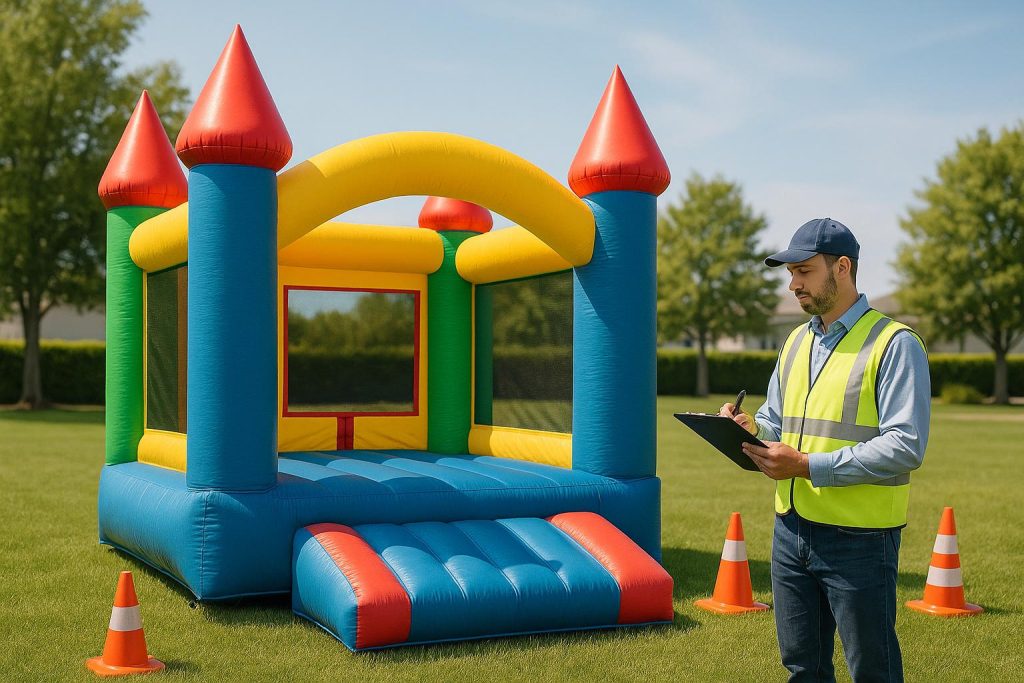
In South Carolina, inflatables like bounce houses and water slides must pass annual inspections to ensure safety. These inspections, regulated by the South Carolina Department of Labor, Licensing, and Regulation (LLR), focus on structural integrity, anchoring, and operational components. Operating permits expire on December 31 each year, requiring timely renewals. Operators must also maintain detailed records of inspections, maintenance, and any incidents, as unannounced inspections can occur anytime. Failure to comply with these rules can result in penalties or shutdowns.
Key Points:
- Annual inspections are mandatory for all inflatables.
- Permits expire December 31 and must be renewed yearly.
- Operators must keep inspection certificates, maintenance logs, and insurance proof accessible.
- Daily and weekly safety checks are strongly encouraged.
- Significant modifications require re-inspection before use.
Staying compliant ensures safe operations and avoids disruptions for businesses and event hosts.
South Carolina Inflatable Inspection Laws Explained
South Carolina has specific laws designed to keep inflatable attractions like bounce houses, water slides, and obstacle courses safe for public use. These regulations apply to all commercial inflatables, whether they’re permanent fixtures or temporary setups. The South Carolina Department of Labor, Licensing, and Regulation (LLR) oversees these safety measures.
Annual Inspection Requirements
To legally operate an inflatable in South Carolina, it must pass an annual inspection conducted by an LLR director or a qualified inspector. Once the inflatable meets all safety standards, it receives a Certificate of Inspection, which is required before it can be used at public events. Without this certificate, operation is prohibited.
Inspectors must have at least five years of experience and hold a valid safety course certification. Permits for inflatables expire on December 31 each year, meaning inspections must be renewed annually. If an inflatable fails an inspection, it cannot be used until all issues are resolved.
For operators who schedule their inspection at least 60 days before their permit expires but cannot complete it in time, there’s a 30-day grace period during which the previous inspection remains valid.
Next, let’s look at what operators need to do to stay compliant year-round.
Operator Responsibilities and Compliance Rules
Inflatable operators have several key responsibilities to ensure ongoing compliance with state laws. They must keep all inspection certificates, affidavits, permits, maintenance logs, and incident records organized and easily accessible. These documents must also be available for review during unannounced inspections, which inspectors can conduct at any time.
If an inflatable undergoes major modifications – such as structural changes, mechanical updates, or capacity adjustments – the operator must notify the LLR director in writing. The inflatable will need a fresh inspection before it can return to service, and the permit must be updated to reflect the changes.
Additionally, operators are required to file an affidavit of the annual inspection with the LLR director. Since unannounced inspections can happen without prior notice or fees, having all documentation on hand is essential.
At Bouncy Rentals, we take these regulations seriously. All of our inflatables are inspected annually, and we maintain detailed records to ensure full compliance with South Carolina laws. This means you can enjoy your event stress-free, knowing safety is our top priority.
How to Get Your Inflatable Inspected and Certified
In South Carolina, inflatable inspections are handled at the local level. This means you’ll need to check with your city or county health and safety department to confirm the specific process and deadlines before scheduling an inspection. By following the outlined steps, you can ensure your equipment stays compliant with South Carolina’s safety standards. Here’s what you need to know about scheduling, required paperwork, and what inspectors look for during the process.
How to Schedule Your Inspection
To get started, reach out to your local municipal or county government or the appropriate health and safety department. They’ll provide you with the required steps and inform you of any deadlines. Some areas, like the Town of Hilton Head Island, may require you to complete a visual inspection checklist before certification is approved. Make sure to allow enough time for the process, as deadlines and processing times can vary depending on your location.
Documents You Need for Inspection
Having the right documents ready will make the inspection process smoother. Here’s what you’ll typically need:
- An affidavit from your last annual inspection
- Proof of your business license
- Maintenance records showing any repairs or changes made since the previous inspection
- Proof of insurance
If you’ve made any significant modifications to the inflatable, include a written notice along with supporting documentation. It’s also a smart idea to keep records of any incidents or safety concerns since your last inspection, as these could be reviewed during the process.
What Inspectors Check During the Inspection
Inspectors focus on several key areas to ensure the safety and functionality of your inflatable:
- The condition of the vinyl or fabric materials, including seams and stitching, to ensure structural integrity
- The effectiveness of anchoring and securing systems to prevent unsafe movement during use
- The operation of blowers, inflation systems, and any electrical components
Inspectors may also take photographs, collect material samples, and ask questions about your maintenance routines and safety protocols. If any issues are identified, you’ll need to fix them – whether through repairs or modifications – and schedule a re-inspection before the inflatable can be used for public events.
At Bouncy Rentals, we take inspections seriously. We prepare every inflatable meticulously to meet these safety standards and keep thorough records to ensure compliance with local regulations. This attention to detail allows us to provide equipment that meets South Carolina’s safety requirements, giving you peace of mind for your event.
Ongoing Maintenance for Continued Compliance
Maintaining compliance between annual inspections isn’t just a matter of following the rules – it’s about ensuring safety every single day. South Carolina’s regulations stress the importance of consistent daily maintenance and accurate record-keeping to stay compliant. Plus, state officials can conduct unannounced inspections at any reasonable time to review your maintenance records. This means your inflatable equipment must always be ready for inspection. Daily protocols play a critical role in bridging the gap between annual inspections and keeping operations safe. Below, you’ll find the essential daily tasks and record-keeping practices needed to remain compliant.
Daily and Pre-Event Maintenance Tasks
A thorough safety check is mandatory before every setup. The South Carolina Department of Labor, Licensing, and Regulation offers official weekly inspection checklists that can easily be adapted for daily use. These checks aren’t optional – they’re a required part of maintaining your operational status.
Start by conducting a visual inspection for any signs of damage, wear, or defects across the inflatable’s surface. Look closely at seams, stitching, and high-stress areas to ensure there are no tears. Pay extra attention to anchor points and securing mechanisms, confirming that all anchors are properly secured.
Clean the entire surface of the inflatable before each event. Not only does this remove dirt and debris, but it also helps you spot hidden damage that could compromise safety.
Test all blowers, inflation systems, and electrical connections to confirm they are functioning correctly and show no signs of wear or malfunction.
While the state mandates weekly visual inspections during event operation periods, performing daily checks offers an added layer of protection. These inspections are your first line of defense against potential compliance issues. Keep detailed records of every inspection and note any issues. This routine ties directly into the record-keeping requirements outlined below.
Required Maintenance and Incident Records
South Carolina places a high priority on record-keeping. During both scheduled and unannounced inspections, maintenance and incident records are closely reviewed and must be readily accessible. Your documentation should be thorough, precise, and organized.
Log every maintenance activity in detail, including the date, time, type of inspection or repair, and the name of the person conducting it. For example, a proper log entry might read:
"Date: 11/10/2025, Device: Bounce House #3, Inspection: Checked for tears (none found), anchor points secure, blower functioning, surfaces cleaned, Inspector: John Smith, Notes: No issues detected; ready for event use."
Record all incidents involving injuries, equipment malfunctions, or unsafe conditions. Include the date and time, a detailed description of the event, names of those involved, immediate actions taken, and any follow-up repairs or corrective measures.
Document maintenance activities promptly to ensure accuracy and demonstrate your commitment to safety compliance. These records act as immediate proof during unannounced inspections and show that you’re adhering to safety standards. Set aside time each week to review your logs for accuracy and ensure you’re prepared for any regulatory audit.
Neglecting proper record-keeping can lead to serious consequences. Incomplete or inaccurate records may result in penalties, suspension of operating permits, or a ban on using the inflatable equipment until compliance is restored. Equipment that fails inspection due to poor documentation cannot be used for public events until it passes a follow-up inspection.
At Bouncy Rentals, we prioritize safety and compliance by maintaining detailed daily logs and incident records for every item in our inventory. This systematic approach not only ensures we’re always ready for inspections but also helps us address potential issues before they escalate. It’s all part of our commitment to providing safe, reliable equipment for every event.
Insurance and Permit Requirements for South Carolina Inflatable Rentals
Keeping up with insurance and permit requirements is just as important as regular inspections and maintenance for inflatable rental operators. In South Carolina, the law mandates that operators carry the proper insurance and permits. Failing to meet these requirements can lead to fines, permit suspension, increased liability, or even being shut down.
Insurance Coverage Essentials
South Carolina requires all amusement device operators, including those renting out inflatables, to have liability insurance to operate legally and obtain permits. While the law doesn’t specify exact minimum coverage amounts, operators must secure enough general liability insurance to handle potential bodily injury or property damage claims. To ensure compliance, it’s a good idea to consult the South Carolina Department of Labor, Licensing, and Regulation (LLR) or speak with an experienced insurance provider.
In some cases, venues or municipalities may require extra coverage, such as additional insured endorsements or umbrella policies. This is especially common for events at schools, municipal properties, or larger venues. When applying for permits or scheduling inspections, you’ll need to present a certificate of insurance as proof. Make sure to keep updated copies on hand, as you’ll need them annually to renew permits.
Once you’ve secured insurance, the next step is to address local permit requirements.
Navigating Local Permits and Venue Approvals
Local jurisdictions often have specific permit requirements for inflatables, and these can vary widely depending on the city or county. It’s crucial to contact local authorities where your event will take place to understand what’s needed. Common permits include special event permits, temporary use permits, or approvals from parks and recreation departments. For instance, cities like Hilton Head Island may require detailed forms and checklists for larger inflatables.
Getting approval at the venue level usually involves submitting a permit application to the local authority or property owner. This process often requires proof of insurance and, in some cases, a site inspection. Private venues, such as schools, churches, or event centers, may have their own rules for safety and anchoring. They might also ask for a copy of your state-issued permit or inspection affidavit. Additionally, some local jurisdictions may impose extra safety measures, like requiring regular visual inspections during events or following specific setup guidelines. To avoid delays, it’s best to start the permitting process well ahead of your event date.
At Bouncy Rentals, we go the extra mile by carrying general liability insurance that exceeds the minimum requirements. We also keep our certificates up to date for permit applications and work closely with local authorities in every area we serve. By staying ahead of municipal requirements, we ensure our events run smoothly and comply with all safety regulations, avoiding last-minute surprises.
Meeting South Carolina Inflatable Safety Requirements
Running inflatable rentals in South Carolina comes with a clear set of rules to ensure safety and compliance. The state’s Amusement Rides Safety Code requires that all inflatables used for public events pass annual inspections and hold a valid permit before operation. These regulations create a framework for safe and legal operations.
Annual Inspections and Scheduling
To keep permits valid, inflatables must undergo yearly inspections, with re-inspections required if needed. Operators are encouraged to schedule these well ahead of permit expiration to avoid any interruptions in their business.
What Inspections Cover
During the inspection process, professionals thoroughly examine the inflatable’s structural strength, anchoring systems, operational components, and adherence to manufacturer instructions. They also check for visible damage, excessive wear, or unauthorized alterations that could pose risks.
Documentation Is Key
Staying compliant means keeping your paperwork in order. Operators must have up-to-date records, including inspection affidavits, permits, maintenance logs, and incident reports. These documents should be readily accessible for state inspectors, who can request to review them at any time.
Pre-Event and Weekly Safety Checks
Before each use, operators should visually inspect the inflatable for any signs of damage, confirm that all anchoring is secure, and ensure operational systems are functioning properly. If any issues arise, they must be addressed immediately, and completed maintenance checklists should be retained. Additionally, during events, operators are required to complete the state-provided weekly safety checklist and resolve any unsafe conditions right away.
Handling Inspection Delays
If an inflatable fails an inspection, it cannot be used until it passes a follow-up inspection and receives a valid permit. However, the state provides a 30-day extension on the previous inspection’s validity if operators can prove they requested an inspection at least 60 days before their permit expired but were unable to secure it in time.
At Bouncy Rentals, we don’t just meet these requirements – we go beyond them. Our team follows detailed maintenance schedules, performs rigorous pre-event inspections, and ensures that all documentation is organized and accessible. We also conduct additional safety checks beyond what’s mandated, guaranteeing that each inflatable not only complies with South Carolina’s regulations but also meets the highest safety standards for every rental.
FAQs
What happens if inflatable operators in South Carolina don’t meet inspection or documentation requirements?
In South Carolina, not adhering to inspection or documentation rules for inflatables can result in hefty fines, penalties, or even the suspension of an operating license. Beyond these immediate consequences, failing to comply could leave operators vulnerable to liability if an accident happens during an event.
To steer clear of these risks, operators must ensure their inflatables are thoroughly inspected, certified, and documented according to state regulations. Staying compliant doesn’t just prioritize safety – it also strengthens customer confidence.
What steps should inflatable operators take to comply with South Carolina’s inspection requirements and be ready for unannounced inspections?
Inflatable operators in South Carolina are required to follow strict inspection and certification rules outlined by the South Carolina Department of Labor, Licensing, and Regulation (LLR). To stay compliant and prepared for surprise inspections, operators should focus on a few key practices:
- Perform Regular Inspections: Frequently check all equipment to ensure it meets safety standards.
- Maintain Detailed Records: Keep thorough, up-to-date logs of inspections, certifications, and maintenance activities.
- Verify Certifications: Ensure all inflatables have valid certifications and comply with South Carolina’s specific safety guidelines.
Staying on top of maintenance and documentation doesn’t just help meet regulations – it also creates a safer, more enjoyable environment for everyone.
What should you do if you make significant changes to an inflatable, and how does it impact inspection and compliance requirements in South Carolina?
If you make big changes to an inflatable – like altering its structure or replacing materials – you need to make sure it still meets South Carolina’s safety and inspection standards. Modifications like these might mean you’ll need a fresh inspection and updated certification to confirm everything is up to code.
To ensure you’re on the right track, reach out to a licensed inspector to review the modified inflatable. This not only protects users but also helps you avoid legal or operational headaches. Be sure to keep all inspection reports and certifications on file for your records.
