
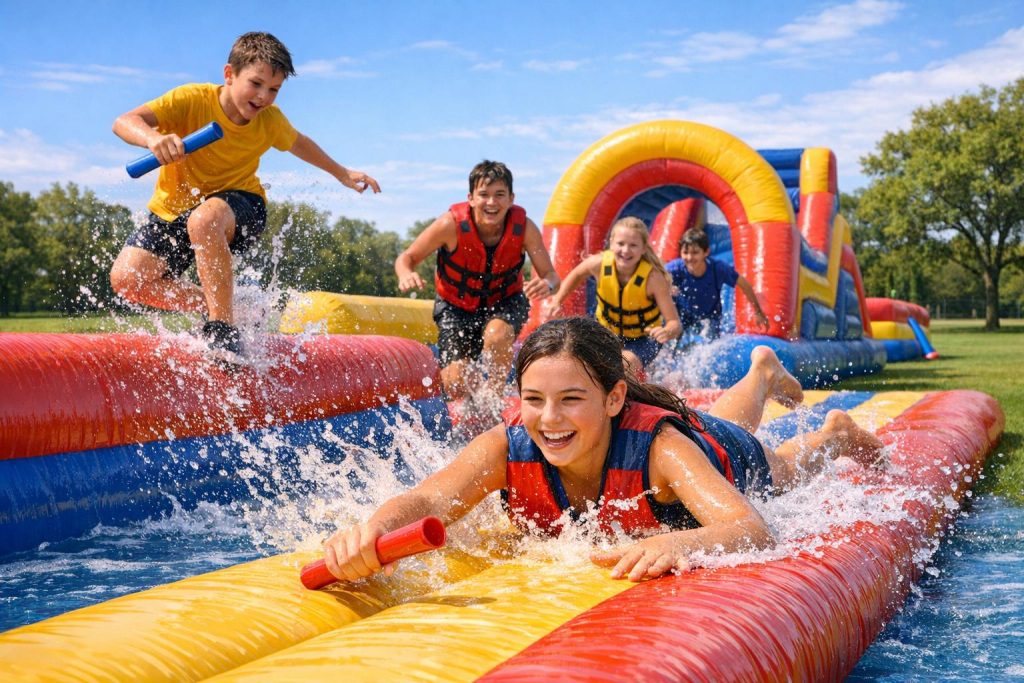
Inflatable team relay water games are a fun, interactive activity combining water challenges, inflatable structures, and teamwork. Perfect for summer events like parties, school field days, or corporate gatherings, these games are accessible for all ages and focus on collaboration over athletic skill. Popular formats include obstacle course races, sponge-and-bucket water transfers, and slide-and-splash relays.
To organize a successful event:
- Plan for your audience: Tailor games to age groups and group sizes.
- Choose the right venue: Ensure flat ground, water access, and enough space for inflatables.
- Prioritize safety: Use proper anchoring, enforce rules, and provide supervision.
- Partner with rental providers: Companies like Bouncy Rentals USA handle setup, takedown, and equipment sanitization.
With careful planning and safety measures, these games can turn any gathering into a memorable experience filled with teamwork and laughter.
Planning Your Inflatable Relay Water Event
Setting Goals and Identifying Your Participants
Start by defining what you want your event to achieve. A backyard birthday party will have very different needs compared to a corporate team-building day or a school fundraiser. Your goal will guide everything – from the types of games you organize to how competitive the activities should be.
Next, think about who will be playing. Age is a big factor here. For example, energetic 8-year-olds might thrive on fast-paced obstacle courses, while mixed-age groups may enjoy games that are more inclusive and less intense. Make sure to form at least two balanced teams to keep the energy up and minimize waiting times for participants. If you’re expecting around 20 guests, plan the teams carefully to ensure everyone stays engaged and the event flows smoothly.
Choosing Your Venue and Equipment
Your venue needs to check three key boxes: flat ground, enough space, and easy access to water. A backyard can work well for smaller setups, while larger events might require a park. Water access is essential – a simple garden hose is usually all you need.
The amount of space required depends on the equipment you’re using. For example, a standard bounce house typically needs 13×13 to 15×15 feet. Inflatable obstacle courses, on the other hand, require more room – anywhere from 30×10 to 60×15 feet or more, depending on the setup. Water slides usually need about 15×30 feet, but dimensions can vary based on their height. Companies like Bouncy Rentals USA offer a variety of options, including obstacle courses for team relays, combo units for mixed age groups, and water slides suitable for all ages. They also handle delivery, setup, and takedown, making things easier for you.
Once you’ve secured your venue and equipment, focus on refining your budget and ensuring safety measures are in place.
Budget, Logistics, and Safety Planning
Your budget will mainly cover equipment rental and water usage. Be sure to book your inflatables early, especially during busy summer weekends when demand spikes. Companies like Bouncy Rentals USA take care of delivery, setup, and takedown, so you can focus on other aspects of the event.
Plan for about two hours of setup time before your guests arrive to test the equipment and make sure everything is running smoothly. Safety should be a top priority: ensure all inflatables are securely anchored, assign responsible adults to supervise each station, and have a backup plan in case of unexpected weather. Keep a first aid kit nearby and establish clear rules for participants before the games start. If it’s a hot day, schedule frequent water breaks and set up shaded areas where players can cool off.
Popular Inflatable Team Relay Game Formats
Obstacle Course Relay Races
Inflatable obstacle courses are a perfect fit for relay races. Many feature dual-lane designs with two parallel lanes, allowing participants to race head-to-head or for teams to execute quick handoffs at the finish line. These courses typically measure about 30 feet long, 17 feet wide, and 16 feet high, and include a mix of pop-up obstacles, crawl tubes, climbing walls, and a thrilling finishing slide.
Event organizers often use leaderboards to track the fastest team times. Clowns.com highlights a key safety benefit of these designs:
Because the entrance and exit of the relay race obstacle course are on the same side, it makes it easier to monitor child safety.
This layout allows a single supervisor to keep an eye on both the start and finish lines, making it easier to manage multiple teams.
Up next, let’s look at how water relay challenges introduce a splash of fun to the competition.
Sponge and Bucket Water Transfer Relays
This classic relay format is simple yet entertaining. Players dunk a large sponge in a water-filled bucket, dash to an empty bucket on the other side, and wring out the sponge to hit a fill line. The first team to fill their bucket wins.
For added fun, inflatable elements can be integrated into the course. Participants might navigate through inflatable tunnels or bounce over barriers while carrying their soaked sponge. To mix things up, try variations like balancing the sponge on their heads while running or a blindfolded version where teammates guide each other verbally to avoid spilling water. These twists not only keep the game lively but also emphasize teamwork and precision. Plus, they’re easy to adapt for different age groups, making them great for mixed audiences.
Slide and Splash Relay Circuits
Adding water slides to relay games cranks up the excitement. These formats are all about fast-paced fun, perfect for high-energy summer events. For example, in slip-n-slide bowling, players slide down an inflatable slip-n-slide to knock over plastic bottles using their bodies or an inflatable beach ball. Another option is the beach ball relay, where teams move an inflatable ball across the course using only their bodies – no hands allowed.
For a more competitive twist, try noodle jousting. Two players sit on inflatable rafts and use pool noodles to knock each other into the water. The last player remaining on the raft scores points for their team. These games are ideal for summer events, keeping everyone cool and engaged while the competition heats up.
Summary of game formats and key skills tested:
| Game Format | Primary Equipment | Key Skill Tested |
|---|---|---|
| Obstacle Relay | Inflatable Obstacle Course | Agility and Speed |
| Sponge Transfer | Sponges, Buckets, Inflatable Tunnels | Coordination and Accuracy |
| Slide & Splash | Water Slides, Inflatable Rafts, Beach Balls | Balance and Teamwork |
| Noodle Joust | Inflatable Rafts, Pool Noodles | Balance and Strategy |
Safety and Best Practices for Inflatable Water Games
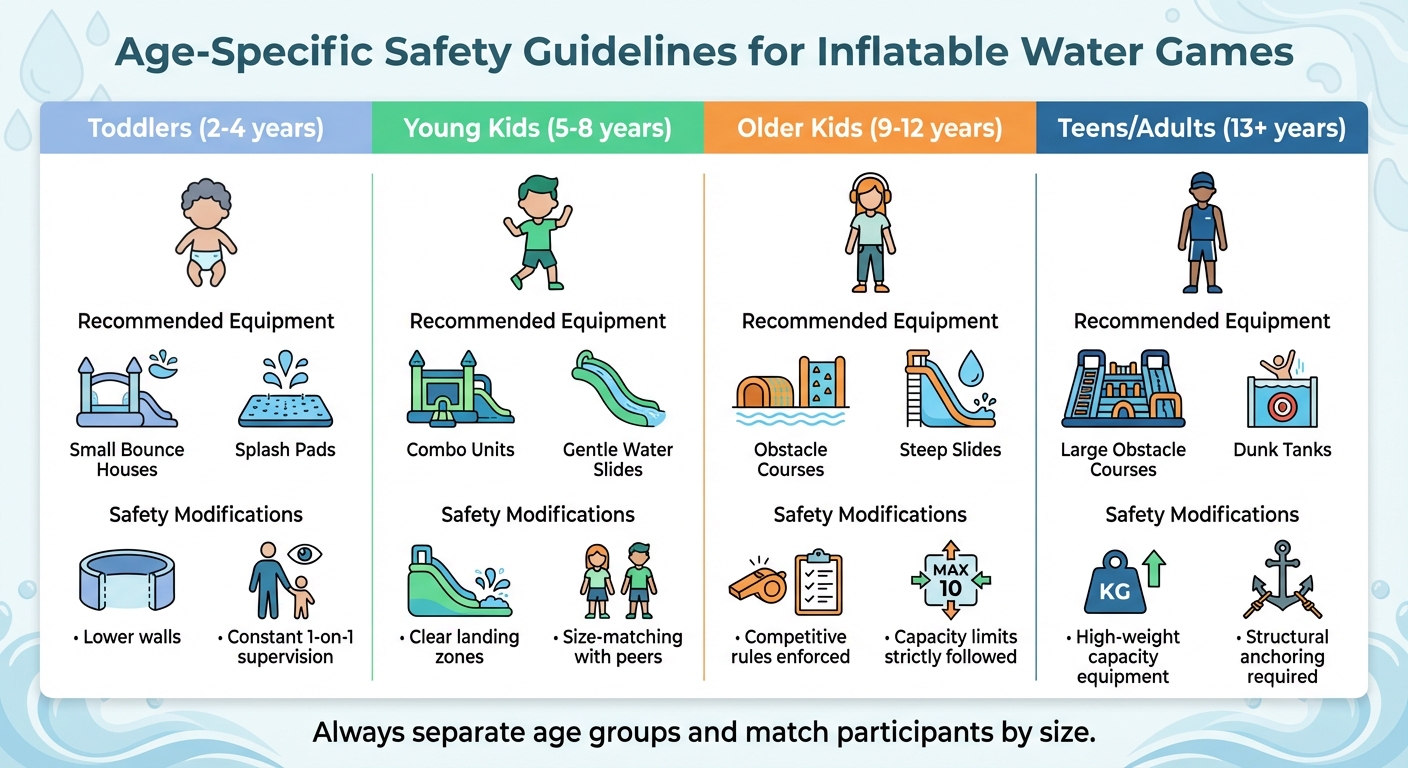
Safety Guidelines by Age Group for Inflatable Water Games
Core Safety Guidelines
Now that your event is planned, it’s time to focus on safety. Following these guidelines will help ensure a secure and enjoyable experience for everyone.
Start by maintaining a 3-foot clearance around each inflatable to allow for safe operation. When transporting and setting up, keep in mind that inflatables can weigh anywhere from 200 to 1,000 lbs, and the pathway to the setup area should be 36–48 inches wide, depending on the unit size.
Always set up on level ground. For grassy areas, use stakes to secure the inflatable, while sandbags or water barrels work best on concrete or asphalt. Each blower powering the inflatable requires a dedicated 110V/120V, 20-amp outlet located within 50–100 feet of the unit. Assign a "bounce house monitor" for each inflatable to enforce rules and manage capacity. A good rule of thumb is one inflatable for every 15–20 guests to keep things from getting too crowded.
For water slides, enforce a seated, feet-first position, and for slip-and-slides, participants should go stomach-down with hands forward to minimize risks. Make sure the landing area is clear before the next person uses the slide, and limit the top of the slide to three children or one adult at a time. If the inflatable starts to deflate or bad weather rolls in, participants should exit calmly and immediately.
Adapting safety measures for different age groups is also essential for a safe event. Here’s how to manage participants of varying ages.
Age-Specific Rules and Modifications
To avoid injuries, keep toddlers separate from older children and adults. Only allow children of similar age and size to use an inflatable at the same time. For events with mixed age groups, consider scheduling separate time blocks for different age ranges.
| Age Group | Recommended Inflatable Type | Key Safety Modifications |
|---|---|---|
| Toddlers (2-4) | Small Bounce Houses, Splash Pads | Lower walls, constant 1-on-1 supervision |
| Young Kids (5-8) | Combo Units, Gentle Water Slides | Clear landing zones, size-matching |
| Older Kids (9-12) | Obstacle Courses, Steep Slides | Competitive rules, enforced capacity limits |
| Teens/Adults | Large Obstacle Courses, Dunk Tanks | High-weight capacity, structural anchoring |
Before play begins, brief participants on basic rules like no flipping, roughhousing, or wearing jewelry. To prevent injuries and protect the equipment, require everyone to remove shoes, eyeglasses, sharp objects, and anything else that could cause harm or damage.
In addition to age-appropriate rules, maintaining hygiene and proper equipment care will keep everything safe and ready for use.
Hygiene and Equipment Maintenance
Keeping inflatables clean is crucial – not just for participant safety, but also for extending the life of the equipment. The rules are simple: no food, gum, drinks, pets, or sprays inside the inflatable. These items can leave sticky residues and encourage bacterial growth, especially in wet environments.
Provide towels for participants to use before and after water activities to help manage moisture and reduce slippery surfaces. High-quality inflatables are generally made from commercial-grade PVC, which is easier to sanitize and resists mold better than cheaper materials. Reputable rental companies, such as Bouncy Rentals USA, thoroughly sanitize their inflatables between uses. This is especially important for high-traffic events, ensuring the equipment arrives clean and ready for safe, hygienic fun.
Conclusion: Creating a Successful Inflatable Relay Water Event
Inflatable team relay water games combine teamwork, competition, and loads of fun, making them a highlight of any gathering. By pairing the right equipment with careful planning and a focus on safety, you can create an event that participants will talk about long after it’s over.
The recipe for success revolves around three main ingredients. First, select inflatables that match your audience – dual-lane slides for head-to-head races, obstacle courses for competitive teens and adults, or combo units designed for younger kids. Second, make safety a priority – ensure proper anchoring, have dedicated monitors, organize participants into age-appropriate groups, and conduct pre-event safety briefings. Third, keep the games fresh and engaging by mixing up relay formats like sponge relays or bucket transfers to maintain energy and excitement throughout the day. When these elements come together, you’ve got all the makings of a fun, safe, and well-organized event.
Partnering with a professional rental company makes the process even easier. Bouncy Rentals USA takes care of the logistics, providing sanitized, fully insured inflatables that meet safety standards. Their team handles setup, takedown, and safety checks, leaving you free to focus on creating a memorable experience for your guests.
Whether it’s a neighborhood block party, a school field day, or a corporate team-building event, success boils down to thoughtful planning, a commitment to safety, and high-quality equipment. With these principles in place, your inflatable relay water event transforms into more than just a gathering – it becomes a celebration of teamwork, friendly competition, and summer fun that brings people closer together.
FAQs
How can I select the best inflatable games for different age groups?
Choosing inflatable games that match the age and abilities of your participants is key to ensuring everyone has a fun and safe experience. For toddlers (ages 2–4), stick to simple bounce houses with low walls and soft play areas. These setups provide a safe environment while keeping them entertained. Young kids (ages 5–8) might enjoy combo units that include small slides or splash zones, adding a bit of variety and excitement without being overwhelming. Older kids and pre-teens (ages 9–12) are typically ready for inflatable obstacle courses or medium-sized water slides, which bring just the right mix of fun and friendly competition. Teens and adults (ages 13 and up) can take on larger, more thrilling options like full-size obstacle courses, tall water slides, or multi-lane water relays.
If you’re organizing a team relay water event, consider grouping participants by age and selecting inflatables that suit their skill levels. For instance, toddlers could enjoy a splash pad, mixed-age groups might tackle a moderate obstacle course, and teens and adults could compete on a larger water slide relay. This approach ensures that everyone has a memorable time with activities tailored to their abilities. With Bouncy Rentals’ wide selection of inflatables, you’ll find plenty of options to keep all age groups entertained and safe.
What are the key safety tips for inflatable water games?
To keep inflatable water games both safe and enjoyable, it’s crucial to focus on supervision, proper setup, and clear rules for participants. Always have a responsible adult actively overseeing the activity, ensuring that everyone follows essential guidelines like removing shoes, sharp objects, and jewelry. Group participants by age and size to minimize the risk of injuries, and strictly enforce rules against roughhousing, climbing on walls, or sliding headfirst. Also, make sure food, drinks, and pets stay away from the inflatable.
When setting up, place the inflatable on a flat, clean surface free of debris, and secure it firmly with anchors. Keep the blower running continuously and ensure the power supply matches the equipment’s requirements. Steer clear of using inflatables during bad weather, including high winds, rain, or lightning. Companies like Bouncy Rentals USA offer sanitized, thoroughly inspected equipment and trained staff to help you follow these safety practices, making sure everyone has a blast!
What steps should I take to ensure a smooth setup and takedown for inflatable team relay water games?
To make setting up and taking down your inflatable team relay water games a breeze, here’s a simple guide to follow:
- Get the area ready: Pick a flat, open space free from debris, and make sure there’s at least 4 feet of clearance around the inflatable for safe movement. Lay down a tarp underneath to protect the inflatable and keep it clean.
- Set up the inflatable: Roll out the inflatable, attach the blower securely, and tie off any extra ports. Plug the blower into a dedicated 110-volt outlet using a heavy-duty extension cord (no longer than 100 feet). Use stakes or sandbags to anchor the inflatable and keep it stable.
- Perform safety checks: Double-check that all zippers and vents are sealed, the splash pool is filled to the correct level, and the area around the inflatable is clear. Designate an adult to supervise and ensure everyone’s safety during the activity.
When it’s time to pack up, clear the area of guests, drain the water, and turn off the blower to deflate the inflatable. Open all air valves, remove the anchors, and carefully fold the unit before storing it in a dry spot. By sticking to these steps, you’ll keep everything running smoothly and safely!
