

Obstacle courses are fun but come with risks if safety isn’t prioritized for different age groups. Toddlers, kids, preteens, teens, and adults have unique needs when it comes to play equipment. Here’s a quick breakdown of how to keep everyone safe:
- Toddlers (2-4): Use low-height inflatables with soft materials, simple slides, and tunnels. Keep them separate from older kids and under close supervision.
- Young Children (5-8): Opt for smaller obstacle courses with simple challenges. Limit group sizes, enforce rules, and separate age groups to avoid accidents.
- Preteens (9-12): Medium-sized courses with cushioned landings work best. Supervise closely, manage turn-taking, and inspect equipment regularly.
- Teens (13-17): Larger courses with team elements are ideal. Enforce safety rules, limit participants, and monitor for rough play.
- Adults (18+): Use commercial-grade inflatables designed for higher weight limits. Separate play areas from kids and inspect equipment after use.
Universal Tips: Always anchor equipment securely, monitor weather conditions, enforce capacity limits, and maintain active supervision. Safety depends on choosing age-appropriate designs and following strict guidelines.
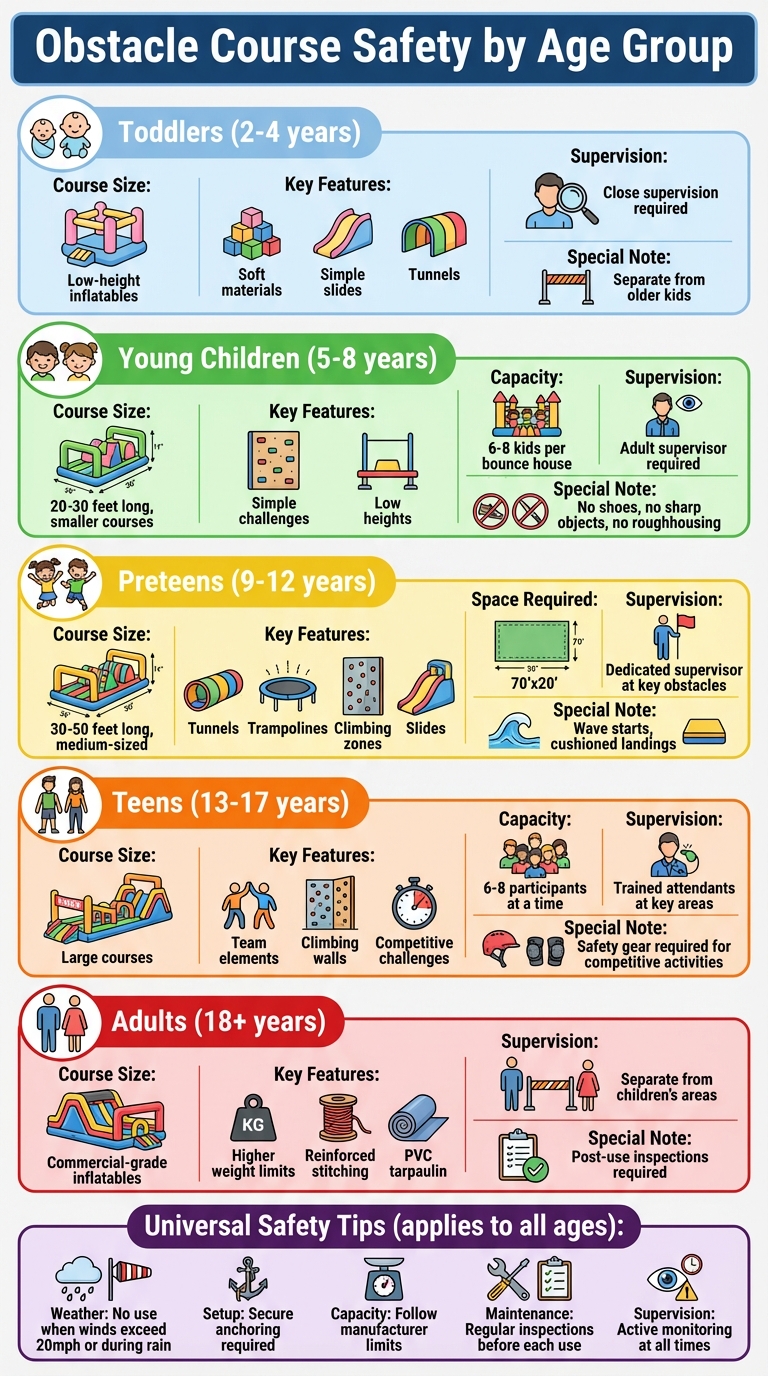
Obstacle Course Safety Requirements by Age Group
Safety Guidelines for Toddlers (Ages 2-4)
For toddlers aged 2 to 4, play equipment needs to match their developing motor skills and coordination. Below are some tips on selecting safe, engaging options and ensuring a secure environment for this age group.
Low-Height and Toddler-Specific Courses
The best choice for toddlers is equipment designed just for them. Look for inflatables made from soft materials to cushion any falls. Features like gently sloping slides, soft climbing areas, and tunnels are great for sparking curiosity without overwhelming their senses. It’s also important that the design keeps toddlers safely contained and avoids overcrowding. For instance, Bouncy Rentals USA offers inflatables tailored to toddlers, with age-appropriate activities and obstacles that encourage safe exploration.
Supervision and Grouping by Age
Close adult supervision is essential. Keep toddlers in separate play zones away from older children to reduce the risk of accidents. Having parents or attentive supervisors nearby ensures a safer and more enjoyable experience for little ones.
Features to Avoid
When choosing inflatables, skip designs with steep walls, narrow beams, or complex obstacles that might be too difficult for toddlers to navigate. Stick to simple layouts with low slides and minimal barriers. Also, check for small parts that could pose choking hazards. Prioritize features like low, easy-to-access entrances and protective safety netting to keep toddlers secure.
Safety Tips for Young Children (Ages 5-8)
Kids aged 5 to 8 are full of energy and have better coordination than toddlers, but they still need close supervision to avoid accidents during play. Obstacle courses designed for this age group should match their abilities while keeping things fun and manageable.
Choosing the Right Obstacle Courses
For children in this age range, opt for smaller obstacle courses or bounce houses, typically 20–30 feet long, with low heights and simple challenges. Avoid larger, more competitive setups meant for older kids or adults, as these can be too difficult and even intimidating. Combo units with separate play areas are a great choice because they help reduce crowding and accidental bumps. For example, a jungle-themed course with a slide and small obstacles offers just the right level of excitement without overwhelming them.
Reputable rental companies often provide specific age recommendations for their equipment. At Bouncy Rentals USA, we strictly follow these guidelines to ensure our inflatables are safe and suitable for each age group. Choosing the right course is the first step in creating a safe and enjoyable experience for young children.
Managing Capacity and Enforcing Rules
Stick to the manufacturer’s recommended occupancy limits – typically 6 to 8 kids for a standard bounce house. Post clear rules at the entrance, explain them to both kids and parents, and assign an adult to supervise. This includes enforcing rules like no shoes, no sharp objects, and no roughhousing. Having a dedicated supervisor on hand greatly reduces the risk of accidents.
Keeping Age Groups Separate
It’s also important to keep younger kids separate from older children and adults. At larger events, set up distinct play zones by grouping inflatables by age. This helps prevent injuries caused by size or activity differences and ensures everyone has a safe, enjoyable time. By providing age-appropriate courses and enforcing clear rules, you can create a secure and fun environment for children to play and explore.
Safety Measures for Preteens (Ages 9-12)
As kids grow into their preteen years, their desire for adventure and competition increases. They enjoy activities that challenge their abilities but may sometimes overlook the risks involved. To strike the right balance, obstacle courses for this age group should be engaging yet carefully monitored. Medium-sized courses, typically ranging from 30 to 50 feet in length, are ideal for preteens. These courses often feature elements like tunnels, trampolines, climbing zones, and slides – providing a mix of fun and physical challenges that are exciting without being overwhelming.
Medium-Sized Courses with Cushioned Landings
For preteens, it’s important to select obstacle courses designed specifically with their needs in mind. Features like slip-and-slide zones add an extra layer of fun, but safety should always come first. Ensure that all surfaces are clear and that landing zones are well-cushioned to minimize the risk of injury. These courses typically require a space of about 70’x20′ to allow for safe play and movement. The design should encourage teamwork and friendly competition while keeping the challenges appropriate for their age and abilities. Structured play management is key to maintaining a safe and enjoyable experience.
Supervision and Turn-Taking
Having a dedicated supervisor stationed at key obstacles is crucial for ensuring safety. Supervisors can enforce rules, guide participants, and manage the flow of activity using wave starts. This approach reduces congestion on the course and helps separate competitive players from those who prefer a more relaxed experience. Clear communication of safety rules is essential – both children and parents should understand participant limits and guidelines for entering and exiting the course safely.
Regular Equipment Inspections
To maintain a safe environment, rental companies often conduct routine checks on inflatables to ensure they are properly anchored, clean, and compliant with weight limits. Before each use, double-check that the course is securely anchored, free of debris, and meets all weight requirements. Additionally, unused sections of the course should be disabled or secured to prevent unsupervised access. By following the safety protocols recommended by companies like Bouncy Rentals USA, you can ensure that preteens enjoy a challenging yet secure play experience.
Safety Considerations for Teens (Ages 13-17)
Teenagers bring a lot of energy and a strong sense of competition to obstacle courses, making these activities both fun and challenging. However, with this age group, safety becomes a priority since they often push limits and engage in rough play. Obstacle courses designed for teens should strike a balance between physical challenges and social interaction while keeping safety at the forefront. Here’s how to meet their unique needs.
Large Courses with Team Elements
Obstacle courses that are larger and include team-based challenges are ideal for teens. Features like tunnels, climbing walls, and slides naturally promote both competition and collaboration. These elements not only keep teens engaged but also encourage teamwork in a fun, active setting. At Bouncy Rentals USA, our obstacle courses are designed to combine excitement with safety, ensuring that teens can fully enjoy the experience without unnecessary risks. Activities should be structured to maximize enjoyment while fostering teamwork.
Enforcing Safety Rules
Clear rules are essential for ensuring safe play among teens. Prohibit behaviors such as roughhousing, flipping, or intentional collisions to minimize the chance of injuries. For activities that involve direct competition – like jousting or inflatable boxing rings – provide proper safety gear, such as headgear and gloves, to reduce risks. Additionally, having a dedicated supervisor on hand to monitor and address unsafe actions immediately is crucial.
Participant Limits and Supervision
To prevent overcrowding, follow manufacturer guidelines for capacity, which are typically 6–8 participants at a time. Overcrowding not only increases the risk of collisions but also makes it harder to supervise effectively. For larger or more complex obstacle courses, station trained attendants at key areas to ensure smooth and safe participation. By sticking to these guidelines and maintaining active supervision, teens can enjoy the physical and social aspects of obstacle courses in a secure environment.
Adult Safety and Equipment Durability (Ages 18+)
When it comes to obstacle courses for adults, the equipment needs to handle higher weight limits and more intense activity compared to those designed for children. This means using materials with greater strength and durability. Commercial-grade inflatables for adults are typically made from tough materials like PVC tarpaulin and feature reinforced stitching at key stress points to prevent tears or structural failure. Whether you’re hosting a backyard party or organizing a team-building event, it’s crucial to choose equipment that can safely support multiple adults at once without compromising safety. While the focus on safety remains consistent with courses for younger users, adult events bring unique requirements that must be addressed.
Commercial-Grade Equipment for Adults
Inflatables designed for adults have specific weight capacity requirements and include secure anchoring systems to prevent shifting or tipping during use. These features are especially important for corporate events or large festivals, where equipment durability is put to the test. Always look for inflatables that clearly list their weight limits and maximum occupancy – this information should be easy to obtain from your rental provider. For example, Bouncy Rentals USA offers obstacle courses made from commercial-grade materials, ensuring they can handle the demands of adult participants while maintaining strict safety standards.
Supervision and Separate Play Areas
To minimize risks, it’s important to separate play areas for adults and children. The size and weight differences between the two groups can increase the likelihood of collisions and injuries. By designating specific inflatables for adults and enforcing strict age separation, you can create a safer environment for everyone. If space is limited, consider scheduling separate play sessions for adults and children to ensure safe use of the equipment.
Weather and Post-Use Inspections
For adult obstacle courses, maintaining proper inflation is critical. Continuous blower operation ensures the equipment remains fully inflated and structurally sound throughout use. After each event, conduct a thorough inspection to check for any damage, such as tears, loose seams, or shifted anchor points. These post-use checks are especially important for adult inflatables, as they experience higher stress levels during active use. Regular inspections and maintenance help ensure the equipment stays safe and reliable over time.
Universal Safety Tips for All Age Groups
Whether it’s toddlers, teens, or adults tackling the obstacle course, some safety rules apply to everyone. These general precautions help create a safer environment for participants of all ages and skill levels while minimizing the chance of accidents.
Weather and Setup Considerations
Weather plays a huge role in the safety of obstacle courses. As Magic Jump Rentals Ventura, LLC. advises, "Do not use inflatables during inclement weather (rain, hale, or when winds exceed 20mph)". Strong winds can shift or even lift inflatables, while rain makes surfaces dangerously slippery. If the weather takes a turn for the worse, deflate the inflatables immediately and ensure everyone exits the area. Proper anchoring during setup is equally critical – stakes or weights must be securely fastened following the manufacturer’s guidelines to keep the equipment stable and safe. These precautions, paired with constant supervision, are essential for all age groups.
Supervision Ratios and Capacity Limits
Proper supervision is a cornerstone of obstacle course safety. Always stick to the manufacturer’s capacity limits, both for the number of participants and the total weight allowed. Mixing adults and children on the same course is a no-go – differences in size and weight can lead to serious collisions. Ensuring participants are grouped appropriately and capacity limits are respected helps keep everyone safe.
Sanitization and Maintenance
Safety doesn’t stop at setup and supervision – routine maintenance is just as important. Before each use, inspect the inflatable for any issues like tears, worn seams, or improper inflation. Opt for rental companies that prioritize cleanliness and safety, such as Bouncy Rentals USA, which sanitizes equipment and carries full insurance coverage. Providers affiliated with rental safety organizations and adhering to industry standards are a safer choice. Regular upkeep ensures the equipment remains reliable and reduces the risk of accidents over time.
Conclusion
Safety in obstacle courses depends heavily on age-appropriate design. What works for a teenager could pose risks for a toddler, and adult setups are built to handle greater physical demands. It’s crucial to align the course with the needs of each age group: soft, low-to-the-ground structures for toddlers, straightforward layouts for young kids, moderate challenges for preteens, competitive designs for teens, and durable, commercial-grade inflatables for adults.
Beyond design, universal safety measures are non-negotiable. These include securing equipment properly, keeping an eye on weather conditions, enforcing capacity limits, and maintaining active supervision. Regular inspections also play a key role in ensuring the equipment remains safe and clean. By balancing age-appropriate designs with these safety protocols, you can create a fun and secure experience for everyone involved.
FAQs
What safety tips should I follow for toddler obstacle courses?
To keep toddlers safe while they enjoy obstacle courses, it’s important to prioritize age-appropriate design, a secure setup, and constant supervision. Look for courses specifically designed for children aged 12 to 36 months. These should feature low obstacles, wide pathways, and soft, rounded edges that accommodate their developing coordination and balance. Before use, double-check that the inflatable is fully inflated, securely anchored with straps or sandbags, and free of any damage.
Prepare the surrounding area by clearing away debris like rocks or sticks, and set up the course on a cushioned, non-slip surface such as foam tiles or rubber mulch. Active supervision is a must – an adult should always be nearby to prevent overcrowding, keep an eye out for signs of fatigue, and enforce safety rules like limiting one child per obstacle. Stick to the recommended capacity for the course, and pause activities if weather conditions, such as wind over 15 mph or rain, make play unsafe.
For a stress-free option, consider toddler-friendly obstacle courses from Bouncy Rentals USA. Their courses are professionally set up, thoroughly sanitized, and insured, allowing you to focus on creating fun, worry-free moments with your little ones.
How can I keep obstacle courses safe for all age groups?
Ensuring safety on obstacle courses for mixed-age groups starts with choosing equipment that matches the participants’ ages and abilities. Opt for courses that either separate areas for younger kids and older participants or are designed to accommodate different skill levels. Keep the number of users in check to avoid overcrowding and ensure smaller children don’t feel overwhelmed by older, faster participants.
Before the fun begins, thoroughly inspect the course. Check for any signs of damage, make sure all anchors are secure, and clear away debris. Post clear rules regarding age limits and supervision, and assign adults to monitor critical areas like entrances and high-traffic obstacles. While the course is in use, enforce a one-at-a-time rule on obstacles, remind everyone to play safely (no roughhousing or climbing on walls), and keep an eye on the weather. If conditions become unsafe, such as during strong winds, pause the activity immediately.
By focusing on preparation, using age-appropriate equipment, and maintaining active supervision, obstacle courses can be both fun and safe for everyone involved. Need a clean, high-quality inflatable obstacle course for your next event? Check out Bouncy Rentals USA!
What factors should I consider when selecting an obstacle course for adults?
When choosing an obstacle course for adults, focus on options built to handle higher weight limits and made from sturdy, long-lasting materials. This ensures both safety and dependability. It’s also important to select a course that fits the size of your venue, includes secure anchoring systems, and, if necessary, has access to a dependable power source.
Key features to look for include non-slip surfaces, clear safety instructions, and equipment that complies with sanitation and insurance requirements. Don’t forget to factor in weather conditions and ensure the setup includes proper supervision to keep participants safe during the event. For reliable rentals, consider providers like Bouncy Rentals, known for offering sanitized and insured equipment.
