
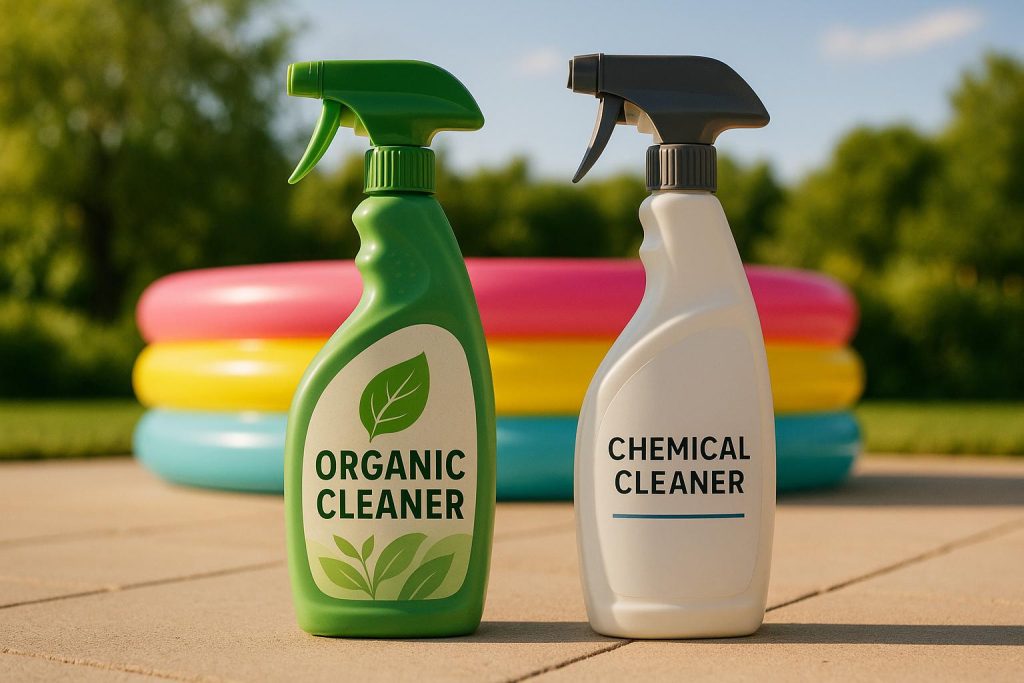
Cleaning inflatables the right way is critical for safety, hygiene, and durability. The choice between organic and chemical cleaners depends on the mess, event type, and cleaning requirements. Here’s a quick breakdown:
- Organic cleaners (like mild dish soap): Gentle, safe for frequent use, and ideal for light messes. Great for family-focused events, indoor settings, and eco-conscious clients.
- Chemical cleaners (synthetic formulas): Stronger, effective for tough stains and deep sanitization. Best for outdoor events, quick turnarounds, and strict sanitation needs.
Key takeaway: Use organic cleaners for routine maintenance and chemical cleaners for deeper cleaning. Combining both ensures clean and long-lasting inflatables while keeping guests safe.
Types of Cleaners for Inflatables
When it comes to keeping your inflatables in top condition, there are two main types of cleaning solutions to consider: organic cleaners and chemical cleaners. Let’s break down what each type brings to the table.
What Are Organic Cleaners?
Organic cleaners, such as mild dish soap, rely on natural surfactants to break down dirt and grime. These solutions are gentle yet effective, making them a great choice for regular maintenance.
What Are Chemical Cleaners?
Chemical cleaners, on the other hand, are synthetic products specifically formulated to tackle tougher messes. They’re ideal for deep cleaning and removing stubborn residues that organic solutions might struggle with.
Organic vs Chemical Cleaners: Side-by-Side Comparison
When deciding between organic and chemical cleaners for inflatables, it’s important to weigh factors like cleaning performance, safety, and cost.
Cleaning Power and Results
Both organic and chemical cleaners can get the job done, but they operate in distinct ways. Organic cleaners, such as mild dish soap, rely on natural surfactants to gently break down dirt and grime. They’re perfect for routine maintenance and handling everyday messes like food stains, sweat, and light soil.
On the other hand, chemical cleaners are designed for tougher challenges. Their synthetic formulas can tackle stubborn stains, sticky residues, and deeply embedded grime that organic options might struggle with. While they deliver stronger results for heavy-duty cleaning, they may pose risks to material durability and require more caution during use.
Safety and Health Impact
Organic cleaners are generally safer for both staff and users. They don’t emit harmful fumes, are less likely to cause skin irritation, and leave no toxic residues behind – making them especially suitable for indoor use or environments with limited ventilation. This makes them a reliable choice for frequent cleaning tasks.
Chemical cleaners, however, demand more careful handling. They can irritate the skin and respiratory system and often leave residues that must be rinsed away thoroughly to ensure safety, particularly for children. With proper precautions – like wearing protective gear and ensuring good ventilation – chemical cleaners can still be safely incorporated into your cleaning routine.
Cost Breakdown and Budget Impact
Organic cleaners, especially concentrated ones, can be cost-effective. They often match or even outperform chemical cleaners in price while cutting down on shipping expenses and waste. Additionally, using organic cleaners might reduce risks of workplace injuries, lower workers’ compensation claims, and minimize healthcare costs tied to chemical exposure.
Ultimately, the choice comes down to balancing cost, cleaning effectiveness, and safety. Consider these factors carefully to select the cleaner that aligns best with your specific cleaning needs and priorities.
Which Cleaner to Use When
Deciding between organic and chemical cleaners isn’t a simple one-size-fits-all choice. The right cleaner ensures both the safety of your guests and the durability of your inflatables. Your decision will depend on the type of event, the level of mess, and your specific cleaning needs.
When Organic Cleaners Make Sense
Organic cleaners are a great option for children’s parties and family-focused events, especially where kids are likely to spend hours playing and may put their hands in their mouths. They’re also ideal for indoor venues like church halls or community centers where ventilation might be limited. Plus, they’re a natural fit for clients who prioritize sustainability, such as schools or daycare centers.
These cleaners are effective for light to moderate messes, like everyday dirt and spills, while being gentle on both equipment and staff. During busy seasons, frequent cleaning is easier with organic products since they’re less harsh and reduce potential health risks for your team. Additionally, offering eco-friendly cleaning practices can appeal to environmentally conscious clients, giving you a unique selling point for schools, daycares, and green-minded families.
By using organic cleaners, you can maintain equipment longevity, support safety-conscious practices, and attract clients who value eco-friendly solutions. However, when faced with tougher messes or strict time constraints, chemical cleaners may be the better option.
When Chemical Cleaners Are Necessary
Chemical cleaners shine in heavy-duty situations. Events that leave behind mud, sticky residues, or bodily fluids require the stronger cleaning power these products provide. They’re also essential when strict sanitization standards are in place, such as for large public events or when health department regulations demand EPA-approved disinfectants.
For quick turnarounds, chemical cleaners can be a lifesaver. If you only have 30 minutes between events, they can tackle stubborn stains and sanitize more efficiently than organic options. Additionally, outdoor events with good ventilation are ideal for using chemical cleaners, as fumes can dissipate safely.
From a cost perspective, budget-conscious operations might find chemical cleaners more economical for deep cleaning tasks, as they can prevent the need for multiple cleaning cycles or costly equipment replacements due to permanent stains.
By strategically using chemical cleaners, you can ensure thorough sanitization, meet tight schedules, and maintain high standards of cleanliness for your inflatables.
Finding the Right Balance
Many successful inflatable rental businesses use a mix of both cleaners to meet their needs. Organic cleaners are perfect for routine maintenance and eco-conscious events, while chemical cleaners are indispensable for deep cleaning and tougher messes. Matching the cleaner to the situation not only keeps your inflatables in top shape but also ensures happy, healthy guests and smooth operations.
Cleaning Methods and Safety Tips
Keeping your inflatables clean isn’t just about appearances – it’s about protecting your equipment and ensuring customer satisfaction. The right cleaning methods can make all the difference.
Step-by-Step Cleaning Process
Pre-event preparation starts with a thorough inspection. Look for stains, tears, or areas that might need extra care. For general cleaning, organic cleaners are a great option. Follow the manufacturer’s instructions to mix your solution, then focus on high-touch areas like entrances and handholds.
Post-event cleaning requires a more detailed approach. Begin by removing debris with a soft-bristled brush or a vacuum to avoid grinding dirt into the material. For mild dirt, apply your cleaner, let it sit for the recommended time, and wipe it off with microfiber cloths.
Tough cleaning situations may need chemical cleaners. For heavy dirt or stains, use an EPA-approved disinfectant. Always test the cleaner on a small, hidden spot first to ensure it won’t damage the material. Apply the cleaner, follow the manufacturer’s dwell time, and rinse thoroughly with clean water to remove any residue.
Storage preparation is just as important as cleaning. After washing, make sure the inflatables are completely dry before storing – this usually takes 2-4 hours with fans or air-drying. If you’ve used chemical cleaners, double-check that all residue is rinsed off before drying to prevent mold or material damage.
Temperature matters when cleaning. For best results, work in temperatures between 50°F and 85°F. Extreme heat or cold can affect the effectiveness of your cleaning products.
Finally, consistent staff training ensures these steps are followed properly, leading to safe and reliable results every time.
Training Staff and Handling Products Safely
Personal protective equipment (PPE) is essential, especially when using chemical cleaners. Equip staff with nitrile gloves, safety glasses, and closed-toe shoes. In enclosed spaces or when dealing with strong disinfectants, respiratory protection may also be necessary. Even with gentler organic cleaners, gloves are recommended to avoid skin irritation from prolonged exposure.
Product knowledge training is key to avoiding mistakes. Teach staff the differences between organic and chemical cleaners, how to dilute them properly, and the required contact times for effective cleaning. Provide simple reference cards to guide them in choosing the right cleaner for each situation. Also, include emergency procedures for accidental spills or exposure.
Ventilation requirements vary depending on the cleaner. Organic cleaners typically need minimal ventilation, making them ideal for indoor tasks. Chemical cleaners, however, require good airflow to prevent hazardous fumes. When working indoors, open windows or doors and use exhaust fans. Never mix cleaning products, as this can create dangerous chemical reactions.
Safe storage and handling protect both your staff and the products. Keep organic and chemical cleaners in separate, labeled storage areas. Chemical cleaners should be stored in cool, dry places away from direct sunlight and heat. Regularly check expiration dates to ensure the products remain effective and safe to use.
Documentation practices help keep everything organized. Maintain cleaning logs that detail the products used, cleaning times, and the staff involved. These records not only track equipment maintenance but also help meet health and safety regulations.
Emergency preparedness is vital. Post safety data sheets (SDS) for all chemical products in accessible locations, and train staff on first aid procedures for common scenarios like skin or eye contact. Make sure eyewash stations or clean water sources are available during chemical cleaning tasks.
Quality control checks are the final step to ensure your cleaning efforts are effective. Assign experienced team members to inspect cleaned inflatables for missed spots, leftover residue, or incomplete drying. This prevents issues that could impact future events or harm your reputation.
Conclusion: Choosing the Right Cleaner for Your Needs
When it comes to cleaning inflatables, the choice between organic and chemical cleaners depends on the specific situation. Both options have their strengths and can work together to keep your equipment in top condition.
Organic cleaners are a great choice for everyday maintenance and quick cleanups, especially when the equipment will be used shortly after cleaning. They’re gentle yet effective, making them ideal for routine care.
On the other hand, chemical cleaners shine in situations requiring a deeper clean, such as tackling heavy contamination or ensuring a higher level of disinfection. These are best reserved for more demanding scenarios where extra sanitation is necessary.
By combining both methods, you can maintain a balance between efficiency and safety. Many rental businesses find that using organic cleaners for daily upkeep and turning to chemical solutions for tougher jobs offers the best of both worlds. Of course, proper training and strict adherence to safety guidelines are essential, no matter which cleaning method you choose.
At Bouncy Rentals USA, we know that clean equipment is key to creating memorable customer experiences. Whether you’re just starting out or managing a large inventory, having a clear and effective cleaning strategy not only protects your investment but also ensures every inflatable meets the highest standards of safety and cleanliness. A thoughtful approach to cleaning helps guarantee that every bounce, slide, and climb happens on equipment that’s as safe as it is fun.
FAQs
What are the eco-friendly advantages of using organic cleaners on inflatables?
Using organic cleaners for inflatables offers a range of environmentally friendly perks. These cleaners are usually biodegradable and non-toxic, steering clear of harsh chemicals that could harm wildlife or contaminate water sources. Plus, by avoiding abrasive ingredients, they help maintain the integrity of inflatable materials, which can lead to a longer lifespan for your items.
On top of that, organic cleaners create a safer experience for users by reducing exposure to harmful residues. Opting for these products promotes a more sustainable way to care for inflatables, benefiting both the planet and your well-being.
What’s the best way to clean inflatables with chemical cleaners without causing damage?
When cleaning inflatables, it’s important to use the right products to avoid damaging the material. Steer clear of harsh chemicals like bleach, as they can weaken the fabric and cause discoloration. Instead, opt for gentle alternatives like white vinegar, mild dish soap, or cleaners specifically made for inflatables. Organic, dye-free options are also a safe bet to preserve the material.
Make sure to check the manufacturer’s cleaning instructions and always test any cleaner on a small, hidden spot first to confirm it won’t cause damage. Regular, careful cleaning not only keeps your inflatables looking their best but also helps them last longer.
How do I choose between organic and chemical cleaners for inflatable rentals?
When deciding between organic and chemical cleaners for inflatables, it’s important to weigh safety, health considerations, and the specific needs of your event. Organic cleaners are non-toxic and environmentally friendly, making them a solid choice for family gatherings or events where health-conscious attendees are a priority. They’re gentle on inflatable surfaces and safer for children or individuals with sensitivities.
On the other hand, chemical cleaners offer a stronger disinfecting punch. They’re often the go-to option when dealing with tough germs, particularly in high-traffic areas or during times when hygiene is a top concern.
To choose the right cleaner, think about the type of dirt or germs you’re tackling, the material of the inflatable, and whether you’re doing a deep clean or just routine upkeep. For kid-centric or family events, organic cleaners might be the better fit. But for large-scale events that demand thorough sanitation, chemical options could be more effective. Always stick to the cleaning guidelines to keep the inflatable safe and in good condition.
