
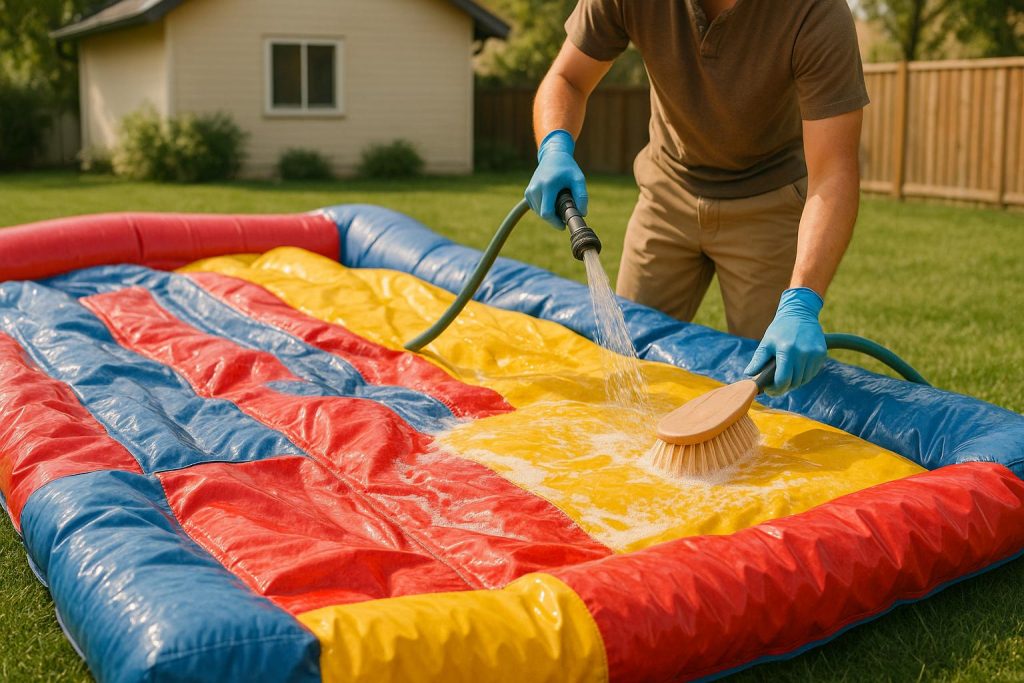
Cleaning inflatables after events is non-negotiable. It ensures safety, extends their lifespan, and keeps users happy. Neglecting this can lead to dirt, mold, and damage, which harm both the equipment and your reputation. Here’s a quick breakdown:
- Why it matters: Dirt, food spills, and moisture can cause stains, odors, and health risks. Regular cleaning prevents costly repairs and builds trust with customers.
- Common issues: Stuck debris, dried mud, and hidden moisture are major culprits. These can weaken seams and foster mold.
- Steps to clean:
- Dry clean: Remove loose dirt with a broom or vacuum.
- Wet clean: Use mild soap and soft brushes to scrub surfaces.
- Disinfect: Focus on high-touch areas with safe sanitizers like hydrogen peroxide.
- Dry thoroughly: Use towels, leaf blowers, and sunlight to eliminate moisture.
- Storage tips: Store in a cool, dry place, away from pests, after ensuring it’s completely dry.
Pro tip: Companies like Bouncy Rentals USA follow strict cleaning routines to maintain quality and customer satisfaction. A clean inflatable isn’t just about appearance – it’s about safety, durability, and trust.
How to Make Inflatables Ready for a Clean
After a fun time, getting inflatables ready for a clean is key. It keeps them safe and strong, and makes cleaning a lot faster.
Look for Woes and Clear Trash
Start by letting the air out of the inflatable – this makes it safe and simple to check over. Look well at the whole surface for rips, holes, or lost parts, keeping a close eye on seams, tie spots, doors, and spots where kids play. These spots tend to get worn out fast. Note any harm so it does not get worse when you clean.
As you check, spot any mold, mildew, or tough stains that might need special cleaning mix.
Then, clear any loose trash with a soft brush, broom, or vacuum. Be gentle, as strong stuff like vinyl and polyester can rip if you’re rough. For more dirt, a light spray with a pressure washer works for PVC inflatables, but skip this way for soft stuff like denier polyester.
Once the inflatable is free of trash and checked, you can set up where you will clean.
Get Your Cleaning Spot Ready
Pick a flat, clean, air-filled place away from sharp bits. Stay away from spots with rough bits, cracked ground, or sharp plants that might rip the fabric. To keep the bottom safe, put a tarp under. This keeps the bottom clean and safe from harm during the wash. Plus, it makes cleaning up easy by getting dirty water and bits.
Get your cleaning bits: soft soap or vinyl wash, soft brushes or wipes, a hose, buckets of clean water, and towels to dry. Having all ready and close by saves time and keeps dirt off the inflatable.
Pro rental firms like Bouncy Rentals USA show that good prep is key. Their good setup keeps their gear in top shape and customers happy.
With your cleaning spot ready, move on to taking off parts you can take apart.
Take Off Parts You Can Remove
Before you clean the main bit, take off any bits you can take off like ladders, steps, covers, panels, nets, rails, and other bits. Clean these bits by themself, and taking them off lets you get to spots that need a look.
Be sure you have all bits before you start. Lost parts are often not seen until it’s time to pack up, so best to spot any issues now. Keep these bits in a safe, clean spot where they won’t get lost or hurt.
Taking these bits apart also keeps the risk low of water or wash mix getting stuck, which can make mold or mildew later. This step makes sure each part gets the care it needs without putting the main inflatable at risk.
How to Clean Step by Step
Your inflatable is set up, now let’s clean it. There are three main steps: dry cleaning, wet cleaning, and drying well. This order stops dirt from spreading and keeps your inflatable looking great.
Dry Cleaning: Get Rid of Loose Dirt
First, get rid of dirt, leaves, grass, and other trash without using water. This helps stop dirt from getting stuck in the material when you wash it. Start with a soft broom for sweeping, focusing on corners and seams where dirt piles up. Use a vacuum for small stuff, and a leaf blower works well for big inflatables, getting into the deep folds.
Go from the top to the bottom, looking at busy spots. Look behind flaps and in small spaces for hidden things like toys or jewelry. Be careful – materials like vinyl or PVC are strong but can still tear. If you skip this step or rush, washing later will be tougher.
After the dirt is gone, you’re ready to wash.
Wet Cleaning: Wash and Scrub the Surfaces
With the dirt out, begin washing. Keep the inflatable up to see any damage and clean every spot. Use gentle soaps, like Dawn dish soap, or ones made for vinyl. Stay away from strong chemicals or rough stuff as they can hurt the material and make colors fade. If there are hard stains, try your cleaner on a small hidden spot first.
Use a soft brush, sponge, or cloth to scrub softly in circles. Look closely at places people touch often like handrails, zippers, and edges where dirt and germs hide.
If you have really tough dirt or dry mud, try using a low-pressure washer. But keep it gentle to not harm seams or pictures.
Bouncy Rentals USA follows a detailed cleaning routine: after every event, they inflate the inflatable on a clean tarp, blow away loose debris with a leaf blower, and vacuum corners. They then wash the surfaces with a mild detergent and soft brush, focusing on high-touch areas.
After you wash it all, use a hose to clean the inflatable well. Start at the top and move down, looking hard at seams and tight spots where soap may hide. Be sure all soap is gone to stop any sticky feel or soap left on it.
Once it’s rinsed, you need to dry the inflatable to keep it free from water issues.
How to Dry Inflatables Right
Drying well is key to stop mold and mildew. These can hurt the inflatable and be bad for your health too. Don’t hurry this step – a wet inflatable is a good place for mold. Air drying it in the sun is a good way. Use soft towels to soak up water in seams and bends where water stays.
A leaf blower is great to use here, mainly to get water out of folds and seams. Keep the inflatable full of air when you do this so air can reach all parts and keep it from sticking. Drying time can go from a few hours to days based on the weather and air dampness. If it’s very humid, make sure it’s all dry. It should feel dry to touch before you let the air out.
After rinsing, the team at Bouncy Rentals USA towel-dries wet spots, uses a leaf blower for seams, and leaves the inflatable to air dry in the sun. Once fully dry, it’s inspected and rolled for storage, ensuring it’s sanitized and ready for the next rental.
Don’t miss the bottom side! If you can, turn the inflatable over or use fans to help air move under it. If you skip this part, you might have water issues later, so make sure it’s fully dry. Drying it well is important to keep your inflatable in good shape and make it last longer.
How to Clean and Make Inflatables Safe
After you wash your inflatables well, you need to move on to killing germs. This step makes sure all germs and bacteria that stay after washing are gone. Since kids often use inflatables, making them germ-free is key to keep a safe and clean place.
It’s key to know how cleaning and making safe differ. Cleaning takes away the dirt you see, but killing germs targets bad tiny life forms that can make you sick. For those who rent out inflatables, doing a good job at killing germs is a must to keep users safe. Here’s how to do it right.
Pick the Right Germ Killers
Not all germ killers are okay for inflatables. Strong stuff like bleach can hurt vinyl or PVC, make colors fade, and leave bad stuff behind. Use soft options that are good and safe for the material.
- Hydrogen peroxide (3% mix): It kills germs and does not harm vinyl. You can get it at most drug stores or food shops.
- Isopropyl alcohol (70% or more): It goes away fast and makes germs dead without leaving water.
- Simple Green Pro D 5: A top germ killer good for inflatables, great for those who rent them out.
Before you use any germ killer, try it on a small, hidden part of the inflatable. Leave it for 10–15 minutes to make sure it does no harm. Then, spread the germ killer all over or use a soft cloth for small parts. Make sure to get every part but do not use too much.
Focus on Spots Touched a Lot
Some parts of inflatables get more touching and need more care when killing germs. Put more work into these parts to make sure they are fully safe:
- Entrances and exits: Places with a lot of moving in and out.
- Climbing steps and handrails: These spots are touched a lot for help.
- Landings, platforms, and sidewalls: Spots where kids often lean or hold.
- Netted areas: The net can keep germs, making it tough to clean.
- Play spots: Things like hoops, climbing walls, or courses need good cleaning.
Go from the top to the bottom. This stops dirty stuff from getting back on cleaned areas. Look closely at seams, corners, and hard-to-reach places where germs may hide. When all touch-heavy spots are free from germs, let the germ killer dry fully off.
Let Germ Killers Dry Out Well
Germ killers need some time to work well, often around 10 minutes for hydrogen peroxide. Do not wash them off unless told by the label.
Letting the inflatable dry in the air is best for a few reasons:
- It lets the germ killer work long enough to kill germs.
- It stops any leftover stuff that may irritate skin or make surfaces sticky.
- It cuts the chance of mold or mildew, more so in damp air.
Keep the air-filled toy full of air while it dries to keep air moving and stop sides from sticking. If needed, use fans to make it dry faster, but don’t hurry. Make sure it’s all the way dry before you let air out or let kids play on it. Depending on the day, it may take a few hours to dry, more so if it’s wet out. It’s best to wait more than to leave it wet.
Professional rental companies, like Bouncy Rentals USA, follow strict cleaning routines after each event. These include removing debris, washing thoroughly, disinfecting high-touch areas, and ensuring complete drying before the next use. This approach not only maintains safety standards but also reduces customer complaints.
Once the float is dry, it’s good to go. You can store it or set it up for its next use. This keeps it safe and clean for all to have fun.
Keep and Care After Clean
Taking good care of your inflatables after you clean them not only makes them last longer but also keeps them safe to use.
Be Sure Inflatables Are All Dry
It’s key to fully dry your inflatable to stop mold and harm to the material. Keep it filled with air so air moves through all seams. Based on the weather, this may take hours or days.
For water slides or inflatables that trap water inside, open zip points and use an air blower or vacuum to get rid of stuck water. If it’s still wet, lay it flat, let it drip, and pat the wet spots with towels.
Look out for a musty smell or dark marks, as these can mean there’s still moisture inside. Vinyl ones, in wet places, can get mold or mildew quickly if put away wet. If you see mold, mix one part vinegar with three parts water and carefully clean those spots.
If short on time, a leaf blower can dry hard areas fast, but take your time. Drying it well stops seam issues and keeps your buy safe. When it’s all dry, put it in a safe place.
Best Place to Keep Them
After clean and dry, how you store your inflatables matters. Pick a spot that’s cool, dry, and steady in its air feel. Skip places like attics or sheds where the air can shift, as this can make vinyl and polyester go weak or fade.
Roll or fold them well and put them back in their first bag to keep them from dust and bugs. Thick bags give more care for a long keep. Use Velcro straps to fasten it and avoid folds that could break the material over time.
To stop pests, think about sealed boxes and put mothballs or bug sprays near (not right on) the bags. Rats and bugs can harm a lot if they get to your gear.
Keep inflatables up from the ground – on shelves or stands – stops water soak from spots like concrete and helps find any problems soon.
Often Keep and Check
Right store is just one part. Often keeps make sure your gear stays good. After each use, check for tears, loose seams, worn zips, or other wear signs, mostly in places with a lot of use like starts, climbs, and lands. Fix little problems, like a tear, soon to stop big ones later.
Do deep cleans and checks at least once each season – or more if your inflatables get a lot of use.
Keep it neat. Write the unit’s name, size, and when you last cleaned it on each storage bag. Keep a record to watch over every inflatable’s state and where it is. This way, you can easily pick what you need for events and make sure you don’t miss any unit.
Professional companies like Bouncy Rentals USA prioritize thorough cleaning and proper storage to ensure their equipment is safe and reliable for every event.
Wrap Up: Key Tips for Clean Gear
After an event, cleaning is much more than just a task – it’s a big part in keeping your gear safe and ready for the next user. By sticking to a set clean plan – clearing trash, using soft clean fluids, cleaning often touched spots, and drying kit well – you’re getting ready for a long run in the rent game.
Taking good care of your gear not just makes it last longer but also cuts down on buy new gear costs and lifts your money made back. Clean gear is key in stopping germs, keeping a good name, and looking after the health of your users.
Happy users really think about how clean your rent stuff is. Families see and like very clean gear, which often brings them back and gets you good talk.
Pro rent firms see that keeping things clean is a big win. These days, folks look for clean, safe gear for their parties. Places that make cleaning a top need – like Bouncy Rentals USA, which cleans all their gear well – build trust and fans. This push not just starts good talk but also makes sure users return.
FAQs
How can I effectively prevent mold and mildew when storing inflatables?
To keep inflatables free from mold and mildew, drying them thoroughly before storage is a must. After your event, start by wiping the inflatable with a clean, dry cloth to eliminate any surface moisture. Then, leave it to air dry completely in a well-ventilated space. If possible, do this outdoors, but avoid direct sunlight to prevent potential damage to the material.
Once the inflatable is completely dry, store it in a cool, dry location. Use a storage bag or container to shield it from dust and humidity. To go the extra mile, you can include moisture-absorbing packets or even use a dehumidifier in the storage area. Make it a habit to inspect your inflatables regularly to ensure they’re in great shape for the next use.
What’s the best way to ensure the cleaning products used on inflatables are safe for both the material and users?
When it comes to cleaning inflatables, safety for both the material and the users is key. Always opt for non-toxic, biodegradable disinfectants specifically labeled as safe for vinyl or similar materials. These cleaners are effective at sanitizing without damaging the surface or leaving behind harmful residues.
Once you’ve finished cleaning, use a damp cloth to wipe away any leftover product. Make sure the inflatable is completely air-dried before putting it away. This not only helps preserve the material but also ensures a clean and safe experience for everyone. Renting from a provider like Bouncy Rentals USA? You can relax knowing their inflatables are professionally sanitized after every use.
How can I check and fix minor damage on inflatables before cleaning them?
Before you start cleaning your inflatable, take a moment to inspect it for any small issues like tears, punctures, or loose seams. Fully inflate the unit and carefully examine both the exterior and interior surfaces. Pay special attention to stress-prone areas such as seams, corners, and attachment points.
If you spot minor damage, a vinyl repair kit can usually do the trick. These kits typically include adhesive and patches. Make sure the damaged area is clean and completely dry before applying the patch. Follow the instructions provided in the kit to ensure a proper fix. Give the adhesive enough time to fully set before moving on to cleaning or storing the inflatable. Regular checks and quick repairs not only help keep your inflatable safe but also extend its lifespan.
