
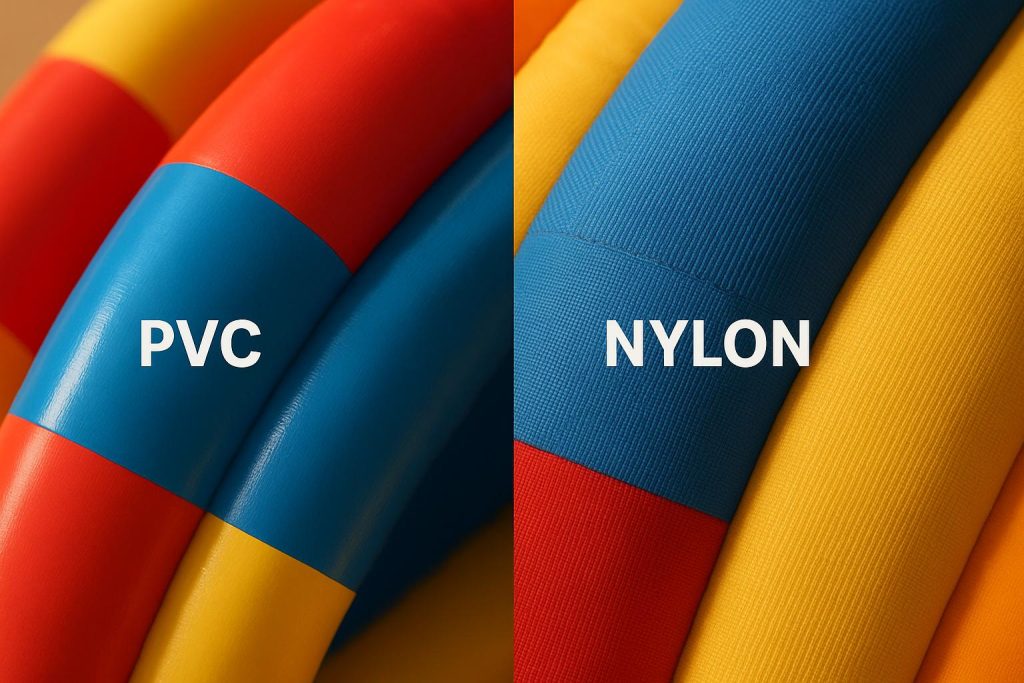
When choosing a material for bounce houses, PVC and nylon are the primary options, each suited for different needs. PVC is durable, supports higher weight, and lasts longer, making it ideal for commercial use. Nylon is lightweight, affordable, and better for occasional residential use.
Key Takeaways:
- PVC: Strong, waterproof, supports up to 2,000 lbs, lasts 5–10 years, but heavier and more expensive ($1,000–$5,000+).
- Nylon: Lightweight, supports 200–400 lbs, costs $200–$300, but less durable and requires more maintenance.
Quick Comparison:
| Feature | PVC (Commercial) | Nylon (Residential) |
|---|---|---|
| Durability | High | Moderate |
| Weight Capacity | Up to 2,000 lbs | 200–400 lbs |
| Waterproofing | Built-in | Coating-dependent |
| Maintenance | Low | High |
| Cost | $1,000–$5,000+ | $200–$300 |
For frequent use or rental businesses, PVC offers better long-term reliability. For occasional backyard fun, nylon is a cost-effective option.
PVC for Bounce Houses: Pros and Cons
PVC (polyvinyl chloride) has become the go-to material for commercial bounce houses, and it’s easy to see why. It combines strength, weather resistance, and low maintenance, making it ideal for rental businesses and frequent use.
Durability and Weather Protection
PVC bounce houses are built to handle heavy use. The material features a polyester base layered with PVC, creating a tarpaulin that’s tough enough for commercial demands. Typically, commercial-grade PVC vinyl weighs 15–20 oz/yd² (0.55–0.7 mm thick), providing much better durability compared to residential-grade materials.
This material resists punctures, scratches, and abrasions that would easily damage thinner fabrics. Construction methods like triple stitching and heat welding reinforce the seams, ensuring they hold up under stress. Features like metal D-rings and high-tensile yarn offer secure anchoring points, even in windy conditions.
Additionally, PVC’s UV resistance makes it perfect for outdoor use over several years. This is a major advantage for businesses that need their equipment to withstand various weather conditions without degrading quickly.
Waterproofing and Mold Prevention
One of PVC’s standout features is its waterproof surface, which keeps moisture out and prevents mold or mildew from forming. This makes it a great choice for both dry bounce houses and water slides. Even in rainy conditions or during water play, the interiors stay dry, ensuring safe and sanitary use.
For rental companies like Bouncy Rentals USA, this versatility is a game-changer. Using the same material for both dry and wet applications simplifies maintenance and eliminates the need for separate cleaning protocols.
Maintenance and Cost
PVC is surprisingly easy to clean and dries quickly, which is a big plus for commercial operators. It also complies with important safety standards like ASTM F2374-22 and NFPA 701, ensuring a safe experience for users.
While PVC bounce houses come with a higher upfront cost – typically ranging from $1,000 to $5,000 or more, depending on size and features – they’re a long-term investment. With proper care, a PVC bounce house can last 5–10 years, far outpacing the 1–3 years you’d get from other materials. This extended lifespan means fewer replacements, less downtime, and happier customers, making the initial expense well worth it.
That said, PVC isn’t without its challenges.
Drawbacks
One downside is the weight. The durability of PVC comes with heft, and a 10×10 ft bounce house made from 21oz PVC can weigh 50–70 lbs, requiring extra effort for transport and setup.
Another consideration is its performance in cold weather. When temperatures drop below freezing, PVC can become stiff and more prone to cracking if mishandled. While this isn’t a problem in most U.S. climates, operators in colder regions should handle PVC inflatables carefully during winter.
Despite these minor drawbacks, PVC remains a top choice for commercial bounce houses, delivering unmatched durability and safety for businesses that rely on dependable equipment.
Nylon for Bounce Houses: Pros and Cons
Nylon brings a different perspective to bounce house construction, catering mostly to residential users who prioritize lightweight and portable options. While it doesn’t offer the industrial-grade toughness of PVC, nylon stands out for being more affordable and easier to handle. Let’s break down how nylon performs in areas like durability, water resistance, and upkeep, and how it compares to PVC.
Durability and Wear Performance
Nylon offers moderate durability, making it a decent choice for occasional use. It holds up reasonably well against minor punctures and tears, but it’s not as tough as PVC. For context, PVC is about five times stronger than the standard residential nylon used in bounce houses. While commercial PVC units can handle up to 2,000 lbs, nylon bounce houses are typically designed to support only 200–400 lbs. This weight capacity is fine for small groups of children but falls short for larger gatherings or more intense use.
Over time, nylon tends to wear out faster, especially at seams and areas that see a lot of activity. Families using a nylon bounce house a few times a month may notice stress points developing sooner than they would with PVC. So, while it works for light, occasional use, frequent use can significantly shorten its lifespan.
Water Resistance and Air Flow
One advantage of nylon is its natural resistance to mildew. However, it’s not inherently waterproof and relies on a special coating to block water. This coating can degrade over time, making the material more vulnerable to water damage. Additionally, nylon dries more slowly, which can lead to issues if it’s not thoroughly dried after use.
Nylon’s breathability is a double-edged sword. On one hand, better air flow can help keep the interior cooler on hot days. On the other hand, it can make it harder to detect trapped moisture, potentially leading to mold or mildew if the material isn’t properly maintained. Unlike PVC, which has built-in waterproofing, nylon’s water resistance depends entirely on maintaining the integrity of its coating.
Maintenance and Cost
One of nylon’s strongest selling points is its affordability. Residential nylon bounce houses often cost between $200 and $300, making them a budget-friendly option compared to commercial PVC units, which typically range from $1,000 to $3,000 or more. However, the lower upfront cost comes with some trade-offs in maintenance.
Nylon requires careful drying after each use to prevent mold and mildew. Its tendency to absorb moisture means drying can take longer, and neglecting this step can lead to issues. Additionally, the waterproof coating may need to be reapplied periodically, adding to the long-term maintenance demands. While the initial price is lower, the ongoing care required can make nylon less convenient over time.
Drawbacks
The biggest downside of nylon is its limited durability compared to PVC. It’s not built to withstand frequent or heavy use, making it less suitable for commercial purposes. The material’s tendency to wear out faster means replacements may be needed more often. Weight capacity is another limitation, as nylon bounce houses are designed for smaller groups, which can be restrictive for larger families or events.
Even though nylon naturally resists mildew, its slower drying time and tendency to absorb moisture can create challenges. If not properly cleaned and dried, the material can become prone to mold and mildew. These drawbacks highlight the trade-offs you’ll face when deciding between nylon and PVC for a bounce house. While nylon is a solid option for light, residential use, it doesn’t offer the same durability or resilience as PVC for more demanding applications.
Direct Comparison: PVC vs. Nylon
When deciding between PVC and nylon for a bounce house, it all boils down to your specific needs, budget, and how often you plan to use it. Each material has its strengths and weaknesses, and understanding these differences will help you make the best choice for your situation.
The standout difference? Strength. PVC is about five times stronger than residential nylon, supporting up to 2,000 lbs compared to nylon’s 200–400 lbs range.
Commercial PVC uses thicker, more durable material – 15–20 oz/yd² vinyl (0.55–0.7 mm thick). In contrast, residential nylon relies on lighter fabrics like 420D or 840D. This difference significantly impacts durability, weather resistance, and overall performance.
Comparison Table
Here’s a side-by-side look at how PVC and nylon stack up across key factors:
| Feature | PVC (Commercial) | Nylon (Residential) |
|---|---|---|
| Durability | High – handles frequent use and heavy activity | Moderate/Low – best for occasional use |
| Weight Capacity | Up to 2,000 lbs | 200–400 lbs |
| Waterproofing | Naturally waterproof | Partial – depends on a coating that wears off |
| Mold/Mildew Resistance | Excellent – built-in protection | Low – needs thorough drying to avoid issues |
| Weather Resistance | Strong UV and rain protection | Good, but fades with sun exposure over time |
| Material Thickness | 15–20 oz/yd² (0.55–0.7 mm) | 420D–840D nylon (thinner) |
| Weight | Heavy (50–70 lbs for 10×10 ft unit) | Light – easier to transport |
| Setup Difficulty | Moderate – heavier and requires effort | Easy – lightweight and portable |
| Maintenance | Simple cleaning, minimal upkeep | More demanding – needs careful drying |
| Intended Use | Frequent/Rental business | Occasional/Home use |
| Lifespan | Long-lasting | Shorter, may need replacement sooner |
| Cost | Higher upfront, better long-term value | Lower initial cost, but higher replacement potential |
Portability is a major trade-off. Nylon bounce houses are lightweight and easy to set up, making them convenient for home use. However, this comes at the cost of durability and performance. For example, a 10×10 ft PVC unit can weigh 50–70 lbs, which makes it harder to handle but much sturdier.
Weather resistance is another area where PVC shines. It offers excellent protection against UV rays, rain, and even chemical exposure. That said, PVC can become brittle in extremely cold conditions. Nylon, on the other hand, holds up well with frequent setup and takedown but deteriorates faster with prolonged sun exposure.
Maintenance is where these materials differ significantly. PVC’s waterproof nature and built-in mold resistance make it nearly hassle-free – just basic cleaning is needed. Nylon, however, absorbs moisture and relies on a protective coating for water resistance. This coating can degrade over time, making thorough drying essential after every use to prevent mold and mildew.
For safety, PVC bounce houses meet ASTM and NFPA standards, making them ideal for commercial use. Nylon models, while suitable for residential use, often lack these certifications and aren’t built to endure the demands of rental operations.
When it comes to cost, nylon wins on upfront affordability, but PVC offers better long-term value due to its durability and lower maintenance needs. Families looking for occasional backyard fun might find nylon a practical choice. However, for frequent use or rental purposes, PVC’s durability and lifespan justify the higher initial investment.
Material Selection for Rental Businesses
When it comes to rental businesses, PVC stands out as the go-to material for inflatable equipment. Its durability makes it ideal for handling the wear and tear of frequent setups and heavy use, all while maintaining safety and performance standards.
For rental companies like Bouncy Rentals USA, which serves everything from small birthday parties to large school carnivals, this reliability is a game-changer. Fewer equipment failures mean fewer headaches, reduced liability concerns, and the ability to serve larger groups without a hitch.
Another big advantage? PVC’s waterproof surface. It allows operators to sanitize units quickly between bookings, keeping up with tight schedules during busy seasons. In contrast, nylon tends to absorb moisture, which can delay turnaround times and disrupt operations during high-demand periods.
PVC also requires less maintenance, freeing up time for rental businesses to focus on growing their revenue instead of constantly repairing equipment. Its weather resistance and compliance with ASTM and NFPA safety standards make it a smart choice, not just for reliability but also for securing insurance and meeting legal requirements in the U.S. market. While PVC units might cost more upfront than nylon ones, their longer lifespan and lower maintenance needs make them a cost-effective option in the long run.
In addition to its durability, PVC helps reduce event disruptions, which keeps customers happy. Its resistance to bacterial growth and ease of cleaning are especially important in today’s post-pandemic world. These features make PVC the clear winner for rental environments where quality, safety, and efficiency are non-negotiable.
Ultimately, PVC ensures rental businesses can maintain a fleet of dependable, high-quality equipment that meets both safety standards and customer expectations, making it an essential investment for long-term success.
Conclusion: Best Material for Bounce Houses
When it comes to choosing the best material for bounce houses, PVC stands out as the clear winner, particularly for rental businesses or anyone focused on safety and durability. As discussed earlier, PVC outperforms nylon in terms of strength and load capacity.
While the initial investment in PVC may be higher, its sturdy design – featuring triple stitching, heat welding, and reinforced seams – helps minimize the need for frequent repairs or replacements. This makes it a smarter choice over time. On top of that, PVC complies with strict safety requirements, being free from lead and phthalates, which aligns with regulations for children’s products. Its 15–20 oz/yd² thickness ensures the necessary structural strength for commercial use.
For businesses like Bouncy Rentals USA, PVC’s waterproof surface is a game-changer, allowing for quick and efficient cleaning between events – especially during busy seasons.
FAQs
What’s the difference between PVC and nylon bounce houses when it comes to durability and maintenance?
When it comes to bounce houses, PVC (vinyl) and nylon are two commonly used materials, each with its own strengths and weaknesses. PVC is known for being tough, weather-resistant, and easy to clean, making it a great option for frequent use or outdoor gatherings. While it’s heavier than nylon, its durability means it can handle plenty of wear and tear over time.
Nylon, on the other hand, is much lighter and easier to move, which simplifies setup and storage. However, it doesn’t hold up as well as PVC, especially when exposed to moisture or heavy use, and it may need repairs more often.
When deciding between the two, think about how often you’ll use the bounce house, the types of events you’re hosting, and how much effort you’re willing to put into maintenance. If you’re after something sturdy and low-maintenance, PVC is likely the better option. But if portability and a lower price point are more important, nylon could be the way to go.
What’s the difference in weight capacity between PVC and nylon bounce houses, and how does it affect event planning?
When it comes to bounce houses, PVC models typically handle more weight than their nylon counterparts. This makes them a great choice for events with mixed-age groups, including adults. Nylon bounce houses, on the other hand, are lighter, easier to transport, and better suited for smaller groups or younger children.
Think about your event and the kind of crowd you’re expecting. For instance, a PVC bounce house could be perfect for a school carnival or a neighborhood block party, where sturdiness and higher weight limits are essential. Meanwhile, a nylon bounce house might be just right for a smaller birthday gathering focused on younger kids. Picking the right material ensures everyone has a blast while staying safe!
What should I consider when choosing between PVC and nylon for a residential bounce house?
When choosing between PVC and nylon for a residential bounce house, it’s essential to weigh three main factors: durability, cost, and upkeep.
PVC stands out for its durability and water resistance, making it a solid option for outdoor use and long-term reliability. It’s also easy to clean, which is a big plus if you’re dealing with frequent use or messy events. While PVC tends to be heavier, this added weight contributes to its sturdiness, allowing it to handle wear and tear better over time.
Nylon, by contrast, is lightweight and more budget-friendly, offering decent strength for less frequent use. However, it’s not as resilient as PVC, especially under heavy or repeated use. Nylon also demands a bit more attention – exposure to moisture or extended time in harsh weather can lead to damage.
If you want a bounce house that’s tough, low-maintenance, and ready for regular action, PVC is likely the better pick. But if your goal is occasional use without breaking the bank, nylon can be a sensible alternative. Ultimately, the right choice depends on how often you’ll use it and the conditions it’ll face.
