
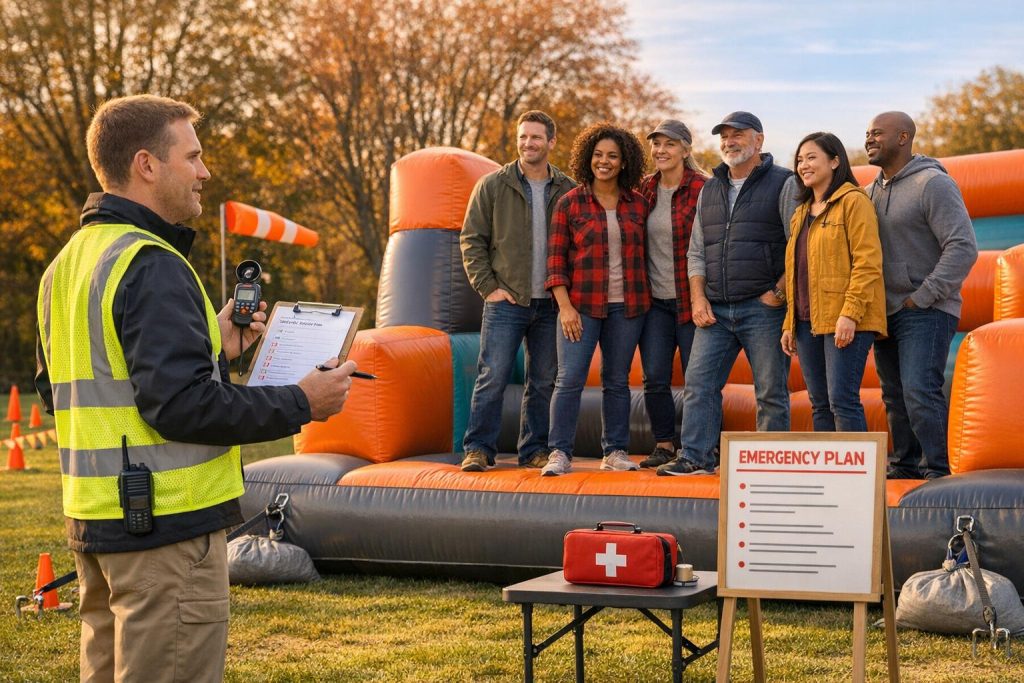
Fall is a great season for team-building activities with inflatables. But seasonal weather, shorter daylight hours, and wet leaves can create safety challenges. To ensure a fun and secure experience, follow these key safety tips:
- Choose a safe setup area: Use flat, debris-free spaces with proper clearance. Avoid wet or muddy spots.
- Anchor inflatables securely: Use stakes, sandbags, or weights depending on the surface. Monitor wind speeds closely.
- Remove shoes and sharp objects: Prevent injuries and damage by having participants remove shoes, jewelry, and items like pens or glasses.
- Separate by age and size: Group participants to avoid risks of injury and equipment damage.
- Prohibit risky behaviors: Ban flips, rough play, and head-first sliding to reduce accidents.
- Assign supervisors: Adults should actively monitor inflatables and enforce rules.
- Check weather conditions: Monitor wind, rain, and temperature changes. Deflate inflatables in unsafe conditions.
- Keep clear of blowers and zippers: Mark restricted zones to prevent injuries or accidental deflation.
- Follow manufacturer guidelines: Stick to capacity limits, anchoring instructions, and maintenance tips.
- Have an emergency plan: Be prepared for weather changes or equipment failures with clear evacuation procedures.
These steps help reduce risks and ensure a safe, enjoyable event for everyone. For added convenience, consider renting insured and professionally set-up inflatables from providers like Bouncy Rentals USA.
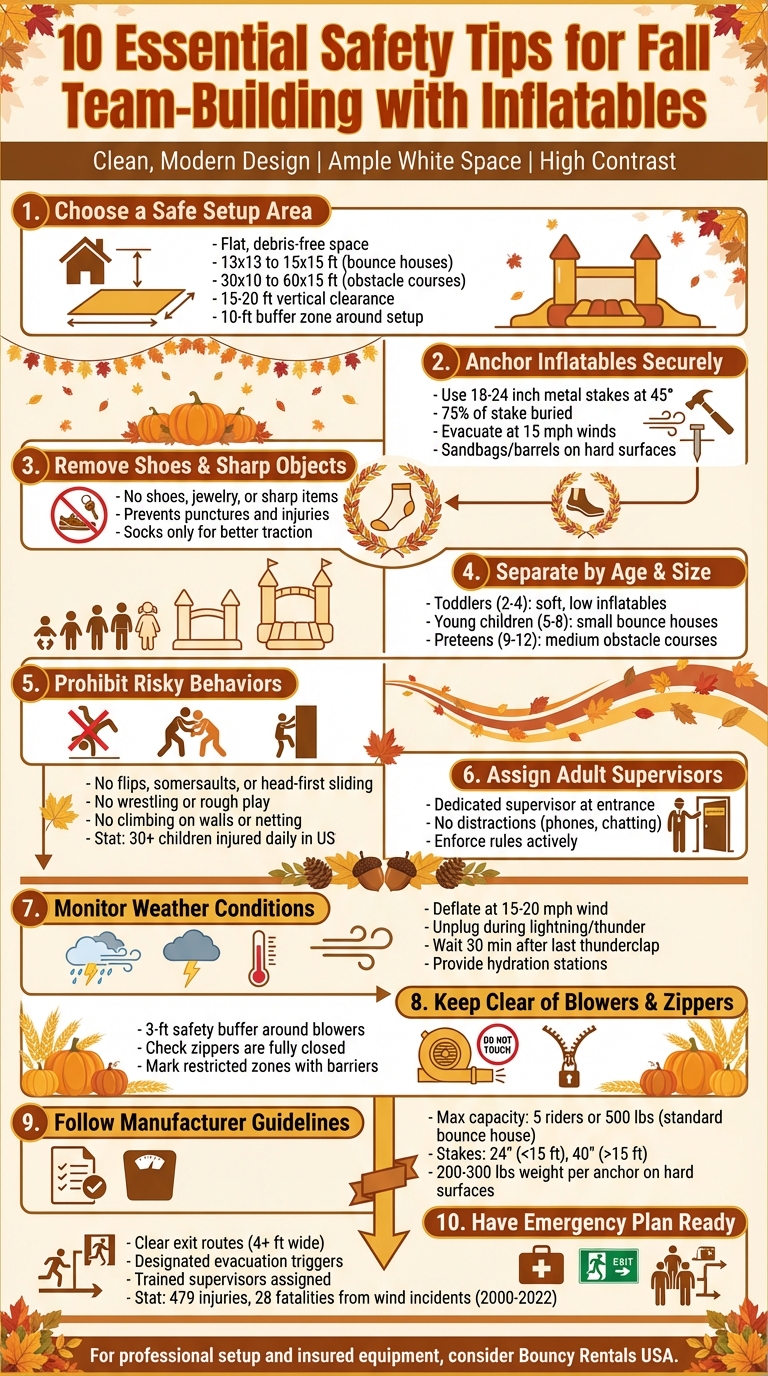
10 Essential Safety Tips for Fall Team-Building with Inflatables
1. Choose a Level, Clear Setup Area
Start by selecting a flat, debris-free area to reduce the risk of tipping or slipping. Carefully inspect the space and remove anything that could cause issues, like rocks, sticks, acorns, or wet leaves. These can puncture the vinyl or create slippery conditions.
Avoid setting up in wet or muddy spots, as these can weaken stability and encourage mold growth. When anchoring stakes, position them at a 45° angle for better hold.
For bounce houses, you’ll need a space measuring 13×13 to 15×15 feet, with at least 15–20 feet of vertical clearance. Obstacle courses require more room – typically between 30×10 to 60×15 feet. Keep a 10-foot buffer zone around the setup and ensure there’s at least 6 feet of space for safe entry, exit, and emergency access.
Don’t forget to check for overhead hazards. Make sure there’s 15–20 feet of clearance from tree branches, power lines, or building overhangs, especially on windy days. If you’re setting up on concrete or pavement, you may need special anchoring methods, so confirm the setup requirements with your rental provider. At Bouncy Rentals USA, for example, their team evaluates every site to ensure it meets safety standards.
Once you’ve secured a safe, clear area, the next step is anchoring the inflatable to protect against wind.
2. Use Proper Anchoring for Wind
Once your site is prepared, the next step is making sure the inflatable is anchored securely to handle wind. Wind can turn an inflatable into a dangerous "sail", so it’s critical to secure every single tie-down point. Skipping even one anchor can put the entire structure at risk.
For grass or soil setups, use heavy-duty metal stakes that are 18–24 inches long. Drive them into the ground at a 45° angle, pointing away from the inflatable. Make sure at least 75% of each stake is buried. If the soil is dry and compacted – common during fall – opt for auger anchors, which provide a stronger hold. If the ground is too hard to easily drive in stakes, lightly wet the soil to loosen it, but avoid creating mud, as it weakens the anchor’s grip.
For surfaces like concrete, asphalt, or gym floors, stakes won’t work. Instead, use sandbags, water barrels, or concrete blocks. Keep in mind, these alternatives are less effective in high winds, so ensure straps are tightened and rated for the inflatable’s weight. You may also need additional weights to keep everything stable.
Stay vigilant during the event. Use a handheld anemometer to measure wind speeds directly at the site – weather apps often miss localized gusts. If winds hit 15 mph, evacuate participants and deflate the inflatable immediately. This is especially important for high-energy activities like inflatable obstacle courses for adults, where movement adds extra stress to the structure. Leave the anchors in place during deflation to prevent the structure from catching wind. Periodically check each anchor point by giving it a firm tug to ensure it’s still secure.
Avoid anchoring inflatables to vehicles, fences, or trees. These options aren’t reliable and can shift or fail under pressure. For larger inflatables, consider using "deadman" anchors – heavy objects buried underground – for the best stability.
3. Remove Shoes, Jewelry, and Sharp Objects
Before stepping onto an inflatable, participants should remove shoes, jewelry, and any sharp objects. This step is essential for protecting both the inflatable’s surface and the participants themselves. Hard-soled shoes, for example, can turn a playful child into a potential hazard for others. As Jumperbee puts it:
Shoes turn a hurtling child into a dangerous object to other children.
Sharp objects are another concern. Items like belt buckles, hair clips, pens, and certain types of jewelry not only risk puncturing the vinyl, which can lead to expensive inflatable repairs, but also pose direct injury risks. Earrings can get caught in netting and tear skin, necklaces can create choking hazards, and glasses may shatter if someone falls.
To prevent these issues, consider setting up a designated check-in area where participants can remove prohibited items. This area should be part of your overall safety perimeter to manage the flow of guests. This is especially important during fall events when shoes might track in wet leaves, acorns, or twigs, creating slippery and abrasive surfaces.
Supervisors play a key role in ensuring safety. They should inspect participants for hidden items like phones, pens, or hair accessories and enforce the rules. Alvin Bearden emphasizes this responsibility:
The supervisor is responsible for enforcing the bounce house rules… This includes limiting the number of children, preventing roughhousing, ensuring children are playing appropriately for their age, and managing entry/exit.
Encourage participants to wear socks only. This not only improves hygiene but also provides better traction during play.
4. Separate Participants by Age and Size
Allowing participants of different ages and sizes to share the same inflatable can lead to serious safety concerns. Younger or smaller children are especially at risk when playing alongside older, larger participants who tend to move with greater speed and force. Experts caution:
Bigger, older children can easily overwhelm or accidentally injure smaller, younger ones.
This issue isn’t just about safety – it also impacts the durability of the equipment. Inflatables designed for toddlers aren’t built to handle the vigorous activity of heavier teens or adults, which could result in structural damage. Grouping participants by similar size and ability not only reduces risks but also boosts their confidence and enjoyment during play.
For fall team-building events, it’s a good idea to organize participants into age-appropriate groups before they enter an inflatable. Here are some suggestions:
- Toddlers (2–4 years): Use inflatables specifically designed for their age, featuring soft, low-height elements.
- Young children (5–8 years): Small bounce houses or combo units are ideal for this group.
- Preteens (9–12 years): Medium inflatable obstacle course rentals and slip-and-slides work well, though closer supervision is necessary.
This kind of separation not only ensures safety but also makes supervision more effective. Assign adult monitors to manage entry, exit, and capacity limits, ensuring that age groups remain distinct. JumpOrange highlights the importance of this approach:
Proper age separation ensures everyone has a positive and safe experience.
Fall events bring additional challenges, like wet leaves that create slippery conditions, making age separation even more critical. Clear signage near each inflatable’s entrance, outlining age restrictions, helps parents and participants understand the rules before play begins.
5. Prohibit Flips, Rough Play, and Head-First Sliding
To keep everyone safe, it’s essential to ban high-risk moves on inflatables. Activities like flips, head-first sliding, wrestling, and somersaults are common causes of injuries, including head trauma, collisions, and falls. In fact, in the United States, inflatable-related injuries send over 30 children to emergency rooms daily – that’s about one child every 45 minutes.
But it’s not just flips that pose a danger. Actions like climbing on the walls or hanging on netting can weaken the inflatable’s structure, increasing the likelihood of falls or other accidents.
To combat these risks, clear safety rules are a must. Assign an adult supervisor whose only job is to monitor the inflatable and step in immediately to stop unsafe behavior. At the entrance, post a visible "No-Go" list that outlines prohibited actions, such as somersaults, wrestling, or climbing on walls. Instead of risky moves, offer safer alternatives like "bounce freeze" or light relay games – these keep the fun going without unnecessary danger.
When enforcing safety, use positive and engaging language. Supervisors can take on a "Fun Captain" role, combining safety with enthusiasm to keep kids engaged. If play gets too rough, try the "pause button" approach – calmly stop the activity, quickly regroup the participants to discuss safe behavior, and then resume play with a focus on having fun responsibly. By sticking to these safety measures, you can ensure a secure and enjoyable inflatable experience for everyone.
6. Assign Adult Supervisors at All Times
Having an adult supervisor on duty is a must, especially when using bounce houses at adult events. Their job isn’t just standing around – they need to actively monitor the inflatable and be ready to react quickly. Ideally, the supervisor should stay at the entrance, facing the activity, so they can keep an eye on everything happening inside. Sitting with their back to the inflatable or focusing only on the line of kids waiting to enter can lead to missed safety concerns.
Once the inflatable is set up safely, the next priority is uninterrupted supervision. The person in charge should avoid all distractions – no phones, no chatting with others. Their full attention should be on the inflatable at all times. This way, if something goes wrong, they can step in immediately.
A good supervisor also takes on several important responsibilities. They need to ensure participants follow the rules, like removing shoes, jewelry, and sharp items before entering. While kids are playing, they should watch for overcrowding, stop rough behavior, and enforce rules about separating participants by age or size. On top of that, supervisors should be familiar with emergency procedures, such as turning off the blowers and evacuating the inflatable if needed, to keep everyone safe.
7. Watch Weather Conditions and Schedule Water Breaks
Keeping everyone safe during team-building activities goes beyond just setting things up. Fall weather can be unpredictable, so staying on top of conditions is a must, especially for outdoor inflatable activities. Wind poses the biggest threat – since inflatables can act like massive sails, strong gusts can lift or even flip them. To stay ahead of this, use a wind meter to track wind speeds. If gusts hit 15–20 mph or you notice the inflatable starting to lift, take action immediately and deflate it.
Even with proper anchoring, consistent weather checks are crucial for inflatable safety. Rain and lightning bring additional risks. Since inflatables rely on electric blowers, wet conditions can increase the danger of electrical shock. If you hear thunder or see lightning, unplug the blowers right away and wait at least 30 minutes after the last thunderclap before powering them back up. Extreme temperatures are another concern; they can either make the vinyl too stiff or cause burns. Adapting to these conditions helps ensure the weather doesn’t ruin your team-building plans.
Even in cooler fall temperatures, active play on inflatables can lead to dehydration. To prevent this, set up hydration stations with bottled water or sports drinks near the exits. Provide shaded rest areas using pop-up tents, and rotate groups regularly so everyone has time to rest and rehydrate. If anyone shows signs of cold stress, move them to a warm indoor space to recover.
8. Keep Participants Away from Blowers and Zippers
Blowers and zippers can pose serious safety risks during team-building events if not properly managed. Blowers, which are high-powered electrical devices, have moving parts and strong air intakes that can easily catch hair or clothing, leading to injuries. Additionally, using blowers in damp conditions, like during light rain or on dewy grass, increases the risk of electrical shocks.
To minimize these risks, establish a clear no-entry zone around the blower areas. Maintain at least a 3-foot safety buffer around all blowers, and assign a dedicated supervisor to keep an eye on these zones.
Zippers, on the other hand, require close attention to prevent accidental deflation of inflatables. An open zipper can cause rapid deflation, leading to collapses that may endanger participants. Before the event, inspect all zippers to ensure they are completely closed and properly covered. Stay alert for signs of deflation, such as sagging or distortion, and evacuate participants immediately if these occur.
For added safety, use physical barriers like cones or rope lines to mark off blower zones and emphasize their restricted access. During your safety briefing, explain the dangers of these areas, highlighting the electrical and mechanical hazards to ensure everyone understands the importance of staying clear.
9. Follow Manufacturer Guidelines for Each Inflatable
To ensure safety and proper usage, always stick to the manufacturer guidelines for every inflatable you set up. These instructions are designed to protect participants and maintain the equipment’s integrity.
Every inflatable has specific recommendations that help prevent overcrowding and structural issues. Ignoring these rules can lead to serious risks, especially during busy fall events.
"These are not arbitrary suggestions; they are crucial guidelines to prevent overcrowding and ensure structural integrity." – Wow Inflatables
Capacity Limits and Anchoring
Start by checking capacity limits. For example, most standard bounce houses can safely hold up to 5 riders or a total of 500 lbs. Going beyond these limits can lead to overcrowding or even damage the structure. Make sure these limits are clearly posted at the entrance so everyone knows the rules.
Proper anchoring is another must. For inflatables under 15 ft tall, use stakes that are at least 24 inches long. For larger inflatables (over 15 ft), stakes should be at least 40 inches. If you’re setting up on hard surfaces, secure the inflatable with 200–300 lbs of weight per anchor, using sandbags or water bags as specified by the manufacturer.
Inspection and Maintenance
Before every use, inspect the inflatable thoroughly. Check vinyl seams, mesh netting, and zippers for any wear, tears, or punctures. Also, ensure all deflation zippers are fully closed before powering up the blower.
For maintenance, clean the inflatable using non-chlorine, non-MEK cleaners – avoid bleach and harsh chemicals. Make sure the unit is completely dry before storing it to prevent mold. If you find punctures smaller than 12 inches, repair them promptly with a vinyl patch kit approved by the manufacturer.
10. Have an Emergency Response Plan Ready
Even with the best precautions, emergencies can still happen. A solid response plan is essential for handling unexpected situations, like sudden weather changes or equipment failures. In the U.S., over 30 children visit emergency rooms daily due to inflatable-related injuries. Between 2000 and 2022, wind-related incidents alone resulted in 479 injuries and 28 fatalities.
Your emergency plan should build on your existing safety measures and clearly outline when to evacuate. Triggers for evacuation might include lightning, thunder, heavy rain, snow, wind speeds exceeding 15–25 mph, or any unexpected deflation of the inflatable. Assign trained adult supervisors who are familiar with shutting down equipment and guiding participants to safety. Designate one person as the main point of contact for all emergency communications.
"If the weather conditions change and wind, lightning, rain or an unsafe condition is present, remove everyone from the inflatable, find cover and turn off the motor until the weather clears." – Katrina Eicholtz, Glatfelter Insurance
To ensure safety, keep all exit routes clear and at least 4 feet wide. A public address system can help you communicate evacuation instructions quickly. If a blower fails or the inflatable begins to deflate, assist participants in exiting immediately.
After any emergency, review your safety procedures and make updates as needed. Ensure your protocols also align with local safety laws for inflatable rentals to maintain full compliance. Place generators at least 5 feet away from building openings to avoid carbon monoxide risks, and restrict access to the inflatable during inflation and deflation. These steps are crucial for maintaining a safe environment for everyone involved.
Conclusion
Taking the right safety precautions ensures your fall team-building event is both secure and enjoyable. Careful planning helps prevent injuries and reduces liability risks. By focusing on key safety measures – like proper site preparation, secure anchoring, weather monitoring, and emergency readiness – you can create a solid safety plan that protects everyone involved.
A well-thought-out safety strategy doesn’t just save money; it also gives you peace of mind. When equipment complies with safety standards and trained professionals manage the setup, you can concentrate on fostering stronger connections and creating memorable experiences.
For your next fall team-building event, consider Bouncy Rentals USA. They provide sanitized, insured equipment and professional setup to ensure everything runs smoothly. From verifying anchor points to conducting thorough safety checks, their team handles the details so you can focus on what truly matters – team building and fun. Let trusted partners like Bouncy Rentals USA bring expert safety and lasting memories to your event.
FAQs
What should I do if wind picks up during the event?
If the wind starts to pick up, it’s crucial to act quickly. Turn off the blower, deflate the inflatable, and secure it to avoid any accidents. Use a weather app or an anemometer to keep an eye on wind speeds. Make sure the inflatable is properly anchored with stakes or weights at all times. If wind speeds go beyond the safe range of 15-20 mph, evacuate anyone using the inflatable and deflate it right away to ensure everyone’s safety.
How many supervisors do we need per inflatable?
Typically, having one supervisor per inflatable is advised to ensure everyone’s safety. However, the specific number of supervisors might vary depending on the inflatable’s size and type. For events that run for an extended period, it’s a good idea to rotate supervisors every 30 minutes. This helps maintain their focus and ensures consistent monitoring throughout the event.
Can inflatables be set up on concrete or asphalt safely?
Yes, inflatables can be safely set up on concrete or asphalt, but it requires taking the right precautions. Use impact-absorbing mats around the inflatable to cushion potential falls and reduce injury risks. Since traditional stakes won’t work on hard surfaces, secure the inflatable using water weights or sandbags. Also, avoid setting up the inflatable in high winds, as this can make it unstable. Concrete’s hard surface adds to injury risks, so these steps are crucial to ensure a safe experience.
