
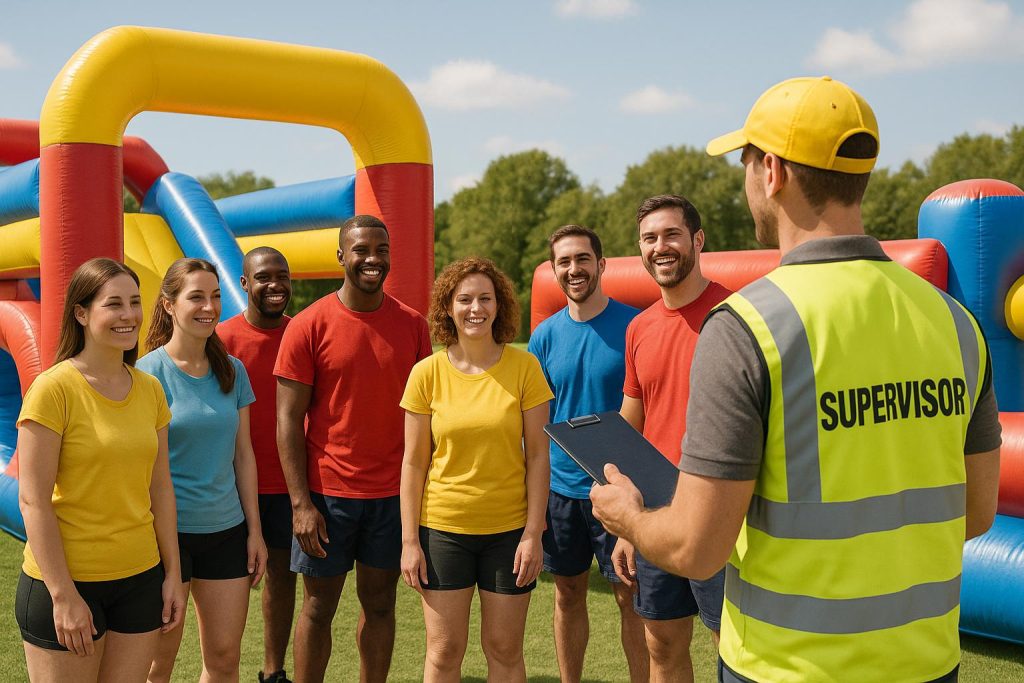
Inflatable team competitions are fun but come with risks. Every year, thousands of injuries – mostly involving kids under 15 – occur due to improper setup, supervision, or weather conditions. To ensure a safe event:
- Anchor securely: Use stakes or weights to prevent movement.
- Inspect equipment: Check for tears, deflation, or loose anchors before use.
- Supervise actively: Assign trained adults to enforce rules and manage participants.
- Follow occupancy limits: Group participants by size and age to avoid collisions.
- Monitor weather: Stop activities during high winds, storms, or rain.
- Prepare for emergencies: Have first aid kits and clear evacuation plans ready.
Companies like Bouncy Rentals USA can help by providing inspected, sanitized, and insured equipment, along with professional setup and monitoring. Safety starts with proper planning and vigilance.
Equipment Setup and Inspection
Setting up and inspecting equipment properly is key to ensuring safe and enjoyable competitions.
Site Selection and Preparation
Choose a flat, level area free of hazards like rocks, branches, debris, or sharp objects. This creates a safer environment for participants and reduces the risk of damage to the inflatable.
Make sure there’s at least a 4-foot clearance around the inflatable. This space should include impact-absorbing mats to provide a safe area for entry and exit. Avoid placing the inflatable near overhead power lines, fences, sprinkler systems, or water sources, as these can pose additional risks.
Before setup, clear the area of any debris and cover it with tarps or mats, especially if you’re working on hard surfaces like concrete or gym floors. This prevents punctures and ensures a clean, stable base for the inflatable.
Anchoring and Stability
Proper anchoring is essential to keep the inflatable secure and prevent unsafe movement or tipping. Always follow the manufacturer’s guidelines for the number and placement of anchors.
- On soft surfaces like grass, use heavy-duty stakes and ropes at every corner. Ensure the stakes are driven deep enough to provide a firm hold.
- For hard surfaces such as concrete or gym floors, use sandbags or weights at each corner to keep the structure stable.
- Larger inflatables may require additional center anchors to prevent sagging and maintain their shape.
Double-check all anchor points before use. There have been instances where improper anchoring allowed inflatables to be lifted by wind, causing injuries when stakes or weights failed to hold the structure in place.
Once the inflatable is anchored, conduct a thorough pre-use inspection to confirm everything is secure and ready for use.
Pre-Use Inspection
A final safety check before use can identify issues that might have been missed during setup or delivery.
- Start by visually inspecting the structure for tears, holes, or worn seams, particularly in high-stress areas like corners and seams. Check that all zippers and closures are secure and functional. Address any visible damage immediately.
- Confirm that the inflatable is fully inflated with no sagging or soft spots. Uneven air pressure could indicate problems with the blower or leaks. Only trained adults should handle the blower equipment, and all connections should be secure. If the inflatable starts losing air, have participants exit immediately until the issue is resolved.
- Ensure entry and exit points are clear and equipped with impact-absorbing mats for added safety. Check that safety netting around slides or elevated areas is intact and properly installed.
Minimize trip hazards by covering electrical cords with protective covers and marking stakes with visible markers, such as tennis balls. Keep cords and anchors away from high-traffic areas to reduce the risk of accidents.
For inflatables taller than 8 feet, verify that any safety alarm systems, like the Watchdog Safety Alarm, are functioning correctly. These alarms detect blower failure or deflation and alert supervisors to potential problems.
Professional rental companies, like Bouncy Rentals USA, follow these steps diligently. Their trained staff handle everything from site selection to anchoring and inspections. Plus, their equipment is thoroughly sanitized and inspected, giving event organizers peace of mind so they can focus on creating a memorable experience.
Supervision and Participant Management
Having clear supervision guidelines and participant rules is crucial for maintaining order and reducing the risk of injuries during inflatable activities.
Trained Supervision
Every inflatable should have at least one trained adult supervisor to enforce safety rules. These supervisors should receive a safety briefing from the rental company or event organizer before the event begins. This briefing should cover the specific equipment being used and the necessary emergency procedures.
Supervisors should be familiar with the safety manual and have basic first aid knowledge. Certification programs can further prepare them for their roles. For larger inflatables, multiple supervisors may be required. For example:
- Standard bounce houses typically need one adult supervisor.
- Larger setups, like slides over 15 feet or obstacle courses, may require two to three supervisors. For obstacle courses, one should be stationed at the entrance, another at the exit, and a third in the middle to monitor all areas effectively.
Supervisors need to stay visible, use whistles or hand signals to grab attention, and be ready to act immediately if rules are broken. They should also coordinate with other staff to manage participant flow and ensure smooth operations.
Age, Size, and Occupancy Limits
Grouping participants by age and size is essential to prevent injuries caused by differences in weight or ability. Keeping participants of similar size together helps reduce the risk of collisions.
Each inflatable has manufacturer-recommended occupancy limits that must be followed. For instance:
- Standard bounce houses usually allow 4–5 participants at a time.
- Slides and obstacle lanes are designed for one person at a time.
The U.S. Consumer Product Safety Commission reported that over 18,800 injuries related to inflatable amusements were treated in emergency rooms in 2018, with most involving children under 15 years old. Collisions between participants of varying sizes and ages are among the leading causes of these injuries.
| Inflatable Type | Recommended Supervision | Occupancy Guidelines |
|---|---|---|
| Bounce House | 1 adult supervisor | 4–5 participants maximum |
| Large Obstacle Course | 2–3 supervisors (start, middle, end) | 1 person per lane/section |
| Inflatable Slide | 1 adult at top, 1 at bottom | 1 person at a time |
| Competitive Games | Trained attendant required | Follow manufacturer limits |
If mixed-age groups are unavoidable, closer supervision is essential. Consider limiting the number of participants or scheduling separate play sessions for different age groups to reduce risks.
Behavioral Guidelines
Supervisors must pair effective oversight with clear behavioral rules to minimize risks during play. Dangerous behaviors, such as flips, roughhousing, wrestling, wall climbing, or hanging from the inflatable, should be strictly prohibited. Supervisors should enforce a zero-tolerance policy for such actions.
Participants should remove shoes, jewelry, eyeglasses, and any sharp objects before entering. On slides, only feet-first sliding is allowed, and no one should enter or exit while the inflatable is inflating or deflating.
Safety rules should be clearly posted at the entrance of each inflatable and reviewed verbally with participants before use. Supervisors should maintain orderly lines, prevent running or pushing near entrances, and ensure that occupancy limits are strictly followed.
For obstacle courses, stagger participants by allowing one person to start at a time, with brief intervals between each to avoid collisions. Additionally, a first aid kit should always be on hand, and supervisors should be familiar with emergency protocols, including how to quickly deflate the inflatable if needed.
Some companies, like Bouncy Rentals USA, prioritize safety by providing trained staff for delivery, setup, and on-site monitoring. Their equipment is thoroughly sanitized, inspected, and fully insured, giving event organizers peace of mind about their safety measures.
Weather and Environmental Considerations
Weather and environmental conditions play a major role in the safe use of inflatable equipment. Keeping a close eye on these factors before and during your event is essential to avoid accidents and protect everyone involved.
Weather Monitoring
Always check the weather forecast ahead of your event. Conditions like high winds (over 25 mph), rain, thunderstorms, and extreme heat can make inflatable equipment unsafe to use. The U.S. Consumer Product Safety Commission (CPSC) advises against using inflatables when wind speeds exceed 15–20 mph, as strong winds can lift the equipment, creating serious hazards.
Assign a staff member to monitor weather updates through reliable apps or local sources. During storms, it’s a good idea to check conditions every 30 minutes.
This level of preparation is crucial. The Child Injury Prevention Alliance reports that U.S. emergency rooms treat over 30,000 injuries related to inflatable amusements each year, many of which occur due to poor weather or improper setup. Research published in Pediatrics also revealed that inflatable-related injuries doubled between 1995 and 2010. By staying alert to weather changes, you can act quickly to prevent accidents.
Action During Weather Changes
If the weather takes a turn for the worse, stop all activities immediately. Deflate the inflatables and move participants to a safe area. Make sure supervisors are trained to handle these situations calmly and efficiently. It’s also important to brief staff and participants on what to do in case of bad weather before the event begins.
Failing to act on weather warnings can have serious consequences. For example, in June 2019, a bounce house in Nevada was lifted by a sudden wind gust, injuring several children. The incident occurred because the equipment wasn’t properly anchored, and the event continued despite wind warnings.
Thunderstorms, in particular, demand extra caution. If lightning is visible or thunder can be heard, evacuate the inflatables immediately. Follow the National Weather Service‘s 30-30 rule: seek shelter if thunder occurs within 30 seconds of a lightning flash, and wait at least 30 minutes after the last thunder before resuming activities.
Many states and local governments have specific rules about using inflatables in bad weather, including mandatory shutdowns under certain conditions. Always consult local authorities to ensure your safety measures align with these regulations. Additionally, choosing the right setup surface can further reduce weather-related risks.
Surface Conditions
The surface where inflatables are set up significantly impacts safety. Wet, muddy, or uneven surfaces can create slipping hazards and compromise anchoring systems. If the ground becomes wet due to weather, use protective mats for added safety.
Avoid setting up inflatables on surfaces that are wet, unstable, or littered with debris. Clear the area of rocks, sharp objects, or anything that could puncture the inflatable or harm participants. For hard surfaces like concrete or asphalt, place safety mats around entrances and exits to cushion falls and reduce the risk of ankle injuries.
Proper anchoring is even more important when dealing with challenging surface conditions. Grass surfaces require stakes, while pavement setups should use sandbags or weights to keep the equipment secure. Mark any trip hazards, like cords or stakes, with visible markers to prevent accidents.
If you’re renting equipment, opt for companies that prioritize safety. For instance, Bouncy Rentals USA ensures all their inflatables are delivered and set up by trained professionals. Their team monitors weather, secures equipment properly, and will not operate in unsafe conditions, making participant safety their top priority at every event.
Safety Practices During the Event
Once your inflatables are properly set up and supervised, staying alert throughout the event becomes essential. Keeping a close eye on activities and routinely checking the equipment can help avoid accidents and injuries.
Continuous Monitoring
Each inflatable should have at least one trained adult supervisor. Larger inflatables – like obstacle courses or slides taller than 15 feet – require two or more supervisors. These supervisors must strictly enforce safety rules, such as prohibiting flips, wrestling, roughhousing, shoes, sharp objects, and overcrowding. Most inflatables are designed for a maximum of four participants at a time, and it’s safest when users are of similar height and size. For slides, only one person should go down at a time, always feet-first.
Supervisors should remain vigilant for unsafe behavior, such as climbing on walls or running on the inflatable. If they notice anything unsafe, they need to step in immediately to prevent injuries.
Regular Equipment Checks
Frequent equipment checks are a must. Inspect inflatables every 30 to 60 minutes during the event. During these inspections, ensure the inflatable is fully inflated, all anchoring points (stakes, sandbags, or weights) are secure, and the blower is functioning properly. Look for tears, deflation, or any trip hazards, especially in high-traffic areas prone to wear and tear.
If you notice any signs of deflation or instability, clear the inflatable immediately. Don’t let anyone back on until the issue has been fixed and the equipment has been thoroughly reinspected. For inflatables taller than 8 feet, use Watchdog Safety Alarms to alert you to blower issues or deflation. Also, check blower vents and electrical connections regularly, and ensure only trained adults handle adjustments or repairs. These checks can catch small problems before they turn into bigger issues.
Emergency Preparedness
Always have a fully stocked first aid kit nearby, and make sure every supervisor knows where it is. Supervisors should also be trained in basic first aid and emergency procedures, including how to quickly deflate an inflatable if needed. Post emergency contacts, such as local medical services, poison control, and the event coordinator, in a visible spot.
Before the event begins, review and practice emergency protocols. If an incident occurs, supervisors should immediately clear the inflatable and move participants to safety.
Monitoring the weather is equally important. Assign someone to check for updates every 30 minutes. If high winds, lightning, or heavy rain are detected, deflate and evacuate the inflatables immediately. Move everyone to a safe indoor location and inspect the equipment for damage before resuming play.
Consider hiring professional services like Bouncy Rentals USA. Their on-site staff is trained to handle regular equipment checks and enforce emergency protocols. With their expertise in first aid and safety procedures, they can respond swiftly to any situation, giving you peace of mind while you enjoy your event.
Bouncy Rentals USA Safety Standards
Bouncy Rentals USA takes safety seriously, going beyond basic setup and supervision to ensure a secure and worry-free experience. When organizing inflatable team competitions, choosing a company that prioritizes safety is key to a successful event.
Sanitized and Inspected Equipment
Every inflatable is meticulously cleaned, sanitized, and inspected before and after each event. This process includes disinfecting all surfaces, removing dirt and debris, and ensuring the equipment is safe from allergens and germs. Additionally, each inflatable undergoes a thorough safety check to confirm it’s in excellent condition and functioning as it should.
"The castle was super clean, and the team at Bouncy Rentals USA was incredibly professional." – Dylan Hoy
Professional Delivery and Setup
The team at Bouncy Rentals USA is trained to handle every aspect of delivery, setup, and takedown with precision. They strictly follow manufacturer guidelines and conduct on-site safety checks to ensure everything is secure. Using industry-standard anchoring methods for both grass and hard surfaces, they ensure stability and safety. Before installation, staff assess the site for any hazards and ensure there’s enough clearance around the equipment to minimize risks.
With professionals managing the setup, you can relax knowing everything is installed correctly and meets stringent safety requirements.
Insurance and Compliance
Bouncy Rentals USA is fully insured, with liability coverage for equipment-related accidents. They comply with all safety standards set by the U.S. Consumer Product Safety Commission (CPSC) and any applicable state or local regulations. Beyond meeting basic requirements, they include additional features like safety netting on slides, impact-absorbing mats at entry and exit points, and Watchdog Safety Alarms on larger inflatables to monitor for blower issues.
Event organizers and supervisors also receive detailed safety briefings, which cover rules like occupancy limits, prohibited actions, and emergency procedures. Written instructions and on-site demonstrations ensure everyone involved understands how to maintain a safe environment. These extra measures reinforce their commitment to safety, ensuring your event runs smoothly and securely.
Key Safety Tips Summary
Hosting inflatable competitions can be tons of fun, but safety must come first. Each year, around 10,000 emergency room visits in the U.S. are tied to inflatable-related injuries, with most involving kids under 15 years old, according to the U.S. Consumer Product Safety Commission. Thankfully, many of these incidents are avoidable with the right precautions. Here’s a quick rundown of essential safety tips to keep everyone safe and ensure a smooth event.
- Secure Anchoring: Use heavy stakes for grass surfaces or sandbags for hard surfaces to anchor inflatables securely at all corners. Larger units often need extra anchoring in the center for added stability.
- Thorough Pre-Event Inspections: Before participants enter, check for tears, ensure proper inflation, and confirm all anchors are holding firmly.
- Constant Supervision: Assign one trained adult to each inflatable. For obstacle courses, place supervisors at key points like the start, middle, and end. Supervisors should know the manufacturer’s guidelines and enforce safety rules consistently.
- Participant Management: Group kids by similar age and size, limit occupancy to a maximum of four per inflatable, and enforce rules such as no shoes, jewelry, or roughhousing.
- Weather Awareness: Keep a close eye on weather conditions. Stop using inflatables immediately if there are high winds, thunderstorms, or wet surfaces.
- Professional Providers: Companies like Bouncy Rentals USA can help reduce risks by offering sanitized, inspected, and insured equipment. They also handle setup with expert care.
- Emergency Preparedness: Have first aid-trained personnel on-site, clear evacuation plans, and protocols for rapid deflation in case of an emergency.
FAQs
What are common causes of injuries during inflatable team competitions, and how can they be avoided?
The leading causes of injuries during inflatable team competitions often stem from improper equipment setup, lack of supervision, and poor weather conditions. To reduce these risks, make sure inflatables are firmly anchored and placed on a flat, clean surface free of debris. Always have trained adults on hand to supervise, enforce safety rules, and prevent overcrowding. Weather matters too – strong winds or rain can make inflatables dangerous, so it’s better to delay activities if conditions take a turn for the worse.
For a worry-free experience, consider renting from trusted companies like Bouncy Rentals USA. They inspect and sanitize their equipment thoroughly, and their professional delivery team ensures everything is set up safely, so you can focus on having fun!
What’s the best way to securely anchor inflatables on different surfaces during team competitions?
To keep everyone safe, inflatables need to be properly anchored depending on the surface they’re set up on. If you’re working with grass or soil, use heavy-duty stakes driven deep into the ground at an angle to ensure stability. For harder surfaces like concrete or asphalt, sandbags or weighted anchor bags are a must to keep the inflatable securely in place. Always follow the manufacturer’s instructions and use all designated anchor points.
Before the event kicks off, double-check that everything is firmly secured. It’s also a good idea to inspect the anchoring periodically during the event. Solid anchoring prevents tipping or shifting, ensuring participants stay safe and the fun keeps rolling without interruptions.
What weather conditions make it unsafe to use inflatables, and what steps should you take in those situations?
Inflatable equipment should never be used in severe weather, such as strong winds, heavy rain, or lightning. Winds over 15 mph can make inflatables unstable, creating serious safety hazards. Likewise, rain can make surfaces slippery, increasing the risk of slips and falls.
If the weather takes a turn for the worse, act quickly – turn off the blower, deflate the inflatable, and secure it to prevent it from being carried off by the wind. Always follow the safety instructions provided by the manufacturer and check the weather forecast before setting up. To ensure a safe and hassle-free experience, consider renting from a reliable provider like Bouncy Rentals USA, where you’ll get expert advice and well-maintained equipment.
