
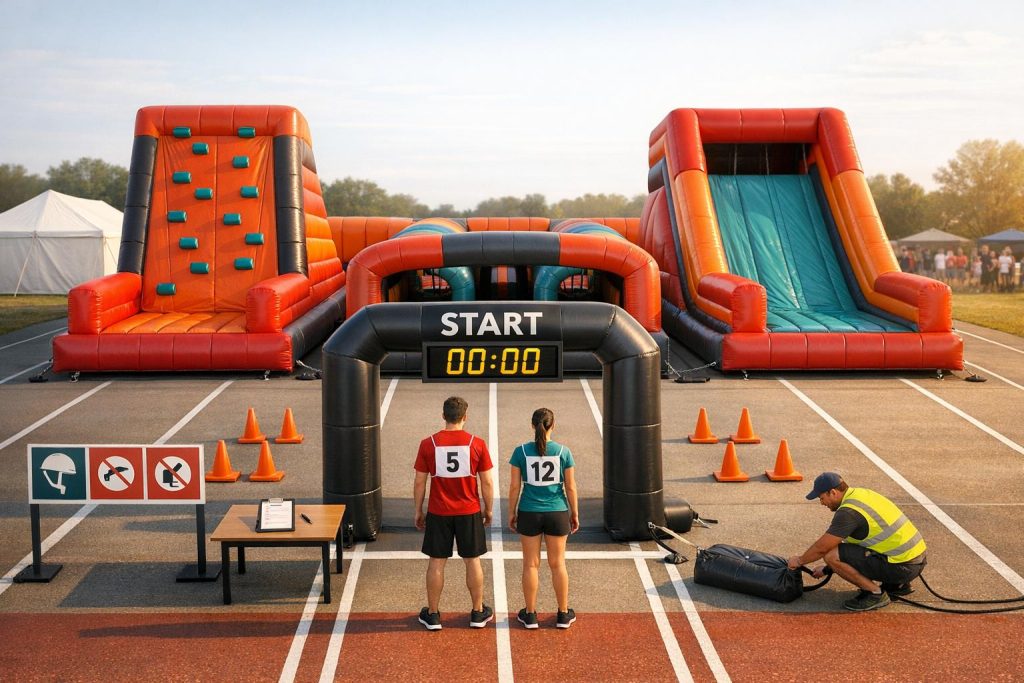
Inflatable obstacle course competitions are a fun way to engage participants of all ages. These events feature challenges like climbing walls, slides, and tunnels, often inspired by popular TV game shows. Whether you’re hosting a small party or a large community event, here are some tips for renting inflatable obstacle courses:
- Audience-Specific Design: Create courses tailored to different age groups – gentle slides for toddlers, medium obstacles for kids, and high-energy challenges for teens and adults.
- Venue Selection: Choose a flat, debris-free location with enough space for inflatables, safety buffers, and clear entry/exit points. Always have a backup plan for bad weather.
- Safety First: Enforce rules like no shoes or jewelry, monitor wind conditions, and ensure proper supervision. Regular equipment checks are crucial to avoid accidents.
- Course Setup: Use a mix of obstacles to keep it engaging, maintain clear sightlines for monitoring, and secure inflatables with stakes or sandbags.
- Event Formats: Offer head-to-head races, timed runs, or add-on games like bungee runs or Velcro walls for variety.
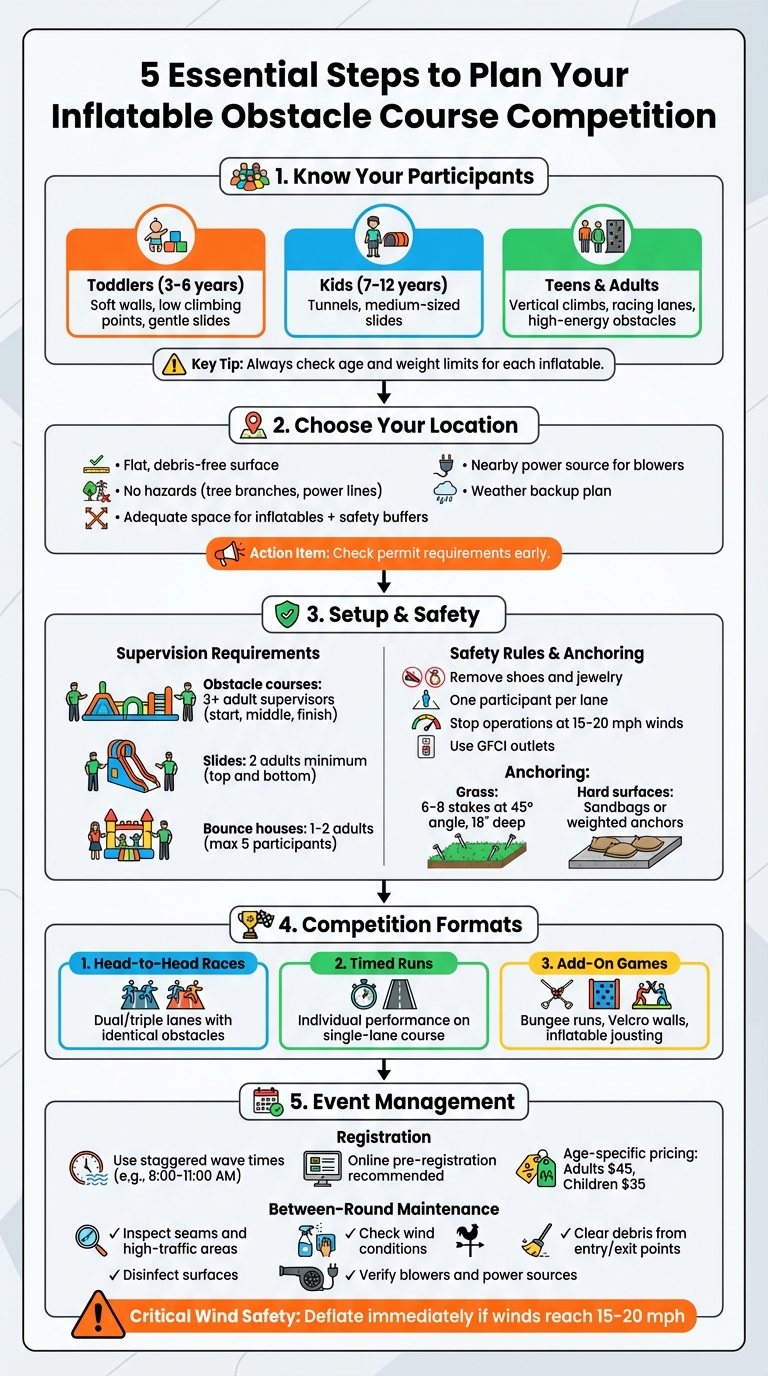
Inflatable Obstacle Course Competition Planning Guide: 5 Key Steps
Planning Your Competition
Know Your Participants
The first step in planning your competition is figuring out who will participate. Age and skill level play a big role in shaping your course design. For example:
- Toddlers (ages 3–6): Use soft walls, low climbing points, and gentle slides to keep things safe and fun.
- Kids (ages 7–12): Incorporate tunnels and medium-sized slides to challenge their energy and curiosity.
- Teens and Adults: Opt for more intense features like vertical climbs, racing lanes, or other high-energy obstacles.
Always check the age and weight limits for each inflatable to avoid accidents or damage. If you’re hosting a larger event, consider multi-player courses to keep lines moving and minimize wait times.
Pick the Right Location
The right venue can make or break your event. Look for a flat, clean surface free of rocks, sticks, or other debris. Watch out for potential hazards like tree branches or nearby power lines. Once you’ve found a suitable spot, measure the area carefully to ensure there’s enough room for the inflatables, as well as safety buffers and entry/exit points.
For outdoor events, weather is a critical factor. Rain or strong winds can make inflatables unsafe, so have a backup plan – like an alternate date or an indoor location. Also, make sure there’s a nearby power source for the blowers. Depending on your venue, you might need permits, especially for public spaces or indoor facilities. Reach out to your local city or county government early to avoid last-minute hiccups. Once the location is secured, you can start designing a layout that meets participant needs.
Map Out Your Course
With your venue chosen, it’s time to design a course that’s both safe and exciting. For teens and adults, think about adding dual racing lanes or linking several 15- to 20-foot sections to create a longer, more challenging course. Safety should always come first, so arrange obstacles to ensure smooth, one-way traffic flow and avoid bottlenecks. Supervisors need clear sight lines to monitor all areas effectively.
Don’t forget to double-check all measurements on-site to confirm everything fits perfectly. Liability insurance is also a must to protect against potential injuries. By planning ahead, you can create a course that’s fun, competitive, and safe for everyone.
Setting Up Your Course
Choose and Position Your Obstacles
Pick inflatables that match your event’s theme and difficulty level. Incorporate a variety of movement types – like running, jumping, crawling, climbing, and sliding – to keep participants engaged and entertained. If your event caters to a wide age range, consider adding optional, easier paths for younger participants to ensure everyone can join in.
Space out obstacles to prevent bottlenecks and allow for safe entry and exit. For climbing and sliding areas, ensure there are proper footholds and smooth, clear landing zones. Position obstacles in a way that maintains clear sightlines for supervision. Once everything is in place, you’re ready to inflate and secure the course.
Inflate and Secure Everything
Before inflating, clear the area of any debris that might damage the inflatables. Lay down a tarp beneath each inflatable to protect against moisture and wear. Connect electric blowers to a power source equipped with a ground fault circuit interrupter (GFCI) to minimize electrical risks.
Keep the blowers running throughout the event to maintain firmness – any sagging could signal under-inflation and instability. If you’re setting up on grass, secure the inflatables with six to eight stakes driven at a 45-degree angle to a depth of at least 18 inches. For hard surfaces, use sandbags or weighted anchors. Make sure all corners and edges are firmly secured to prevent shifting, especially in windy conditions. If wind speeds hit 15–20 mph or higher, deflate the course immediately for safety. A secure setup is essential for ensuring the safety measures you planned earlier are effective.
Mark Your Boundaries and Lines
Use high-visibility markers like cones, flags, or inflatable arches to clearly define the start, finish, and boundaries of the course. For indoor setups, opt for nonskid polyvinyl markers in bright colors like red, yellow, or orange – they’re reusable and safe for participants.
For outdoor courses, inflatable bunkers or barrels can help outline perimeters and create strategic zones. Ensure all inflatable boundary markers are securely anchored with stakes or weighted bases to handle participant impact. Before opening the course, perform a final check to confirm there are no leaks and that everything is stable.
Safety and Supervision
Required Safety Rules
Before participants enter inflatables, they must remove their shoes and any jewelry to prevent damage or injuries. Allow only one participant per lane at a time, spacing out starts to avoid collisions. Participants should keep moving consistently to prevent pileups inside the inflatable.
For slides, ensure participants go down feet first. Limit access to the staircase or slide to one person at a time. Keep lines orderly in the staging area to avoid chaos. Inflatables should never be used during rain, thunder, or lightning. Monitor wind conditions and weather resistance closely – operations should stop if wind speeds reach 15–20 mph, as detailed earlier. Safety relies on clear rules and constant supervision.
Staff and Monitoring
Supervision plays a key role in maintaining safety. For obstacle courses, at least three adult supervisors are necessary: one at the start, one in the middle, and one at the finish. Inflatable slides require a minimum of two adults – one at the top to manage the flow of participants and another at the bottom to clear the landing area before the next person slides. Bounce houses typically need one to two adults, with a maximum of five participants allowed inside at a time.
All supervising adults should receive a thorough safety briefing before the event begins. Assign at least one person to monitor wind conditions and check the firmness of the inflatables throughout the event, as sagging can indicate under-inflation or blower issues. Keeping a written setup checklist and maintenance log ensures you document compliance and equipment condition for every event.
Equipment Checks
Regular equipment inspections are just as critical as initial setup and supervision. Before each event, examine all inflatable surfaces for tears, holes, or loose seams. Inspect blowers and electrical cords for signs of wear or damage, and confirm that all outlets are grounded GFCI circuits. During the event, periodically check that inflatables remain firm and stable, watching for any signs of deflation or shifting.
"Safety is the cornerstone of a successful inflatable rental business. Ensuring that every event is a safe environment for participants not only protects your clients but also safeguards your business from potential liabilities." – Titan Inflatables
After the event, clean all inflatable surfaces thoroughly to prevent mold and maintain hygiene. To comply with local regulations, search for "[Your State] Amusement Ride Safety Regulations" to find specific permitting and inspection requirements. Consult with a qualified inspector to ensure your equipment meets annual safety standards.
Competition Formats and Game Ideas
Once your course is designed and safety measures are in place, these competition formats and game ideas can take your event to the next level.
Head-to-Head Races
Dual- and triple-lane courses bring instant energy to any event by letting participants race side by side. These multi-lane tracks are perfect for events like school carnivals or community festivals, where quick participation is key. Each lane is built with identical obstacles – think tunnels, climbing walls, and slides – so the competition comes down to speed and agility.
For younger kids, themed courses with simpler obstacles and smaller mazes work best. On the other hand, teens and adults thrive on tougher challenges. Features like Warped Walls (anywhere from 18 to 75 feet tall) or Ninja Ladders that test upper body strength are sure to grab their attention. Just make sure all high-difficulty elements meet the required safety standards. Tailoring the course difficulty to your audience keeps the fun factor high and frustration low.
Timed Runs
Timed runs are all about individual performance on a single-lane course. Participants race through the course while their time is recorded, with the fastest run taking the win. This format is especially suited for Ninja-style courses with obstacles like climbing walls, balance beams, and skill-based challenges that require precision and focus.
Adding visible leaderboards and digital timers can heighten the competitive atmosphere, allowing participants to see how they stack up against others. You can also run several heats and finish with a championship round for the top competitors, creating a thrilling finale. To keep things fresh, consider sprinkling in creative inflatable games for team building to keep both participants and spectators engaged.
Add-On Games
For a fun twist, include interactive games that break up the action and keep the energy high. Bungee runs, for instance, challenge players to sprint as far as they can while tethered to elastic cords. Inflatable jousting arenas test balance and coordination as participants try to knock each other off pedestals using foam-padded poles. These games not only entertain but also give participants a breather between obstacle course heats.
Velcro walls are another crowd-pleaser, where participants wear special suits and aim to stick to vertical surfaces. If your event is outdoors in warm weather, consider adding water slides with splash pools or even inflatable pools filled with slime or mud at the end of a cargo net crawl. For an extra layer of fun, let spectators join in by using water guns to spray participants at designated sections. Turning the audience into active participants boosts the excitement for everyone involved.
Running Your Event
Registration and Scheduling
Once your course and safety protocols are ready, keeping registration and scheduling efficient is key to a smooth event. Use staggered wave times (e.g., 8:00–11:00 AM) to prevent overcrowding and maintain a steady flow of participants. Online pre-registration is a great option – it lets participants select their preferred time slot and gives you a clear headcount in advance. Be mindful of your course capacity when setting limits for each wave, and consider a multi-lap format where participants run the course twice. This adds more value without needing extra space. You can also set age-specific pricing, such as $45 for adults and $35 for children, to keep things fair. A well-planned schedule not only enhances the flow of the event but also works hand-in-hand with your safety measures.
Between-Round Maintenance
Short breaks between rounds are the perfect time for quick maintenance to keep everything running smoothly and safely. Here’s what to focus on during these intervals:
- Inspect seams, high-traffic areas, and any spots showing wear.
- Disinfect surfaces and clear out shoes, trash, or food debris from entry and exit points.
- Check wind conditions and ensure that steel stakes (minimum 18 inches) or sandbags are securely in place.
- Verify that power sources and blowers are working, and keep cords away from standing water.
- For water-based courses, towel-dry slick areas to maintain traction and prevent mildew. Following a guide to inflatable water slides can help you manage these specific maintenance needs.
If winds pick up to 15–20 mph, it’s best to pause the event and deflate the units for safety. These small but essential steps ensure a safe and enjoyable experience for everyone involved.
Conclusion
Planning a successful event with an inflatable obstacle course requires thoughtful preparation, attention to safety, and smooth execution. Start by designing the course to match your audience and venue. For younger kids, opt for gentler obstacles, while older participants may enjoy more challenging setups. Choose a flat, open area free of hazards, and always have a backup plan in case of bad weather.
Safety should always come first. Enforce clear rules, perform quick checks between rounds, and make sure all equipment is secure and supervised. To keep things running smoothly, create an efficient schedule with short maintenance breaks. This ensures the equipment stays in top shape and participants stay energized – whether it’s a school carnival, corporate event, or local fundraiser. You can even compare obstacle courses and inflatable games to see which fits your team best. Inflatable obstacle courses bring excitement and fun for all ages.
By following these strategies, you’ll create an event that’s not only safe but also memorable and engaging for everyone involved.
Why Choose Bouncy Rentals USA
When it comes to inflatable obstacle courses, Bouncy Rentals USA is the name you can trust. Our professionally set up, age-appropriate designs allow you to focus on the fun while we handle the logistics. Plus, our equipment is always insured, sanitized, and delivered on time for a worry-free experience.
Planning a spring or summer event? Be sure to book early to secure the best options. We even offer discounts for schools and multi-day events. With Bouncy Rentals USA, you’ll get dependable equipment, expert support, and the confidence of working with a reliable partner.
FAQs
How many people can run the course at once?
Most inflatable obstacle courses are built to accommodate 1 or 2 participants at a time, depending on their size and design. Be sure to review the course’s specific guidelines to keep things safe and enjoyable.
What happens if the weather turns bad mid-event?
If the weather takes a turn for the worse during your event, safety should come first. In case of rain or high winds, it’s crucial to deflate the inflatable and store it securely to avoid any accidents. Extreme temperatures can also pose risks – when it’s above 90°F, the vinyl can become dangerously hot and may cause burns, while temperatures below 50°F can make the material stiff and prone to cracking. Always have a plan in place to quickly secure the inflatable if unexpected weather conditions arise.
What permits and insurance do I need to host this?
When planning to host inflatable obstacle course competitions, it’s important to address permits and insurance. Many venues will ask for a certificate of insurance, and in some locations, inspections or licenses may be legally required. To avoid any issues, consult your local authorities to understand the regulations in your area. Make sure you have adequate insurance coverage to handle liability concerns and safeguard against potential injuries.
