
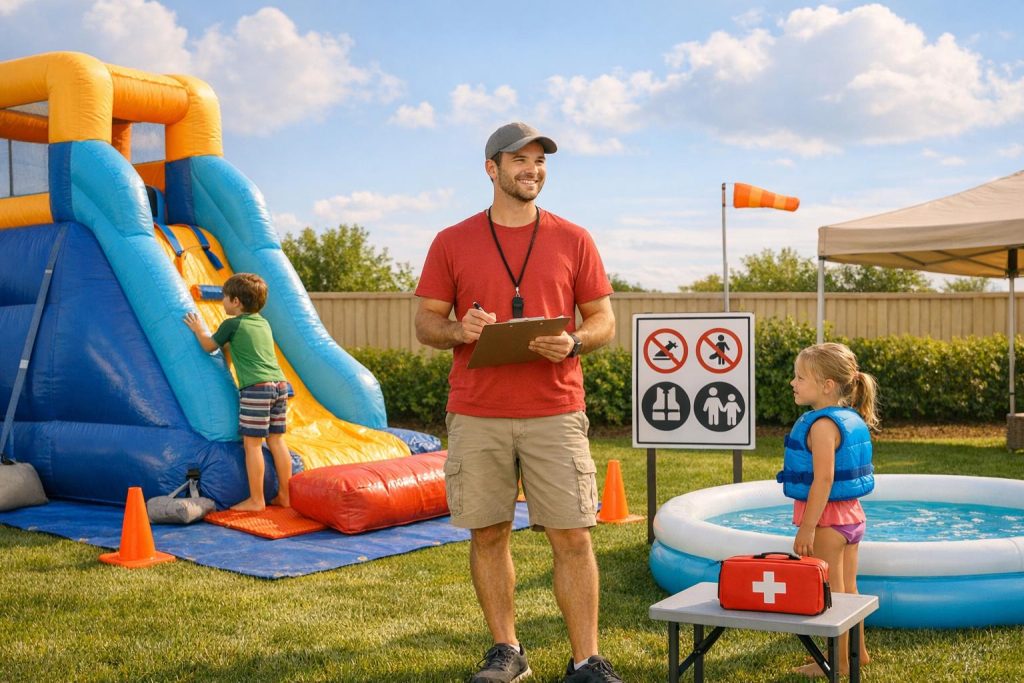
When planning a backyard event with water activities, safety is the most important factor to consider. Both water slides and pools come with unique risks, but with proper precautions, accidents can be minimized. Here’s a quick breakdown:
- Water Slides: Common risks include collisions, tipping, and improper sliding techniques. Assign a "slide captain" to supervise, enforce one-at-a-time sliding, and ensure proper setup with secure anchoring. This includes knowing how to connect a water hose correctly to maintain the slide’s surface.
- Pools: Drowning is the primary concern, especially for children. Always have a dedicated adult or lifeguard supervising. Use barriers like fences, check water depth, and ensure non-slip surfaces to prevent accidents.
Quick Tip: For younger kids, water slides with shallow splash zones (3–4 inches deep) are safer than pools. Pools require constant vigilance, while slides allow for more controlled supervision.
Quick Comparison
| Aspect | Water Slides | Pools |
|---|---|---|
| Supervision | Slide captain to enforce one-at-a-time use | Lifeguard or adult focused on all swimmers |
| Main Risks | Collisions, tipping, improper sliding techniques | Drowning, slipping, diving injuries |
| Weather Sensitivity | Avoid use in winds over 15–20 mph | Suspend during lightning or storms |
| Setup Requirements | Secure anchoring with stakes or sandbags | Fencing, depth markers, non-slip surfaces |
Choosing the safest option depends on your guests’ ages, supervision capacity, and venue layout. Follow the recommended safety measures for a fun and worry-free event.
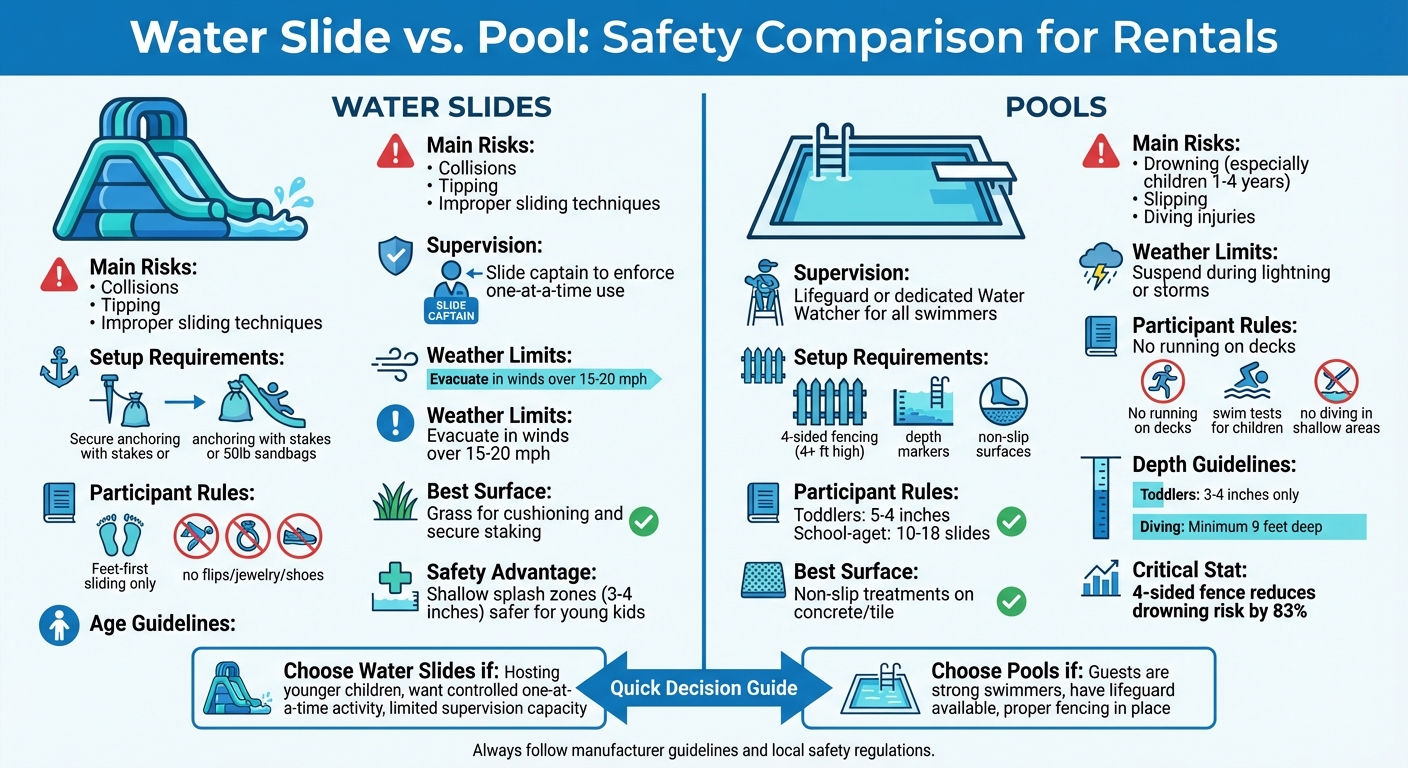
Water Slide vs Pool Safety Comparison Chart for Rentals
Safety Factors for Water Slide Rentals
Water slides can turn any backyard party into an unforgettable experience, but they also come with safety considerations. By following specific safety measures, you can ensure everyone enjoys the fun while minimizing risks.
Supervision and Slide Rules
Assign an adult "slide captain" to oversee the slide area and enforce safety rules. This person should ensure that only one rider uses a lane at a time, waiting until the splash pool is completely clear before the next person slides. To prevent fatigue, rotate supervisors in shifts. Quick collisions are a common cause of inflatable-related injuries, so constant vigilance is key.
"Riders should always slide down feet-first in a seated position. Head-first sliding or attempting tricks increases the risk of serious injuries such as head or neck trauma." – Kangaroo Bounce Party
Make sure riders remove shoes, glasses, jewelry, or any sharp items before sliding. Roughhousing, flips, climbing, or head-first sliding should be strictly prohibited. If your water slide includes an attached bounce area, keep children of similar sizes together to avoid dangerous collisions. Mixing toddlers with older kids significantly increases the chance of accidents.
Keep an eye on the weather. If winds exceed 15–20 mph or there’s any sign of lightning, evacuate the slide immediately and deflate it. Even a properly anchored inflatable can tip over or blow away in strong winds.
Proper setup and anchoring are equally critical to maintaining safety throughout your event.
Setup and Anchoring
Before installation, clear the area of debris like rocks, sticks, sprinkler heads, or pet waste. A flat, level surface is essential – grass works best since it allows for secure staking and provides a bit of extra cushioning.
Use heavy-duty stakes to anchor the slide on grass, and 50-pound sandbags for concrete or asphalt. Never skip any anchoring points or replace recommended weights with lighter alternatives.
"Water slides must be staked down at every stakedown point or if on concrete, anchored with 50lb sandbags on each tiedown point. This will ensure the inflatable stays in place." – Inflatable Party Magic
Once inflated, test the slide’s stability by gently tugging on it to ensure it doesn’t shift or tip. Keep the air blower running on a dry surface, and secure extension cords with tape to prevent tripping. Monitor the blower throughout the event – if the slide starts deflating, help riders exit calmly and safely.
Maintain at least 5 feet of open space around the slide for safe access. Before setting up, check for overhead obstacles like power lines or tree branches.
Safety also depends on choosing a slide design that matches the age and size of your guests.
Age-Appropriate Designs
Select a slide that fits the age group of your attendees. For toddlers, choose slides that are 5–10 feet tall with gentle slopes. School-aged children can handle slides between 10–18 feet, but only if they’re playing with others of similar size. Teenagers and adults can enjoy commercial-grade slides that are 17–20 feet or taller. Always check the manufacturer’s weight and height limits – many slides require riders to be at least 42 inches tall. Ask about the "landing pad height" to ensure a safe experience.
"Renting a slide that is too large for your child or guests, could result in injury." – Inflatable Party Magic
At Bouncy Rentals USA, we prioritize safety above all else. Our team ensures every water slide is carefully set up, securely anchored, and monitored, so your event stays fun, safe, and hassle-free.
Safety Factors for Pool Rentals
Renting a pool comes with specific risks, particularly drowning, which is a major concern for children. In the United States, drowning is the second leading cause of injury-related death for kids aged 1 to 14. For children aged 1 to 4, most drowning incidents occur in residential swimming pools. By understanding these risks and taking proper precautions, you can help ensure your event remains safe and enjoyable.
Supervision is one of the most effective ways to reduce these risks.
Lifeguard and Supervision Requirements
Even if you hire a lifeguard, it’s crucial to assign a dedicated "Water Watcher" to focus solely on supervising the pool area.
"Designate an official Water Watcher, an adult tasked with supervising children in the water. That should be their only task – they shouldn’t be reading, texting or playing games on their phone." – Pool Safely
The Water Watcher should stay close to young or inexperienced swimmers and take regular breaks to avoid fatigue. If a child goes missing during your event, always check the pool first – drowning can happen silently and in a matter of seconds. Keep essential rescue tools and a phone nearby, and ensure at least one person on-site is trained in CPR.
"Knowing how to swim doesn’t make a child drown-proof. Never use flotation devices as a substitute for supervision." – Washington State Department of Health
Water Depth and Non-Slip Surfaces
The depth of the pool should match the age and swimming abilities of your guests. For toddlers, splash zones with just 3–4 inches of water are ideal. Older swimmers can use deeper sections, but diving should only be allowed in areas where the water is at least 9 feet deep.
To reduce slip-and-fall accidents, wet surfaces around the pool need attention. Provide towel stations and dry-off mats near exits to improve footing. Using grass instead of concrete or asphalt can also help, as it offers natural cushioning and better drainage. Make sure water runoff is directed away from walkways and entrances to avoid creating slippery spots.
Additionally, inspect all drain covers before the pool is used. Loose, broken, or missing drain covers are dangerous and must comply with the Virginia Graeme Baker Pool & Spa Safety Act to prevent suction-related accidents. If someone becomes trapped against a drain, immediately turn off the pump and break the seal by prying between the person and the drain rather than pulling directly.
Fencing and Restricted Access
Securing the pool area with proper barriers is another critical step in preventing accidents.
A four-sided isolation fence can reduce a child’s risk of drowning by 83% compared to a three-sided fence that uses the house as one side.
"A fence of at least four feet in height should surround the pool or spa on all sides and should not be climbable for children." – Pool Safely
The fence should be at least 4 feet high, with vertical slats spaced no more than 4 inches apart to prevent children from squeezing through. Avoid chain-link fencing, as it’s easy for kids to climb. Gates should be self-closing, self-latching, open outward, and have latches positioned at least 54 inches above the ground. Remove any objects, like lawn furniture, that children could use to climb over the fence. For above-ground pools, secure or remove ladders and steps when the pool isn’t in use. Installing door alarms on any house exits leading to the pool area can also alert you if a child tries to access the pool. Lastly, clear toys from the pool and surrounding area when not in use, as they can tempt children to approach the water.
While inflatable water slides pose risks like collisions and tipping, pool safety is primarily about preventing drowning and slip hazards.
Safety Comparison: Water Slides vs. Pools
Water slides and pools each come with their own set of safety considerations and requirements.
For water slides, supervision often involves a specific role called a "slide captain" whose main job is to manage the sliding process and ensure one-at-a-time use. Pools, however, demand lifeguard-style monitoring to oversee multiple swimmers across varying depths and activities. While water slide oversight focuses on controlling the flow of participants, pool supervision requires constant vigilance over the entire swimming area.
Weather-related safety protocols also differ. Water slides must be evacuated when winds reach 15–20 mph, while pool activities are suspended during lightning storms. These tailored approaches to supervision and setup reflect the unique safety needs of each option.
Comparison Table of Safety Aspects
| Aspect | Water Slide Rentals | Pool Rentals |
|---|---|---|
| Supervision Intensity | Continuous monitoring to enforce one-at-a-time use | Lifeguards required to oversee multiple swimmers |
| Primary Setup Risks | Requires stable anchoring with stakes or 50 lb sandbags; access to blower power | Ensuring secure fencing, visible depth markers, and non-slip surfaces |
| Weather Sensitivity | Evacuate during winds over 15–20 mph | Suspend use during lightning or thunder |
| Participant Rules | Feet-first sliding only; no flips, jewelry, or shoes allowed | No running on decks; swim tests for children; no diving in shallow areas |
| Surface Safety | Grass is ideal for cushioning and secure staking | Concrete or tile surfaces need non-slip treatments |
The risks associated with water slides and pools also differ significantly. For water slides, common injuries include collisions, friction burns, and head or neck trauma caused by improper sliding techniques. Pools, on the other hand, pose risks such as drowning – particularly for children aged 1 to 4 – diving-related injuries in shallow water, and slipping accidents on hard deck surfaces. These distinctions emphasize the importance of tailored safety protocols for each type of activity.
Choosing the Safer Rental Option
When deciding between a water slide and a pool rental, consider factors like your guests’ ages, your ability to supervise, and the layout of your venue. Water slides naturally create a more controlled environment by enforcing a one-at-a-time rule, which makes it easier to monitor participants. In contrast, pools often involve multiple swimmers moving unpredictably, making supervision more challenging. Plus, inflatable water slides come with soft, air-filled surfaces that cushion falls – something you won’t get with the hard concrete or tile decks typically found around pools.
If you’re hosting younger kids, a water slide with a shallow splash zone (around 3–4 inches deep) can significantly lower drowning risks compared to pools with varying depths. Choose the right slide height for your guests: toddlers enjoy shorter slides (5–10 ft), elementary-age kids tend to prefer mid-range options (13–18 ft), and teens usually go for taller slides (18–22+ ft). These considerations pair well with the setup tips discussed earlier to ensure a safe and fun experience.
Make sure your rental company meets essential safety standards. Look for ASTM-compliant equipment manufactured in the U.S., along with commercial liability insurance. Reputable companies follow strict sanitization practices, using commercial-grade cleaners to disinfect equipment before delivery. In states like Texas, additional inspections provide an extra layer of safety.
For proper setup, ensure the slide is placed on grass for secure anchoring and that there’s enough clearance from obstacles. Following these steps will help create a safe and enjoyable environment for everyone.
At Bouncy Rentals USA, we take these precautions seriously. Every water slide we offer is fully insured, sanitized, and meets ASTM safety standards. Our trained team handles the setup and anchoring process, so you can relax knowing your event is in good hands. Whether it’s a backyard birthday or a neighborhood block party, our equipment arrives clean, inspected, and ready for safe, worry-free fun.
FAQs
Which is safer for toddlers: a water slide or a pool?
A water slide designed for toddlers can often be a safer option compared to a pool, as long as it’s specifically made for their age group and closely monitored. These slides typically have gentle slopes, soft landings, and cushioned materials that help reduce the chance of injuries. While pools can be safe with proper fencing and vigilant supervision, they carry a higher risk of drowning. For younger children, a thoughtfully designed water slide provides a more controlled and safer setting for water play, as long as adults are keeping a close eye on them.
What should I check before a water slide is set up?
Before setting up a water slide, it’s important to make sure the area is flat, free of sharp objects, and spacious enough for the slide, safety zones, and water runoff. Ideally, the ground should be soft and level – grass works great for this. Also, double-check that there’s access to a reliable water supply and proper drainage to avoid pooling.
Make sure the slide is securely anchored – using stakes or sandbags can help keep it in place. And don’t forget: proper supervision and clear safety rules are key to keeping everyone safe while the slide is in use.
Do I need a lifeguard for a rented pool party?
Yes, bringing in a lifeguard for a rented pool party is a smart move, especially if kids will be there. Lifeguards offer crucial supervision, reducing the risk of accidents and ensuring everyone stays safe. Plus, their presence allows you to relax and enjoy the event without constantly worrying about safety.
