Cleaning bounce houses requires different approaches depending on the season. Summer cleaning focuses on dealing with sweat, sunscreen, and humidity, while winter cleaning prioritizes keeping materials dry and safe from freezing. Here’s a quick breakdown:
- Summer Cleaning:
- Use warm water, mild soap, and a garden hose for rinsing.
- Dry thoroughly in sunlight using towels and leaf blowers to prevent mold.
- Handle frequent cleaning due to outdoor events and grime buildup.
- Winter Cleaning:
- Limit water use to avoid freezing; rely on dry cleaning methods like vacuums and spot cleaning with minimal liquid.
- Dry indoors with fans and store in temperature-controlled spaces to prevent moisture damage.
- Inspect for damage during the slower season.
Each method ensures bounce houses remain safe, clean, and ready for use while extending their lifespan. Proper storage and drying are critical year-round to avoid mold, odors, and material damage. Whether it’s summer heat or winter cold, tailoring your cleaning routine to the season is key.
How to Clean Bounce Houses in Summer
Rinsing, Scrubbing, and Drying in Warm Weather
To start, deflate the bounce house and lay it flat on a clean surface. Use a vacuum, broom, or soft brush to clear away loose debris like grass, leaves, dirt, and any forgotten toys.
Prepare a simple cleaning solution by mixing three parts warm water with one part white vinegar and a few drops of dish soap. Focus on high-touch areas such as entrances, climbing walls, slide landings, and netting. Use a soft-bristle brush or sponge to scrub away sweat, body oils, and sticky residues without damaging the vinyl.
Rinse the bounce house thoroughly with a garden hose set to a gentle flow. Avoid using high-pressure washers unless on the lowest setting, as they can strain seams or damage the material. After rinsing, use clean towels to soak up standing water, particularly around seams, corners, and under slide liners. A leaf blower can help push moisture out of tight spots and speed up the drying process.
Let the bounce house air-dry in direct sunlight for several hours or even a full day. The heat and sun not only speed up drying but also help prevent mildew. Be sure to inspect all crevices to ensure no damp spots remain before storing. For better drainage, you can tilt the bounce house slightly by propping one side on a chair. Make sure every surface, including the underside, is completely dry and clean.
Once rinsing and drying are done, it’s time to address those stubborn summer stains and other seasonal cleaning challenges.
Common Summer Cleaning Problems
Summer brings its own set of cleaning hurdles, even with a regular routine.
Hot weather and frequent use can lead to a buildup of sweat and body oils, especially in high-traffic areas. After each use, clean these spots with your soap-and-vinegar solution, then sanitize with a bleach-free disinfectant to avoid leaving harmful residues.
Sunscreen and lotions often leave greasy films on the vinyl. For these stains, use a vinyl-safe degreaser. Let it sit for a few minutes, then scrub with a soft brush or magic eraser before rinsing. The summer heat works in your favor here, helping the cleaner act faster and ensuring quick drying to avoid streaks.
High humidity can be another issue, as it traps moisture in seams and corners, creating the perfect conditions for mold and mildew. Check these areas closely and treat any mold with a mildew remover like Blitz Mildew Remover or 30 Seconds Outdoor Cleaner. Scrub the affected spots, rinse thoroughly, and dry completely using the methods mentioned earlier. Never roll up or store a bounce house while it’s still damp – this can lead to mold, unpleasant odors, and long-term damage.
How to Clean Bounce Houses in Winter
Cold Weather Cleaning Methods
Cleaning a bounce house during winter calls for a whole new approach compared to summer. The goal is to use as little water as possible to avoid ice buildup and slippery surfaces. Instead of hosing it down, focus on dry cleaning techniques.
Start by bringing the inflatable indoors – whether it’s a garage, warehouse, or heated tent – and let it warm up. Cold temperatures can make vinyl stiff and prone to cracking along the seams. Warming the bounce house to a temperature between 50–70°F not only protects the material but also makes the cleaning process smoother. Once it’s warmed, inflate the bounce house and inspect it thoroughly. Look for and remove any toys, trash, or sharp objects that may have been left behind.
After the inspection, use a broom, soft brush, or shop vac to clear out snow, leaves, and dirt from the floor, walls, and seams. Pay extra attention to corners, steps, and slide areas since debris tends to pile up there. If you find dried mud, let it air-dry completely before brushing or vacuuming it off. For stains, lightly spray a small amount of diluted dish soap or a vinyl-safe cleaner, scrub gently, and wipe it off with absorbent towels. Keep liquid use to a minimum to avoid water seeping into seams or zippers, which could freeze and cause damage. Avoid using a hose at all costs during winter cleaning.
Indoor Drying and Storage Requirements
Once the bounce house is cleaned, drying it indoors is a must to prevent freezing. After clearing debris and treating any stains, keep the inflatable partially or fully inflated in a heated, low-humidity space. Open all flaps and use fans to circulate warm air. For tricky spots like corners, seams, or the undersides of slides, use towels to absorb any hidden moisture. It’s critical to ensure the bounce house is completely dry, as any trapped moisture can lead to mold, unpleasant odors, or even vinyl damage. Winter’s short, cold days make outdoor drying ineffective, so indoor drying is your best bet.
When the bounce house is fully dry, store it in a dry, temperature-controlled space that stays above freezing – ideally between 50–70°F. Avoid areas with fluctuating temperatures or high humidity. Roll the unit tightly, secure it, and keep it off the ground by placing it on pallets or shelves. This prevents moisture from the floor and reduces the risk of rodent damage.
Companies like Bouncy Rentals USA follow strict winter cleaning, drying, and storage protocols to keep their equipment in top shape and ensure safety for every event. Proper care during the off-season helps extend the life of your bounce house and keeps it ready for action when warmer days return.
Summer vs. Winter Cleaning: Side-by-Side Comparison
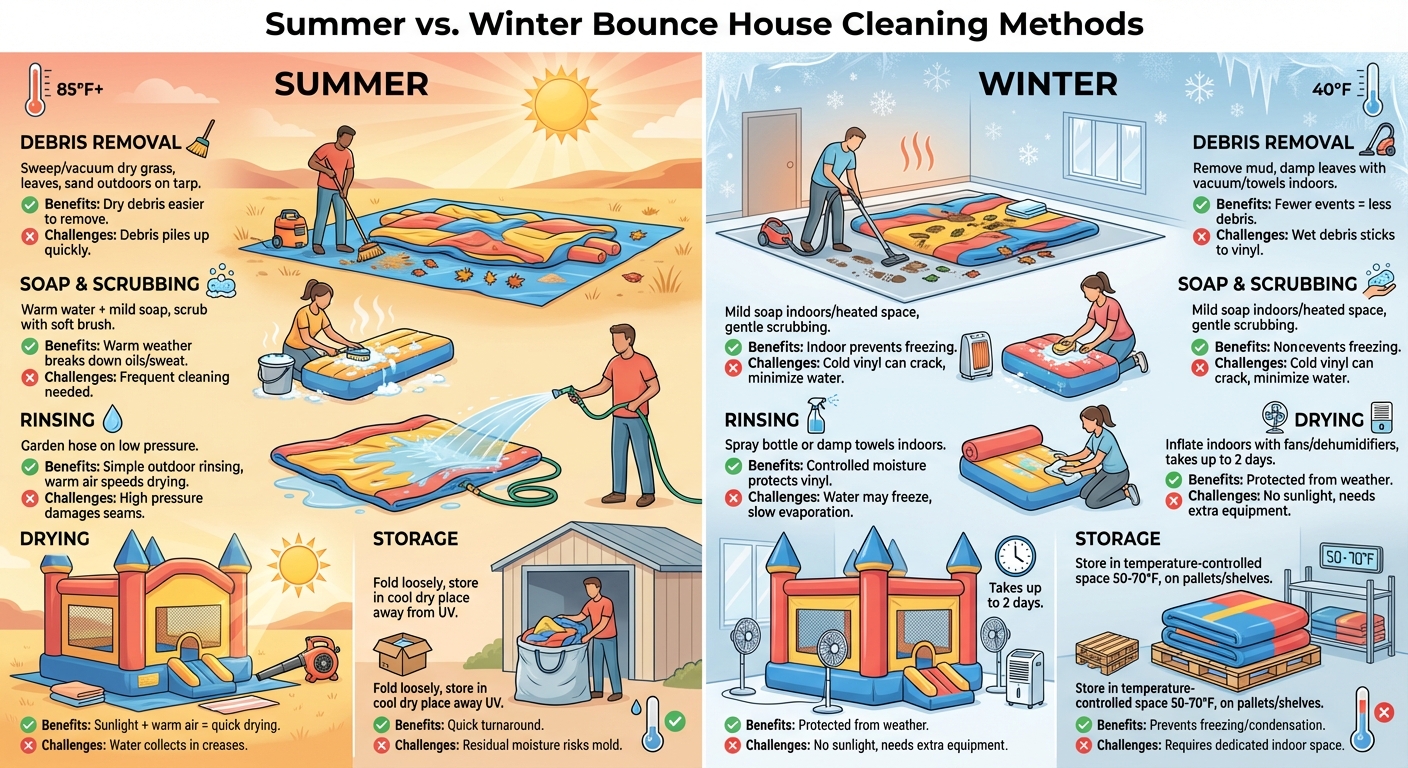
Summer vs Winter Bounce House Cleaning Methods Comparison
Cleaning inflatables follows the same basic steps – removing debris, scrubbing, rinsing, drying, and storing – but the season can make a big difference in how easy or challenging each step is. In the summer, warm temperatures and plenty of sunlight make outdoor cleaning quicker and more efficient. Winter, on the other hand, brings cold weather and shorter days, shifting the focus to indoor cleaning, which can slow things down.
Take drying, for example. In winter, if a bounce house isn’t completely dry before storage, it can lead to mold or even damage the vinyl. In summer, rushing to dry it under the sun might leave hidden moisture in seams. To make things clearer, the table below breaks down the differences in cleaning approaches between the two seasons.
Comparison Table
| Cleaning Step | Summer Approach | Summer Benefits | Summer Challenges | Winter Approach | Winter Benefits | Winter Challenges |
|---|---|---|---|---|---|---|
| Debris Removal | Sweep or vacuum dry grass, leaves, sand, and party trash after deflating outdoors on a tarp. | Dry debris is easier to remove and less likely to smear on the vinyl. | Outdoor debris can pile up quickly. | Remove mud, damp leaves, and dirt manually with a vacuum or towels during indoor cleaning. | Fewer events mean less debris to clean. | Wet debris sticks to vinyl, making removal harder. |
| Soap & Scrubbing | Use warm water with mild dish soap or a vinyl-safe cleaner; scrub high-traffic areas with a soft brush. | Warm weather helps break down oils, sweat, and sunscreen residue. | Frequent cleaning is needed due to outdoor spills and grime. | Use a mild soap solution indoors or in a heated space; scrub gently to avoid stressing cold vinyl. | Indoor cleaning prevents freezing and allows careful scrubbing. | Cold vinyl can stiffen or crack, and water use must be minimized to avoid freezing. |
| Rinsing | Rinse thoroughly with a garden hose on low pressure to remove soap residue. | Outdoor rinsing is simple, and warm air speeds up drying. | High-pressure water can damage seams, and leftover water may leave spots. | Rinse lightly indoors using a spray bottle or damp towels to avoid freezing. | Controlled moisture levels protect vinyl from freezing or weather damage. | Water may freeze on surfaces, and evaporation indoors takes longer. |
| Drying | Towel off water, use a leaf blower for moisture, then inflate and dry in direct sunlight for a few hours. | Sunlight and warm air dry the unit quickly. | Water can collect in creases, requiring careful checks for complete drying. | Inflate partially or fully indoors with fans or dehumidifiers; dry seams and corners with towels. This can take up to two days. | Indoor drying protects against outdoor contaminants and weather damage. | Without sunlight, drying indoors may need extra equipment and effort to prevent mold. |
| Storage | Once dry, fold and roll loosely, storing in a cool, dry place away from direct sunlight to prevent UV damage. | Quick turnaround for the next event. | Residual moisture risks mold, and heat in storage areas can harm vinyl. | Store in a dry, temperature-controlled space above freezing (50–70°F), off the ground on pallets or shelves. | Prevents freezing and condensation during storage. | Requires dedicated indoor space with careful monitoring of humidity and temperature. |
Bouncy Rentals USA follows these seasonal cleaning practices to keep their equipment safe and in top condition. Whether it’s a sunny July birthday bash or a brisk November school event, tailoring cleaning methods to the season ensures inflatables stay durable and ready to bring joy all year long.
Cleaning Tools and Supplies for Each Season
Having the right tools for cleaning bounce houses can make a huge difference, especially since what works in the summer might not cut it during the winter. In warmer months, outdoor-friendly equipment and wet cleaning methods shine, thanks to the warm air that speeds up drying. On the other hand, winter cleaning calls for indoor techniques that limit moisture and protect vinyl from cold-related damage.
Tools for Summer and Winter Cleaning
Seasonal cleaning comes with its own set of challenges, but the right tools can help keep your inflatables in top shape year-round.
During summer, a gentle-spray garden hose is perfect for rinsing off soap without putting stress on seams. Soft brushes or sponges work well for scrubbing high-traffic areas, while shop vacuums or brooms handle dry debris like sand, grass, and leaves before you start cleaning. For cleaning solutions, a mix of warm water, vinegar, and dish soap works for everyday grime, while vinyl-safe cleaners tackle stubborn stains. Microfiber towels are great for soaking up water in corners and seams, and tools like leaf blowers or portable fans speed up drying when used under the summer sun.
Winter cleaning, however, focuses on keeping things as dry as possible to avoid ice buildup. Dry brushes and brooms are ideal for sweeping away debris without adding moisture, while shop vacuums handle dust and dirt. Spray bottles filled with mild, vinyl-safe cleaner allow for spot cleaning without soaking the material, and microfiber towels help dry those tricky corners and seams where moisture tends to linger. Indoor fans are essential for promoting evaporation in temperature-controlled spaces, especially when sunlight isn’t an option. Protective sprays can help prevent mold and moisture damage during storage, and inflatables should be stored in heavy-duty bags or under tarps to keep them off the floor and safe from pests.
One thing Bouncy Rentals USA avoids is high-pressure washers, opting instead for soft brushes to ensure safe cleaning. These tools not only make cleaning easier but also align with their thorough sanitization standards, which are explained below.
How Bouncy Rentals USA Sanitizes Equipment
Bouncy Rentals USA takes sanitization seriously, ensuring each inflatable is clean, safe, and event-ready. Their process starts with a pre-clean inspection to check for sharp objects, damage, or heavily soiled areas. After that, they use shop vacuums for dry cleaning, followed by soft brushes and vinyl-safe cleaners to scrub high-touch spots. A garden hose on a low setting rinses off soap residue, while towels and leaf blowers remove any remaining moisture from seams and undersides. Disinfectant wipes are used to sanitize all surfaces, and mildew removers take care of any problem areas before storage.
This detailed approach ensures every inflatable meets high hygiene standards and stays mold-free, ready for anything from a summer birthday party to a chilly November school event.
Storage Tips After Cleaning
Taking care of your inflatables doesn’t end with cleaning – how you store them plays a big role in keeping them in good shape. Whether you’re wrapping things up after summer fun or preparing for the winter off-season, smart storage practices can make a huge difference.
Storing Inflatables After Summer Cleaning
Once you’ve cleaned your inflatables after summer use, proper drying and storage are essential. Let them air dry in sunlight for about 3–5 hours. To help water drain, keep them partially inflated and prop them up with a chair or dolly.
When they’re completely dry, deflate them and roll them loosely to avoid creating creases that could lead to damage. Store them in a well-ventilated garage or shed, away from walls to prevent humidity and mold issues. Double-check for any leftover debris before tucking them away.
Storing Inflatables After Winter Cleaning
After winter cleaning, indoor storage is key to protecting your inflatables from freezing temperatures and pests. Fully deflate them and store them in a temperature-controlled space, ideally between 50–70°F. To keep them off the ground, use pallets or shelving, and cover them with rodent-proof containers or heavy-duty tarps. Avoid using plastic bags, as they can trap moisture.
If there’s any lingering dampness, let it air dry indoors to prevent condensation. Make it a habit to inspect your inflatables monthly for signs of pests or damage. This way, they’ll be in great shape and ready to go when the next season rolls around.
Conclusion
Adjusting cleaning routines to suit summer and winter conditions is key to maintaining the safety and durability of your bounce house. The methods discussed earlier focus on keeping your inflatable in top shape, no matter the season.
In summer, water-based rinsing paired with sun drying works best, while winter calls for limiting moisture and using indoor drying methods like fans and towels. Regardless of the season, thorough drying is essential to avoid mold, mildew, and material damage. Neglecting this step – even slightly – can lead to unpleasant odors, material degradation, and a shorter lifespan for your bounce house.
Season-appropriate cleaning and storage routines also bring other benefits. They help reduce germs and allergens, prevent slippery residues, and allow you to spot small issues like tears or seam problems early. Addressing these problems promptly can save you from bigger headaches down the line.
Bouncy Rentals USA sets a great example by sanitizing their inflatables after every event, using child-safe disinfectants, and ensuring everything is completely dry before storage. Homeowners and smaller rental operators can benefit from adopting similar habits. Regular inspections, removing debris, gentle cleaning, careful drying, and proper seasonal storage can keep your bounce house safe, inviting, and ready for countless celebrations. By sticking to these tailored routines, you’ll ensure your inflatable stays in excellent condition all year long.
FAQs
What’s the best way to keep a bounce house mold-free during winter?
To prevent mold from forming on your bounce house during the winter, ensure it’s thoroughly dry after every use. Store it in a dry, well-ventilated area, keeping it away from moisture, snow, or freezing temperatures. Make it a habit to clean and disinfect the surface regularly, and always check for leaks or damp areas before packing it up. Taking these steps will help keep your inflatable in great condition and make it last longer.
What are the must-have tools for cleaning a bounce house in the summer?
To keep your bounce house in top shape during the summer, start with a soft-bristle brush to gently scrub off dirt and debris. Use a mild soap or an inflatable-safe cleaner to avoid causing any damage to the material. For rinsing, grab a garden hose or, if needed, a pressure washer for tougher spots. Once it’s clean, dry the surface thoroughly with microfiber cloths or towels to prevent mold and mildew from forming. A clean bounce house ensures a safe and fun experience for all your summer gatherings.
What’s the best way to store a bounce house after cleaning it in winter?
After giving your bounce house a thorough cleaning during the winter, ensure it’s entirely dry before putting it away. This step is crucial to prevent mold and mildew from forming. Once dry, fold it carefully and store it in a cool, dry, and ventilated space, away from direct sunlight and extreme temperatures. For added protection, use a storage bag or cover to keep it free from dust and potential damage.