
Filtration systems are essential for maintaining clean and safe water on water slides, especially for commercial and rental operations. These systems keep water free of debris, bacteria, and contaminants, ensuring a safe experience while meeting health regulations. For backyard inflatable slides, filtration may not always be necessary, but it becomes important during longer events or when water is reused. Proper filtration improves water clarity, enhances safety, and reduces maintenance costs by minimizing the need for frequent water replacement.
Key points:
- Commercial slides: Filtration is mandatory to meet safety and clarity standards.
- Backyard slides: Filtration depends on water reuse and event duration.
- Benefits: Clear water improves safety, guest confidence, and operational efficiency.
- Types of systems: Sand filters, regenerative filters, and natural methods like sphagnum moss.
- Maintenance tips: Run filtration 2–3 hours before use, backwash regularly, and combine with disinfection methods like chlorine.
Whether you’re hosting a party or managing a rental business, understanding how and when to use filtration systems ensures a safer, cleaner, and more enjoyable experience.
Why Water Slides Need Filtration Systems
Keeping Water Clean
When water recirculates on an inflatable slide, it doesn’t take long for it to collect all sorts of contaminants – dirt, sweat, sunscreen, and body oils are just the beginning. A filtration system steps in to tackle this by pulling water from the landing area, running it through a filter, and sending it back clean and clear. As the water passes through, the filter traps visible debris like leaves and hair while also targeting tiny particles that can make the water appear cloudy, keeping turbidity levels low.
This constant cycle of cleaning is crucial for more than just appearances. It removes organic material that bacteria and algae thrive on, preventing the formation of stagnant areas where germs could multiply unchecked. Filtration systems also help evenly distribute disinfectants throughout the water, ensuring consistent quality. Many manufacturers suggest running the filtration process at least three hours before riders show up to stabilize conditions fully and maintain them during the event. By continuously cleaning the water, these systems create a safe and inviting environment for everyone.
Protecting User Safety
Clean, clear water isn’t just about aesthetics – it’s a key safety feature. When the water is free of debris, attendants can quickly spot any riders in distress. Filtration systems that meet standards like NSF/ANSI 50 are specifically designed to ensure water clarity, and they’re often required by state and local regulations to safeguard users.
But filtration alone isn’t enough. It works alongside disinfection methods, such as chlorine treatment, to minimize the risk of waterborne illnesses. While filters remove physical debris and particles, disinfectants handle harmful microorganisms like E. coli, Giardia, and Cryptosporidium. Together, these measures reduce the overall particle load and effectively neutralize germs, which is vital for preventing infections that can spread quickly in untreated water.
Better Appearance and Guest Experience
Crystal-clear water doesn’t just look good – it sends a powerful message about hygiene and safety, which is especially important at events like birthday parties, school functions, and corporate gatherings where parents and organizers are paying close attention. On the flip side, cloudy or debris-filled water can make guests uneasy, even if the slide itself is perfectly safe. Clear water reassures everyone that cleanliness is a priority, building trust and encouraging repeat business.
There’s also a practical side to keeping the water clean. With less debris to deal with, operators can spend more time running the slide and less time stopping to skim the water or refill it. This means shorter wait times, happier kids, and a smoother event overall. Clean water not only enhances the visual appeal but also boosts the efficiency and success of the entire experience.
Common Filtration Systems for Water Slides
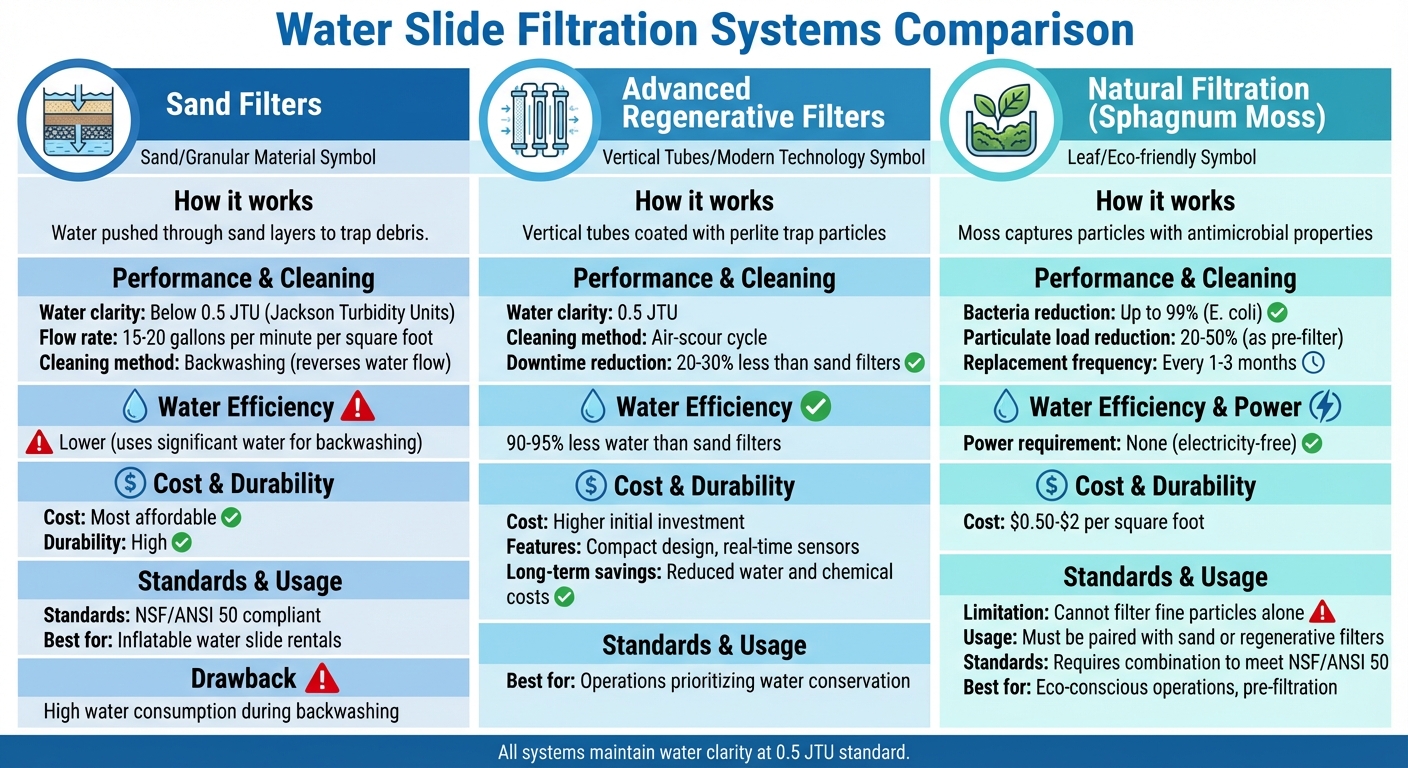
Water Slide Filtration Systems Comparison: Sand vs Regenerative vs Natural Filters
Sand Filters
Sand filters are a staple in maintaining clean and clear water for water slides. They work by pushing water through layers of sand, which trap dirt and debris, ensuring water clarity stays below 0.5 Jackson Turbidity Units (JTU) – a standard outlined by regulations like Georgia’s Rule 120-3-27-.28. When the sand becomes clogged, the system undergoes a cleaning process called backwashing, where water flow is reversed to flush out impurities. Sand filters are especially popular for inflatable water slide rentals due to their affordability, durability, and ability to process 15–20 gallons per minute per square foot, meeting Florida’s Chapter 64E-9 requirements. Many models come with monitoring features and conform to NSF/ANSI 50 standards. However, backwashing can consume a substantial amount of water, making this a potential drawback in areas with strict water usage policies.
Advanced Regenerative Filters
Advanced regenerative filters provide a more water-efficient alternative to traditional sand filters. Instead of sand, these systems use vertical tubes coated with perlite to trap particles. Cleaning is achieved through an air-scour cycle, which uses up to 90–95% less water compared to the backwashing process of sand filters. These systems are compact, integrate sensors for real-time water quality monitoring, and can cut downtime by 20–30% compared to their sand-based counterparts. Like sand filters, they maintain water clarity at the crucial 0.5 JTU level. While their initial cost is higher, the long-term savings in water and reduced chemical use often balance out the investment over time.
Natural Filtration Methods
Natural filtration systems, such as those using sphagnum moss, offer an eco-friendly way to complement mechanical filtration. Sphagnum moss captures larger particles and has natural antimicrobial properties, with studies showing it can reduce bacteria like E. coli by up to 99%. When used as a pre-filter, it can decrease the particulate load by 20–50% before water reaches the main filtration system. This relatively low-cost option – priced between $0.50 and $2 per square foot – doesn’t require electricity but does need to be replaced every 1–3 months, depending on usage. Since it cannot filter fine particles on its own, sphagnum moss is typically paired with sand or regenerative filters to meet NSF/ANSI 50 standards. Companies like Bouncy Rentals USA use natural filtration to improve water quality and promote sustainability during their events.
Benefits of Filtration Systems for Inflatable Water Slide Rentals
Filtration systems play a critical role in maintaining water clarity and safety, making them essential for any rental operation. Here’s why they matter.
Better Safety and Hygiene
Filtration systems work hard to remove bacteria, oils, sunscreen residue, and debris from the water, creating a cleaner and safer environment for users. By keeping the water clear and continuously circulating, these systems make it easier for attendants to spot potential hazards, such as a toy stuck in the slide or a child lingering near the exit. This reduces the risk of accidents, like slips or falls. For companies like Bouncy Rentals USA, clean water isn’t just about hygiene – it’s about providing a safer, more attractive experience for customers. Parents and event organizers can feel confident knowing the water stays sanitary for hours, even during heavy usage. Filters that meet NSF/ANSI 50 standards ensure the level of cleanliness families expect from public pools.
Lower Costs and Less Maintenance
Filtration systems also help rental companies save money. Instead of frequently draining and refilling water, operators can use backwashing to clean the system, reducing water usage and disposal costs. For businesses with sensor-monitored systems, water usage can drop by 30–40% annually, saving mid-sized rental fleets between $500 and $2,000 per season.
Operational efficiency is another big win. Features like air release valves and pressure gauges allow crews to quickly check system performance, while regular backwashing prevents clogs and extends filter lifespan. This makes it easier for companies to handle multi-day rentals or back-to-back events without downtime. On top of that, proper filtration ensures compliance with health and safety regulations, avoiding costly penalties.
Meeting Health Standards
Many states have strict codes for water attractions, requiring continuous filtration and specific flow rates. For instance, Georgia’s Rule 120-3-27-.28 mandates water clarity at 0.5 JTU, while Florida’s Chapter 64E-9 sets flow rates of 15–20 gallons per minute per square foot. By using the right filtration systems – whether sand, cartridge, or regenerative filters – rental operators can meet these requirements and avoid fines, shutdowns, or liability issues during inspections.
Companies like Bouncy Rentals USA go a step further by delivering sanitized and insured equipment that meets public pool safety standards. Running the filtration system for three hours before and after each event, as recommended by industry experts, helps ensure compliance with health checks and reassures families that safety is a top priority.
How to Maintain Filtration Systems
Keeping your filtration system in good shape ensures clean water and helps you avoid expensive repairs. A little routine maintenance goes a long way.
Pre-Event Setup and Filtration Timing
To get the best performance from your filtration system, start it 2–3 hours before your guests arrive. This gives the pump enough time to cycle all the water through the filter at least once, ensuring it’s clear and ready. Not sure how long you need? Divide your total water volume (in gallons) by your pump’s flow rate (in gallons per minute). For example, if you have a 3,000-gallon basin and a 50 gpm pump, it’ll take about 60 minutes for one full cycle. For busy events, aim for 1–2 complete turnovers before opening. If your event is in the afternoon, fill the basin early and keep the filter running continuously.
Before guests arrive, check a few key things: make sure pressure gauges are within the normal range listed on your equipment, verify a steady return flow, inspect for leaks or odd noises, and confirm the water is clear enough to see the bottom of the splash area (this is often measured at 0.5 JTU). Catching any issues early can save you a lot of hassle during the event.
Regular Cleaning and Backwashing
Backwashing is an essential step to keep your filter working efficiently. It reverses the water flow to flush out dirt and debris trapped in the filter. For sand and diatomaceous earth filters, backwash whenever the pressure rises 8–10 psi above the baseline or stick to a regular schedule – daily if your system is handling a lot of use. Always discharge the backwash water into an approved sanitary drain or disperse it on landscaped areas, keeping it away from storm drains and wells.
Hair and lint strainers on pump inlets should be emptied daily, or at least before and after each event. If you’re using cartridge filters, rinse them with a hose when you notice a drop in flow, and give them a deep clean with a filter cleaner every few weeks during periods of heavy use. These simple steps keep your filtration system running smoothly and prepare the water for additional disinfection.
Combining Filtration with Disinfection Methods
Filtration alone won’t remove viruses or bacteria, so maintaining a disinfectant residual is critical. Many U.S. pool codes recommend keeping free chlorine levels between 1–3 mg/L to kill pathogens introduced by swimmers and debris. Test the chlorine and pH levels before opening and every 1–2 hours during long events. Adjust chemical feeders as needed to stay within the target range.
For extra protection, consider using UV or ozone units, which can further reduce harmful microorganisms. These measures not only improve water quality but also enhance safety for everyone involved. If you’re renting equipment from Bouncy Rentals USA, their team will handle the initial setup and sanitization. However, you should still keep an eye out for cloudy water, unusual pump noises, or strong chemical odors during your event. If anything seems off, contact their team right away.
Conclusion
Filtration systems play a key role in keeping water clean, safe, and clear. By removing debris and working alongside disinfection methods, they ensure water is hygienic and meets clarity standards. On top of that, they can significantly cut costs over time – some operations report savings of 20–30% – by reducing the need for frequent water replacement and excessive chemical use. They also help operators comply with strict health regulations, avoiding potential fines.
To keep these systems running efficiently, regular maintenance is essential. This includes starting the system at least 3 hours before an event, backwashing when pressure increases by 8–10 psi, and keeping a close eye on chlorine levels. These steps not only ensure optimal performance but also help prevent future problems.
FAQs
Why do inflatable water slides need filtration systems?
Filtration systems play a key role in keeping inflatable water slides clean, safe, and fun for everyone. They work to remove bacteria, algae, and debris that can build up over time, ensuring the water remains clear and hygienic.
Without an effective filtration system, the water can quickly become unsafe, creating potential health risks and taking away from the overall enjoyment. Adding a filtration system not only safeguards users but also helps preserve the condition and lifespan of your inflatable water slide.
What makes regenerative filters better than sand filters?
Regenerative filters are known for their effectiveness and convenience. Unlike sand filters, they use very little backwash water and consistently eliminate debris and contaminants. This not only leads to cleaner, clearer water but also makes the filtration process more eco-friendly.
On the other hand, sand filters require frequent backwashing and often have difficulty trapping smaller particles. For inflatable water slides, regenerative filters offer a more reliable option to keep the water clean and safe.
What’s the best way to maintain a water slide’s filtration system?
To keep your water slide’s filtration system running smoothly, regular cleaning and sanitizing should be a priority. Frequently inspect the filters and replace them as necessary to ensure optimal performance. It’s also crucial to maintain proper water circulation as specified by the manufacturer to avoid buildup and keep the water clean and safe. Always consult the manufacturer’s guidelines for detailed maintenance instructions.
