A damaged bounce house can cause safety issues and disrupt your event. Here’s how to handle it effectively:
- Ensure Safety First: Evacuate all participants calmly and quickly. Turn off the blower and secure the area to prevent further risks.
- Assess the Damage: Inspect for tears, punctures, or equipment issues like blower malfunctions. Use soapy water to detect air leaks.
- Make Quick Repairs: Use a repair kit with vinyl patches and adhesive for minor issues. For seams or large tears, stitching and professional assistance may be needed.
- Call for Help if Needed: Contact your rental provider for backup equipment or professional repairs if the damage is severe.
- Post-Event Maintenance: Clean, dry, and store the bounce house properly to prevent future problems. Regular inspections help catch issues early.
Pro Tip: Always have a repair kit on hand and follow safety protocols for bad weather to minimize risks. If in doubt, prioritize safety and contact professionals for support.
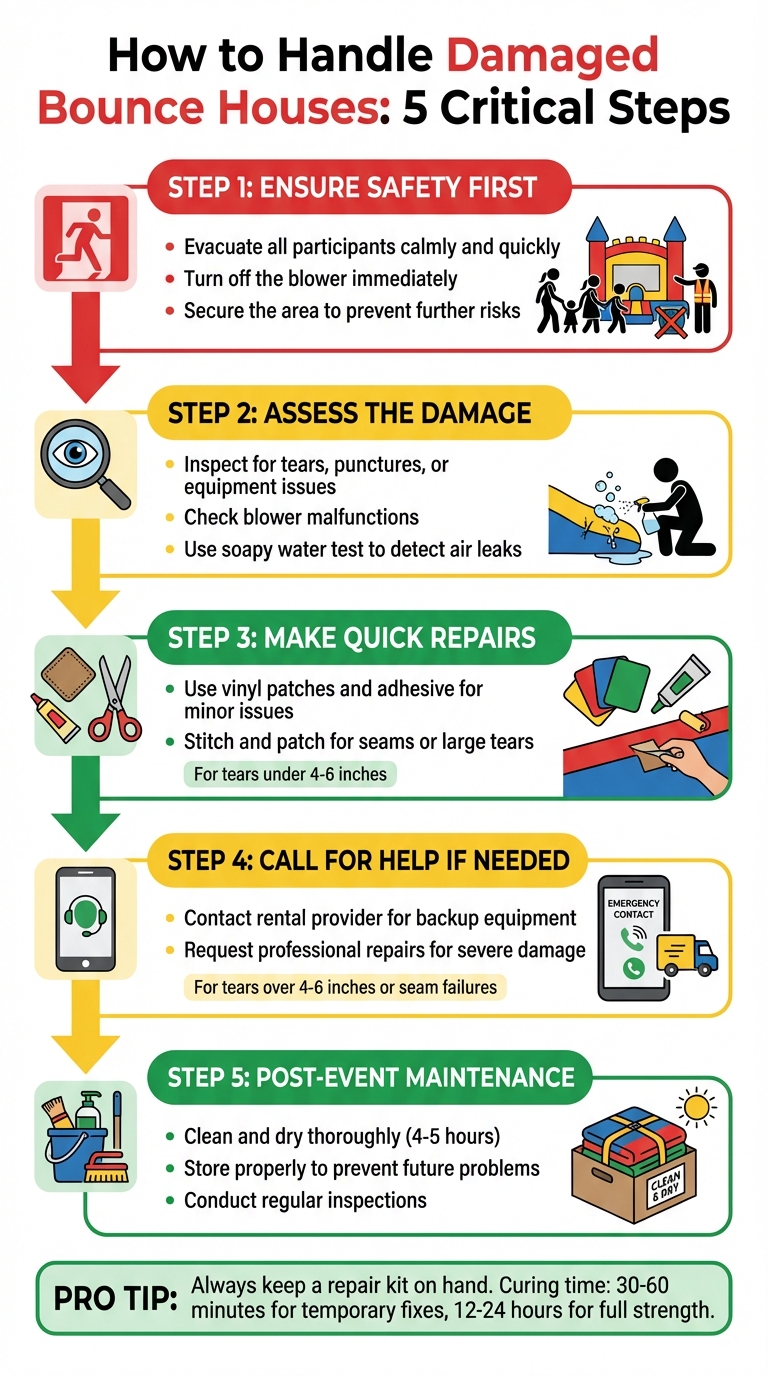
5-Step Emergency Response Guide for Damaged Bounce Houses
Assessing the Damage
When a bounce house isn’t functioning as it should, the first step is to figure out the extent of the problem. Is it a minor tear that can be patched quickly, or a more serious structural issue that requires immediate shutdown? Acting promptly can help prevent further risks.
Checking for Physical Damage
Start with a thorough visual inspection of the inflatable. Pay close attention to high-stress areas like seams and corners, as these spots are more prone to damage. Look for signs such as punctures, tears, worn fabric, loose threads, or frayed material. Double-stitched seams should also be checked for any separation, as these can lead to air leaks and deflation. Don’t forget to examine the netting – sagging, tears, or detachment around entry and exit points can create safety hazards, especially for children.
If leaks aren’t immediately visible, try the soapy water test. Mix dish soap with water, spray it on the inflated surface, and watch for bubbles forming – this will pinpoint where air is escaping. Alternatively, run your hand along the seams and surface to feel for airflow, or inflate the unit in a quiet space and listen for hissing sounds. However, as HeroKiddo explains, "it’s normal to hear some air escaping through the seams or out to the blower, so don’t rely solely on your ears when checking for leaks".
Once you’ve identified the damage, mark the area using a marker, pencil, or chalk to ensure you can find it again after deflation. Pay attention to whether certain sections of the inflatable lose air more quickly than others, as this can signal a significant leak.
After confirming the inflatable’s structural condition, shift your attention to the mechanical systems and anchoring components.
Inspecting the Blower and Anchors
Sometimes, what seems like structural damage could actually be an issue with the equipment. Start by inspecting the blower. Make sure it’s running smoothly and isn’t straining. Check the connection between the blower and the inflation tube for any loose attachments or unusual sounds that might indicate air loss. Also, inspect the inflation tubes and air vents for blockages, and test all valves to ensure they’re maintaining consistent pressure. If the blower stops working, check for a blown fuse or reset the GFCI to get it running again.
Next, examine the anchor points. Ensure all tie-downs, ropes, stakes, and other anchoring materials are secure and free from damage. Proper anchoring and setup are critical to keeping the bounce house stable, especially in windy weather.
Taking Immediate Safety Steps
When damage occurs, the first priority should always be guest safety. Acting quickly and decisively can help prevent injuries and keep the situation under control.
Clearing Everyone Out
If you notice damage or the inflatable starts losing air, evacuate everyone immediately. Don’t stop to investigate the issue – focus on getting participants out safely. As Party Rental Pro advises, "Remain Calm! You will have sufficient time to help the riders to quickly and safely exit the ride. This situation tends to cause panic . . . unless the operator stays calm and relaxed".
Your calm and collected approach will set the tone for everyone else. Head to the entrance and, in a composed manner, explain that it’s time to leave the bounce house. Use clear, reassuring instructions and offer assistance to anyone who may need help. Jungle Jumps suggests, "Gently approach the person and explain that it is time to leave the bounce house. Offer them a hand for support and help them out as quickly and safely as possible".
Once everyone appears to have exited, do a final check. Look through every corner, including tunnels or obstacle areas, to ensure no one is left inside. After confirming the inflatable is empty, focus on securing the area to prevent additional risks.
Shutting Down and Securing the Area
After evacuation, immediately turn off and unplug the blower to stop re-inflation and eliminate any electrical risks. Let the inflatable deflate completely before taking further steps.
If wet conditions are involved, move blowers and cords to a dry location before addressing the area. Set up barriers – like cones, chairs, or ropes – to keep people away from the deflated structure. This minimizes the chance of trips, falls, or further damage. Finally, document the incident thoroughly. Note the time, the type of damage, and any relevant details about how it occurred, so you can provide a full report to the rental provider.
Making Quick Repairs On-Site
Once the area is secure, you can assess the damage and decide if a quick repair is possible. Minor issues can often be addressed on-site, allowing activities to continue with minimal interruption. The trick is having the right tools ready and knowing when a temporary fix will do versus when the situation calls for a full shutdown.
Using a Repair Kit
A well-stocked repair kit is essential for quick fixes. At a minimum, it should include vinyl or PVC patches, industrial-strength vinyl cement (like HH-66 or SX-69), rubbing alcohol, scissors, and a silicone seam roller. These kits are affordable, typically ranging from $10 to $30. As Inflatable Island explains:
Always use vinyl/PVC-specific repair kits – household glue will fail.
To locate a leak, use soapy water to spot escaping air. Once found, deflate the unit and follow a post-cleanup checklist to remove any dirt or oils that might interfere with adhesion. Cut a vinyl patch into a circular or oval shape – rounded edges are less likely to peel over time.
Apply a thin, even layer of vinyl cement to both the patch and the damaged surface. Allow it to sit for 30 seconds to 2 minutes until tacky, then press the patch firmly into place. Use a silicone seam roller to smooth out any air bubbles, working from the center outward. For temporary fixes, vinyl repair tape can hold things together until a more permanent patch is applied.
If the damage involves seams or areas under significant tension, additional steps like stitching and patching will be necessary.
Fixing Seams and Structural Problems
Seam repairs, where panels meet, require extra care since these areas handle a lot of stress. Start by cleaning the damaged seam with rubbing alcohol. Then, use a sewing awl and heavy-duty nylon thread to stitch the torn edges together. Keep the stitches small and even for better durability.
Once stitched, reinforce the area with a vinyl patch that overlaps the seam by at least 1 inch on all sides. Apply vinyl cement to both the patch and the surface, wait for it to become tacky, and press it firmly into place. As Minye Fun advises:
Seam repairs often require accessing both sides of the material… Apply an additional patch over the seam on the exterior for extra reinforcement.
For a stronger bond, gently warm the patch with a hairdryer, which activates the adhesive. Allow the repair to cure for 30–60 minutes before reinflating. This ensures the fix holds up under use.
Backup Options and Getting Help
When on-site repairs fall short, acting quickly and getting professional support becomes essential. Some issues – like large tears (typically over 4–6 inches) or complete seam failures – require more than a quick patch. In these cases, reaching out for professional help promptly is the best way to keep your event on track. This includes pathway planning for bounce house events to ensure emergency crews can access the site without obstacles.
Calling Bouncy Rentals USA
If the damage makes the bounce house unsafe, contact Bouncy Rentals USA right away through their phone line or emergency text service. Be prepared to provide details about the incident. This helps their team assess whether they can guide you through an on-site fix or need to send backup equipment.
Before calling, perform quick checks on power connections and air intake – sometimes minor issues can be resolved on the spot. If the problem persists, Bouncy Rentals USA has a stock of backup inflatables and offers on-site support to replace damaged units or deliver necessary parts like blowers. Their emergency road crew, staffed by experienced professionals, can arrive quickly if the issue can’t be fixed over the phone.
Repair vs. Replacement: What to Choose
Choosing between repairing and replacing depends on safety, time constraints, and the extent of the damage. Small punctures are often manageable with on-site repairs, but keep in mind that adhesives typically require 30 minutes to 1 hour to cure – and up to 12–24 hours for full strength. If your event can’t afford that downtime, switching to backup equipment is the safer and faster option.
| Feature | On-Site Repair Kit | Professional Replacement/Support |
|---|---|---|
| Services Provided | TPU tape, vinyl patches, vinyl cement, a silicone seam roller, and a heavy-duty sewing kit | Backup inflatables, emergency road crew dispatch, and on-site technical support |
| Ideal For | Small punctures, minor leaks, and detached components | Large tears, damaged seams, or mechanical failures |
| Safety/Quality | Temporary fix requiring curing time | Restores the unit to manufacturer safety standards, ensuring both safety and functionality |
Damaged inflatables pose safety risks and increase liability. If you can’t achieve a professional-level repair immediately, replacement is the safer choice. With backup units and contingency plans, Bouncy Rentals USA ensures your event runs smoothly. After addressing the issue, perform final checks and document the repair to help prevent future problems.
After the Event: Inspection and Prevention
After your event wraps up, it’s important to take care of the bounce house properly. A little effort now can help prevent future problems and keep everything in great shape for the next use.
Cleaning and Storage
Start by clearing everyone out, turning off the blower, and removing any debris like toys, leaves, or sharp objects as the unit deflates. Once that’s done, clean the surface with warm water and mild dish soap. Avoid using harsh chemicals or bleach, as they can damage the material.
"If you put the bounce house away while it’s still wet, that moisture has nowhere to go, and you may end up with mold or mildew." – Big and Bright Inflatables
Make sure the unit is completely dry before storing it. Air-dry it thoroughly, ideally in the sun for 4–5 hours. Pay special attention to seams and crevices, blotting away any trapped moisture. Open vent zippers to help release any hidden dampness. Even if the outside feels dry, moisture inside can lead to mold.
Once the bounce house is dry, fold and store the unit properly to avoid creating permanent creases or stress points that could weaken the material. Store it in a cool, dry place inside a storage bag. To prevent moisture issues, keep the bag elevated on pallets or wooden stands instead of placing it directly on a concrete floor. Adding cedar blocks or peppermint oil can also help deter pests like rodents from nesting or chewing on the vinyl.
By cleaning and storing your bounce house properly, you’ll not only keep it in good condition but also extend its lifespan. These steps, combined with pre-event inspections, ensure long-term safety and reliability.
Regular Maintenance Checks
Cleaning is just one part of the equation. Regular inspections are key to catching small issues before they become big problems. A quick 5-minute check before and after each use can help you spot punctures, tears, or signs of wear – especially in high-stress areas and along double-stitched seams. Don’t forget to test the blower motor for steady airflow and any unusual noises.
For more thorough maintenance, follow a tiered schedule: quick daily checks, weekly deep cleanings, and monthly professional inspections for blowers and internal structures. If you’re renting, companies like Bouncy Rentals USA take care of all this for you. Their equipment is professionally maintained, sanitized, and inspected to meet safety standards, so you can focus on hosting a successful event without worrying about upkeep.
Conclusion
When damage occurs, it’s crucial to act fast. Evacuate everyone, shut down the inflatable, and reach out for help immediately. As Party Rental Pro emphasizes:
If the inflatables deflate, or if you experienced any other problems with the equipment, please call Us before allowing or engaging in further use of the bounce house.
Once safety is ensured, you can address minor issues. Small punctures can often be repaired on-site using a vinyl repair kit, but larger tears – anything over 4–6 inches – or seam damage will need professional assistance. Keep in mind that temporary repairs require a curing period of 12–24 hours before the inflatable can be safely reinflated. Hero Kiddo highlights the importance of prompt action:
Timely repairs help prevent accidents and injuries for everyone who uses it.
If on-site fixes don’t suffice, you can count on Bouncy Rentals USA for expert help. Our inflatables are professionally maintained, sanitized, and inspected to meet rigorous safety standards. Whether you need guidance, repairs, or even a replacement unit to keep your event running smoothly, we’re just a phone call away.
Always keep a repair kit on hand, follow your rental provider’s emergency procedures, and never leave a damaged inflatable unattended. With Bouncy Rentals USA, you’ll have the support you need to handle unexpected issues and ensure your guests’ safety.
FAQs
When is damage too serious to keep using the bounce house?
If a tear or hole in a bounce house exceeds 6 inches, the damage is too severe to keep using it. While smaller tears can usually be patched up with DIY repair kits, larger issues are a safety hazard. These should always be assessed and fixed by a professional before the bounce house is used again. Ensuring safety and regular maintenance is essential to keep the inflatable safe for everyone.
What should I do if the blower stops or loses power?
If the blower isn’t working, start by checking the electrical connection. Make sure it’s plugged into a functioning 20-amp outlet. To confirm the outlet is working, test it with another device. If the outlet is fine, examine the circuit breaker and reset it if necessary. Next, inspect the power cord and switch for any visible damage or loose connections. If none of these steps solve the problem, reach out to your rental provider for assistance or look into repairing or replacing the blower.
How can I prevent tears and leaks during an event?
To keep your bounce house in great shape and avoid tears or leaks, make it a habit to check for small rips, weak seams, or punctures – especially after each use. Keeping it clean and dry helps you spot any damage early and prevents mold from forming. Take precautions by avoiding sharp objects, overloading, or improper storage. When it’s not in use, deflate it, give it a good cleaning, and store it in a cool, dry spot to extend its lifespan.