
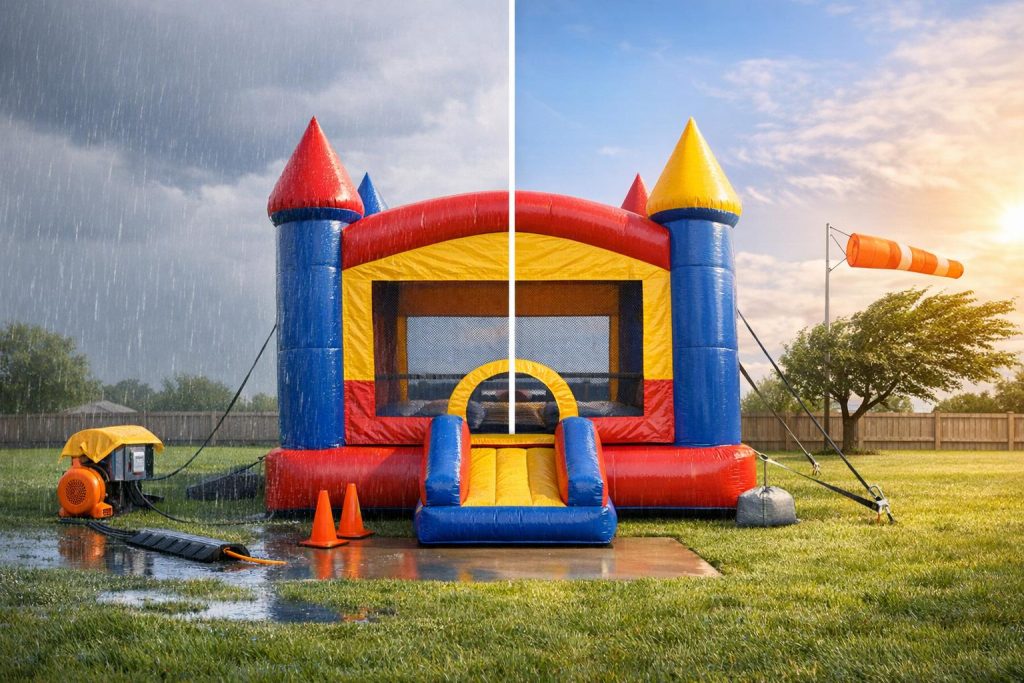
When it comes to inflatable safety, rain and wind are the two biggest weather threats. Rain can create slippery surfaces, damage electrical equipment, and weaken inflatable materials over time. Wind, on the other hand, is far more dangerous – it can destabilize inflatables, tipping them over or even lifting them off the ground, which poses serious risks to participants.
Key Takeaways:
- Rain Risks: Slippery vinyl, water pooling, electrical hazards, and long-term material damage.
- Wind Risks: Tipping, airborne inflatables, and anchor failures even with moderate gusts.
- Safety Tips: Deflate inflatables during heavy rain or winds over 15 mph, use proper anchoring methods, and monitor weather conditions closely.
Rain is manageable with preparation, but wind requires immediate action to avoid accidents. Always prioritize safety by following manufacturer guidelines and staying vigilant about changing weather conditions.
How Rain Affects Inflatables
Rain can significantly impact inflatables, creating challenges that require prompt attention. From slippery surfaces to electrical risks and long-term material damage, even a short downpour can turn a fun inflatable setup into a safety concern.
Slippery Surfaces and Water Pooling
Materials like vinyl and PVC become extremely slippery when wet. This increases the risk of users slipping, especially around entrances and interior walls.
Heavy rain introduces an added problem: water pooling. Rainwater can accumulate inside the inflatable, seeping into seams and weighing it down. This extra weight can cause the structure to sag or tilt, creating a safety hazard. For example, in 2021, a commercial bounce house became waterlogged during a storm, leading to a partial collapse and minor injuries.
These issues not only pose immediate risks but can also lead to further damage to the inflatable, as explained below.
Electrical Equipment Hazards
Rain doesn’t just create physical dangers; it also affects the electrical components that keep inflatables running. Blowers and power cords are particularly vulnerable since they are not waterproof. As one expert puts it:
Water and electricity don’t mix, and a wet blower can malfunction or create a shock hazard.
A damaged blower can cost around $200 to replace. Worse, wet electrical equipment can short-circuit, potentially causing shocks to anyone nearby. Groundwater pooling around extension cords adds another layer of risk, making proper setup and monitoring critical during rainy conditions.
Material Damage from Prolonged Exposure
While commercial inflatables are water-resistant, they’re not fully waterproof. Prolonged exposure to rain allows moisture to seep into seams and air chambers, leading to mold and mildew growth. This not only causes unpleasant odors but also poses potential health risks and can permanently damage the fabric.
Additionally, the weight from pooled water puts stress on the stitching and seams, increasing the likelihood of tears that may require expensive repairs.
Rain may seem harmless at first glance, but its effects on inflatables can be far-reaching, demanding proactive measures to ensure safety and longevity.
How Wind Affects Inflatables
Wind poses a serious threat to inflatables. Their lightweight materials and large surface area make them highly susceptible to the "sail effect." This happens when the structure catches the wind, creating enough lift to overcome its weight – even when it’s securely anchored. Unlike rain, which mainly causes slippery surfaces, wind directly destabilizes inflatables, making it a much greater hazard.
Tipping and Airborne Risks
Even moderate winds can tip or lift inflatables off the ground. The combination of their size and lightweight design means a single gust can send a bounce house airborne, often with participants still inside. This creates a dangerous situation for both users and bystanders, as it can lead to falls and impact injuries.
Anchoring Challenges and Wind Gusts
Anchors are essential for keeping inflatables stable. However, improper anchoring can lead to tipping, even in low wind conditions, as the movement of participants alone can destabilize the structure. When wind gets underneath the inflatable, it can act like a balloon, making it uncontrollable. To be effective, stakes need to be driven at least 75% of their length into the ground. Partially deflated inflatables are even riskier because their loose material catches the wind more easily, behaving like a parachute. These factors highlight the importance of proper anchoring and safety perimeter protocols and strict adherence to wind speed limits.
Safe Wind Speed Guidelines
Most manufacturers recommend a maximum wind speed of 15 mph for safe inflatable use. While ASTM standards sometimes allow operation up to 25 mph, it’s generally safer to stick to the lower limit. As Inflatable Doctor explains:
Winds above 20 mph are considered dangerous for any outdoor inflatable. The risk of the bounce house tipping, moving, or flying away is extremely high, even with proper anchoring. – Inflatable Doctor
At 15 mph winds, it’s crucial to evacuate participants, turn off the blower, and deflate the inflatable. Anchors should remain in place until the structure is fully deflated to prevent it from blowing away during the process.
Rain vs. Wind: Side-by-Side Comparison
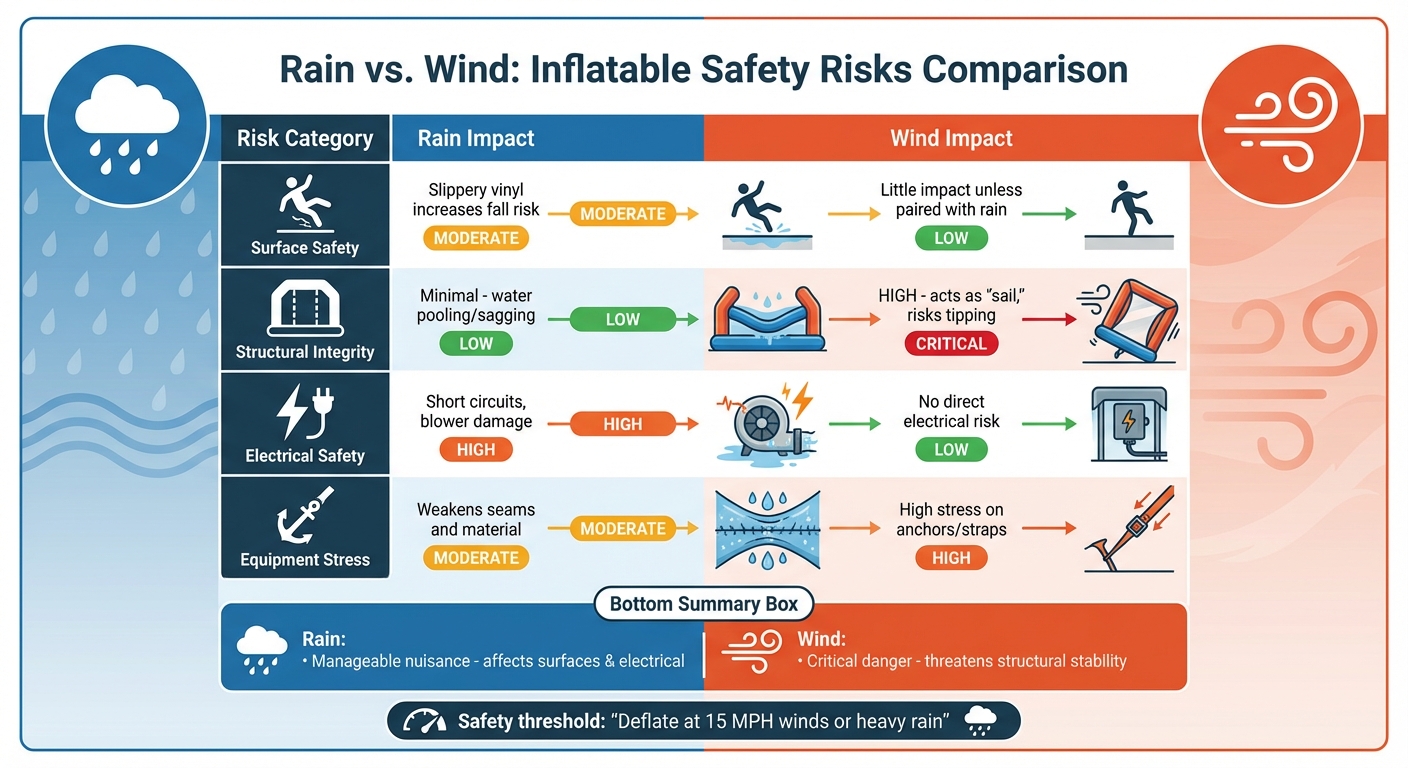
Rain vs Wind Safety Risks for Inflatable Bounce Houses Comparison Chart
After examining how rain and wind impact inflatables individually, here’s a quick comparison of the risks they pose.
Both rain and wind present safety concerns for inflatables, but they do so in different ways. Rain primarily affects surface conditions and introduces electrical hazards – making surfaces slippery and increasing the likelihood of short circuits. On the other hand, wind directly threatens the structural stability of the inflatable, potentially turning it into a "sail" that could tip over or lift off the ground. To put it simply, rain is often a manageable nuisance, while wind can lead to far more dangerous situations.
Risk Comparison Table
| Risk Type | Rain Impact | Wind Impact | Severity Level | Example Incidents |
|---|---|---|---|---|
| Surface Safety | Slippery vinyl increases the risk of falls | Little impact unless paired with rain | Moderate (Rain) / Low (Wind) | Slip-and-fall injuries |
| Structural Integrity | Minimal – water pooling or sagging may occur | High – acts as a "sail", risking tipping | Low (Rain) / Critical (Wind) | Inflatables becoming airborne |
| Electrical Safety | Short circuits or blower motor damage possible | No direct electrical risk | High (Rain) / Low (Wind) | Blower motor failure from water |
| Equipment Stress | Prolonged exposure may weaken seams and material | High stress on anchors and straps | Moderate (Rain) / High (Wind) | Anchoring failures |
This table highlights that rain primarily affects surface safety and electrical components, while wind poses a greater threat to the inflatable’s stability and anchoring.
How to Reduce Rain Risks
Rain doesn’t have to derail your event entirely. With the right preparation and quick action, you can keep your guests safe and protect your equipment from water damage.
Wet/Dry Inflatables and Surface Maintenance
Wet/dry inflatables are designed with waterproof vinyl and reinforced stitching, making them better equipped to handle water exposure. During light rain, use beach towels to wipe away puddles every hour to maintain traction. Pay special attention to high-traffic spots like entrances and interior floors, as these areas can become dangerously slippery when wet.
After the rain stops, elevate one side of the inflatable using an extra blower. This helps pool the water in one spot, making it easier to remove.
Blower Covers and Weather Planning
While the inflatable material itself can handle water, the blowers and electrical cords cannot. These components are not waterproof and can pose serious shock hazards if exposed to rain. To protect them, cover blowers with waterproof tarps or sealed plastic covers, ensuring the air intakes remain open. Alternatively, you can relocate the blower to a sheltered area, such as under a canopy, as long as the hose can still reach the inflatable.
Keep an eye on local weather forecasts. If rain is expected, set up portable shelters in advance. Once the rain ends, leave the inflatable inflated in the sun for 4–5 hours to ensure it dries completely before you properly fold and pack the unit for storage. For heavier rain, immediate deflation may be necessary to avoid additional risks.
When to Deflate During Heavy Rain
Heavy rain requires quick action to prevent water from damaging blowers and power cords, which can lead to electrical hazards. Water buildup also adds weight to the inflatable, which can strain the material and cause it to sag or collapse unexpectedly.
"Turn off the blower immediately: Deflating the bounce house will prevent it from being lifted by the wind. Ensure that all children are safely removed from the inflatable before turning off the blower." – 3 Monkeys Inflatables
Evacuate everyone from the inflatable, turn off the blower, and unplug it immediately. Cover the unplugged blower with a waterproof tarp to protect it from further exposure. Let the inflatable deflate naturally – this reduces the risk of wind catching the material during the process. Even while deflated, keep the unit securely anchored to prevent it from being moved by sudden gusts , especially when setting up on concrete or in public parks.
If lightning is present, follow the 30-30 rule: wait 30 minutes after the last sound of thunder before resuming use. Once the storm passes, dry the inflatable by removing any standing water with towels, reinflate it, and let it air dry for 4–5 hours before allowing use again.
How to Reduce Wind Risks
Wind is one of the biggest safety concerns when it comes to inflatables, but taking the right precautions can make a huge difference.
Secure Anchoring Methods
The first step in wind safety is proper anchoring. On grass or soft soil, use metal stakes that are at least 18 inches long and 1 inch in diameter at every anchor point. Drive them into the ground at a 45-degree angle – this angle provides much better resistance to upward lift compared to stakes installed vertically. On breezy days, regularly test each anchor point by giving it a firm pull to ensure it hasn’t loosened.
For hard surfaces like concrete or asphalt, stakes aren’t an option. Instead, use heavy-duty sandbags, water bags, or water barrels. The amount of weight needed depends on the inflatable’s size, ranging from 360 to 1,500 pounds distributed across all anchor points. Water barrels are particularly convenient since they can be filled on-site and provide substantial weight. Just make sure the straps connecting the barrels to the inflatable are secure.
Grass is the preferred surface because stakes provide a much stronger hold than weights on hard surfaces. No matter the surface, proper anchoring and understanding space and surface requirements are essential for keeping the inflatable stable and safe, setting the foundation for effective wind monitoring and response.
Monitoring Wind Speed and Choosing Locations
For accurate wind readings, use a handheld anemometer instead of relying solely on weather apps. Localized and real-time data is crucial because wind conditions can change quickly and vary even over short distances.
Pay attention to environmental clues like swaying branches or drifting dust – these can signal that wind speeds are approaching the 15 mph limit, at which point operations must stop. When setting up, try to pick locations with natural windbreaks, such as buildings or trees, and avoid wide-open areas where wind can easily catch and lift the inflatable.
Shutdown Procedures for High Winds
Even with solid anchoring and careful monitoring, shutting down promptly is critical when wind speeds exceed safe limits. Once winds hit 15 mph, act immediately. Evacuate participants in a calm and orderly manner to avoid congestion at the exit. Turn off the blower and unplug it, allowing the inflatable to deflate naturally. This prevents the wind from catching and lifting the material during the process.
"Winds exceeding 15 mph are considered unsafe for bounce houses, and they should be deflated and secured if the wind speed reaches this level." – Inflatable Doctor
After deflation, keep the anchoring in place to prevent the inflatable from being displaced. If the wind is accompanied by thunder or lightning, wait at least 30 minutes after the last sign of the storm before resuming use. Before re-inflating, recheck and tighten all stakes or weights to ensure everything is still secure after the shutdown.
Conclusion
Rain and wind pose very different risks when it comes to inflatable safety. Wind compromises structural stability, potentially turning an inflatable into a dangerous sail that can tip, lift, or even go airborne. On the other hand, rain creates slip hazards and electrical risks, especially if blowers or other equipment are exposed. While both demand attention, wind is often the more serious threat to safety.
Recognizing these dangers is the first step toward implementing the right safety measures. Preparation is key to keeping your event safe. Always follow safety guidelines – deflate inflatables when winds hit 15 mph and shut down operations during heavy rain. Secure anchoring systems and real-time weather monitoring are essential to responding quickly to changing conditions. If conditions become unsafe, evacuate the area and deflate immediately.
To simplify these precautions, Bouncy Rentals USA ensures weather safety is never left to chance. Our inflatables are made from 0.4–0.6 mm PVC vinyl with waterproofing rated over 10,000mm, offering durability you can trust. Our trained staff handles setup, uses professional wind monitoring tools, and strictly adheres to a 15 mph wind limit – even if local regulations allow higher thresholds. Fully insured and compliant with ASTM F2374-22 standards, we focus on safety so you can focus on enjoying your event.
FAQs
Can I use a bounce house in light rain?
Yes, you can use bounce houses in light rain, but it requires some extra care. Keep a close eye on the weather, and make sure to dry the surface regularly to reduce the risk of slipping. Also, ensure the blower remains dry to avoid any electrical issues. That said, never use bounce houses in heavy rain or storms – these conditions are dangerous and should be avoided.
How do I know if wind is too strong on-site?
Use a handheld anemometer to check wind speeds at the site. If the wind exceeds 15 mph, take immediate action: evacuate everyone, deflate the inflatable, and secure it properly. It’s important to monitor conditions throughout the event, as sudden gusts can also reach dangerous levels. Acting quickly in these situations helps prevent potential accidents.
What’s the safest way to deflate in bad weather?
To safely handle inflatables during bad weather, start by turning off the blower and ensuring all participants exit the inflatable. If winds exceed 15 mph, deflate the inflatable immediately to avoid tipping or lifting hazards. In cases of heavy or continuous rain, either cover the inflatable or deflate it to protect its components, even though the blower can tolerate light rain. Acting quickly reduces risks and helps prevent potential damage.
