
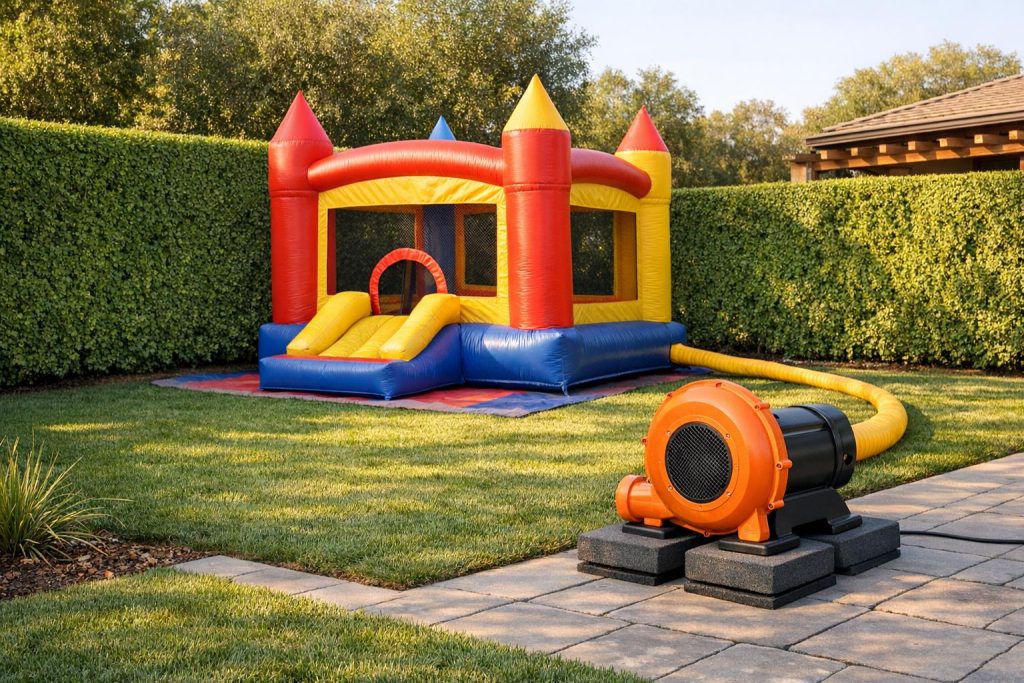
Reducing bounce house noise is easier than you might think. The constant hum from the blower can be distracting, but with a few simple adjustments, you can make your event quieter and more enjoyable. Here’s how:
- Use the Right Blower Size: Match the blower’s power to the bounce house size. For example, a 1 HP blower is sufficient for most 12’x12′ inflatables, keeping noise at around 75 dB.
- Adjust Blower Placement: Move the blower further from guests, ideally behind the bounce house, to naturally lower perceived noise levels.
- Add Sound Barriers: Use acoustic blankets, foam padding, or build a sound-dampening enclosure to reduce noise from the blower.
- Reduce Vibrations: Place vibration-reducing pads under the blower to minimize sound transmission.
- Rent Quieter Equipment: Look for low-noise blower models when renting or buying equipment to keep noise levels manageable.
These steps not only reduce noise but also ensure the bounce house remains safe and functional. Whether it’s a backyard party or a larger event, combining these methods can keep the fun going without the unwanted hum.
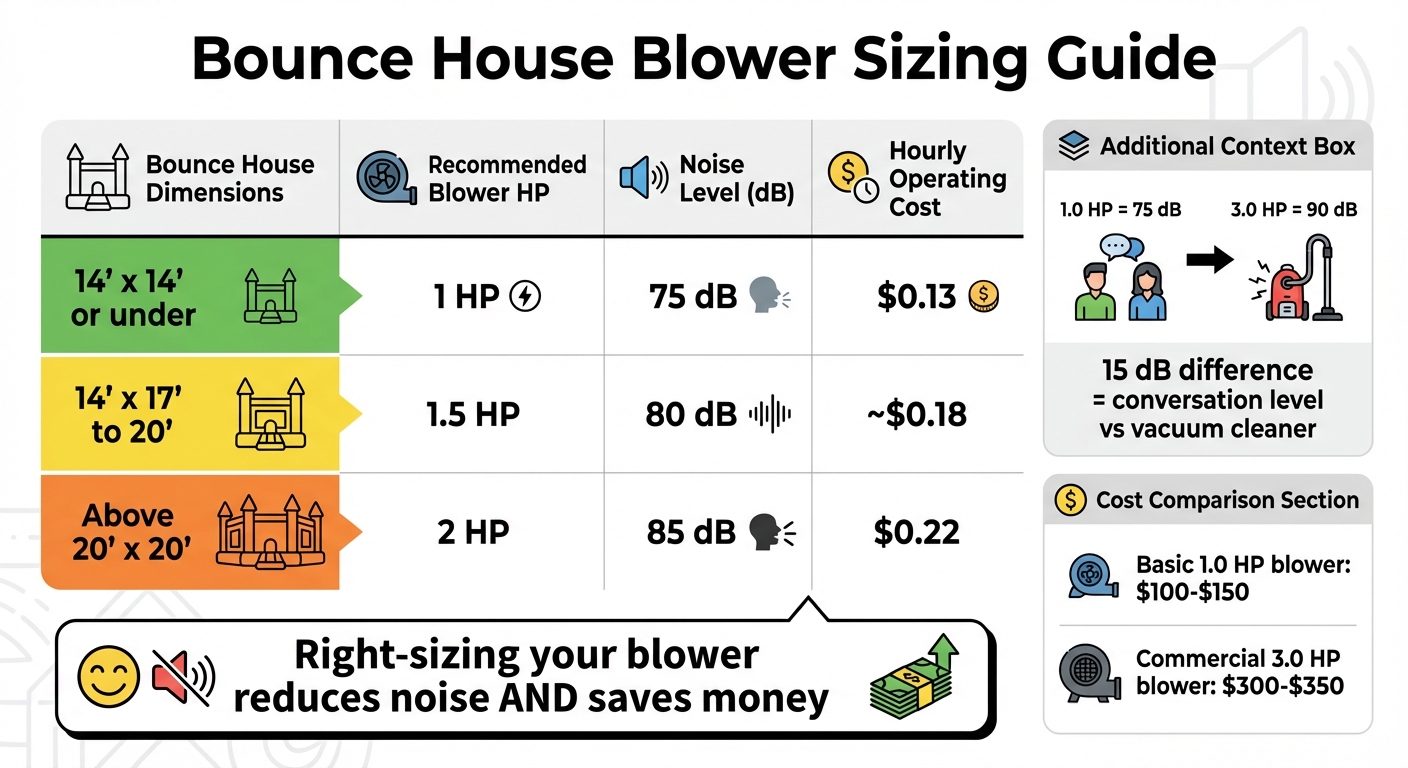
Bounce House Blower Sizing Guide: Noise Levels and Operating Costs
1. Adjust Blower Power Settings
Noise Reduction Effectiveness
The power of your blower has a direct impact on noise levels. For example, a 1.0 HP blower operates at around 75 dB, while a 3.0 HP blower can hit 90 dB. That 15-decibel jump may not sound like much, but it’s the difference between normal conversation and the constant hum of a vacuum cleaner – definitely not ideal for backyard events or keeping the neighbors happy.
Choosing the right blower size for your bounce house can help keep noise under control. A 1 HP blower is perfect for a 14′ x 14′ unit, keeping noise at 75 dB compared to the louder 90 dB from higher-powered models. It’s not just about noise, though – this setup also saves on operating costs, cutting expenses from $0.22 per hour with a larger blower to just $0.13 per hour.
Ease of Implementation
If your blower is too powerful for your bounce house, there’s a simple fix: use an airflow regulator. This handy device lets you lower the power without having to replace your equipment. Alternatively, many newer blowers come with built-in adjustable airflow settings, allowing you to fine-tune inflation pressure to match your exact needs.
After making adjustments, always check the bounce house walls. They should feel firm but have a slight give. If they’re too soft or sagging, you’ve reduced the power too much, which could lead to safety issues. This approach works well alongside other noise-reducing strategies we’ll cover later.
Cost Considerations
Using the right blower size isn’t just quieter – it’s more economical. A basic 1.0 HP blower typically costs between $100 and $150, while commercial-grade 3.0 HP models are priced around $300 to $350.
| Bounce House Dimensions | Recommended Blower HP | Noise Level | Hourly Operating Cost |
|---|---|---|---|
| 14′ x 14′ or under | 1 HP | 75 dB | $0.13 |
| 14′ x 17′ to 20′ | 1.5 HP | 80 dB | ~$0.18 |
| Above 20′ x 20′ | 2 HP | 85 dB | $0.22 |
2. Build Sound-Dampening Enclosures
Noise Reduction Effectiveness
Enclosing your blower can make a big difference in cutting down noise. David Watkinson, an Acoustical Sales Consultant, explains that increasing the distance between the sound source and the listener can reduce noise by 6dB, and adding a physical barrier can lower it even more. He points out:
A tall fence lined with PrivacyShield® ABBC-13 EXT Exterior Soundproofing Blankets effectively reduces noise.
To achieve this, you can use a tall fence or a portable barrier covered with acoustic blankets. For a more permanent solution, consider building a specialized enclosure using materials like Green Glue Noiseproofing Compound and soundproofing composite foam. Temporary setups can benefit from exterior soundproofing blankets as well. Let’s look at how you can easily apply these methods.
Ease of Implementation
Setting up a basic barrier is fairly simple. For instance, you can drape acoustic blankets over an existing fence near the blower. If you’re going for a custom enclosure, use soundproofing materials specifically designed for noise reduction. However, don’t forget about ventilation. Before starting any construction, it’s important to check with your blower manufacturer to ensure you provide the right amount of air space for safe operation.
Impact on Bounce House Functionality
Ventilation is key when it comes to blower enclosures. These machines produce a lot of heat during use, and blocking airflow can lead to overheating, damage to the equipment, or even void your warranty. Jump N Slide Texas emphasizes:
Keep blower dry and ventilated.
To avoid issues, make sure your enclosure includes proper intake and exhaust openings. This will not only prevent overheating but also ensure the bounce house stays fully inflated and safe for everyone to enjoy.
3. Position Blowers Away from Guests
Noise Reduction Effectiveness
Another effective way to reduce noise is by simply moving the blower farther away from the gathering area. The further the blower is from your guests, the quieter it will seem – thanks to natural sound dissipation. Since blowers vary in noise levels depending on their horsepower, this small adjustment can make a noticeable difference.
The best spot for the blower is at the rear of the bounce house, where the inflation tube connects. This placement allows the inflatable itself to act as a sound barrier, muffling some of the noise. For indoor setups, you can get creative by extending the blower into a nearby doorway or even a closet to add more distance. Bounce Insider explains:
The air blower can sometimes take a few feet stretched out taut in order for the blower to inflate the bounce house correctly. In our own house, we have had to get creative with extending the blower into a doorway or closet to obtain the added distance.
Ease of Implementation
This method is straightforward but requires careful attention to safety. Use a heavy-duty 12- or 14-gauge extension cord, no longer than 50 feet, to prevent voltage drops and keep the blower running safely.
If the blower needs to be positioned farther than 50 feet, opt for a portable generator (at least 2,000 watts) instead of adding more extension cords. Be sure the new location is flat, free of debris, and allows for adult supervision to ensure proper ventilation and a secure connection. After setup, press down on the bounce house to confirm it holds weight without collapsing – this ensures the blower is providing adequate airflow even at a greater distance. When combined with other sound-reducing strategies, this approach can significantly lower noise levels while maintaining safety.
Cost Considerations
Repositioning the blower is a budget-friendly solution if you’re working within the 50-foot extension cord range. A high-quality 12-gauge outdoor extension cord typically costs between $20 and $40 at most hardware stores. If you need to go beyond 50 feet, renting a generator is an affordable option, with prices averaging around $59.00. As for ongoing costs, a standard blower uses only about $0.13 of electricity per hour, so the financial impact remains small no matter where you place it.
Impact on Bounce House Functionality
Proper power delivery is key when increasing the distance. Blowers can draw up to 17 amps at startup before settling to around 7 amps during regular operation. Avoid using long or thin extension cords, as they can cause voltage drops and damage the blower’s motor. Maintaining consistent power not only protects the blower but also ensures the bounce house stays fully inflated and safe to use. Keep the inflation tube taut and free of kinks to maintain steady airflow. A partially deflated bounce house is a clear sign of a power issue or blower malfunction, which could make the unit unsafe. Proper positioning and power management ensure both quieter operation and reliable performance.
4. Add Foam or Acoustic Padding
Noise Reduction Effectiveness
Adding foam or acoustic padding around your blower can significantly cut down on noise. Placing vibration-reducing pads – made from materials like neoprene, cork, or rubber – directly under the blower helps isolate it from hard surfaces. This minimizes both sound and vibration transmission. Soundproofing expert Ryan Yaukey explains:
Rubber grommets will function as a barrier between your air compressor and the surface it rests on to absorb vibrations.
Acoustic foam panels or sound-absorbing insulation can also help by reducing noise reflections from nearby walls or hard surfaces. Studies show that using 6 inches of sound-absorbing material can improve sound insulation ratings by about 8 points. If you’re looking for a budget-friendly option, heavy blankets can be wrapped around the unit. According to Soundproof Cow, blankets not only reduce vibrations but also prevent noise from escaping. They are especially effective at dampening high- and mid-range frequencies.
Ease of Implementation
Using vibration-reducing pads is a straightforward fix – just lift the blower and slide the pads underneath. If you decide to build a padded enclosure, make sure the intake and exhaust openings are clear to maintain proper airflow. Ventilation is key; without it, the blower could overheat. To avoid this, regularly monitor the blower’s temperature and ensure airflow remains unrestricted. This method works well alongside other noise reduction strategies, ensuring the blower operates safely and efficiently.
Cost Considerations
Noise reduction doesn’t have to break the bank. Vibration-reducing pads are a budget-friendly option, and heavy blankets can be a cost-effective DIY solution. If you prefer ready-made products, soundproof blower boxes can be purchased for about $50.00. For even more noise reduction, specialized inflatable blower silencers – like those offered by Dodo Inflatables – are available for around $100 and can lower noise levels by approximately 5 decibels.
Impact on Bounce House Functionality
Maintaining proper airflow is critical for bounce house safety. Blowers need to move at least 350 cubic feet of air per minute (CFM) to keep the structure fully inflated. Any padding or enclosure that blocks the intake or exhaust could reduce airflow, leading to a soft or unstable bounce house. Specialized acoustic silencers and soundproof boxes are designed to tackle noise without compromising performance. As Dodo Inflatables notes:
The silencer does not affect the performance of the blower and ensures an efficient air supply for the inflatable.
After installing sound-dampening measures, always check the firmness of the bounce house walls. Press on them to ensure they’re firm; if they feel soft or saggy, airflow may not be sufficient.
5. Rent Quieter Equipment
Noise Reduction Effectiveness
Choosing a quieter blower can make a world of difference when it comes to reducing noise levels. Look for models rated between 75 dB and 80 dB, which are perfect for residential events or smaller gatherings where a quieter atmosphere is preferred. As Pogo Bounce House points out:
Usually a higher horsepower rating means the blower will be louder, too.
By opting for a blower within this noise range, you can create a more enjoyable environment for your guests without the distraction of excessive noise.
Ease of Implementation
When renting equipment, let the rental company know you’re looking for low-noise options. They can help you find a blower that matches the size of your inflatable while keeping noise to a minimum. Pogo Bounce House highlights the importance of this:
You’ll be gobbling up more electricity for no reason and creating lots of noise you wouldn’t need to listen to otherwise.
This step works well alongside other noise-reducing measures and ensures a smoother setup for your event.
Cost Considerations
Balancing cost with quieter operation doesn’t have to be complicated. Basic inflatable rentals typically range from $200 to $500, while larger, custom designs can go up to $3,000. As for operating costs, a 1 HP blower costs about $0.13 per hour to run, compared to $0.22 per hour for a 2 HP model. If you’re renting from companies like Bouncy Rentals, ask about the specific blower models they use. Requesting a lower-horsepower option could save you money while keeping noise levels down, provided it meets the needs of your inflatable.
Impact on Bounce House Functionality
Quieter blowers are generally better suited for smaller inflatables. To ensure safety and firmness, make sure the blower’s capacity aligns with the bounce house specifications. For instance, a 1.0 HP blower is sufficient for keeping a small residential bounce house firm and operates at around 75 dB. Most standard inflatables take just 3 to 5 minutes to inflate and can safely accommodate 8–10 children, supporting a total weight of about 1,000 pounds. Matching the blower to the inflatable ensures both safety and a quieter experience.
Conclusion
Reducing bounce house noise doesn’t have to be complicated or expensive. The simplest and most effective step is choosing a blower that matches the size of your inflatable. For instance, a 1 HP blower works perfectly for a standard 12′ × 12′ bounce house. On the other hand, a 2 HP blower not only creates unnecessary noise but also offers no additional benefits.
Proper placement of the blower can also make a big difference. Setting it at least 15 feet away from your guests helps naturally reduce the sound. For events in areas with stricter noise regulations, you can go a step further by adding foam padding around the blower or creating a simple sound-dampening enclosure.
If these measures aren’t enough, professional rental services can provide quieter, tailored solutions. For example, Bouncy Rentals helps ensure you get the right blower for your inflatable, avoiding the noise issues caused by oversized equipment. Additionally, rental companies maintain their equipment well, which often results in quieter operation compared to older, poorly maintained units.
To sum it up, you can significantly lower noise levels by combining the right blower size, thoughtful placement, and optional acoustic enhancements. For a backyard birthday party, simply placing the blower correctly and using appropriately sized equipment might suffice. However, larger events like school carnivals may benefit from additional noise-dampening measures.
The key takeaway? Avoid using a blower that’s too powerful for your needs. As Pogo Bounce House puts it:
A larger blower… will be gobbling up more electricity for no reason and creating lots of noise you wouldn’t need to listen to otherwise.
Start with the basics – proper sizing and placement – and add more noise-reduction strategies as needed.
FAQs
How do I choose the right blower size for my bounce house?
To pick the right blower for your bounce house, you’ll need to match its horsepower (HP) or cubic feet per minute (CFM) rating to the size of the inflatable. For smaller bounce houses, such as 9-foot models, a 1 HP blower (roughly 300 CFM) usually does the job. Medium-sized inflatables, measuring between 10 and 13 feet, typically require a 1.5–2 HP blower (about 400–600 CFM). For larger commercial units over 13 feet, you’ll need a 3 HP blower or higher, delivering approximately 800 CFM.
Another important factor to check is the blower’s amperage rating – make sure it works with your electrical outlet to prevent any power issues. If you’re renting a bounce house, companies like Bouncy Rentals USA often supply the appropriate blower, so you won’t have to worry about choosing the right size yourself!
What materials work best for reducing bounce house blower noise?
To cut down on the noise from a bounce house blower, try using dense acoustic blankets made of fiberglass, mineral wool insulation, or mass-loaded vinyl. These materials work well to absorb sound and lower noise levels. For extra noise control, consider surrounding the blower with an enclosure lined with acoustic foam panels. These solutions can help keep the party atmosphere lively without the distraction of loud blower noise!
How can the placement of a bounce house blower help reduce noise at an event?
Positioning the blower further from the main gathering area can help cut down on noise by adding distance between the sound source and your guests. To take it a step further, you could place the blower in a separate, insulated spot or behind something that absorbs sound, like a fence or a row of hedges. These simple tweaks can keep distractions to a minimum, ensuring your guests enjoy the event while the bounce house operates seamlessly.
