Throwing a gymnastics-themed party can be fun, but safety should always come first. Here’s how to ensure a secure and enjoyable event:
- Proper Setup: Use a flat, level surface for equipment. Anchor inflatables with stakes (18 inches deep) or sandbags, depending on the location.
- Supervision: Assign adults to monitor activities. Enforce rules like one person at a time on equipment and no rough play.
- Weather Awareness: Avoid using inflatables in wind over 15–20 mph or during rain. For hot days, ensure surfaces are cool and provide shade.
- Cleanliness: Sanitize equipment before and after use to prevent germs and mold.
- Age Groups: Separate kids by age to match their skill levels and reduce risks.
Partnering with experienced rental companies ensures equipment is insured, sanitized, and set up correctly. Follow these tips to keep the party safe and fun for everyone.
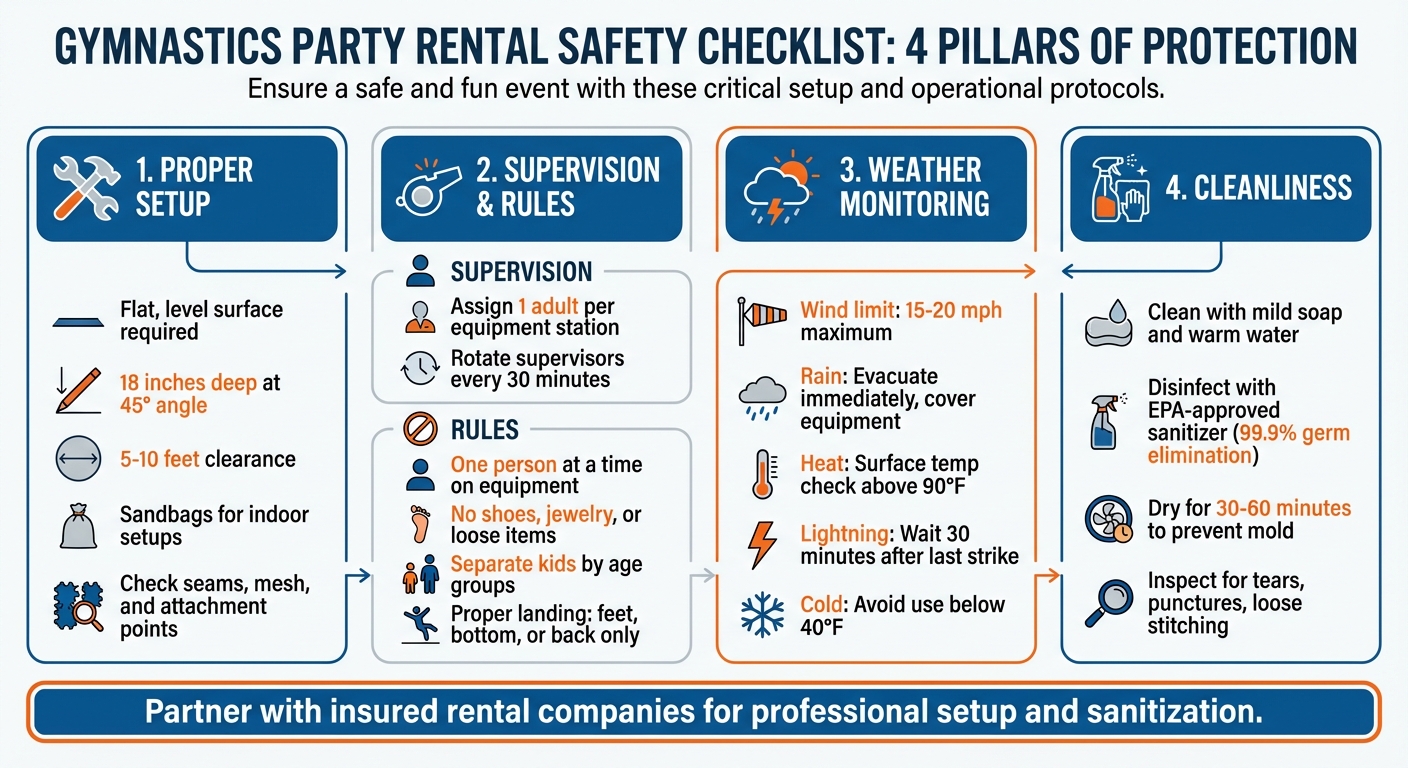
Essential Safety Checklist for Gymnastics Party Rentals
Setting Up Gymnastics Equipment and Inflatables Correctly
Getting the setup right is a critical part of ensuring safety at gymnastics parties. Many accidents stem from improper setup, like inflatables not being anchored securely or placed on uneven ground. These mistakes can lead to tipping, sliding, or even the inflatable lifting off the ground during use. A proper setup creates the stability needed for a safe and enjoyable experience.
Selecting the Right Surface
The foundation matters – flat, level ground is a must for gymnastics equipment and inflatables, though you can set up on concrete or in parks with the right precautions. Uneven surfaces can shift the center of gravity, making the equipment lean or creating gaps that could trip kids. Outdoors, grass is ideal because it allows for secure staking. Indoors, level gym floors work best, especially if they have non-slip properties or are covered with protective tarps to keep equipment from moving during play.
Before setting up, inspect the area for debris or hidden hazards. Look out for things like sprinkler heads or holes that might be hidden by grass. Also, keep a safety perimeter of 5–10 feet clear of obstacles to ensure kids have plenty of room to play.
Anchoring Equipment Properly
Once the surface is ready, anchoring the equipment securely is the next step. Strong winds – around 15–20 mph – can lift an inflatable that isn’t properly anchored, potentially carrying it a significant distance with participants inside. To prevent this, use every manufacturer-specified anchor point. For outdoor setups on grass, drive heavy-duty steel stakes (at least 18 inches long) fully into the ground at an angle away from the inflatable to maximize stability.
For indoor setups or when stakes aren’t an option, rely on heavy-duty sandbags or water weights that meet the manufacturer’s weight requirements for each anchor point. Ensure blowers are placed on dry, level surfaces with their intakes unobstructed by debris, like leaves or loose clothing, which could cause hazards.
Pre-Use Equipment Inspection
Before anyone starts using the equipment, a detailed inspection is essential. Check all seams, mesh netting, and attachment points for any signs of wear, such as "stress whitening", tears, or loose stitching. Make sure all zippers and air-release vents are fully closed, and confirm that the inflatable has reached full pressure. For gymnastics setups, place landing mats directly under apparatus and secure them with hook-and-loop connectors. This final check is crucial for catching potential issues before they lead to injuries.
Supervising Participants and Managing Activities
Even with a well-organized gymnastics setup, keeping everyone safe requires active supervision. Overcrowding, roughhousing, or kids attempting skills beyond their abilities can lead to accidents. To minimize risks, designated adults need to monitor activities closely and enforce local safety rules.
Setting Clear Safety Rules
Before the fun begins, gather everyone for a quick safety talk. Stress the importance of using equipment one person at a time – whether it’s a trampoline, balance beam, bar, or slide – to avoid collisions. Make it clear that rough play, like wrestling or double bouncing, is not allowed, and remind kids to walk – not run – between stations.
Ask participants to remove shoes, jewelry, and loose items before entering the play area. A socks-only rule works well to protect both the kids and the equipment, though rubber-soled gymnastics shoes may be allowed on beams. Teach proper landing techniques: feet, bottom, or back only – no headfirst, prone, or knee-first landings. For foam pits, ensure kids exit immediately after landing to keep the area clear and safe.
Combining clear rules with attentive supervision creates a controlled and enjoyable environment.
Designating Adult Supervisors
Assign adults to specific activity stations and rotate them every 30 minutes to keep supervision sharp. In professional settings, at least half of the staff on duty should be First Aid-certified. Supervisors should enforce rules, watch for signs of fatigue or unsafe behavior, and assist younger kids when they need help with equipment.
Grouping Children by Age
Separating kids by age helps prevent injuries caused by differences in size and strength. For example, equipment like "preschool rings" is best suited for children aged 7 and under. Additionally, assess children under 5 to ensure they’re ready to participate. Organizing groups by age ensures everyone can enjoy activities at a pace and skill level that matches their abilities.
Planning for Weather Conditions
Hosting an outdoor gymnastics party comes with its share of weather-related challenges. From sudden wind gusts to heatwaves, understanding how to prepare for and respond to these conditions ensures a safe and enjoyable experience for everyone.
Managing Wind Safety
Wind is one of the most significant hazards for inflatables. Because of their design, inflatables can act like sails, making them prone to lifting or tipping – even when weighted down properly. Wet ground from recent rain can further weaken stakes, reducing their ability to hold the structure securely.
"The structure of a bounce house, with its large surface area and lightweight materials, makes it highly susceptible to the effects of wind."
– Inflatable Doctor
Inflatables should never be used when wind speeds exceed 15–20 mph. At wind speeds over 20 mph, the risk of the inflatable becoming airborne is extremely high, regardless of how well it’s anchored. A portable wind meter is a must-have for accurate, on-site readings – don’t rely solely on general weather forecasts.
"If you see branches moving or dust blowing around, that’s usually a sign of 15+ mph winds. Trust your gut – if it feels too windy, it probably is."
– Hero Kiddo Inflatables
If the wind suddenly picks up, evacuate participants immediately. Turn off and unplug the blower, allowing the inflatable to deflate safely. Always follow anchoring instructions provided by the manufacturer to minimize risks.
In addition to wind, rain and extreme temperatures can also create hazards that require quick action.
Handling Rain and Heat
Rain calls for immediate attention. As soon as it starts raining, clear the inflatable of participants, switch off the blower, and cover it with a waterproof tarp. Before resuming use, make sure all equipment is completely dry – wet vinyl becomes slippery and increases the risk of accidents.
If there’s lightning or thunder, shut down all equipment and move everyone to a safe indoor space, such as a building or vehicle. Wait at least 30 minutes after the last sign of lightning before restarting.
High temperatures bring their own risks. When the temperature climbs above 90°F, the surfaces of inflatables can become dangerously hot, potentially causing burns. Use the back of your hand to test the surface – if it’s too hot for you, it’s too hot for kids. Provide shaded areas with tents or umbrellas, encourage frequent water breaks, and consider deflating equipment if it gets too hot to use. On the flip side, cold temperatures below 40°F can make vinyl brittle and prone to cracking, so avoid using inflatables in such conditions.
When outdoor weather becomes too unpredictable, having an indoor backup plan is essential.
Preparing Indoor Backup Options
A solid Plan B is critical. Gymnasiums, garages, or similar indoor spaces can serve as excellent alternatives for setting up gymnastics inflatables and equipment. When renting equipment, ask about units designed for both indoor and outdoor use.
"For winter events, some commercial bounce houses can be used indoors (like in a gym or garage). Just make sure the space is heated enough to keep the vinyl flexible."
– Hero Kiddo
Before the event, inspect your backup location to ensure it meets basic safety requirements. Check for adequate ceiling height, sufficient floor clearance, and a temperature of at least 50°F to keep the vinyl flexible and operational. Also, be cautious when moving electrical components indoors – ensure blowers and cords remain completely dry.
Maintaining Cleanliness and Equipment Condition
Keeping equipment clean is essential for ensuring the health and safety of children at your gymnastics party. Plus, proper care can extend the life of rental inflatables by 3–5 years.
Following Sanitization Procedures
After every use, start by cleaning inflatables thoroughly. Remove debris first, then scrub the surface with mild dish soap and warm water using a soft brush or microfiber cloth. Avoid harsh cleaning products like bleach or ammonia-based cleaners, as well as pressure washers, since these can damage the vinyl coating and weaken seams.
Once washed, use an EPA-approved disinfectant that eliminates 99.9% of germs. This step is crucial for neutralizing pathogens, including viruses like COVID-19, without harming the material.
"Cleaning and sanitizing bounce houses aren’t just about appearance – it’s about safety and health."
– 3 Monkeys Inflatables
After sanitizing, run the blower for 30–60 minutes to ensure the inflatable is completely dry. Moisture left behind can lead to mold growth within 24–48 hours, potentially causing damage and requiring early replacements.
Checking Equipment After Events
Once the event is over, inspect the inflatables while they’re still inflated. Look for tears, punctures, loose stitching, or worn anchor points that might need immediate repair. Pay attention to D-rings and tie-down webbing, checking for fraying or stretching.
"Small problems caught early are $10 patches; ignored problems become $500 repairs."
– Reservety
Don’t forget to examine accessories like blowers, intake screens, vents, and zippers for any signs of wear or damage. Regular inspections help ensure the equipment stays in top condition and meets safety standards.
Working with Reliable Rental Companies
Partnering with reputable rental companies makes a big difference. Professional providers use digital inventory systems to track maintenance, log equipment conditions, and flag items needing repairs. They also train their staff on proper procedures for folding, drying, and inspecting inflatables to keep them safe and ready for use.
At Bouncy Rentals, every piece of equipment is thoroughly sanitized, and we maintain detailed cleaning logs to ensure you receive safe, hygienic products. Our team follows strict protocols to dry, inspect, and prepare inflatables for your event.
Before you accept delivery, take a moment to perform a quick check. Run your hand along the seams and stitching – if you feel any dampness or notice a musty smell, it could be a sign that the unit wasn’t dried properly and may be at risk for mold.
Conclusion
Throwing a safe gymnastics-themed party boils down to four key elements: proper equipment setup, active supervision, weather monitoring, and strict hygiene practices. When these factors come together, kids can enjoy flipping, bouncing, and playing in a secure environment.
Here’s a quick rundown of the essentials. First, make sure inflatables are anchored securely – stakes should be driven at a 45-degree angle, at least 18 inches deep, on a level, padded surface with a 5-foot safety zone around them. Assign an adult to supervise each major piece of equipment, ensuring capacity limits and appropriate age groupings are followed [4, 17]. Stay mindful of weather conditions; if wind speeds hit 15–20 mph, deflate the equipment to prevent accidents [4, 17].
As Titan Inflatables emphasizes:
"Safety is the cornerstone of a successful inflatable rental business. Ensuring that every event is a safe environment for participants not only protects your clients but also safeguards your business from potential liabilities."
– Titan Inflatables
Partnering with a reliable rental company adds an extra layer of security. Reputable providers like Bouncy Rentals offer at least $1,000,000 in liability insurance, conduct pre-event site inspections, and follow a sanitization checklist for equipment between rentals. They typically arrive 60 to 90 minutes before the event to perform safety checks and handle setup.
Before booking, confirm details like insurance coverage, cleaning protocols, and setup logistics (including power sources and any overhead hazards). These steps ensure your party is not just fun but also safe for everyone involved.
FAQs
How much space do I need around the inflatable?
To keep things safe, make sure there’s 5 to 10 feet of clear space around the inflatable. This extra room is important for setting it up properly, supervising the area, and allowing kids to get in and out safely. Plus, it reduces the risk of accidents and ensures there’s enough space for emergency access if something goes wrong.
What should I ask the rental company before booking?
Before you book a gymnastics party rental, it’s important to ask about their safety measures and equipment inspection routines. Find out if they routinely check and maintain items like beams, vaults, bars, mats, and inflatables to ensure they’re in top condition. Also, ask whether they provide clear setup supervision guidelines and safety instructions for participants. Don’t forget to confirm their sanitation practices to keep the environment clean and safe. Covering these bases will help ensure everyone has a fun and secure experience.
What should I do if the weather suddenly changes?
If the weather takes an unexpected turn during a gymnastics-themed party, safety should come first. Start by deflating and securing any inflatables to avoid potential accidents. Keep a close eye on the conditions, and if severe weather – like high winds or thunderstorms – arises, move the activities indoors or consider rescheduling. Make sure all equipment is safely stored, and supervise children closely during the transition to ensure everyone stays safe.