Water inflatables are fun but can become breeding grounds for bacteria, mold, and germs if not properly maintained. Cleaning removes visible dirt like mud and sunscreen, while sanitizing targets harmful pathogens. Both steps are necessary to ensure safety, especially after heavy use or exposure to illness.
Key Takeaways:
- Cleaning: Removes dirt, oils, and debris using soap and water. Essential before sanitizing.
- Sanitizing: Reduces bacteria and viruses using EPA-approved disinfectants. Crucial after group events or if illness is suspected.
- Moisture and warmth increase risks of contamination, making thorough cleaning and drying vital after every use.
Quick Tips:
- Use mild soap and vinyl-safe cleaners for cleaning.
- Apply disinfectants with proper contact time (5–10 minutes) for sanitizing.
- Dry inflatables completely to prevent mold or odors.
- For group events, always sanitize between uses.
Professional rental companies like Bouncy Rentals USA ensure inflatables are cleaned, sanitized, and dried after every rental to maintain safety and hygiene. Always ask about cleaning protocols when renting equipment.
Cleaning vs. Sanitizing: Key Differences
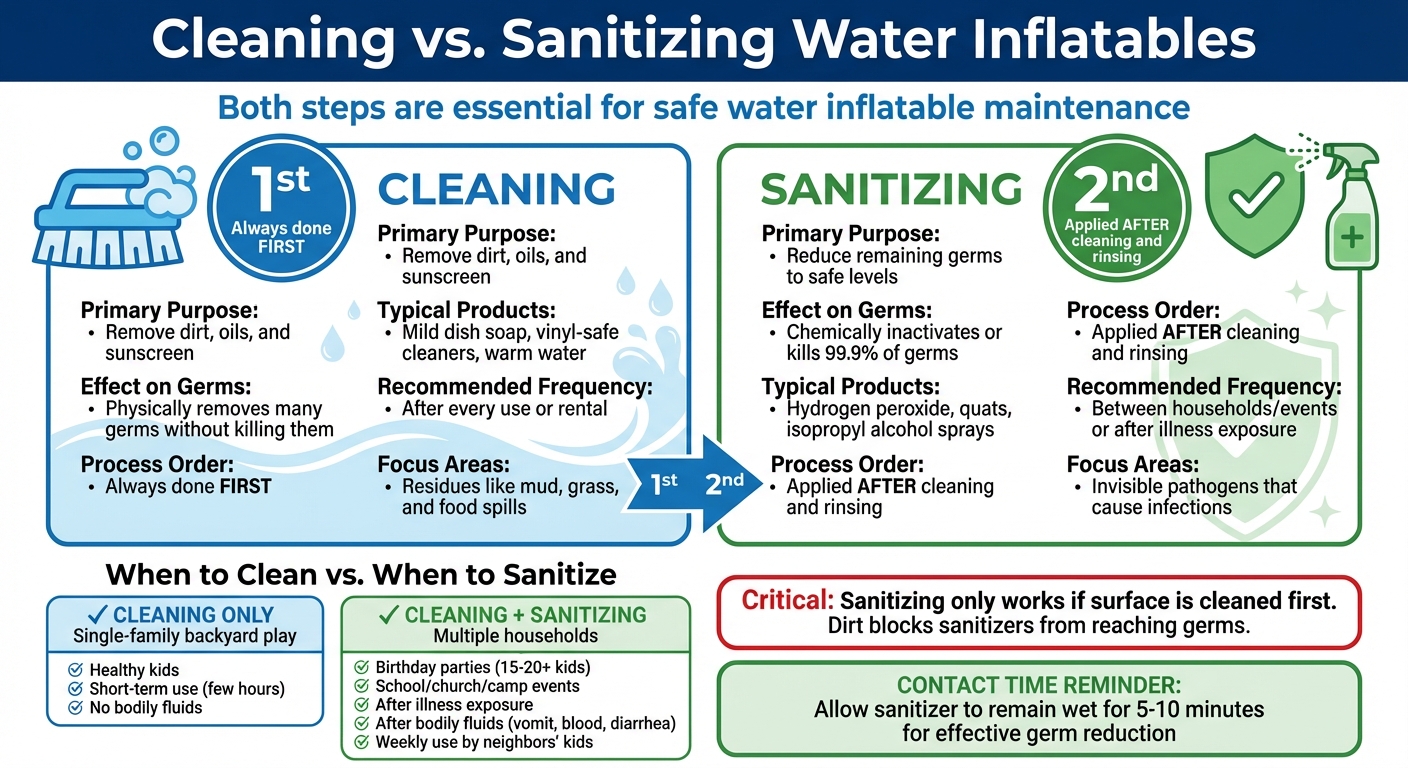
Cleaning vs Sanitizing Water Inflatables: Key Differences and When to Use Each Method
Cleaning and sanitizing play distinct roles in maintaining the safety of water inflatables. Cleaning involves using soap or a vinyl-safe cleaner with water to physically remove visible dirt, oils, sunscreen, grass, mud, and other debris from the surface. While this process washes away some germs, it doesn’t reliably eliminate most microorganisms.
Sanitizing, on the other hand, targets the germs left behind after cleaning. This step uses an EPA-approved disinfectant to reduce bacteria and viruses to levels deemed safe by public health standards. According to the Minnesota Department of Health, sanitizing involves applying chemicals or physical agents to bring microorganism levels down to a safe threshold, but it only works effectively if the surface has been cleaned first. Dirt and organic matter can block sanitizers from reaching germs, making the process ineffective without prior cleaning.
Both steps are critical because they address different concerns. Cleaning focuses on removing residues like mud and sunscreen, improving the surface’s appearance and basic hygiene. Sanitizing, however, is all about infection control, targeting pathogens that can cause illnesses such as colds, flu, stomach bugs, and skin infections.
What Cleaning Does
Cleaning is all about the physical removal of dirt and grime using soap, water, and the right tools. For water inflatables, this typically means using warm water, mild dish soap or vinyl-safe cleaners, soft-bristle brushes, microfiber cloths, and a hose with medium-pressure water. Start by removing loose debris, then scrub areas where skin and feet frequently make contact. Rinse thoroughly to eliminate any soap residue, as leftover soap can cause slipperiness or skin irritation. It’s essential to avoid harsh chemicals or undiluted bleach, as these can damage the vinyl and graphics over time. While cleaning does reduce germs by removing them along with debris, it doesn’t reliably kill them. That’s why it’s a necessary first step before sanitizing, which takes care of any remaining pathogens.
What Sanitizing Does
Once cleaning has removed the dirt, sanitizing takes over to ensure the surface is safe for use. This step involves applying an approved disinfectant or sanitizer to the cleaned surface and letting it sit for a specified contact time – usually 5–10 minutes, as indicated on the product label. This dwell time is crucial for effective germ reduction. Sanitizers safe for vinyl water inflatables include hydrogen peroxide-based cleaners, quaternary ammonium compounds (quats), and isopropyl alcohol sprays. These products are designed to reduce bacteria and viruses on nonporous surfaces, often achieving a 99.9% (3-log) reduction in microorganisms. Depending on the product, some sanitizers may require rinsing after use, while others can air-dry. Sanitizing is especially important between user groups, after heavy usage by multiple children, or when bodily fluids like vomit, blood, or feces have been present.
Comparison Table: Cleaning vs. Sanitizing
| Aspect | Cleaning | Sanitizing |
|---|---|---|
| Primary Purpose | Remove dirt, oils, and sunscreen | Reduce remaining germs to safe levels |
| Effect on Germs | Physically removes many germs without killing them | Chemically inactivates or kills a high percentage of germs |
| Typical Products | Mild dish soap, vinyl-safe cleaners, warm water | Hydrogen peroxide, quats, isopropyl alcohol sprays |
| Process Order | Always done first | Applied after cleaning and rinsing |
| Recommended Frequency | After every use or rental | Between households/events or after illness exposure |
| Focus Areas | Residues like mud, grass, and food spills | Invisible pathogens that cause infections |
When To Clean vs. When To Sanitize
When Cleaning Alone Is Enough
For single-household, short-term use, cleaning is usually all you need. If your kids or close family members are using the inflatable slide in your backyard, and there’s no visible illness or bodily fluids, a good wash with mild soap or a vinyl-safe cleaner followed by a thorough rinse will take care of dirt, grass, sunscreen, food residue, and everyday grime.
The key step after cleaning is making sure everything is completely dry. Inflate the unit and let it air-dry fully, paying special attention to seams and folds where moisture can hide. U.S. rental companies often schedule extra time to ensure no damp spots remain, as leftover moisture can lead to mildew, odors, and bacteria – especially in warm climates. For homeowners, leaving the inflatable up in the sun until it’s fully dry, including any trapped water in chambers, is a practical approach.
Now, let’s look at when sanitizing becomes necessary to ensure everyone’s safety.
When Sanitizing Is Required
Sanitizing goes a step beyond cleaning by addressing germs that may linger on surfaces. It’s particularly important after group events, high-traffic use, or when illness is suspected. Think birthday parties, school events, church gatherings, or neighborhood block parties where kids from different households are sharing the space.
If there’s been any recent or suspected illness – like a stomach bug, cold, flu, or COVID-19 – sanitizing becomes non-negotiable. In these cases, cleaning alone only removes visible dirt. To reduce bacteria and viruses, you’ll need to use an EPA-registered disinfectant that’s safe for vinyl. Professional rental companies in the U.S. sanitize after every use to minimize the risk of cross-contamination, regardless of the event size.
Decision Guide: Cleaning vs. Sanitizing
| Scenario | Cleaning Only | Cleaning + Sanitizing | Reason |
|---|---|---|---|
| Single-family backyard play, healthy kids, few hours | ✓ | Not usually | Minimal exposure, same household, low traffic if fully dried |
| Weekly use by neighbors’ kids (5–10 children) | Maybe | ✓ | Multiple households, increased risk from repeated contact |
| Birthday party with 15–20 kids | ✗ | ✓ | High traffic, mixed families, shared surfaces |
| School/church/camp event | ✗ | ✓ | Public setting, dense use, higher risk of cross-infection |
| After a child vomits or has diarrhea on the slide | ✗ | ✓ | Bodily fluids carry a high risk of pathogens |
| After visible mud but no illness or bodily fluids | ✓ | Optional | Dirt only; sanitize if used by multiple households or for extended periods |
Here’s a simple way to decide: How many households used it? If it’s just your family with short backyard use and no illness, cleaning and drying is enough. But if multiple households or a public event is involved, you’ll need to sanitize as well. How many users and how long? Fewer than five kids for a couple of hours with light use may only require cleaning – if no other risks are present. However, dozens of users or all-day play means sanitizing is a must. Any known or suspected illness? If yes, clean and sanitize the entire unit. Any bodily fluids on the inflatable or in the splash area? If so, stop use immediately, clean deeply, disinfect the affected areas, and sanitize the whole unit.
How To Clean and Sanitize Water Inflatables
Keeping water inflatables clean and sanitized is essential to ensure they remain safe and enjoyable for every event.
Step-by-Step Cleaning Instructions
Start by moving the inflatable to a flat, clean area, and fully inflate it so all surfaces are exposed. Remove loose debris like leaves, grass, and trash by hand or with a leaf blower. Pay extra attention to seams, corners, and splash pool areas where dirt tends to collect.
Next, prepare a cleaning solution using warm water and mild dish soap or a cleaner designed for vinyl. Avoid using harsh chemicals or bleach, as they can damage the PVC or vinyl material. Use a soft brush or cloth to scrub all surfaces, including walls, steps, rails, slides, pools, and entry points, to remove dirt, sunscreen, mud, and stains.
Rinse the inflatable thoroughly with clean water at medium pressure, working from top to bottom to ensure all soap residue is removed. Leftover soap can make surfaces slippery and irritate the skin. Once rinsed, allow the inflatable to air-dry completely. Inspect for any signs of wear or damage, and make sure to open zippers and lift folds so hidden areas and seams dry fully. If needed, use towels to blot puddles in seams.
After the inflatable is completely dry, it’s ready for sanitizing to remove any lingering pathogens.
Step-by-Step Sanitizing Instructions
Once the inflatable has been cleaned and dried, apply a vinyl-safe sanitizer or disinfectant to all contact surfaces. Pay special attention to high-touch areas such as entrances, exits, climbing steps, handles, slide lanes, and splash pools. Use a sprayer, pump sprayer, or clean cloth to evenly distribute the product, and follow the label instructions for dilution and any required safety precautions.
Let the sanitizer stay wet on the surface for the full recommended contact time, usually 5–10 minutes, to ensure it effectively kills germs. Avoid wiping it off too soon. Depending on the product, you may either let it air-dry or rinse lightly if the label specifies rinsing for areas that will come into direct contact with skin. Always follow the manufacturer’s directions, especially for surfaces that children will touch. Make sure the inflatable is completely dry before deflating.
Handling Contamination and Illness Exposure
If the inflatable is exposed to contamination, follow these additional steps before putting it back into use.
In cases of vomit, diarrhea, blood, or urine, stop use immediately and have everyone exit the inflatable. If there is standing water in splash pools nearby, drain it to minimize the spread of contamination. Wear disposable gloves, and use disposable towels to remove any solid waste, sealing it in a trash bag for disposal.
Isolate the affected area and, if possible, deflate or partially deflate the inflatable to make cleaning safer and easier. Clean the contaminated area with soap and water until it’s visibly clean, then apply a disinfectant that is effective against viruses and bacteria commonly found in bodily fluids. Look for products that list norovirus, E. coli, or similar pathogens on the label. Allow the disinfectant to remain on the surface for the full contact time before rinsing and letting the area dry completely.
For rental equipment, operators typically perform a deep clean and full-surface sanitization after such incidents, treating the inflatable as high-risk before it’s used again. This ensures the unit is safe for future users.
Bouncy Rentals USA: Clean and Safe Equipment
Safety Standards for Every Rental
At Bouncy Rentals USA, safety and cleanliness are non-negotiable priorities. Every inflatable undergoes a meticulous cleaning and sanitizing process before it reaches your event. This includes inflating the unit, rinsing it thoroughly, scrubbing it with a vinyl-safe cleaner, and applying an EPA-approved disinfectant. To ensure optimal hygiene, each unit is dried completely – even in those hard-to-reach seams and corners – eliminating any chance of mold or unpleasant odors.
Before storage, staff carefully inspect each inflatable to check for damage or lingering dirt. Once cleared, the unit is rolled and stored in a dry, ventilated space to maintain its condition. These steps form the backbone of our quality control measures, ensuring every rental meets the highest standards.
Our team receives in-depth training on cleaning and sanitizing protocols, correct product handling, and the use of personal protective equipment (PPE). They’re also trained to identify potential issues like worn materials, damaged seams, or signs of mildew. If any problems are found, the unit is immediately removed from service. Supervisors review and approve all cleaning tasks, conduct spot checks, and maintain detailed cleaning logs for each unit. This attention to detail extends to every aspect of our operations, including delivery and setup, to ensure a consistently safe experience.
Full-Service Rental Experience
From storage to setup, Bouncy Rentals USA takes care of every detail to deliver a hassle-free and safe experience. Before transport, each inflatable is cleaned, sanitized, and inspected to ensure it’s ready for use. When the unit arrives at your location, our crew performs a final inspection to confirm all surfaces are dry, free of debris, and safe.
During setup, clean tarps are placed under the inflatable to keep the bottom surface away from dirt and mud. The team securely stakes the unit following safety guidelines and handles electrical and water connections with care. Hoses and cords are positioned away from entry points to avoid tripping hazards. Before handing over the unit for use, the crew ensures everything is secure, clean, and ready for fun. This hands-on, full-service approach ensures your rental is managed by trained professionals who prioritize safety and sanitation every step of the way.
Conclusion
Cleaning tackles visible messes like dirt, sunscreen, and grass, while sanitizing goes a step further by targeting hidden pathogens that thrive in warm, damp conditions. This distinction highlights why professional maintenance is so important for safety.
A regular clean-and-sanitize routine helps reduce pathogens, prevent infections, and stop mold growth that could lead to allergies or respiratory issues. Proper care also protects inflatables from damage caused by harsh residues and standing water, keeping them structurally sound and odor-free for multiple seasons.
Professional rental companies bring more to the table with commercial-grade cleaners, vinyl-safe sanitizers, trained staff, and dedicated cleaning schedules – resources that most homeowners simply don’t have. While household wipes might remove surface grime, they don’t provide the deep disinfection needed for shared inflatables. And while sunlight can dry surfaces, it doesn’t disinfect them.
These high standards are what set professional services apart. When renting water inflatables, ask providers about their cleaning and sanitizing routines, the products they use, and whether they treat equipment after every rental. Look for units that are free of visible dirt, lack strong chemical or musty odors, and feel dry in corners and seams. Positive feedback, like Dylan Hoy’s comment on our attention to cleanliness, underscores the value of these practices:
"The castle was super clean, and the team at Bouncy Rentals USA was incredibly professional. Highly recommend them for any kids’ party in Charleston!"
Opting for a provider that prioritizes safety with thorough cleaning and sanitizing between every use ensures guest health and extends the life of the equipment. By choosing a reliable service and focusing on maintenance, hosts can create a safer, stress-free environment where water inflatables remain the highlight of parties, school events, and neighborhood gatherings.
FAQs
How often do I need to clean and sanitize water inflatables?
To keep your water inflatables in great shape and hygienic, make sure to clean them thoroughly after each use. It’s also a good idea to sanitize them at least once a week – more often if they’re used frequently or shared by multiple groups. Routine maintenance like this not only keeps them safe but also ensures everyone has a fun and worry-free experience.
What are the best products for sanitizing water inflatables?
When it comes to cleaning water inflatables, it’s crucial to choose products that are both effective and gentle on the material. Some reliable options include EPA-registered disinfectants, diluted household bleach (sodium hypochlorite), and commercial sanitizers designed specifically for inflatables. Always check and follow the manufacturer’s guidelines for proper dilution and application to ensure the inflatable is sanitized thoroughly without risking any damage.
Once you’ve sanitized the surface, rinse it well with clean water and let it air dry completely before use. This step ensures a safe and hygienic experience for everyone.
What should I do if someone gets sick after using a water inflatable?
If someone feels sick after using a water inflatable, their health should come first. Seek medical attention right away to address any concerns. If the situation calls for it, notify local health authorities about the incident.
To avoid similar problems in the future, make it a priority to clean and disinfect the inflatable thoroughly. Following proper sanitization practices and keeping up with regular maintenance can go a long way in ensuring the safety and comfort of everyone who uses the equipment.