When planning a summer birthday party, DIY water games are a fun, low-cost way to keep kids entertained. Forget expensive water parks – your backyard can become a water wonderland with simple supplies like sponges, buckets, and balloons. These activities are not only enjoyable but also help improve coordination, motor skills, and creativity. From high-energy races to sensory play for toddlers, there’s something for every age group.
Key Highlights:
- Water Racing Games: Sponge water races, water gun challenges, and balloon relays.
- Balloon Fun: Toss, volleyball, and tag games.
- Backyard Setups: Slip-and-slides, water limbo, and ice challenges.
- Toddler Activities: Water tables, ice excavation, and sponge ball games.
- Safety Tips: Supervise kids, use sunscreen, and clean up balloon pieces.
With the right mix of DIY setups and safety precautions, you can create a memorable and budget-friendly water party for all ages.
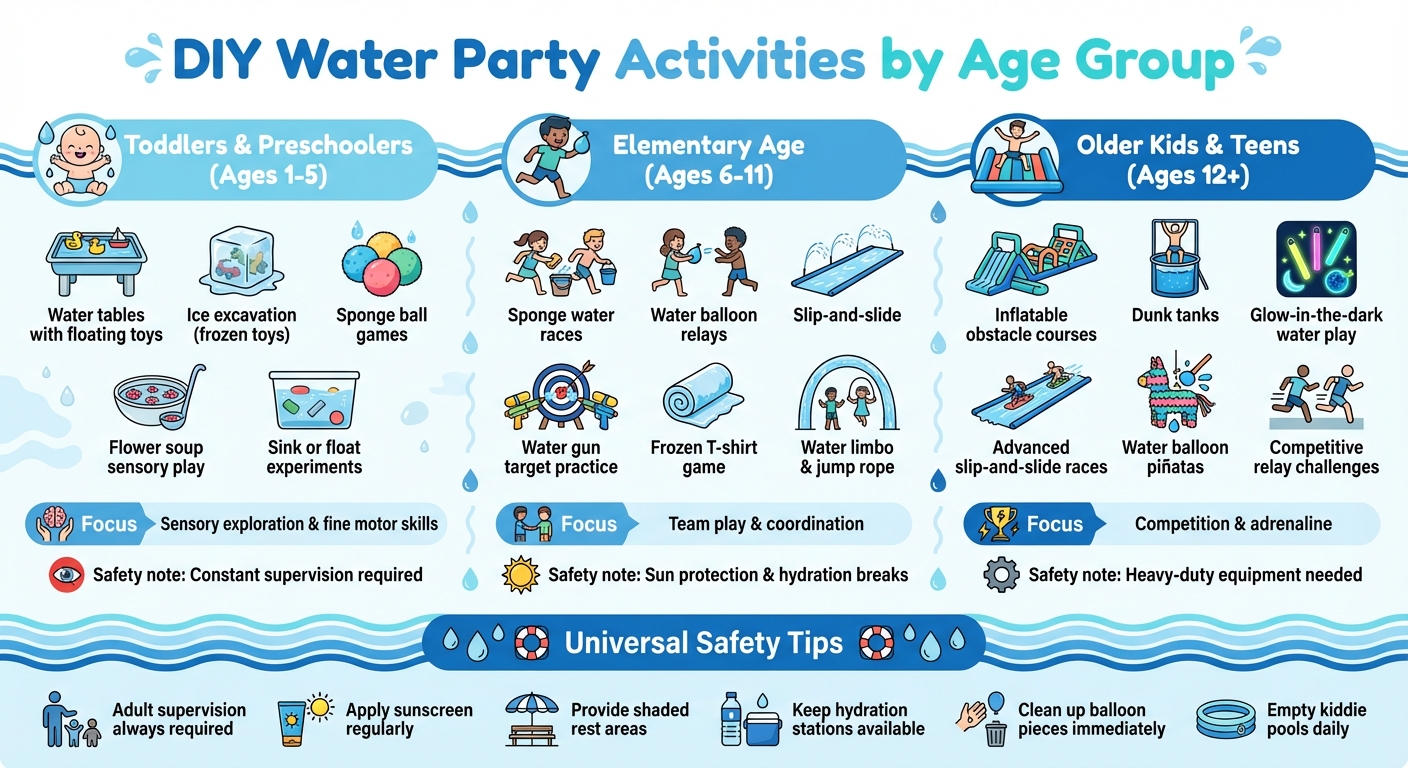
DIY Water Party Activities by Age Group: Toddlers to Teens
Water Racing Games
Racing games bring a burst of energy and laughter to any gathering, making them a hit with kids of all ages. These activities are easy to set up with just a few household items and some backyard space. Here’s a look at a few fun water racing ideas that will keep everyone entertained.
Sponge Water Races
For this game, you’ll need two buckets per team – one filled with water and the other left empty. Players get a sponge, soak it in the full bucket, then race to the empty one to squeeze out as much water as they can. The first team to fill their bucket to a marked line wins.
For younger kids, focus on the sensory fun rather than the competition. Older kids? Make it more challenging by increasing the distance or adding obstacles like cones to navigate. Sponges are a great choice because they’re reusable and don’t leave behind a mess like water balloons. Plus, setting up on grass ensures better traction and a softer surface in case of slips.
Water Gun Races
Set up a course with lightweight plastic cups as targets, placing them on a table or fence. Each child gets a water gun and uses it to knock down the targets. Create a refill station with a small pool or bucket for easy reloading. For older kids, turn up the excitement by designing a timed obstacle course with multiple targets spread across the yard.
Make safety a priority: no squirting faces and keep a safe distance. Small water guns can double as party favors, and you can organize teams with colored vests for added fun and easy identification during the game.
Water Balloon Relay
Fill two buckets with 25–50 water balloons and place them at the starting line. At the finish line, set up two beach chairs. Players race to grab a balloon, run to the chair, and sit on it until it pops. Once it bursts, they run back to tag the next teammate. If a balloon pops early or is dropped, the player must restart. The first team to pop all their balloons wins.
Use thinner balloons for easier popping, and keep a trash can nearby for quick cleanup of balloon pieces. If you’re playing with toddlers or preschoolers, simplify the game – have them stand in a line and pass water from a full bucket to an empty one using small cups instead of balloons.
Water Balloon Games
After the high-energy excitement of racing games, water balloon activities bring a refreshing twist to the party. These games are perfect for all ages, require minimal setup, and guarantee plenty of laughter. Here’s how to organize three timeless favorites that will keep your guests entertained.
Water Balloon Toss
This game is simple but always a hit. Pair up participants and have them stand about 3–5 feet apart. When you give the signal, one person tosses a water balloon to their partner. If they catch it without breaking the balloon, both players take a step back to increase the challenge. The game continues until only one team is left with their balloon intact.
Water Balloon Volleyball
For a creative spin on volleyball, divide players into pairs. Each pair uses a beach towel to launch and catch water balloons over a net, following standard volleyball rules. Teams can make up to three tosses to return the balloon, but no pair can toss it twice in a row. Points are scored if the balloon bursts on the opponent’s side or isn’t returned. If the serving team throws the balloon out of bounds, the serve switches to the other side.
"The pairs of players should be holding the corners of the towel which will be used to propel and catch the water balloon"
– Melissa Haines, Author, Kid Friendly Things to Do
To keep the game running smoothly, prepare at least 70 water balloons for a 30-minute match. Store them in a large bucket of water to prevent accidental popping. Use similar-sized towels for fairness, and stick to traditional latex balloons for consistent results.
Water Balloon Tag
This twist on classic tag replaces tagging with water balloon throws. Before starting, establish safety rules – no aiming for the face or head, and only tag players who are actively participating. Make sure everyone wears non-slip shoes and consider protective eyewear like sunglasses or goggles for added safety [15, 17]. You can also create designated "safe zones" where players can rest.
Fill balloons to about ¾ capacity for easier, safer throws. Plan for 15–20 balloons per player, and set up multiple refill stations around the play area to keep the fun going. Adult supervision is essential, especially for kids under 8, to avoid choking hazards from broken balloon pieces. To make cleanup part of the fun, turn it into a quick contest [15, 16].
"Children under 8 years old can choke or suffocate on un-inflated or broken balloon pieces. Adult supervision is required for all the activities and games listed. Make sure to pick up and discard broken balloon pieces right away."
– Birthday Party Ideas 4 Kids
Backyard Water Activities
Transform your backyard into a hub of water fun with simple setups using everyday items. These ideas are perfect for adding a splash of excitement to any gathering, especially birthday parties. They pair effortlessly with more structured games to create a well-rounded day of fun.
Slip-and-Slide Setup
You can create a DIY slip-and-slide in no time. Start by choosing a flat or slightly sloped area and clearing it of rocks, sticks, or anything sharp. For the slide, grab a roll of 6 mil heavy-duty plastic sheeting (a 10’×25′ roll costs about $25). To make it safe and fun, use pool noodles as bumpers along the sides and secure everything with landscape staples or tent stakes.
"Make sure you get the thicker plastic sheets. They need to be at least 6 mil in thickness to hold up to all the abuse it will take."
– Debbie and Mark Wolfe, Contributing Writers, HGTV
Wrap the plastic sheeting around the pool noodles and fasten with Velcro or waterproof tape to create cushioned edges. Be sure to hammer stakes flush to the ground or cover them with the noodles to avoid injuries. Keep the slide slick by running a garden hose or sprinkler over it, and for extra sliding power, use tear-free baby soap – it’s gentle on the eyes. Pro Tip: Remove the plastic sheet as soon as the fun is over, or the grass underneath might take a hit.
Water Limbo and Jump Rope
Add a refreshing twist to classic games. For water limbo, use a garden hose as the limbo bar. Adjust the water pressure to make the stream more visible, and lower it as players successfully pass underneath. You can also vary the challenge by changing the hose’s angle – a high arch for younger kids, a straight horizontal line for older children, or a super-low stream for teens.
"My boys have me make different trajectories with the hose – a rainbow, a flat line, a shower – and they race through… It counts as a shower in my house!"
– Meredith Shanley, Parent
Water jump rope is another fun option. Have two people swing the rope while a third jumps. To make it more exciting, players can hold a full cup of water while jumping – whoever spills the least wins. Another variation involves jumping through a sprinkler stream. For younger kids, try "snake in the grass", where the rope or hose wiggles on the ground for them to jump over.
Frozen Feet Challenge
This icy game is perfect for hot days and guarantees lots of laughs. Fill a shallow plastic bin or kiddie pool with water and ice cubes, then toss in small plastic toys, animals, or coins. Players must use only their feet to retrieve the items – hands are off-limits! The shallow water makes it safe, and multiple kids can join in the fun at once.
To keep everyone safe and happy, make sure kids wear sunscreen, stay hydrated, and are supervised by an adult at all times. Set up the game on a flat, grassy area free of sharp objects or debris.
"Always watch your children while they’re playing in or near water, even if it’s just a shallow kiddie pool."
– Tasia, The Frugal Farm Girl
Water Play Stations for Younger Kids
Toddlers and preschoolers thrive when they can explore hands-on water activities. These kinds of play not only engage their senses but also help them develop essential skills. The best part? You don’t need any fancy equipment. Simple items like large plastic tubs, coolers, or even buckets can transform into fun water play stations. Below are a few engaging ideas that are perfect for younger children.
"Exploring water – by splashing, pouring, dropping, and more – engages the senses. It feels good! Water play offers soothing sensory inputs, which can often help to calm and regulate children."
– Rebecca Parlakian, Senior Director of Programs at ZERO TO THREE
Water Tables and Treasure Hunts
A plastic tub or cooler filled with water can become a mini water table. Add floating toys and tools like plastic cups, funnels, and measuring spoons to keep little ones entertained. For an extra layer of fun, turn it into a treasure hunt by sinking coins or plastic gems at the bottom. Hand kids tools like tongs, sifters, or soup ladles to "excavate" their treasures. This activity encourages fine motor skill development while keeping their hands busy. Plus, portable coolers make this idea perfect for picnics or camping trips – just fill one with water, and you’re set. After playtime, store the toys in milk crates or mesh containers to let them drain and avoid mold.
Ice Excavation Activities
Freeze small plastic toys or figurines inside large blocks of ice overnight. Place the ice block in a shallow container and give kids warm water in spray bottles, along with small brushes or spoons, to melt the ice and uncover the hidden items. This activity is not only exciting but also introduces basic concepts like temperature and melting, while encouraging problem-solving skills. Watching the ice slowly reveal the treasures is always a hit with kids.
Sponge Ball Games
Sponges are a simple yet effective tool for water play. They’re soft, reusable, and ideal for building hand strength. Set up two buckets and encourage kids to transfer water between them using soaked sponges. This strengthens the hand and finger muscles they’ll need for writing and drawing later on. You can also create a "car wash" station by filling a tub with bubbly water. Kids can use sponges and old toothbrushes to scrub their toy cars or plastic animals. It’s a fun mix of imaginative play and practical skills.
Important safety note: DIY bucket-style water tables are better suited for older preschoolers who can safely stand or kneel. Younger toddlers might tip into them, so it’s crucial to supervise closely and stay within arm’s reach. Always empty water containers immediately after playtime to avoid accidents.
Equipment and Safety Tips
Planning a water play day? To keep it fun and safe, having the right materials and following smart safety measures is key.
Materials Checklist
You don’t need fancy equipment for DIY water play – just some simple, affordable items like garden hoses, buckets, kiddie pools, and sprinklers. Add water balloons, water guns, and sponges for games like tossing, target practice, or filling buckets. Pool noodles are versatile too; they can mark boundaries or even be turned into DIY sprinklers. If you’re setting up a slip-and-slide, grab heavy-duty plastic sheeting, landscape stakes, and a lubricant like dish soap, shampoo, or olive oil.
Here’s a quick guide to materials for different water games:
| Activity | Essential Materials |
|---|---|
| Water Balloon Piñata | Water balloons, string, sturdy branch, baseball bat |
| Ice Excavation | Plastic containers, small toys, water, tiny hammers |
| Water Gun Races | Water blasters, plastic cups, string, anchors like trees |
| Human-Sized Bubbles | Kiddie pool, bubble solution, hula hoop |
| Sponge Water Races | Buckets, large sponges, water |
Once you’ve got your supplies, take steps to ensure everyone stays safe.
Safety Considerations
Water play can be a blast, but it requires constant adult supervision. According to the CDC, adults should avoid distractions like smartphones while keeping an eye on kids. Even shallow pools and water slides can pose risks since they don’t have the filtration systems of traditional swimming pools.
"Small inflatable or plastic kiddie pools and water slides don’t have the same protection against germs that a swimming pool, hot tub, or splash pad do." – CDC
To keep things hygienic, empty and rinse kiddie pools daily, allowing them to air dry. If a child gets sick in the water, clear the area right away, remove waste, drain the water, and disinfect surfaces with a solution of ½ cup household bleach per gallon of water. Kids experiencing diarrhea or vomiting should avoid shared water play areas altogether.
Protect kids from the sun with child-safe sunscreen, and set up shaded areas or tents to help prevent heat exhaustion. Sunglasses are a great addition during water gun games to shield eyes, and clearing the play area of debris ensures safer, non-slip surfaces. Don’t forget to pick up broken water balloon pieces to protect pets and wildlife from swallowing them.
Safety doesn’t have to break the bank – here’s how to save while staying prepared.
Budget-Friendly Tips
Get creative with household items to save money. For example, turn empty soda bottles into DIY sprinklers, bleach bottles into catch-game targets, or cardboard boxes into water gun targets. A slip-and-slide made from heavy-duty plastic sheeting and dish soap can be sturdier and cheaper than store-bought options.
| DIY Activity | Materials Needed | Budget Tip |
|---|---|---|
| Soda Bottle Sprinkler | Plastic bottle, garden hose, tape | Recycle a 2-liter soda bottle |
| Human Bubble Maker | Kiddie pool, hula hoop, bubble solution | Buy bubble solution in bulk or DIY it |
| Pool Noodle Croquet | Pool noodles, yard stakes, beach balls | Use noodles for both wickets and mallets |
| Water Wall | Plastic containers, zip ties, pegboard | Repurpose yogurt or milk containers |
For water gun play, create targets using empty soda bottles or stacked plastic cups. If you’re using sponges, make sure to clean or replace them regularly to avoid bacteria buildup. And don’t forget to have plenty of drinking water on hand to keep everyone hydrated.
If you’re looking for a hassle-free option, companies like Bouncy Rentals USA offer sanitized, insured water play equipment for rent, making setup a breeze.
Activities by Age Group
Water play can be a blast for all ages, but tailoring activities to different developmental stages ensures everyone has a safe and fun time. From toddlers exploring textures to teens seeking thrilling challenges, there’s something for everyone.
Toddlers and Preschoolers
For toddlers, sensory play is king. Activities like soap foam bins let them squeeze and scoop, helping develop fine motor skills essential for drawing and writing. Another favorite is "ice rescue", where small toys are frozen in ice blocks, and kids use toy hammers to free them. Or try "flower soup": fill a shallow tray with water, sprinkle in flower petals, and hand out kitchen tools like ladles and measuring cups for pouring and mixing.
Want to mix in some learning? Set up simple "sink or float" experiments with everyday items, or let kids paint with water on pavement. A DIY car wash using soapy bins and toy vehicles is also a hit. For a budget-friendly water table, use under-the-bed storage containers, and make it colorful with food coloring or Kool-Aid crystals. Add tools like turkey basters, spray bottles, and sponges to keep them entertained. Just remember, close supervision is a must – even with shallow water.
These activities help introduce toddlers to water play while setting the foundation for more complex games as they grow.
Elementary-Age Children
As kids get older, they’re ready for more physical and team-based activities. Sponge water races, water balloon relays, and slip-and-slide setups are perfect for burning off energy while improving coordination. For a skill-based challenge, try squirt gun target practice using stacked plastic cups or empty soda bottles. And don’t miss the "Frozen T-shirt game", where kids race to thaw and wear frozen wet T-shirts – a guaranteed crowd-pleaser.
You can also put a watery twist on traditional games. For example, have kids jump rope while balancing a cup of water or take a swing at water-filled piñatas for a splashy surprise. Between all the action, keep them cool with a snow cone machine or simple water breaks to avoid overheating.
Older Kids and Teens
Older kids and teens thrive on interactive and competitive games that push their skills. Inflatable obstacle courses with tunnels, climbing walls, and pop-up hurdles are perfect for team races. Dunk tanks are another favorite, especially when the target is a parent or sibling. For evening parties, glow-in-the-dark water play – like a glowing water blob made with glow sticks – adds an extra layer of fun.
Games like the Frozen T-shirt challenge and water balloon piñatas remain popular, but older kids tend to push the limits. If you’re setting up a DIY slip-and-slide, opt for heavy-duty plastic sheeting and dish soap to handle faster speeds and heavier use. With activities like these, teens can enjoy an adrenaline-filled, unforgettable time.
Conclusion
Throwing a memorable water-themed birthday party doesn’t have to break the bank or involve complicated planning. DIY water activities are a fantastic way to combine fun with skill-building for kids of all ages. As Roberto Lopez aptly puts it, "Creating a backyard waterpark not only keeps them entertained but also supports their overall well-being". From toddlers discovering the joys of ice excavation to teens racing on slip-and-slides, these activities encourage physical activity and spark creativity.
Hosting the party at home has its perks. You can skip the crowds and chaos of public waterparks while maintaining control over the environment, schedule, and safety measures. Don’t forget the essentials: keep everyone hydrated with water breaks and provide shaded spots for cooling down, even during water play.
For an added layer of fun, consider mixing in professional rentals with your DIY setup. Inflatable water slides, dunk tanks, and obstacle courses from companies like Bouncy Rentals USA can take your backyard celebration to the next level. These rentals bring "splash-worthy thrills" without the hassle of extensive DIY preparation, leaving you with more time to enjoy the festivities alongside your guests. Combining DIY elements with professional rentals creates an exciting and well-rounded waterpark experience right in your backyard.
The real magic lies in creating an atmosphere that’s refreshing, engaging, and full of fun. DIY water play proves that entertaining guests of all ages doesn’t have to be complicated or pricey. As the saying goes, "Creating an engaging environment doesn’t need to be complicated – or costly".
FAQs
What are the best ways to keep kids safe during DIY water play activities?
Ensuring kids stay safe during DIY water play begins with constant adult supervision. Always keep an adult within arm’s reach of young children, especially those under 5. For non-swimmers, life jackets or flotation aids can provide an extra layer of safety. Before the fun begins, take a moment to inspect the play area – look for hazards like sharp objects, slippery spots, or debris. Clear the space around inflatable slides or pools to minimize the risk of trips and falls.
When setting up, choose a flat, level surface away from direct sunlight and strong winds. Secure inflatables using stakes or sandbags to keep them stable. Use clean, fresh water for play, and if the activity stretches over several hours, be sure to replace it regularly. If pool chemicals are part of the setup, follow the manufacturer’s instructions closely and store them well out of children’s reach. To further reduce risks, consider adding non-slip mats, applying sunscreen to prevent burns, and keeping plenty of drinking water on hand to avoid dehydration.
For an extra layer of confidence, opt for professionally cleaned and inspected equipment. Companies like Bouncy Rentals USA provide sanitized inflatables, such as water slides, installed by trained staff to ensure everything is safe and secure. With careful preparation, attentive supervision, and reliable equipment, you can create a water play experience that’s both fun and worry-free for everyone.
What are some affordable materials for DIY water games at a birthday party?
Planning a water-themed birthday party can be a blast without draining your wallet! A lot of the materials you’ll need for water games are probably already at home or can be bought for next to nothing. For example, a simple garden hose is a water-party MVP. Use it to power a DIY slip-and-slide, set up a sprinkler, or supply water for relay races. Combine it with everyday household items like plastic buckets, ladles, or large spoons, and you’ve got the makings of exciting games like bucket-fill races or water-scooping contests.
Here are some other affordable ideas to keep the fun flowing:
- Water balloons: Great for toss games, dodgeball, or even a creative balloon piñata.
- Sponges: Cut up kitchen sponges into smaller pieces for fun, mess-free tossing games.
- Plastic soda bottles: Transform them into sprinklers by cutting off the bottoms and poking holes.
- Plastic tarps: Spread one out on a grassy hill, add water and a little dish soap, and voilà – instant slip-and-slide!
If you’re looking to mix DIY fun with a touch of professional flair, think about renting a water slide from Bouncy Rentals. Their equipment is clean, insured, and a fantastic way to take your party to the next level without blowing your budget.
How can I make water play activities fun and safe for kids of different ages?
To tailor water play for different age groups, it’s important to consider safety, skill level, and physical abilities. For toddlers (ages 1–3), keep things simple and safe. Shallow water, non-slip mats, and sensory activities like sponge tosses or painting with water are perfect for this age. Preschoolers (ages 3–5) can handle a little more structure with activities like water piñatas or a DIY water wall. School-age kids (ages 6–10) thrive on high-energy games such as water balloon relays or sprinkler obstacle courses. Meanwhile, pre-teens and teens (ages 11–14) enjoy larger-scale fun, like inflatable water slides or more complex obstacle courses.
To make the experience even better, consider setting up themed zones for each age group. For instance, toddlers can enjoy a splash pad, while older kids can dive into inflatables or more advanced games. Keep the water temperature comfortable – around 70–75°F is ideal – and ensure there’s proper supervision at all times. Don’t forget to use age-appropriate equipment to create a safe, fun-filled water play experience for everyone!
Related Blog Posts
- Ultimate Guide to Toddler Water Fun
- Ultimate Guide to DIY Water Balloon Games
- Interactive Pool Games for Large Groups
- Ultimate Guide to Water Relay Challenges