Interactive sports inflatables are an exciting way to bring fun and physical activity to events for all age groups. From toddlers to adults, these inflatables cater to different needs, ensuring safety and enjoyment when chosen appropriately. Here’s what you need to know:
- Toddlers (2–5 years): Look for soft, low-profile inflatables with gentle features like small slides and enclosed sides for safe play. Keep play sessions short to prevent fatigue.
- Kids and Preteens (6–12 years): Opt for inflatables with slides, climbing walls, and obstacle courses to match their energy levels. Separate younger kids from preteens during use to avoid injuries.
- Teens and Adults: Choose durable options like obstacle courses, jousting arenas, or bungee runs, which offer higher intensity and physical challenges.
Key Considerations:
- Safety: Match inflatables to participants’ ages, sizes, and abilities. Supervise actively to reduce risks.
- Space: Ensure the setup area fits the inflatable’s size, with buffer zones for safety.
- Durability: Pick commercial-grade materials for older, more energetic participants.
- Weather: Avoid use in high winds or storms and have indoor backup plans.
Sports inflatables are growing in popularity, with obstacle courses seeing a 25% rise in demand last year. By selecting age-appropriate designs and prioritizing safety, you can create memorable experiences for all attendees.
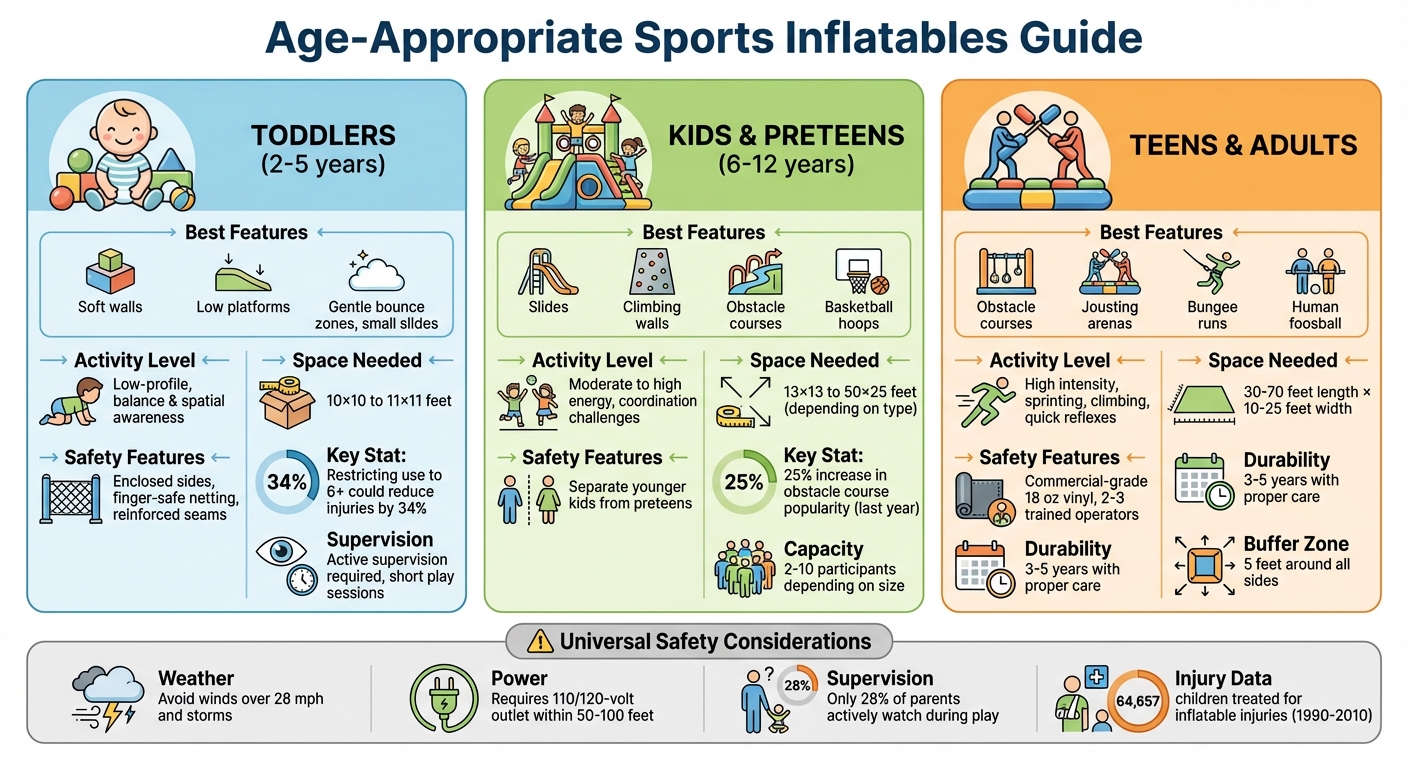
Age-Appropriate Sports Inflatables Guide: Safety, Space, and Activity Requirements
1. Sports Inflatables for Toddlers and Young Children
Age Suitability
Choosing inflatables designed for specific developmental stages is key to ensuring safe and enjoyable play. For toddlers aged 2–4, look for units with soft walls, low platforms, and gentle bounce zones. These features help them develop balance and spatial awareness in a secure environment. Preschoolers aged 4–5 can handle medium-sized inflatables with enclosed sides, simple obstacles, and small sports features like basketball hoops or goals. These additions not only keep them entertained but also help improve hand-eye coordination and encourage independence.
Before renting, always check the manufacturer’s minimum requirements. For instance, some inflatables require children to be at least 34 inches tall and weigh 35 pounds. Grouping kids by similar age and size can also help reduce the risk of injuries caused by collisions between older and younger children. Additionally, consider the recommended play durations and activity levels to match the energy needs of each age group.
Physical Activity Level
Inflatables designed for younger children (2–3 years old) focus on low-profile features that enhance balance, spatial awareness, and gross motor skills, all while building their confidence. Preschoolers benefit from slightly more advanced features, such as short slides and simple climbing elements, which allow them to explore movement more independently. For toddler-specific obstacle courses, safety guidelines recommend that internal features should not exceed a height of 3 feet.
To prevent overstimulation and fatigue, keep play sessions short and always supervise children during use. Ensuring the setup area meets the necessary space requirements is equally important, as outlined below.
Space Requirements
Toddler inflatables typically range in size from 10×10 feet to 11×11 feet, making them suitable for smaller outdoor spaces like backyards or driveways. A buffer zone of 3–5 feet on all sides is recommended for anchoring, blower placement, and safe entry and exit. Additionally, ensure vertical clearance of about 10–12 feet to provide enough overhead space.
Before booking, measure the setup area and entry paths, and confirm access to a 110-/120-volt outlet within 50–100 feet. While grass is the ideal surface for staking, smaller inflatables can also be secured on pavement using sandbags or water barrels.
Durability and Safety
Prioritize inflatables with safety features such as "You-Turn Safe Entry" systems, which guide children safely in and out, as well as finger-safe netting and reinforced seams. Ask rental companies about their cleaning and maintenance schedules, and check how old their units are to ensure they are both safe and visually appealing. Keep in mind that inflatables should never be used in high winds or during lightning storms, so always have an indoor backup plan ready.
2. Sports Inflatables for Kids and Preteens
Age Suitability
As children grow, their play preferences and safety needs evolve. For kids aged 5–8, inflatables with multiple features, like bounce house combos that include slides, small climbing walls, and basketball hoops, are a big hit. These setups keep their energy levels high while offering a secure, enclosed space for exploration and fun. On the other hand, preteens aged 9–12 are drawn to activities that challenge their coordination and strength. Obstacle courses with dual-lane racing, climbing walls, and bungee runs are perfect for this age group, providing the competition and speed they crave.
To minimize the risk of injuries, it’s best to keep younger children and preteens separate during play. If you’re hosting an event with a wide age range, consider renting inflatables designed for specific age groups or creating a schedule with staggered time slots. This way, everyone gets to enjoy age-appropriate activities safely.
Physical Activity Level
As kids progress from simple bouncing to more advanced challenges, their activity preferences shift. Younger children enjoy moderate activities like crawling through tunnels, sliding down short slides, or shooting hoops. Preteens, however, prefer inflatables with more dynamic features, such as race tracks or climbing walls. Inflatable obstacle courses, in particular, have seen a 25% increase in popularity over the past year, becoming one of the fastest-growing options in the party rental scene. Understanding these activity levels helps ensure you choose the right inflatable and allocate enough space for safe play.
Space Requirements
Different types of inflatables require varying amounts of space. Here’s a quick breakdown:
- Small obstacle courses: Typically need 30–50 feet in length and 10–20 feet in width, accommodating 2–4 participants.
- Medium combo units: Require around 13×13 to 15×15 feet and can handle 8–10 kids at a time.
- Large obstacle courses: Demand at least 50 feet in length and 25 feet in width, supporting 4 or more participants.
Be sure to measure your available space carefully to ensure a good fit.
Durability and Safety
When choosing inflatables for kids and preteens, durability and safety should be top priorities. Look for units with reinforced seams, finger-safe netting, and secure entry systems that can handle the wear and tear of active play. It’s also a good idea to check the maintenance history and the age of the equipment. Since older kids tend to be more energetic, inflatables made from commercial-grade materials are better suited to withstand their jumping, climbing, and sliding adventures.
3. Sports Inflatables for Teens and Adults
Age Suitability
Inflatables for teens and adults are all about high-energy fun and physical challenges. Think jousting arenas, bungee runs, and human foosball – designed to handle more weight and dynamic movement. To keep things safe and enjoyable at multi-generational events, it’s best to have separate sessions or dedicated units for different age groups.
Physical Activity Level
When it comes to inflatables, teens and adults are drawn to games that bring a serious physical challenge. Activities like obstacle courses, sumo wrestling, and bungee runs demand sprinting, climbing, and quick reflexes, making them not just fun but also a great workout. Obstacle courses, in particular, remain a favorite for their energy-packed experience. Here’s a quick look at some popular options, along with their intensity levels and space needs:
| Game Type | Physical Intensity | Space Required (Feet) | Capacity (Players) |
|---|---|---|---|
| Obstacle Course | High | 30–70 L x 10–25 W | 2–4 players |
| Human Foosball | Moderate | 45 L x 20 W | 8–12 players |
| Jousting Arena | High | 30 L x 30 W | 2 players |
| Bungee Run | High | 35–40 L x 10–15 W | 2 players |
| Giant Twister | Moderate | 15 L x 15 W | 6–10 players |
| Sumo Wrestling | High | 15–20 L x 15–20 W | 2 players |
Space Requirements
For adult-friendly inflatables, having enough space is non-negotiable. Larger setups, like obstacle courses, can stretch up to 70 feet in length and need widths of 10 to 25 feet. To ensure safety, add a 5-foot buffer around the inflatable for free movement and operations. Indoor venues require careful consideration of ceiling heights – usually between 15 and 20 feet – while outdoor setups offer more room but need to be securely anchored with stakes, sandbags, or water barrels.
Durability and Safety
Teens and adults put inflatables through their paces, so durability is a must. Commercial-grade inflatables made from 18 oz vinyl are built to last, offering resistance to tears, UV damage, and fire hazards. With proper care, these units can handle regular use for 3 to 5 years. Safety is just as important: proper anchoring prevents tipping, and larger units should have 2 to 3 trained operators on hand to manage the flow of participants. Daily inspections – checking blower systems, anchor points, and cleanliness – are essential for both safety and longevity.
At Bouncy Rentals USA, we take these standards seriously. Our lineup of inflatables for teens and adults is built for durability and safety, ensuring every event is as fun as it is secure. From setup to takedown, we’ve got you covered with reliable equipment and professional service.
Pros and Cons
Sports inflatables offer a mix of benefits and challenges that vary across different age groups, as outlined in detailed age-specific evaluations. For toddlers (ages 2–5), the soft, cushioned surfaces provide a safer space for developing coordination and balance. Low walls help create a controlled play area, but mixing toddlers with older kids significantly increases the risk of injuries. Research shows that restricting inflatable use to children over six years old could cut injuries by up to 34%. Between 1990 and 2010, approximately 64,657 children in the U.S. were treated in emergency rooms for injuries related to inflatables. These findings highlight the importance of age-appropriate use and supervision.
Moving to kids ages 6–12, inflatables provide hours of active, social fun. Themes like superheroes and castles, along with features such as slides and obstacle courses, keep this age group engaged. However, kids in this range experience the highest rate of inflatable-related injuries. Specifically, children between six and eight years old are prone to fractures, such as supracondylar humerus and distal radius injuries.
For teens and adults, inflatables offer unique opportunities for team-building, nostalgia, and competition. Sturdier designs accommodate heavier use, making them ideal for corporate events or backyard parties. That said, they require more space, higher vertical clearance, and their physical demands may not suit everyone’s fitness level. While each age group enjoys distinct advantages, careful selection and active monitoring are essential for safe use.
Across all age groups, inflatables are portable, easy to set up compared to permanent structures, and cost-effective for large gatherings. However, they come with notable drawbacks. Weather sensitivity is a major issue – strong winds (over 28 mph) require deflation, and wet or hot surfaces can cause slips or skin burns. They also need continuous power for blowers to stay inflated. Supervision is another critical factor: only 28% of parents in one study reported actively watching their child at the time of an inflatable-related injury.
| Age Group | Key Advantage | Key Disadvantage | Primary Safety Concern |
|---|---|---|---|
| Toddlers (2–5) | Supports motor skill development in a cushioned space | High injury risk when mixed with older kids | Falls and collisions with larger children |
| Kids (6–12) | Engaging themes and active play opportunities | Peak age for fractures like humerus and radius injuries | Collisions between participants of varying sizes |
| Teens & Adults | Great for team-building and competitive activities | Requires large space and physical effort | Falls and collisions during intense activity |
Conclusion
Choosing the right inflatable means considering both the age of the participants and the type of event. For toddlers, prioritize designs that emphasize safety. For kids and preteens, go for themed inflatables with fun challenges. Teens and adults will appreciate durable, commercial-grade options built to handle more activity.
Beyond age, the event itself plays a big role in your decision. Smaller inflatables are perfect for cozy toddler parties, while larger obstacle courses are ideal for school carnivals or adult gatherings. Matching the inflatable to the occasion ensures everyone has a great time.
Safety should always come first. Look for features like reinforced seams, finger-safe netting, and weather-resistant designs. As JumpOrange puts it:
"When inflatables match the user’s abilities, it leads to more enjoyment and confidence".
Whether you’re planning a backyard party or a large-scale event, age-appropriate designs and active supervision are essential. With inflatable obstacle courses growing in popularity – up 25% in the past year – there’s an incredible variety available to suit your needs.
At Bouncy Rentals USA, we’re committed to delivering safe, memorable fun with our expertly maintained equipment and professional service.
FAQs
What safety features should I consider when choosing sports inflatables for different age groups?
When choosing sports inflatables, safety should always be the top priority. Start by ensuring they’re made from strong, commercial-grade materials that can handle rough play. It’s also crucial to confirm that the inflatable can be securely anchored to prevent any tipping or movement during use. Adequate ventilation is another key factor, as it keeps the airflow steady, and having multiple emergency exits adds an extra layer of security in case something unexpected happens.
For younger children, look for designs with lower height limits and soft barriers to reduce the risk of falls. On the other hand, inflatables for older kids and adults should be built to support higher weight limits and more intense activity. Always stick to the manufacturer’s guidelines for age and weight to keep everyone safe while having fun.
How do I make sure the inflatable will fit in my event space?
To make sure the inflatable fits your event space, start by measuring the area where it will be placed. Be thorough – factor in not just the inflatable’s size but also extra room for safety zones, blower equipment, and enough clearance around walls, trees, or any other obstacles.
Then, review the inflatable’s size specifications. For instance, a typical bounce house usually requires about 13×13 feet, while larger setups like obstacle courses might need 25×15 feet or more. Double-check these dimensions with your rental provider to avoid any last-minute issues.
Not sure if your space works? Contact your rental company. They can help assess your venue and suggest inflatables that will fit your setup perfectly.
What are the safest inflatables for events with guests of all ages?
When planning events with mixed-age groups, it’s crucial to choose inflatables that prioritize sturdiness and safety. Opt for options equipped with secure anchoring systems, clear weight restrictions, and designs tailored to different age groups. Favorites for such gatherings include obstacle courses, bounce houses, and sports-themed inflatables, which can entertain both kids and adults alike.
For older participants or adults, go for commercial-grade inflatables built to support higher weight limits. And don’t forget – proper supervision and sticking to the provided safety guidelines are essential for avoiding injuries and ensuring everyone has a great time!