Did you know over 18,000 injuries were linked to bounce houses in 2018, with 95% being preventable? TV show-themed inflatables are a hit at parties, but ensuring safety is essential. From proper setup to constant supervision, following guidelines can drastically reduce risks.
Here’s what you need to know:
- Setup: Use flat ground, secure with stakes or sandbags, and maintain a 3-5 ft safety zone.
- Supervision: Always have an adult monitor activities, group kids by age/size, and enforce no flips or rough play.
- Weather: Avoid use in winds over 15-20 mph or during storms.
- Age/Weight Limits: Follow capacity rules – e.g., 8 kids (ages 2-6) for a standard 13×13 unit.
- Inspection: Check for tears, loose anchors, and blower issues before use.
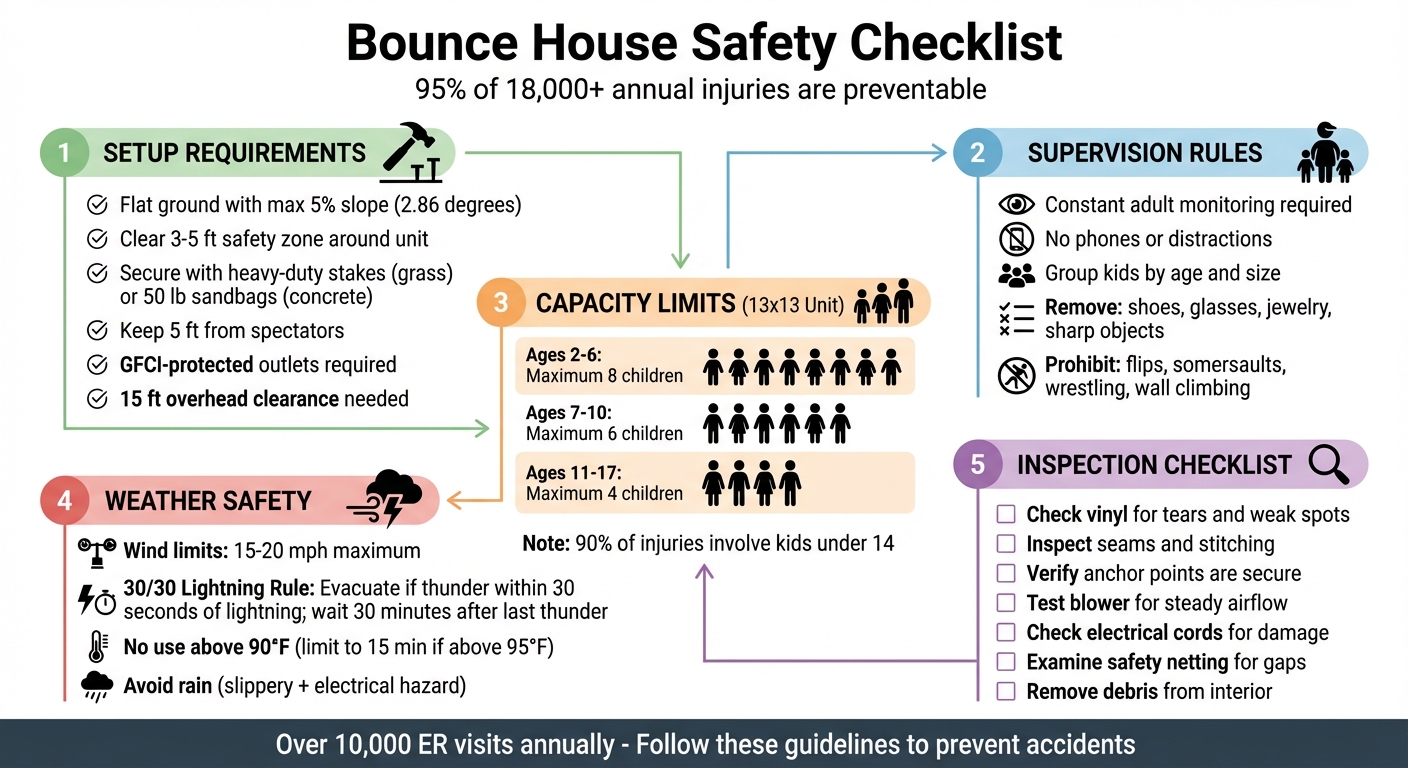
Bounce House Safety Checklist: Essential Guidelines for Safe Play
Basic Safety Rules for Bounce Houses
Setup and Installation Requirements
The first step to ensuring bounce house safety is proper placement. Always set up the inflatable on flat, level ground, with a slope no steeper than 5% (about 2.86 degrees). Before installation, inspect the area carefully – clear it of rocks, sticks, pine cones, sharp objects, or animal waste that could damage the vinyl or harm children.
Make sure there’s enough overhead clearance, keeping the bounce house away from power lines, low tree branches, and fences. Use heavy-duty stakes to secure the bounce house on grass, or weighted sandbags (50 lbs per anchor point) on hard surfaces like concrete or asphalt. Place a protective tarp underneath the unit to reduce wear and tear from friction.
Blowers should be plugged into GFCI-protected outlets, and extension cords or blowers should be positioned at least 5 feet away from spectators to avoid tripping hazards. Maintain a clear safety zone of 3 to 5 feet around the bounce house to keep everyone away from electrical components. Once the setup is secure, the focus shifts to active adult supervision.
Adult Supervision Requirements
Keeping children safe in a bounce house requires constant, attentive adult supervision. Position an adult near the entrance to monitor who enters and exits. Supervisors should stay alert and avoid distractions like cell phones or prolonged conversations, ensuring safety rules are consistently enforced.
Supervisors should manage capacity by grouping children based on their age and size, as larger kids can accidentally hurt smaller ones during play. Before allowing entry, check that children have removed shoes, glasses, jewelry, and any sharp items. Prohibit risky behaviors like flips, somersaults, wrestling, or climbing on the walls.
For larger gatherings, a whistle can be helpful for quickly getting children’s attention if rules are being ignored. If the wind picks up or the bounce house starts to deflate, evacuate the children immediately and calmly.
Age and Weight Limits
Bounce houses come with specific age and weight guidelines for a reason – ignoring them can lead to injuries or damage to the inflatable. A standard 13×13 bounce house typically accommodates:
- 8 children aged 2 to 6
- 6 children aged 7 to 10
- 4 children aged 11 to 17
| Age Group | Maximum Capacity (Standard 13×13 Unit) |
|---|---|
| Ages 2 to 6 | 8 children |
| Ages 7 to 10 | 6 children |
| Ages 11 to 17 | 4 children |
Following these limits helps prevent overcrowding and injuries caused by "piling on." Collisions between children of different sizes are one of the leading causes of bounce house injuries. In fact, nearly 90% of injuries in inflatable amusements involve children aged 14 or younger. Always adhere to the manufacturer’s guidelines printed on the unit or outlined in the rental agreement.
Weather Safety Guidelines
Wind and Storm Safety
Weather can quickly turn a fun bounce house event into a risky situation if precautions aren’t taken. Wind is the biggest weather-related hazard for bounce houses. Never use a bounce house if wind speeds exceed 20 mph when it’s staked into grass, or 15 mph when secured with sandbags on hard surfaces. Even moderate gusts can lift an inflatable off the ground, potentially with children inside.
Always check the local weather forecast before setting up and keep an eye on conditions throughout the day. A good rule of thumb: if nearby tree tops are swaying noticeably, avoid using the bounce house. Rain also poses risks – it makes the vinyl slippery, can damage the blower, and increases the danger of electrical shocks near wet equipment.
The 30/30 lightning rule is critical for safety. If lightning is visible or thunder is heard within 30 seconds of each other, immediately evacuate the bounce house and unplug the blower. Wait at least 30 minutes after the last thunderclap before resuming use. Between 2003 and 2013, the CPSC reported 12 deaths related to inflatable incidents.
In addition to wind and storms, temperature extremes can also create serious safety concerns.
Heat and Surface Temperature
Hot weather requires extra vigilance. Vinyl surfaces on bounce houses can absorb heat and become much hotter than the surrounding air. Avoid using dry inflatables if the temperature exceeds 90°F, as the vinyl can get hot enough to cause burns. If temperatures rise above 95°F, limit play sessions to 15 minutes and ensure kids take water breaks.
Always check the surface temperature before allowing children to play – press your palm against the vinyl; if it feels too hot, it’s unsafe for kids. To minimize heat risks, set up the bounce house in a shaded area whenever possible and lightly mist the surface with water to cool it down. On extremely hot days, consider alternatives like water slides or water-based inflatables, which stay cooler and help kids beat the heat. Scheduling bounce house activities for the morning can also help avoid the peak heat of the afternoon.
Equipment Inspection and Maintenance
Pre-Use Equipment Checks
Before every use, take a few minutes to inspect the equipment. Daily visual checks are a must. Start by carefully examining the vinyl surface for any rips, tears, or weak spots that could lead to sudden deflation. Pay special attention to seams and stitching – run your fingers along them to feel for tears, loose threads, or gaps. These areas are often the first to fail when the equipment is under pressure.
Make sure all anchor points are secure from the last setup. A loose anchor can become a serious hazard if the wind picks up. Check that the blower is providing steady airflow and that the connection tube is tightly secured. Listen for any unusual noises that could signal a problem.
| Inspection Component | What to Check |
|---|---|
| Seams & Stitching | Look for tears, loose threads, or holes in the vinyl. |
| Anchor Points | Ensure stakes are firmly in the ground or sandbags are heavy and attached. |
| Blower Unit | Check for consistent airflow, clear intake, and tight tube connection. |
| Electrical | Verify GFCI protection and inspect cords for frays or exposed wires. |
| Safety Netting | Look for gaps or holes large enough for a child to fall through. |
| Surface Condition | Remove moisture, wet leaves, or sharp debris from inside the unit. |
Before allowing children to enter, double-check that the interior is free of any items that could cause punctures or injuries. During use, stay alert for signs of deflation, like sagging, wrinkling, or changes in the unit’s shape. If you notice any of these issues, stop use immediately, remove all children, and shut down the equipment. With over 10,000 bounce house-related emergency room visits each year, these simple precautions can help prevent accidents.
Once the inspection is complete, the next step is cleaning the equipment to maintain its condition and ensure a safe play environment.
Cleaning and Sanitizing
After inspecting the equipment, cleaning is crucial for both durability and health safety. Begin with dry cleaning – use a shop-vac or a soft-bristle brush to remove dirt and loose debris. This step is essential to prevent small objects from damaging the vinyl during storage or transport.
For wet cleaning, stick to vinyl-safe solutions or make your own by mixing three parts water with one part vinegar and a small amount of liquid dish soap. This homemade mixture is effective, non-toxic, and gentle on the material. Scrub every surface, including the underside and detachable parts. Pay extra attention to high-contact areas like mesh netting and entry ramps where hands and faces frequently touch. Avoid bleach-based cleaners at all costs – they can cause fading, discoloration, and permanent damage to the vinyl.
The most important step comes after cleaning: make sure the bounce house is completely dry before storing it. Even a small amount of moisture can lead to mold, which not only looks bad but can also cause allergic reactions and respiratory problems. Let the equipment dry fully in a well-ventilated area or under sunlight. Taking this extra time protects your investment and keeps kids safe.
These maintenance steps work hand-in-hand with safety checks, ensuring the equipment remains reliable and secure for every use.
Why Choose Bouncy Rentals for Your Event
Safety Standards and Inspections
At Bouncy Rentals USA, safety is always a top priority. Every piece of equipment undergoes a thorough inspection before delivery, and our technicians perform additional on-site checks after setup to ensure everything is securely anchored and functioning properly. We adhere to guidelines set by respected organizations like SIOTO (Safe Inflatable Operators Training Organization) and ASTM to meet industry safety standards.
Our bounce houses are made from durable 18 oz vinyl with double-stitched seams, designed to withstand hours of fun while keeping everyone safe. We also carry full insurance coverage and meet all state inspection requirements, so you can rest easy knowing your event complies with local regulations. Before leaving your site, our team provides a detailed safety briefing and written instructions, covering rules and emergency procedures to ensure a smooth and worry-free experience.
TV Show-Themed Bounce House Options
Looking to add a touch of excitement to your event? Our collection of TV show-themed bounce houses features beloved characters like Mickey Mouse, Spiderman, and Spongebob Squarepants. With options available in a range of sizes, we can accommodate everything from small backyard parties to large community gatherings.
For general play, we offer standard bounce houses suited for kids aged 3-12. If you’re looking for more variety, our combo units – complete with slides and obstacles – are perfect for ages 3-14. Every unit is meticulously cleaned and sanitized with EPA-approved products between rentals, ensuring a safe and hygienic experience for all. These themed inflatables not only bring fun to your event but also meet the same high safety standards we apply across our entire inventory.
Full-Service Delivery and Setup
We take care of everything from delivery to installation and even post-event removal, so you can focus on enjoying the day. Our team customizes anchoring methods based on the surface type – whether it’s grass, concrete, or asphalt – to keep the bounce house securely in place. Before setup, we’ll confirm that your site meets the necessary requirements, including at least 3 feet of ground clearance on all sides, 15 feet of overhead clearance, and access to a GFCI-protected electrical outlet within 100 feet.
"Professional installation isn’t just a recommendation – it’s a crucial safety requirement that can prevent 90% of bounce house accidents." – Safety Expert, Bounce Horizon
We also keep an eye on the weather and offer flexible rescheduling if high winds or storms pose a risk to your event. Our mission is to make your planning process as stress-free as possible, leaving you free to enjoy the celebration with your guests.
Conclusion and Safety Checklist
TV show-themed bounce houses bring excitement to any event, but prioritizing safety is crucial. With over 10,000 emergency room visits each year tied to inflatable play equipment – and nearly 95% of these injuries being preventable – taking the right precautions can make all the difference.
Before the fun begins, take time to ensure the setup is secure. Check that the bounce house is properly anchored and the surrounding area is free of hazards. Inside the play zone, remove shoes, jewelry, sharp objects, food, and drinks. Assign an adult supervisor to keep a close eye on things, group children by age and size, and enforce rules like "no flips, no wrestling." Also, have a first aid kit on hand for any minor mishaps.
Keep an eye on the weather throughout the event. If winds climb to 15–20 mph or a storm is on the horizon, it’s time to deflate the bounce house and evacuate the area. Having a phone handy for real-time weather updates can help you make quick, informed decisions to keep everyone safe.
When you choose Bouncy Rentals USA, you’re not just renting a bounce house – you’re ensuring peace of mind. Our team provides professional installation, thorough inspections, detailed safety briefings, and full insurance coverage. Plus, our TV show-themed bounce houses meet industry standards, so you know your event is in capable hands.
Quick Safety Checklist:
- Ensure professional setup with secure anchoring
- Designate an adult supervisor to oversee activities
- Remove shoes, jewelry, sharp objects, food, and drinks from the play area
- Group children by age and size for safer play
- Continuously monitor weather conditions
- Keep emergency contacts and a first aid kit accessible
- Enforce a strict "no flips, no wrestling" rule
FAQs
What safety tips should I follow when using a TV show-themed bounce house?
To make sure everyone has a fun and safe time with a TV show-themed bounce house, keep these safety tips in mind:
- Pick the right spot: Set up the bounce house on a flat, even surface, away from hazards like power lines or tree branches. Make sure there’s at least 6 feet of open space around it.
- Anchor it securely: Use stakes or sandbags to keep the bounce house steady, especially if it’s windy. If winds go over 15 mph, it’s best not to use the inflatable.
- Check it over: Inspect the bounce house for any damage, wear, or loose seams before letting anyone inside. Make sure it meets all safety standards.
- Watch the weather: Never use the bounce house in rain, lightning, or strong winds. Wet surfaces can get slippery, making it unsafe for kids to play.
- Always supervise: An adult should be present to enforce the rules, control the number of kids inside, and ensure everyone is playing safely.
For an easy and worry-free rental, check out Bouncy Rentals USA. Their equipment is sanitized, insured, and delivered by a professional team. Have fun and stay safe!
How does the weather impact the safe use of bounce houses?
Weather conditions are a key factor in keeping bounce houses safe. Strong winds, for example, can be extremely hazardous. Gusts exceeding 15 mph can cause inflatables to tip over, lift off the ground, or even go airborne – creating serious safety risks. To stay on top of wind conditions, it’s a good idea to monitor speeds closely during events, and a handheld anemometer can provide accurate, real-time readings.
Rain also introduces its own set of challenges. Wet surfaces can make bounce houses slippery and unstable, significantly increasing the risk of accidents. Plus, once soaked, these inflatables can take hours to dry completely. To ensure everyone’s safety, it’s wise to steer clear of using bounce houses during windy or rainy weather. If the forecast looks unfavorable, rescheduling the event is the safest option.
What safety steps should I follow before and during bounce house use?
To make sure everyone has a safe and enjoyable time with a bounce house, keep these safety tips in mind:
- Anchor It Down: Ensure the bounce house is securely fastened to the ground. This helps prevent it from moving or tipping over, especially if the wind picks up.
- Clear the Space: Before anyone enters, remove sharp items, food, drinks, or jewelry. This reduces the risk of injuries and protects the inflatable from damage.
- Always Supervise: An adult should always be present to keep an eye on things. They can step in to stop roughhousing and make sure kids of similar size and age are playing together.
- Mind the Weather: If it’s windy or raining, it’s best to avoid using the bounce house. Wet or windy conditions can make it unsafe.
- Inspect Before Play: Take a moment to check for proper inflation, any tears, or debris inside before letting kids jump in.
Stick to these guidelines, and you’ll help ensure the fun stays safe for everyone!