Inflatable rentals can make any event more fun, but they come with challenges. Issues like poor setup, safety risks, weather concerns, and equipment problems can quickly ruin your day. Here’s what you need to know:
- Setup Problems: Uneven ground, limited space, or improper anchoring can lead to instability or accidents.
- Safety Risks: Overcrowding, lack of supervision, and ignoring age limits increase the chance of injuries.
- Weather Hazards: High winds, rain, and extreme heat make inflatables unsafe to use.
- Equipment Issues: Dirty or damaged inflatables can pose health and safety risks.
- Liability Concerns: Without proper insurance, accidents can lead to legal and financial trouble.
The key to avoiding these problems is planning ahead. Work with a professional rental company that prioritizes safety, provides sanitized equipment, and follows strict setup protocols. Companies like Bouncy Rentals USA offer full insurance, pre-event consultations, and trained staff to ensure a smooth, stress-free experience. By addressing potential issues early, you can focus on enjoying your event.
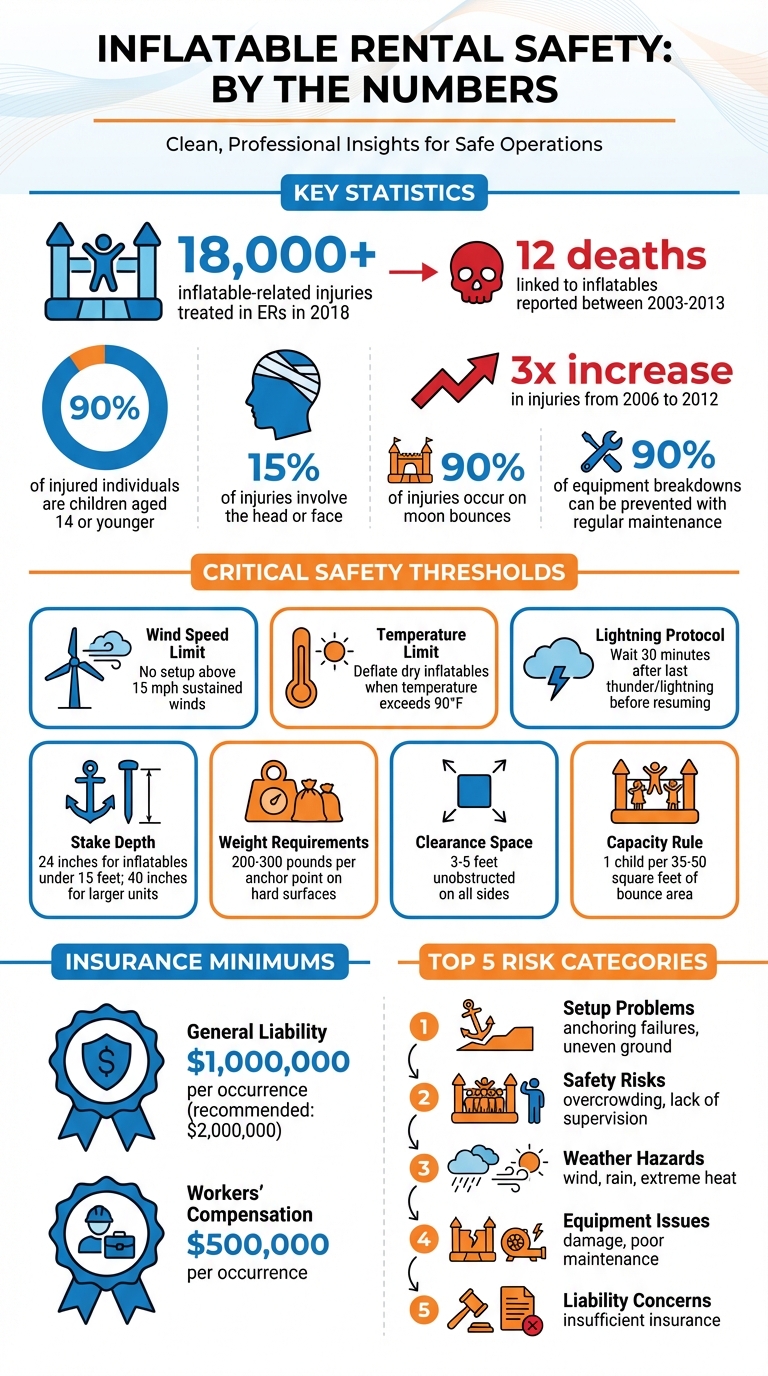
Inflatable Rental Safety Statistics and Key Risk Factors
Setup Problems and How to Fix Them
Setting up an inflatable might seem straightforward, but it requires careful attention to detail. Poor setup is one of the main reasons for bounce house accidents, with the Consumer Product Safety Commission noting thousands of inflatable-related injuries treated in emergency rooms each year.
The two most common setup issues involve anchoring failures and unsuitable ground conditions. If stakes aren’t secured deeply enough, weights are too light, or the surface is uneven, inflatables can shift, tip over, or even lift off the ground. These problems can quickly turn a fun event into a serious safety concern. Let’s break down how to address these issues effectively.
Poor Anchoring Causes Tipping and Instability
Improper anchoring is a leading cause of inflatable accidents. Using unapproved anchor points like vehicles, trees, or fences – or relying on short, shallow stakes – can lead to instability and tipping.
For safe anchoring on grassy surfaces, use commercial-grade stakes. Stakes should be at least 24 inches long for inflatables under 15 feet tall and 40 inches for larger ones. Drive them into the ground at a 45-degree angle away from the inflatable, ensuring at least 75% of the stake is buried. For hard surfaces like concrete or asphalt, replace stakes with sandbags or water bags, providing 200 to 300 pounds of weight per anchor point.
Before driving stakes into the ground, call 811 to check for underground utilities. Accidentally hitting a gas line or electrical cable can have dangerous consequences. Once the inflatable is set up, periodically check the tethers during the event to ensure everything remains secure.
Bouncy Rentals USA takes the guesswork out of setup by following ASTM F2374‑22 standards. Their team uses professional-grade stakes, sandbags, and tethers to secure every inflatable based on the surface type and weather conditions.
Limited Space and Uneven Ground
Tight spaces and uneven ground can also pose challenges. Setting up on slopes, rocky areas, or places with insufficient clearance increases the risk of instability and collisions with overhead obstacles like power lines or tree branches. To avoid these issues, inflatables need at least 3 to 5 feet of unobstructed clearance on all sides.
Before booking a rental, measure your setup area, including overhead space, and remove any debris, rocks, or sharp objects from the zone. Placing a heavy-duty tarp under the inflatable can protect it from wear and tear on rough surfaces.
Temperature matters too. Avoid setting up if it’s below 40°F, as the material can stiffen, affecting air pressure. Additionally, use a 12-gauge, three-prong extension cord plugged into a GFCI-protected outlet to power the blower safely.
Bouncy Rentals USA offers pre-event consultations to evaluate your venue. They’ll identify potential issues with space or ground conditions and recommend the best inflatable for your location. This extra step ensures a safe and hassle-free experience, so you can focus on enjoying your event.
Safety Risks and Prevention Methods
Even with the best setup, inflatables can pose risks if not closely monitored. According to the Consumer Product Safety Commission (CPSC), over 18,000 injuries related to bounce houses were treated in hospital emergency rooms in 2018 alone. Between 2003 and 2013, 12 deaths linked to inflatables were reported. Many of these incidents stem from inadequate supervision, overcrowding, or ignoring safety guidelines.
Common injuries include broken bones, head trauma, contusions, abrasions, and sprains. Alarmingly, nearly 90% of those injured are children aged 14 or younger, and about 15% of injuries involve the head or face [15,17]. These figures highlight the importance of strict supervision and adherence to safety rules. Below are essential guidelines for ensuring safety at your event.
Adult Supervision and Safety Rules
A trained adult attendant should always supervise the inflatable [1,5]. This person is responsible for enforcing safety rules, managing the number of participants, and addressing any issues like deflation or unsafe behavior. Without proper oversight, children may engage in risky activities like flips, wrestling, or piling on each other – common causes of injuries [14,15].
Before entering, participants should remove shoes, eyeglasses, jewelry, and any sharp objects [5,14,15,18]. Rough play, flips, somersaults, climbing on walls, and other unsafe behaviors must be strictly prohibited [15,18]. For inflatable slides, users should slide one at a time, seated, with feet forward – never headfirst [5,15]. Pregnant individuals or those with physical limitations should avoid using the equipment altogether.
Establish a "No Entry" zone by keeping spectators at least three feet away from the inflatable. Make sure the blower area is off-limits. To prevent bottlenecks and reduce fall risks, discourage participants from gathering near entrances or exits. If you notice sagging, wrinkling, or any structural distortion, clear the inflatable immediately.
Bouncy Rentals USA provides thorough safety instructions with every rental and can supply trained staff to supervise your event. Their team ensures all safety measures are followed, so you can relax while your guests enjoy themselves. Effective supervision and managing participant numbers are crucial to minimizing injuries.
Controlling Capacity and Age Limits
Overcrowding can quickly turn fun into danger. In 2012, the CPSC reported over 18,000 injuries related to inflatable amusements – a threefold increase from six years earlier. More than 90% of these injuries occurred on moon bounces. Research also shows that mixing children of different ages and sizes without proper supervision significantly increases the risk of collisions.
To reduce these risks, group participants by age and size – keep adults with adults and young children with children [5,15,17]. If the manufacturer’s specifications are unavailable, a general rule is to allow one child per 35 to 50 square feet of bounce area. Additionally, remove any child who appears fatigued or sits down, as they are more prone to injuries.
Bouncy Rentals USA offers inflatables designed for specific age groups, with clear usage limits displayed on each unit. Their catalog includes recommended age ranges, maximum capacities, and weight limits for every inflatable, making it easy to select the right equipment for your event while ensuring a safe and enjoyable experience for everyone.
Weather Problems and Planning Ahead
Weather can quickly turn a fun-filled event into a dangerous situation, especially when inflatables are involved. These structures, ranging in size from 13’x13′ to 24’x20’x18′, act like massive sails, making them highly susceptible to wind gusts. Ann Marie Buerkle, Acting Chairman of the CPSC, highlighted the risks:
"If a bounce house is not properly secured to the ground, a gust of wind can send it airborne with children inside and the result can be tragic".
To ensure everyone’s safety, it’s crucial to plan ahead and stay vigilant about weather conditions throughout your event. This complements earlier safety measures by focusing on how weather directly impacts inflatable usage.
Wind and Rain Hazards
Weather introduces unique challenges beyond setup and safety protocols, with wind posing the most immediate danger. Experts in the industry emphasize:
"No company should ever setup an inflatable in conditions where the wind is blowing at 15mph or more sustained, period".
Even with secure anchoring, sustained winds above this threshold can lift or topple inflatables, endangering guests.
Rain adds another layer of risk. Wet surfaces turn slippery, increasing the likelihood of falls and collisions. Additionally, outdoor blowers can pull in moist air, leading to water intrusion inside the inflatable. If lightning occurs, evacuate and deflate inflatables immediately. Wait at least 30 minutes after the last thunderclap or lightning flash before resuming use.
To avoid last-minute chaos, monitor weather forecasts ahead of time. Companies like Bouncy Rentals USA offer flexible cancellation policies, allowing you to reschedule without penalties if severe weather threatens. Their team also keeps an eye on conditions and will contact you if safety concerns arise. Having a backup plan, such as an indoor venue or an alternative date, can help salvage your event.
Heat Damage and Guest Comfort
High temperatures can create risks that are often overlooked. When temperatures exceed 90°F, the vinyl on inflatables can become dangerously hot, potentially causing burns. Extreme heat also increases the likelihood of dehydration, heat exhaustion, and heatstroke among participants. In such conditions, dry inflatables should be deflated and closed for safety.
To mitigate heat risks, place inflatables in shaded areas, using natural cover or tents. Schedule events during cooler morning hours to avoid the peak afternoon heat. Staff should regularly check the inflatable’s surface – if it feels too hot to touch, halt operations immediately. For summer events, consider using water slides or inflatables with integrated water features, as the flowing water keeps the surfaces cool and safe for use. Set up hydration stations nearby, providing ample water and seating, and encourage participants to take hydration breaks every 15-20 minutes.
Bouncy Rentals USA ensures their equipment is well-maintained to handle temperature fluctuations. They can recommend water-based inflatables for hot days and ensure blower units are placed in ventilated spots to prevent overheating during continuous use.
Equipment Maintenance and Quality Control
Keeping inflatable equipment in top condition is just as important as having a solid setup and following safety measures. Neglecting maintenance can lead to injuries, event cancellations, or even legal trouble. Knowing how to spot well-maintained equipment versus rentals that have seen better days can help you avoid unnecessary risks. Let’s break down the key steps to ensure your inflatables are safe and reliable.
Dangers of Dirty or Damaged Equipment
Damaged inflatables pose serious risks. Look for punctures, holes, or worn-out areas in the vinyl, especially around seams and corners. Weak spots, such as loose threads, gaps in double-stitched seams, or frayed safety netting, can compromise the structure’s safety. Mechanical issues like malfunctioning blower motors, frayed power cords, or damaged zippers and anchor points are also red flags.
Dirty equipment is another concern. Without proper cleaning, inflatables can harbor bacteria, allergens, and debris. A quick pre-event inspection – focusing on material condition, stitching, and blower performance – usually takes just five minutes but can prevent major problems. Companies like Bouncy Rentals USA tackle these issues by thoroughly sanitizing their equipment after every use and performing regular inspections. Their team pays close attention to high-stress areas like seams, corners, and anchor points to ensure everything meets safety standards.
Avoiding Equipment Breakdowns During Events
Pre-event testing is a simple but effective way to ensure your inflatables are ready to go. An inflatable deflating mid-use or a blower malfunctioning during an event can ruin the experience. Regular maintenance can prevent up to 90% of these incidents. Before the event, take a few minutes to run the blower, confirm it’s working at full capacity, and check that all anchor points are secure.
"Regular maintenance isn’t just about keeping your bounce house clean – it’s about ensuring the safety of children and protecting your investment." – Safety in Inflatable Amusement Alliance
Professional rental companies follow strict inspection routines to keep their equipment in top shape. These include daily checks before each use, weekly deep cleaning and inspections of inflation tubes and valves, monthly servicing of blower motors, and annual certification renewals. Bouncy Rentals USA adheres to this schedule and goes a step further by keeping backup equipment ready and having protocols in place for handling unexpected issues. If small tears appear, they’re repaired immediately using specialized vinyl repair kits, stopping minor problems from escalating into major safety hazards.
Insurance and Liability Protection
Even with careful planning and maintenance, unexpected accidents can lead to serious legal and financial issues. The numbers speak for themselves: in 2018, over 18,000 bounce house injuries required emergency department care – a sharp increase compared to earlier years. Knowing the ins and outs of insurance and liability protection isn’t just a formality – it’s a crucial step to shield your event and organization from potentially overwhelming consequences.
Injury Risks and Legal Responsibility
Injuries involving inflatables don’t just result in physical harm – they can also lead to lawsuits, steep medical expenses, and legal complications. Determining who’s legally responsible can get complicated, often involving multiple parties. This highlights the importance of having the right insurance and liability measures in place.
At a minimum, ensure the rental company provides General Liability insurance of at least $1,000,000 per occurrence, with $2,000,000 being a better safeguard. They should also carry Workers’ Compensation insurance with a minimum of $500,000 per occurrence to cover their staff during setup and teardown. Always ask for a Certificate of Insurance (COI) that confirms these coverages and lists your organization as an additional insured. This step extends the vendor’s liability coverage to include your event.
For example, Bouncy Rentals USA offers extensive insurance coverage and provides COIs naming their clients as additional insured. Their policies meet recommended limits, and they handle all the necessary documentation upfront, ensuring event organizers aren’t left scrambling at the last moment.
Meeting Safety Standards and Regulations
Insurance is just one piece of the puzzle. Following strict safety standards is equally important in reducing legal risks. The ASTM F2374-22 standard serves as the industry guideline for inflatable amusement devices, covering everything from manufacturing and design to safe operation. In many states, such as Texas and Massachusetts, inflatables are required to undergo regular inspections, with compliant equipment displaying a valid inspection sticker.
It’s also essential to work with professionals trained in setup, operation, and teardown procedures. Bouncy Rentals USA ensures their equipment meets ASTM safety standards and that their team receives ongoing training in safety protocols and equipment handling. Their inflatables go through routine inspections, and they maintain all necessary certifications to operate legally and safely within their service areas. Partnering with a company that prioritizes these standards not only reduces your legal exposure but also creates a safer experience for everyone attending your event.
Conclusion
Inflatable rentals can bring a fun and engaging element to corporate events, but ensuring a smooth experience means tackling potential challenges head-on. From setup and safety to weather concerns and liability, careful planning and expert oversight are key to avoiding hiccups.
This is where working with professionals makes all the difference. Companies like Bouncy Rentals USA take the guesswork out of the process by providing sanitized equipment, proper insurance coverage, and skilled setup services.
Whether you’re organizing a company picnic, a team-building day, or a corporate party, selecting a rental partner that prioritizes safety, quality, and dependability is essential. With a range of options to suit different budgets, you can create an event that’s both entertaining and professionally executed.
FAQs
What steps should I take to safely set up an inflatable rental?
Start by picking a flat, stable surface, like grass or pavement, for your inflatable. Clear the area of any debris, sharp objects, or obstacles that could cause damage or injury. Make sure there are no overhead hazards, such as power lines or tree branches, and leave at least 3 feet of open space around the inflatable for safety.
Lay down a tarp or ground cover beneath the inflatable to reduce wear and tear. Secure it properly using stakes or weights, especially if it’s windy, to keep it firmly in place. Always stick to the manufacturer’s guidelines for anchoring, electrical setup, and spacing to ensure everything is done correctly. Lastly, keep an eye on the weather – avoid setting up during high winds or rain to keep everyone safe.
What weather conditions make inflatables unsafe to use?
Inflatables should never be used when wind speeds reach 15-25 mph or higher. Strong gusts can cause them to tip over or even lift off the ground, posing serious safety hazards. Always check and adhere to the manufacturer’s recommended wind limits to avoid accidents.
Rain, on the other hand, is usually less of a concern unless it’s part of severe weather like lightning or storms. That said, wet surfaces can become slippery, increasing the chance of falls. If rain is in the forecast, it’s wise to consider postponing or rescheduling your event to keep everyone safe.
What type of insurance do I need for inflatable rentals?
Having the right insurance is key when renting out inflatables. It not only ensures safety but also provides financial protection. One essential type is general liability insurance, which covers injuries or property damage that might happen while the inflatables are in use. This coverage acts as a safeguard against potential lawsuits or claims from participants or bystanders.
Another important type is product liability insurance, which addresses issues arising from equipment defects or malfunctions. To minimize risks even further, you might want to use signed waivers for participants or property owners, particularly if they’ll be the ones operating the inflatables. Choosing the right insurance helps create a worry-free and enjoyable experience for everyone involved.