Choosing the right bounce house depends heavily on your venue’s size and layout. Here’s the key takeaway: The space you have determines the type and size of inflatable you should rent. Misjudging this can lead to safety risks or an underwhelming setup.
Key Points:
- Space Requirements: Bounce houses need extra room for safety. For example, a 15×15-foot bounce house requires at least 20×20 feet of setup space.
- Overhead Clearance: Standard inflatables need 15–20 feet of vertical clearance, while larger ones like water slides may require up to 22 feet.
- Venue Types:
- Backyards: Smaller inflatables (11×11 to 13×13 feet) are ideal, but ensure enough clearance.
- Indoor Spaces: Ceiling height is crucial; toddler-friendly options (6×6 to 11×11 feet) are best for low ceilings.
- Parks/Open Fields: Larger setups like obstacle courses (30–60 feet long) work well but may require permits or generators.
Pro Tip: Measure your space, check for hazards (like tree branches or slopes), and confirm power access before booking. This ensures a safe and smooth setup.
Bounce House Dimensions and Space Requirements
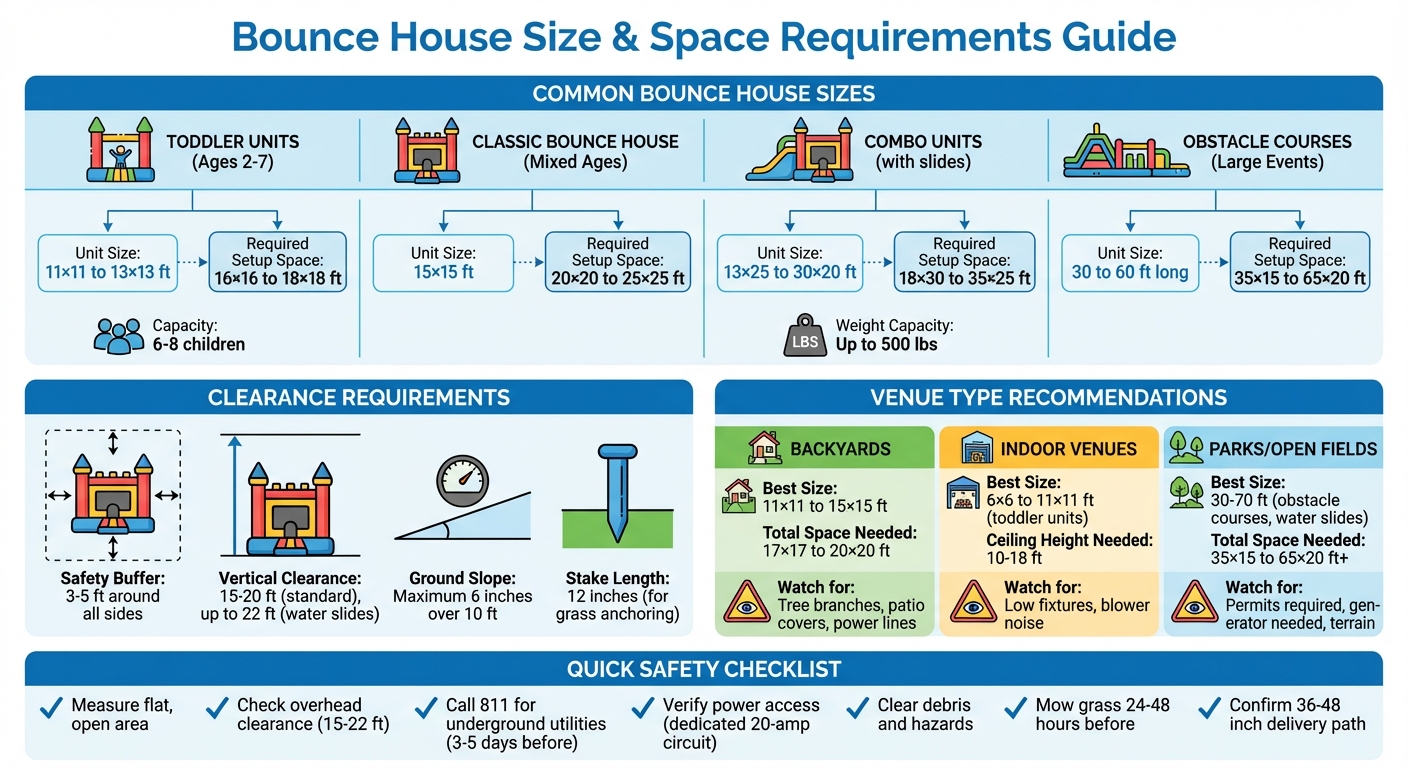
Bounce House Size Requirements by Venue Type
Common Bounce House Sizes
Bounce houses come in a variety of sizes, and the space needed for setup is always larger than the inflatable itself. For smaller toddler units, which usually measure between 11×11 and 13×13 feet, you’ll need a setup area of around 16×16 to 18×18 feet. This extra space accounts for clearance, the blower, and anchoring equipment. These smaller options are great for kids aged 2–7 and fit well in smaller backyards.
The classic 15×15-foot bounce house is a favorite for mixed-age groups. To accommodate this size, plan for a 20×20 to 25×25-foot area. Combo units, which include features like attached slides, generally range from 13×25 to 30×20 feet and require a setup space of 18×30 to 35×25 feet. For larger gatherings, obstacle courses are a popular choice. These can span 30 to 60 feet in length and need a clear area of about 35×15 to 65×20 feet.
Once you’ve chosen the size, it’s essential to consider clearance and overhead requirements to ensure safe use.
Clearance and Overhead Space
Clearance is key to keeping bounce houses safe and functional. You’ll need a 3- to 5-foot buffer around the inflatable to accommodate the blower, entry and exit points, and anchoring equipment. This ensures guests can move safely and gives the crew enough room to secure everything properly.
Don’t forget about vertical clearance either. Standard bounce houses typically need 15 to 20 feet of overhead space, while larger water slides may require up to 22 feet. Check for obstacles like tree branches, power lines, or building eaves – anything below the required height makes the area unsuitable.
The ground is another important factor. It should be flat, with no more than a 6-inch slope over 10 feet, and free of debris, sharp objects, and animal waste. If you’re using stakes to anchor the inflatable on grass, call 811 at least 3 to 5 business days before your event to mark underground utilities. Stakes are about 12 inches long and could damage buried lines for irrigation, gas, or power if not properly accounted for.
Choosing Bounce Houses for Different Venue Types
Picking the right bounce house for your venue isn’t just about fun – it’s about safety and making the most of the available space. Each type of venue comes with its own set of considerations that can influence your choice.
Backyard Parties
Start by measuring your backyard’s flat, open area. For smaller gatherings with kids aged 2–8, compact bounce houses (around 11×11 to 13×13 feet) are a good fit, accommodating 6–8 children. But don’t forget the safety buffer – leave an extra 3 to 5 feet on all sides. That means you’ll need a total area of about 17×17 feet. If you’re hosting a mixed-age group, a standard 15×15-foot bounce house is a better option, requiring around 18×18 to 20×20 feet of space.
Also, keep an eye on overhead obstacles like tree branches, patio covers, or power lines. These can interfere with the setup and operation of the inflatable. If you’re planning to set up indoors, additional adjustments are necessary to ensure everything fits safely.
Indoor Venues
Ceiling height is the most important factor when choosing a bounce house for indoor spaces. Standard models typically need 15 to 18 feet of vertical clearance, but toddler-friendly inflatables are a great alternative, requiring as little as 10 feet. These smaller options (usually 6×6 to 11×11 feet) have lower walls and reduced bounce height, making them ideal for enclosed spaces.
Double-check for any ceiling fixtures or low-hanging lights that could pose a problem. Additionally, blower noise can be amplified indoors, so consider how the sound might affect your guests’ experience.
Parks and Open Fields
Public parks and open fields offer the most flexibility when it comes to bounce house size. These spaces can handle larger setups like obstacle courses (30 to 60 feet long) or water slides with slip-and-slide sections that stretch up to 70 feet. However, you’ll need to take a few extra steps to prepare.
Measure the usable area, excluding obstacles like picnic tables, playground equipment, or fences. Parks may also require permits and proof of insurance from your rental company. If there’s no access to power, you’ll need a generator to keep things running.
Pay attention to the terrain, too. While fields generally work well, avoid steep slopes or uneven ground. Overhead clearance is another key factor – make sure there’s at least 15 to 22 feet of space above the setup area to avoid issues with tree branches or power lines.
These considerations ensure a safe and enjoyable experience, no matter where your event takes place.
Bouncy Rentals USA: Inflatables for Every Venue Size
Bouncy Rentals USA offers inflatables designed to fit venues of all sizes while meeting safety and space requirements. Whether you’re hosting a small backyard gathering or a large outdoor event, our options ensure fun without compromising safety. Here’s how we cater to different venue sizes:
Small Venues: Compact Bounce Houses
For tight spaces, our toddler units and compact bounce houses are perfect. Toddler units, ideal for kids aged 2–4, measure around 11×11 feet or smaller, making them a great choice when space is limited. For slightly larger small venues, compact bounce houses provide entertainment for a broader age range. You can also consider compact water slides, which are about 15×20 feet, to add a splash of fun without overcrowding the area.
Medium Venues: Combo Units
Combo units are a great fit for medium-sized venues like school gyms or community centers. These inflatables, typically sized between 15×15 and 20×20 feet, combine bounce areas with slides and can handle up to 500 lbs, making them suitable for mixed-age groups. Keep in mind that most combo units require 15–18 feet of vertical clearance, so be sure to check the ceiling height if you’re setting up indoors.
Large Venues: Obstacle Courses and Water Slides
For large spaces like parks or open fields, we offer inflatables that bring big fun. Our water slides can tower over 18 feet high and stretch up to 70 feet in length. Inflatable obstacle courses are another popular choice, adding interactive excitement to large gatherings. Make sure your venue meets the overhead clearance recommendations to guarantee safety. Additionally, check with local officials about permits, insurance, and generator rules at least 30 days before your event.
Up next, explore key setup and safety tips to ensure your event goes off without a hitch.
Safety and Setup Guidelines by Venue Size
Setting up your inflatable the right way starts with understanding your venue. Whether it’s a small backyard or a large park, following safety protocols ensures a secure and enjoyable experience for everyone.
Ground and Surface Requirements
The surface you choose for your inflatable is a big deal. Crews won’t set up on gravel, mulch, rocky areas, uneven ground, or steep slopes because these surfaces can make the inflatable unstable and cause damage to the equipment. To prepare, make sure the area is flat, level, and free of debris before the delivery team arrives.
Grass is a popular choice, but it needs some prep work. Mow your lawn 24–48 hours before delivery – don’t wait until the morning of – and turn off sprinklers the night before to avoid wet grass and fresh clippings. Also, if you’re using grass, call 811 at least 3–5 business days ahead of time to locate underground utilities like gas or water lines.
For safety, leave 3 to 5 feet of buffer space around the inflatable. This extra room is essential for the blower, entrance ramp, and participants to move safely. Don’t forget about vertical clearance – at least 20 feet is needed to avoid hazards like tree branches and power lines.
Power Access and Anchor Points
Once the ground is ready, focus on power and anchoring. Each blower needs a dedicated 115-volt, 20-amp circuit. Sharing an outlet with other large equipment can lead to power outages during your event.
Anchoring depends on the surface type. On grass, deep stakes (usually 12 inches long) provide the best stability. For hard surfaces like concrete or asphalt, you’ll need heavy weights like sandbags or water barrels, though these are less stable than stakes. Be sure there are no low-hanging power lines, tree branches, or utility lines in the setup area. Additionally, make sure there’s a clear path at least 36 to 48 inches wide for the delivery team to transport the inflatable, which can weigh anywhere from 200 to 1,000 pounds.
Pre-Event Measurements and Consultation
After preparing the site and securing the equipment, double-check your measurements. Accurate dimensions help avoid last-minute problems. Keep in mind that the total space required is larger than the inflatable itself – a 15×15-foot bounce house, for example, needs a 20×20-foot area to include safety zones, blowers, and anchoring equipment. Use a tape measure to confirm your venue meets these requirements, including the 5-foot safety buffer.
Verify that gates and entryways are wide enough for delivery. The setup area should be mostly level, with no more than a 6-inch slope over 10 feet. To make things easier, share photos and measurements with Bouncy Rentals USA for advice. Mark the setup spot with spray paint or stakes, keeping it away from sprinklers and HVAC units, so the delivery team knows exactly where to position the inflatable.
Conclusion
This guide has highlighted how your venue’s size and layout can significantly impact the inflatable rental you choose. Picking the right inflatable isn’t just about making it fit – it’s about prioritizing safety and creating a fun, worry-free experience for everyone involved.
Getting ready ahead of time is crucial. Measure your space carefully, leave enough room for clearance, and make sure the setup surface is appropriate. If you’re unsure, share your venue’s photos and dimensions with the team for personalized advice.
Whether you’re hosting in a small backyard or an expansive park, Bouncy Rentals USA ensures your inflatable is a perfect match. Their delivery team takes care of setup and safety checks so you can focus on enjoying the event. By understanding your venue’s requirements and working with the right partner, you can turn any space into an unforgettable party spot.
FAQs
How can I make sure a bounce house will fit in my venue?
Start by measuring the space where you plan to set up the bounce house. Grab a tape measure and check both the length and width of the area. Make sure to leave at least 5 feet of extra clearance on all sides for safety and easy access. Don’t overlook the height – watch out for low-hanging branches, wires, or anything else that could get in the way overhead.
To visualize the setup, mark the area using chalk, cones, or flags. This step also helps confirm the space is level, clean, and free of any debris. Taking these precautions ensures the inflatable will fit comfortably and safely, so your event runs smoothly!
What safety tips should I follow when setting up a bounce house?
Creating a safe and enjoyable experience with a bounce house starts with proper setup. Here are some essential tips to keep in mind:
- Pick the Right Spot: Choose a flat, level surface – grass or another soft area works best. This minimizes the risk of tipping or injuries from falls. Make sure there’s at least 3–6 feet of open space on all sides for safe movement and easy supervision.
- Secure It Properly: Use stakes or weights to anchor the bounce house firmly, especially when setting it up outdoors. This prevents it from shifting or becoming unstable during use.
- Avoid Nearby Hazards: Stay clear of power lines, trees, or low-hanging branches. These can pose serious risks to anyone using the bounce house.
- Supervise at All Times: An adult should always be present to monitor activity. This helps enforce capacity limits and ensures everyone is playing safely.
- Watch the Weather: Windy conditions can make a bounce house unsafe. If the wind picks up, it’s better to deflate and wait for calmer weather.
By sticking to these tips, you can create a safe and fun environment for everyone to enjoy the bounce house.
Do I need a permit to rent a bounce house for a public park event?
Yes, in most cases, you’ll need a permit to set up a bounce house in a public park. Local authorities often require this to ensure safety and that all park rules are followed. It’s a good idea to reach out to your local parks department well in advance to confirm what’s needed and to take care of any required paperwork. This way, you can avoid unexpected problems and keep your event running smoothly.