Commercial-grade bounce houses can last 5–10 years with proper care, while residential models typically last 1–3 years. The lifespan depends on factors like material quality, usage frequency, maintenance, and storage. Indoor use and regular upkeep significantly extend durability, while outdoor exposure and heavy use can shorten it.
Key Points:
- Residential Models: Average lifespan is 6–18 months; hybrid models last 3–4 years.
- Commercial Models: Typically last 5–7 years; up to 10 years with excellent care.
- Indoor Use: Extends life to 5–8 years for commercial units.
- Outdoor Use: Reduces lifespan to 3–5 years due to UV rays and moisture.
- Maintenance Matters: Cleaning, repairing tears, and proper storage are critical.
Quick Tip:
For maximum longevity, invest in commercial-grade PVC vinyl units, use ground tarps, and always store inflatables in a dry, climate-controlled space.
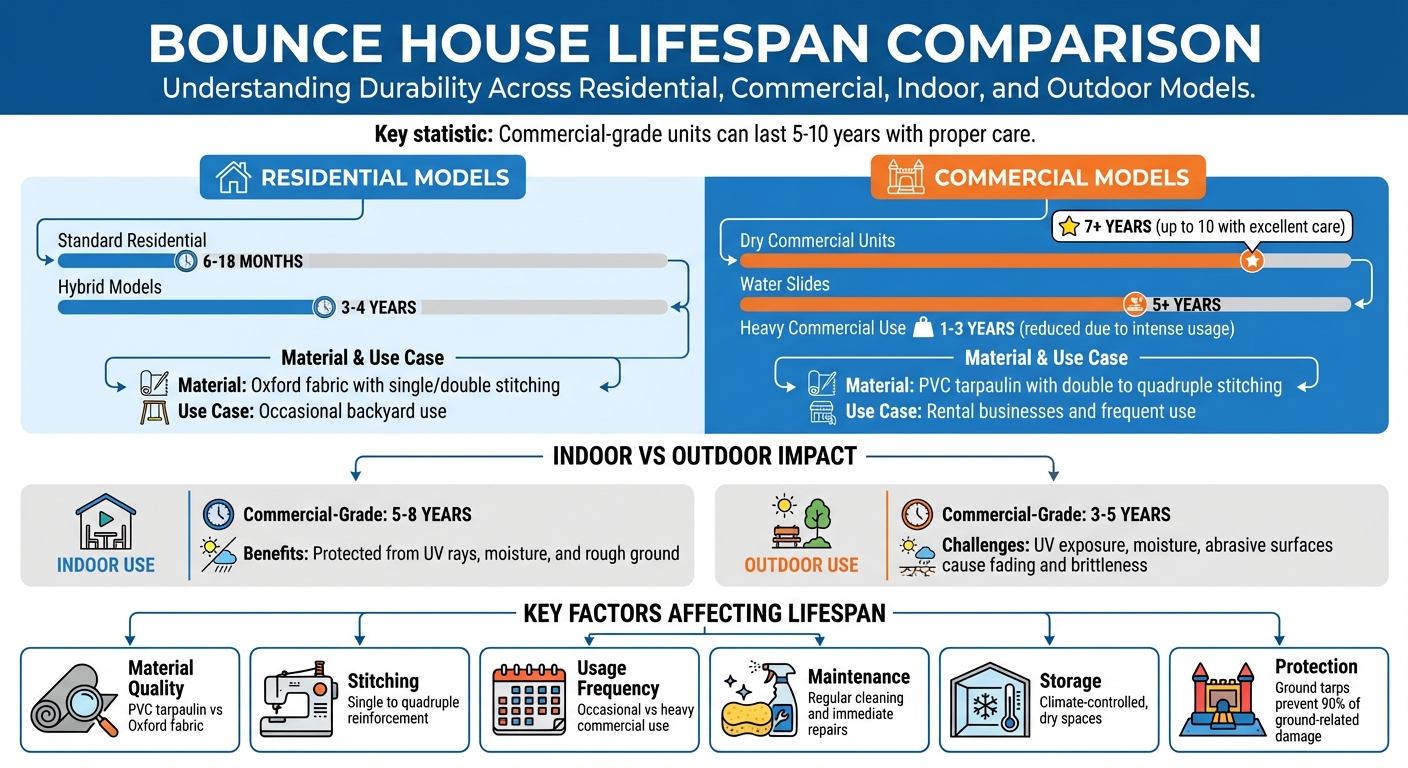
Bounce House Lifespan Comparison: Residential vs Commercial Models
How Long Bounce Houses Typically Last
The lifespan of a bounce house depends on its model and how it’s used, which is crucial for planning and managing expectations.
Residential vs. Commercial Models
Residential bounce houses, often made with Oxford fabric and featuring single or double stitching, are designed for occasional use. These typically last anywhere from 6 to 18 months. For families seeking something sturdier, hybrid models constructed with commercial-grade materials offer a longer lifespan, generally lasting 3 to 4 years.
On the other hand, commercial-grade bounce houses are built for heavy-duty use, featuring durable materials and deep-layered stitching. Dry commercial units can last at least 7 years, while water slides usually have a lifespan of 5 years or more. According to Magic Jump:
A typical commercial grade bounce house manufactured by Magic Jump, if properly taken care of can last five to ten years or possibly even more.
However, intense usage in commercial settings can shorten this lifespan significantly, often reducing it to 1–3 years. The frequency and intensity of use play just as critical a role as the quality of the materials.
Indoor vs. Outdoor Use
The environment where a bounce house is used also impacts its longevity. Indoor and outdoor use present different challenges to the materials. Leo Li, Accounting Manager at Inflatplay, notes:
A commercial-grade inflatable for outdoor use will last 3 to 5 years. If you use it mostly indoors, it can last 5 to 8 years.
Outdoor use exposes the materials to harsh conditions like UV rays, moisture, and abrasive surfaces, which can lead to fading, brittleness, and quicker wear. In contrast, indoor use shields the unit from sunlight, rain, and rough ground, significantly extending its life. For rental businesses, offering indoor setups whenever possible can help preserve equipment longer and reduce the need for frequent replacements.
What Determines Bounce House Lifespan
When it comes to bounce house durability, several factors play a role in determining how long they’ll last. By focusing on these elements, owners and rental operators can get the most out of their investment while avoiding unnecessary replacements.
Material Quality and Build
The materials and construction methods used in a bounce house are key to its longevity. Commercial-grade units are typically made with PVC tarpaulin, reinforced with stitching at stress points like corners and entryways. As Pogo Bounce House puts it:
The number one factor that determines bounce house longevity is the quality of that bounce house. The quality of the materials and the manufacturing process make all the difference.
In areas of high stress, manufacturers often use double, triple, or even quadruple stitching to prevent seams from failing. For water inflatables, industrial-strength heat sealing tape or heat welding ensures a waterproof seal, protecting internal components from water damage and mold.
| Feature | Commercial PVC Tarpaulin | Residential Oxford Fabric |
|---|---|---|
| Stitching | Double to Quadruple | Single to Double |
While material quality is critical, how the bounce house is used also directly impacts its lifespan.
How Often and How It’s Used
Frequent use, especially in commercial rental settings, puts significant strain on a bounce house. Occasional backyard use, on the other hand, results in much less wear and tear. Leo Li, Accounting Manager at Inflatplay, notes:
A well-maintained commercial inflatable can last 3 to 5 years with regular use, while one for occasional private use can last over 5 to 7 years.
Improper use – like exceeding weight limits, wearing shoes inside, or introducing sharp objects – can accelerate damage, especially to seams and fabric. For commercial operators, constant upkeep is crucial to maintaining structural integrity.
Cleaning and Maintenance
Routine cleaning is not just about keeping the bounce house looking good – it’s essential for durability. Using a 1:3 vinegar-to-water solution prevents dirt buildup that can weaken the fabric, while harsh chemicals like bleach or ammonia can damage the vinyl. The Safety in Inflatable Amusement Alliance highlights the importance of regular care:
Regular maintenance isn’t just about keeping your bounce house clean – it’s about ensuring the safety of children and protecting your investment.
Small tears or loose seams should be repaired immediately with professional-grade patch kits to prevent them from growing into larger, irreparable issues.
Storage and Weather Protection
Proper storage practices are another critical factor in extending a bounce house’s lifespan. Always ensure the unit is completely dry before storing it, as moisture can lead to mold and mildew, which weaken stitching and fabric. Inflate the unit outdoors to air-dry thoroughly, paying attention to creases where moisture can hide.
A few additional tips for storage and setup include:
- Use a ground tarp: This protects the bottom of the bounce house from punctures and abrasions, preventing up to 90% of ground-related damage.
- Store in climate-controlled spaces: Keep the unit in a cool, dry area away from direct sunlight, which can cause fading and make PVC brittle. Use pallets to keep it off the floor and avoid moisture or rodent damage.
How to Make Bounce Houses Last Longer
If you want your bounce house to provide years of reliable use, whether for a rental business or personal events, taking the right steps to care for it is key. By focusing on quality, maintenance, and storage, you can ensure your investment stays in top shape for as long as possible.
Buy Quality Bounce Houses
The foundation of a long-lasting bounce house is its quality. Opt for commercial-grade units made with heavy-duty PVC vinyl and reinforced stitching. At a minimum, look for double stitching, but for areas that endure the most stress – like the bounce chamber and entryways – triple or even quadruple stitching is better . As Hero Kiddo Inflatables explains:
Industrial-grade fabrics can handle the impact of hundreds of jumps without tearing or wearing down.
A solid warranty, ideally three years or more, often signals superior craftsmanship. For water slides, check for industrial-strength heat-sealing tape to block water from seeping into internal components. Additionally, UV-resistant and mold-resistant coatings are essential for handling outdoor use. With proper care, dry bounce houses can last at least seven years, while water slides typically hold up for five years or more.
Once you’ve chosen a quality product, the next step is maintaining it.
Follow Regular Cleaning and Maintenance
Cleaning and maintenance aren’t just about appearances – they’re crucial for preventing small issues from snowballing into costly repairs. After each use, remove debris, especially from seams and crevices, and clean the surface with safe cleaning agents. Address small tears immediately with patch kits to stop them from spreading .
Disinfect high-touch areas with a vinyl-safe cleaner, rinse thoroughly, and let the unit air-dry completely before deflating . For water slides, drain all water right after use and use large fans to dry out seams and pools quickly. If you’re running a rental business, rotate your inventory to avoid overworking any single unit.
Regular maintenance is only part of the equation – proper storage is just as important.
Store Bounce Houses Properly
How you store your bounce house can significantly impact its lifespan. Use storage bags or containers specifically designed for inflatables to protect them from damage and pests. Store the unit in a climate-controlled space, ideally between 50–80°F with humidity levels below 50%. Elevate it off the ground on pallets or shelving to improve air circulation. Avoid storing the unit outdoors, even under a cover, as fluctuating temperatures and moisture can weaken the PVC material.
Blowers also need care. Keep them in a cool, dry space to ensure they last 5–10 years.
Conclusion
The lifespan of your bounce house depends on a few critical factors: the quality of materials, consistent upkeep, and smart storage habits. Choosing commercial-grade materials with reinforced stitching is key to ensuring durability. With proper care, a bounce house can last anywhere from 5 to 7 years.
As Henry, an expert in inflatable amusement equipment, explains:
Regular maintenance isn’t just about keeping your bounce house clean – it’s about ensuring the safety of children and protecting your investment.
In fact, up to 90% of inflatable-related incidents can be avoided with proper maintenance.
To keep your bounce house in top shape, adopt simple habits. After every use, clean it with eco-friendly cleaners or a 1:3 vinegar-water mixture, allow it to dry completely, and repair any small tears right away. Store it in a cool, dry place, and use a ground tarp during setup to minimize punctures and moisture damage .
FAQs
How do I tell if my bounce house is commercial-grade?
Commercial-grade bounce houses are built with durable materials, such as 18-ounce PVC-coated vinyl, making them tough enough to handle frequent and heavy use. These models often include reinforced seams, larger dimensions, and warranties ranging from 1.5 to 3 years. On the other hand, residential inflatables are made with lighter materials, are smaller in size, and usually last between 6 months and 1 year. Thanks to their sturdy construction, commercial-grade bounce houses are perfect for rental businesses or indoor play centers.
What are the first signs a bounce house is wearing out?
The earliest indicators of wear in a bounce house often include visible damage, such as holes, weakened seams, or signs of material breakdown. These issues can pose safety risks, particularly as the bounce house approaches its average lifespan of 3 to 5 years with proper care – or even less under heavy commercial use. Conducting regular inspections is key to spotting and fixing these problems before they escalate.
Can I repair small tears myself or should I hire a pro?
Yes, you can fix small tears in a bounce house on your own with tools like repair kits, vinyl glue, or heavy-duty tape. Keeping it clean and inspecting it regularly helps you spot minor issues before they worsen. For larger tears, damaged seams, or if you’re uncertain about the repair, hiring a professional is a safer option. Taking care of regular maintenance can help your bounce house last longer.