Keeping fabric inflatables clean is essential for durability, safety, and maintaining their value. Regular cleaning prevents wear, mold, and damage that can lead to costly repairs or replacements. A well-maintained inflatable can last 3–5 years longer, saving you thousands of dollars.
Here’s what you’ll need to know:
- Dirt, sand, and grit cause wear on vinyl and stitching.
- Moisture leads to mold in 24–48 hours, potentially costing $200–$500 per unit to remediate.
- Proper cleaning with fabric-safe products and thorough drying prevents damage.
- Storage matters – most damage happens during storage, not use.
Follow these steps for cleaning bounce houses and store inflatables effectively, ensuring they remain safe, functional, and ready for use.
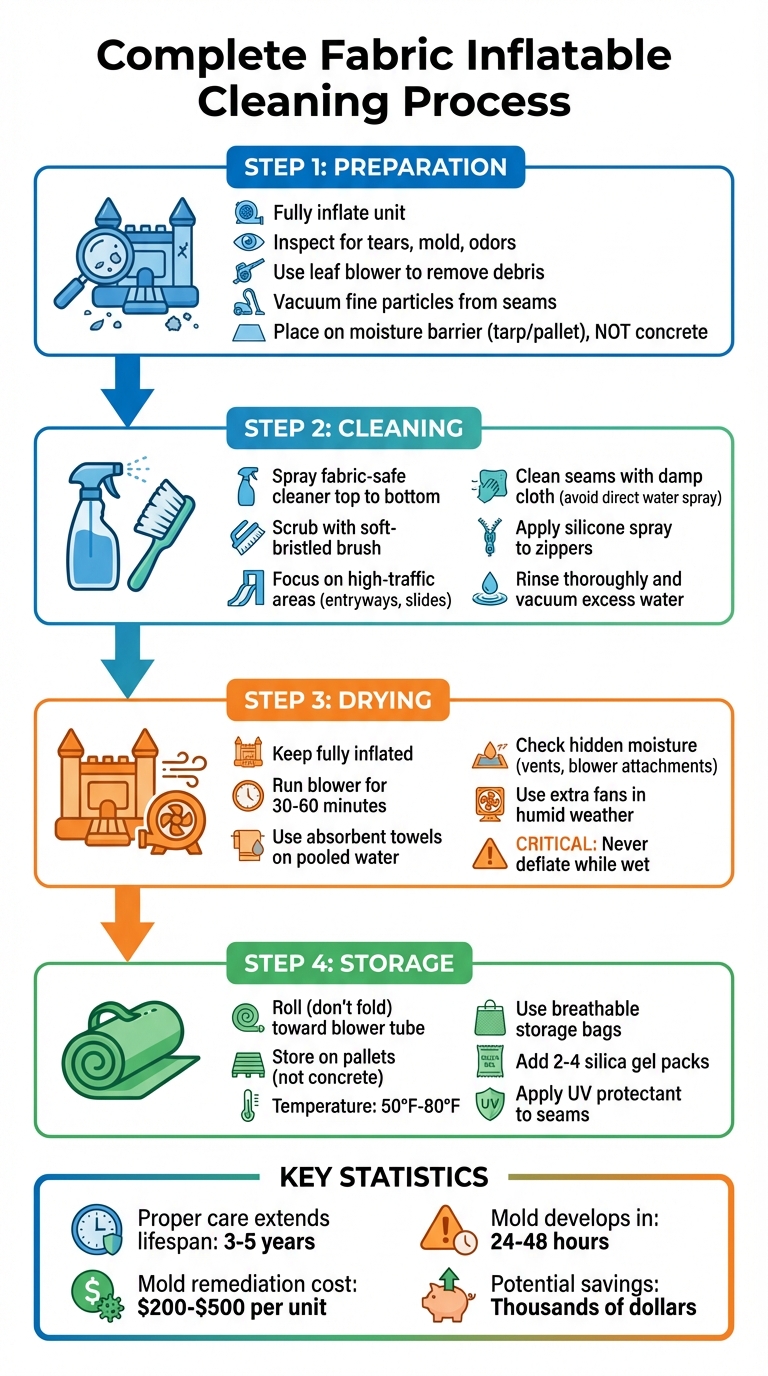
Complete Fabric Inflatable Cleaning Process: 4-Step Guide
Materials and Tools You’ll Need
Before diving into the cleaning process, gather these essentials to protect your inflatable and achieve the best results.
Fabric-Safe Cleaning Products
Using the right cleaning products is key to preserving your inflatable’s fabric and extending its lifespan. Some highly recommended marine-grade cleaners include NRS Inflatable Boat Cleaner ($16), Aurora Inflatable Boat Cleaner ($24), and Star brite Inflatable Boat & Fender Cleaner ($27–$29). These are specially designed for materials like Hypalon, PVC, and vinyl, ensuring they clean effectively without damaging adhesives or fabrics. Practical Sailor conducted a 2008 test on a mold-covered white Avon Rover R250 (Hypalon) and found NRS Inflatable Boat Cleaner to be the top performer for restoring a bright white finish. Aurora Inflatable Boat Cleaner also stands out, boasting a 100% user rating for its effectiveness on surfaces like Hypalon and Polyurethane.
For those looking for budget-friendly alternatives, simple solutions like mild dish soap mixed with water work well for general cleaning. Tough stains and odors can be handled with a baking soda paste, while a 1:1 mixture of white vinegar and water is great for combating mildew. If you’re using concentrated cleaners such as Simple Green, Awesome, or OdoBan, make sure to dilute them with water. For an eco-conscious option, Revival Ecological Paste (90% biodegradable, $57 for 16 oz.) is a solid choice.
"Avoid household or automotive cleaners as these can contain ingredients that may leave residues on your collar fabric that may prevent UV protectors or glues from adhering properly in the future."
If you need to use solvents like white spirit or specialized Hypalon cleaners, handle them with care. Always work in a well-ventilated area to avoid damaging PVC or inhaling harmful fumes.
Cleaning Equipment
To get the job done right, you’ll need a few tools:
- Soft-bristled brushes for gentle scrubbing
- Shop vacuum to remove debris and water
- Clean, absorbent towels for drying
- Spray bottle for evenly applying cleaning solutions
Drying is essential to prevent mold growth, which can occur within 24 to 48 hours. High-powered leaf blowers or box fans are excellent for ensuring your inflatable is completely dry before storage. If your inflatable has slides, lubricants like Armor All, Pledge, or Slide Slick can help maintain a smooth, slippery surface.
Safety Equipment
Don’t forget to protect yourself during the cleaning process. Equip yourself with:
- Nitrile or rubber gloves to prevent skin irritation
- Safety glasses to shield your eyes from splashes
- Masks when dealing with products that produce fumes
"Latex Gloves: We use these as our hand protection when cleaning the inside of the inflatables."
- Gary Simon, Jungle Jumps
Proper ventilation is a must when working with concentrated cleaners or in enclosed spaces. Open windows or, better yet, work outdoors to avoid inhaling chemical vapors.
Once you’ve gathered these supplies, you’ll be ready to tackle the cleaning process and keep your fabric inflatables in top condition. If you’re renting an inflatable from Bouncy Rentals USA, you can rest easy knowing they adhere to these cleaning best practices to ensure their equipment is sanitized, safe, and ready for your next event.
How to Clean Fabric Inflatables
Preparation Steps
Start by inflating the unit fully and giving it a thorough once-over. Look for tears, loose stitching, odors, mold spots, or any forgotten items like jewelry, keys, or toys. If you spot damage, mark it with painter’s tape so you can decide whether to patch or replace the damage later.
Before deflating, use a leaf blower to clear out grass clippings, leaves, and twigs, especially around the seams where debris tends to collect. This step prevents wear on the fabric caused by trapped grit. Follow up with a shop vacuum to remove finer debris from crevices.
When choosing a spot to clean the inflatable, avoid placing it directly on bare concrete. Concrete can trap moisture, leading to condensation and mold. Instead, use a moisture barrier like a heavy-duty tarp or a pallet to keep the inflatable dry. Mold can start forming in as little as 24 to 48 hours if the material stays damp.
Once the debris is cleared and the inflatable is ready, you can begin cleaning the surface section by section.
Cleaning the Surface
Spray one of the top cleaning agents for bounce houses onto the inflatable using a spray bottle, working from top to bottom in manageable sections. Use a soft-bristled brush to scrub all surfaces, paying extra attention to high-traffic spots like entryways and slides. Be careful around seams – don’t spray water directly into them. Instead, use a damp cloth to clean these areas gently, as water trapped inside the baffles can be hard to dry.
For zippers and slides, apply silicone spray to keep zippers moving smoothly. Use a slide lubricant, such as Armor All or a specialized wax, to maintain the slickness of sliding surfaces. After scrubbing, rinse thoroughly with clean water and use a vacuum to remove any remaining water.
Drying and Inspection
After cleaning, it’s essential to dry the inflatable completely. Keep the unit fully inflated and run the blower for at least 30 to 60 minutes to circulate air through the entire structure. Use absorbent towels to soak up any pooled water, especially in slide channels and corners. Check for hidden moisture by opening vent zippers and feeling around blower attachments.
"Deflating a wet bounce house is the single most common cause of mold." – Reservety
If the weather is humid, set up extra fans to speed up the drying process. You can also tilt the inflatable slightly by placing a chair or dolly under one side, helping water drain more efficiently.
Before deflating, do a final inspection while the unit is still inflated. Look for any missed damage and ensure the blower motor is providing steady airflow. Clear debris from the intake screens and hand-tighten all D-rings and metal hardware. Only deflate the inflatable once every surface is completely dry. This careful drying process not only prevents mold but can also extend the lifespan of your inflatable by several years.
Removing Tough Stains and Mold
Bleach Treatment for Mold
Mold thrives in damp conditions, appearing within 24–48 hours and potentially damaging both the weather-resistant PVC vinyl and the underlying fabric. While bleach isn’t recommended for routine cleaning, it’s the go-to solution for tackling active mold growth.
"The removal of mold and mildew is the ONLY instance where you should EVER use bleach on your bounce house." – Pogo Bounce House
For general mold issues, mix a 10:1 water-to-bleach solution. For more severe cases, opt for a 50:50 mix. Always wear rubber gloves and a mask to protect yourself from mold spores during the process. Apply the solution directly to the affected areas, as bleach can cause color fading if used elsewhere. Scrub gently with a soft brush for 5–10 minutes, then rinse thoroughly to remove all residue.
After cleaning, dry the inflatable completely in direct sunlight to ensure any lingering spores are eliminated.
For stains unrelated to mold, or for oxidation issues, different cleaning methods are more effective.
Stain and Oxidation Removal
When dealing with stains like grease or organic buildup, specialized cleaners are a better choice than harsh household chemicals. Products such as Soft Scrub or Clorox Clean-Up can handle tough scrubbing jobs, while a baking soda paste offers a gentler solution for set-in stains. To use the paste, apply it to the stain, let it sit for 10–15 minutes, then scrub and rinse.
Over time, inflatables may develop a chalky, dull appearance due to oxidation. A product like Dynamite Vinyl Shine Whitening Formula can restore the material’s original look without the risks associated with standard degreasers. For lighter mildew or persistent odors, a 3:1 water-to-white-vinegar solution is a safer alternative to bleach. Let the mixture sit for 1–2 hours before rinsing and drying.
Always test any cleaner on a small, hidden section first to ensure it won’t damage the material or cause color fading. Avoid cleaners with chlorine (except for mold treatment), Methyl Ethyl Ketone (MEK), or harsh bathroom solvents, as they can weaken seams and strip the vinyl coating.
Cleaning Method Comparison
| Cleaning Agent | Best For | Application Time | Fabric Safety Rating |
|---|---|---|---|
| Bleach Solution (10:1) | Active mold and mildew | 5–10 minutes | Low (Risk of fading/degradation) |
| Baking Soda Paste | Tough stains, grease, odors | 10–15 minutes | High (Non-abrasive) |
| Vinegar Solution (3:1) | Mildew, odors, light stains | 1–2 hours | High (Safe for all fabrics) |
| Specialized Cleaners (e.g., OdoBan) | Disinfection, set-in dirt | Per label instructions | Medium-High (Vinyl-safe) |
| Oxidation Removers (e.g., Vinyl Shine) | Restore shine, remove oxidation | 5–10 minutes | Medium (Chemical-based) |
Using the right cleaning method for each situation not only improves results but also helps extend the life of your inflatable. Ignoring mold or stains can lead to costly replacements, with expenses ranging from $500 to over $2,000 per unit. On the other hand, proper care and storage can add 3 to 5 years to an inflatable’s lifespan. By taking a targeted approach, you can protect both the appearance and the value of your investment.
Storage and Ongoing Care
Once your inflatable is clean and dry, storing it correctly is crucial to keep it in good condition. Start by rolling the unit instead of folding it – folding can leave permanent creases. Always roll toward the blower tube end to let any trapped air escape. Lay a tarp on the ground before rolling to protect the underside from wear and to keep dirt out.
"Most inflatable damage does not happen during use. It happens during storage." – Reservety
When storing, place the unit on wooden or plastic pallets to prevent it from absorbing moisture from concrete floors. Keep storage temperatures between 50°F and 80°F; cold temperatures can make the vinyl brittle, while heat over 100°F can weaken adhesives and damage the material. Use breathable canvas or mesh storage bags instead of airtight plastic ones to manage moisture, and include 2–4 large silica packs. Recharge the silica packs every 2–3 months to maintain their effectiveness. These steps ensure your inflatable stays in top shape after cleaning.
UV Protection Application
Sunlight can gradually wear down vinyl, causing it to fade and become brittle. To protect your inflatable, apply a thin layer of vinyl protectant to high-stress areas like seams and anchor points before storing it. Make it a habit to reapply the protectant at the start of each season or after a deep cleaning. For added protection, store the inflatable in a shaded, climate-controlled space to minimize exposure to extreme heat.
Folding and Storage Methods
If folding the inflatable is unavoidable, change the fold lines slightly each time to avoid creating permanent stress marks. Remove all trapped air before packing by using your body weight or a vacuum deflator – air pockets can lead to condensation and moisture issues. Keep metal stakes, sandbags, and blowers in separate labeled bags to prevent punctures. To deter pests like rodents, place peppermint oil sachets or cedar blocks around the storage area, but avoid putting them inside the storage bags to protect the vinyl.
Regular Maintenance Schedule
After every rental, inspect the seams for any tears, vacuum out debris, disinfect high-touch surfaces, and make sure the unit is completely dry before packing it away. During the off-season, check the storage bags every 4–6 weeks for moisture, mold, or signs of pests. Rotating stored inflatables every 2–3 months helps prevent permanent compression marks. Twice a year, perform a deep cleaning, reapply UV protectant, and conduct a full repair check. Regular inspections help catch small issues before they become costly. Neglecting proper storage can add up – a business with 20 inflatables could face replacement costs of $3,000 to $10,000 annually if just two units are lost due to poor storage practices.
Conclusion
Keeping your inflatables clean does more than just protect your investment – it also preserves your reputation. With regular maintenance, you can extend the lifespan of equipment by 3 to 5 years, which is especially important when dealing with units that range from $1,500 to $10,000 or more.
Cleaning isn’t just about appearances; it’s also an opportunity to spot minor issues before they turn into costly repairs. For example, mold can develop in as little as 24 to 48 hours, potentially leading to remediation costs of $200 to $500 per unit. Ensuring your equipment is thoroughly dried and stored properly can help you avoid these unnecessary expenses.
Beyond the financial benefits, regular cleaning ensures your equipment stays safe and enjoyable for participants. It also reinforces your commitment to providing high-quality service, which translates to greater customer satisfaction.
At Bouncy Rentals, we know how important proper cleaning and storage are – not only for extending the life of your inflatables but also for ensuring every event is safe and fun. By following these steps, you’ll keep your equipment in top condition and ready for every celebration with Bouncy Rentals. For more help, see our setup and takedown checklist.
FAQs
How often should I deep-clean a fabric inflatable?
Deep-clean fabric inflatables after they’ve seen heavy use, hosted major events, or show visible dirt or stains. Routine cleaning after each use helps prevent mold, mildew, and bacteria from taking hold, which also helps the inflatable last longer. To keep them in top condition, plan for deep cleaning on a regular basis – especially after multiple uses or when dirt has clearly built up. This keeps them hygienic and safe for everyone.
What’s the safest way to clean seams without trapping water inside?
To clean seams effectively and avoid water damage, use a soft brush or a microfiber cloth dampened with a solution of mild dish soap and water. Gently scrub the seams to remove dirt or buildup. After cleaning, make sure to dry the area thoroughly using a clean towel or allow it to air dry in a well-ventilated space. Steer clear of using too much water or harsh chemicals, as these can lead to moisture seeping into the seams, potentially causing mold or mildew issues.
How can I tell it’s 100% dry before I store it?
To properly dry your inflatable before storing it, inspect every part, especially seams and crevices, for any lingering moisture. Use a soft cloth or towel to wipe it down thoroughly. Then, let it air dry in a sunny, well-ventilated spot. If you’re short on time, air blowers or additional towels can help speed up the process. Make sure the surface is completely dry before storing to avoid issues like mold or mildew.