Creating events that accommodate children with special needs requires careful planning and adjustments. Many traditional inflatables can be overwhelming due to noise, bright colors, or crowded spaces. However, with the right modifications, they can provide safe, enjoyable, and developmentally supportive experiences for all participants.
Key considerations include:
- Sensory adjustments: Use quieter blowers, softer colors, and avoid overstimulating lights.
- Physical accessibility: Ensure ramps, wide entrances, and smooth pathways for mobility aids.
- Safety enhancements: Add padding, safety barriers, and separate spaces by age or weight.
- Comfort features: Provide shaded areas, cooling stations, and quiet zones for breaks.
- Clear communication: Use visual aids, signage, and pre-event guides to help attendees navigate.
These changes not only make inflatables more welcoming but also support motor skills, sensory integration, and social interaction. Companies like Bouncy Rentals USA specialize in creating accessible and safe inflatable setups, ensuring every child can participate.
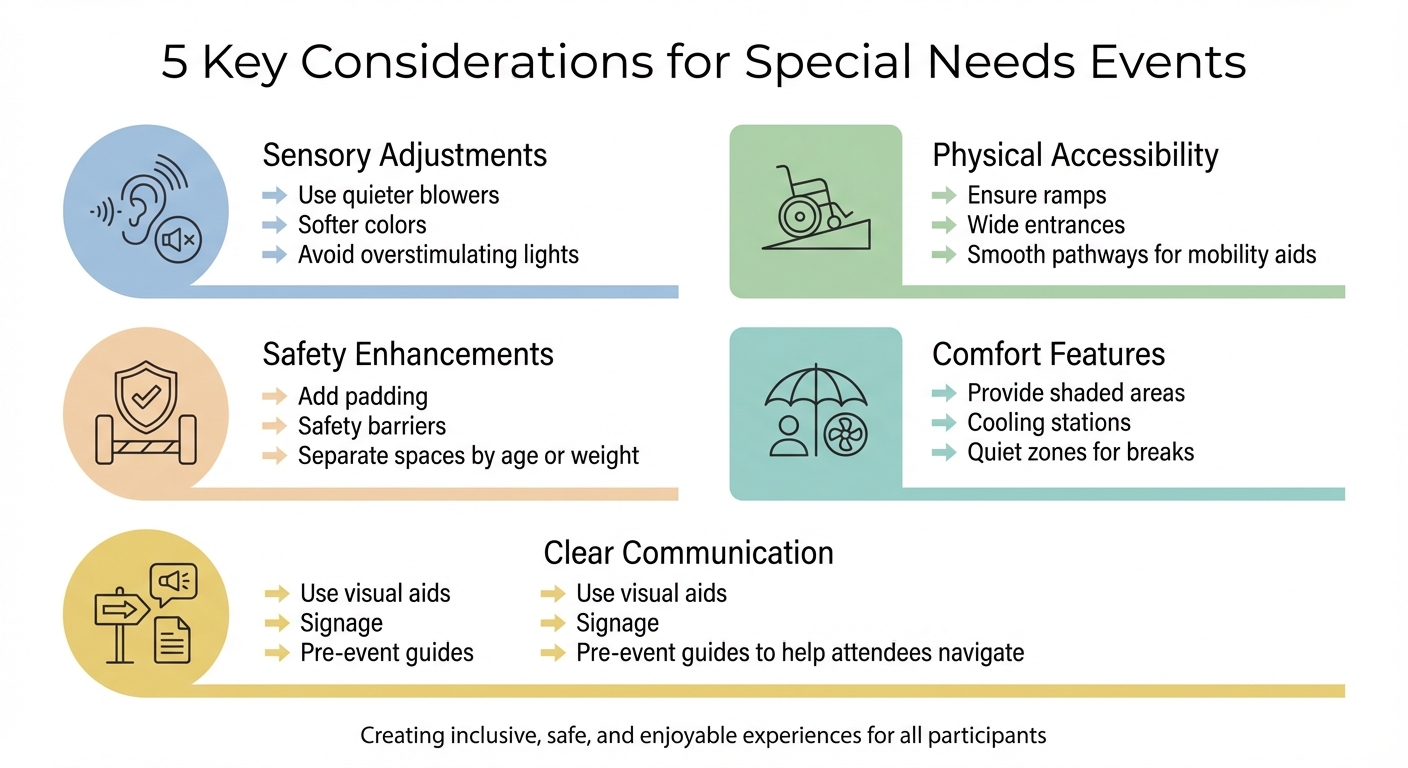
5 Key Considerations for Adapting Inflatables for Special Needs Events
Assessing Participant Needs and Event Requirements
Start by understanding attendee needs – this will shape your choices for equipment and event layout. Caregivers are a great resource for insights into sensitivities, mobility requirements, and social preferences. For instance, some children might love bouncing in an inflatable but feel anxious when sharing the space with others, requiring scheduled alone time instead. Others might benefit from visual cues to help them navigate the experience. This initial assessment is key to creating an event setup that feels inclusive and welcoming.
Recognizing Sensory Preferences and Triggers
Sensory sensitivities can vary greatly among children with special needs. For some, the constant hum of blower motors might be unsettling, while others could find bright colors or intense lighting overwhelming. Identifying these triggers early on lets you choose inflatables designed with quieter blowers and softer, less stimulating colors.
"We understand that too much noise and music can really distress some of those with special needs and so the SEN sessions will be much quieter."
- Leighton Mills, Business Owner, Open Air Bounce
You might also consider working with organizations like the Center for Autism and Related Disabilities (CARD) to create customized assessment tools for your event.
Once sensory needs are clear, the next step is to focus on physical accessibility so that everyone can participate safely.
Planning for Physical Accessibility and Mobility
Physical accessibility is another critical element of planning. Understanding the mobility aids participants use – like wheelchairs, walkers, or strollers – can guide your equipment choices. Look for inflatables with ramps and wider entrances to accommodate these needs.
Evaluate the event space for potential obstacles or bottlenecks. Managing traffic flow is easier with inflatables that have a single entrance and exit secured by Velcro, which minimizes unexpected interactions and helps control crowd movement. For larger events, obstacle courses can be a great way to keep participants engaged while also reducing wait times and overstimulation.
Don’t forget to include quiet zones where participants can take a break if they’re feeling overwhelmed. These areas should have minimal sensory input and be clearly marked with visual aids like "Now and Next" boards to guide participants to these calm spaces.
Selecting and Modifying Inflatables for Special Needs
When creating inclusive spaces, adapting inflatables to meet sensory and physical needs can make all the difference. By focusing on specific modifications, you can turn a standard inflatable setup into a welcoming environment for everyone.
Reducing Noise from Blowers and Equipment
Noise from blowers is a frequent concern at sensory-friendly events. Switching to ultra-quiet generators can significantly reduce this issue. As Jupiter Bounce explains, "an ultra-quiet generator is also used rather than a traditional generator to accommodate those with noise sensitivities". Additionally, you can opt for inflatables equipped with quieter blowers designed specifically for children with sensory processing challenges.
Another effective strategy is increasing the distance between the noise source and the inflatable. Position blowers and generators as far as 115 feet away, using heavy-duty extension cords to maintain performance. This simple adjustment minimizes noise exposure for participants. Just remember, inflatable blowers typically require 7.5 amps of power, and most circuits can only handle one or two blowers at a time to avoid electrical issues.
While noise control is essential, managing temperature is equally important for participant comfort.
Controlling Temperature for Participant Comfort
Direct sunlight can quickly turn bounce houses into uncomfortable spaces, especially on hot days reaching 98°F. Strategic placement is key – set up inflatables near buildings, under trees, or beneath large canopies to reduce heat exposure. Timing is also important; schedule events during cooler parts of the day, avoiding peak sun hours from 10:00 AM to 4:00 PM.
To keep participants cool, place portable fans near entrances and exits to improve air circulation. Misting tents and water-based activities like slides or splash zones can offer immediate relief. Create shaded cooling stations stocked with chairs, water, electrolyte drinks, and cooling towels. For those who may not recognize signs of heat fatigue, plan shorter play sessions with regular breaks in air-conditioned spaces.
Adjusting Lighting to Prevent Overstimulation
Lighting adjustments can have a big impact on sensory comfort. Replacing fluorescent lights with LED lighting is a simple but effective way to reduce overstimulation. Fluorescent lights can flicker at high rates (up to 160Hz), causing headaches and discomfort, while LEDs offer minimal to no flicker.
| Feature | Traditional Lighting | LED Lighting |
|---|---|---|
| Flicker Rate | High flicker; can cause discomfort | Minimal or no flicker |
| Acoustics | Buzzing from ballasts | Silent operation |
| Heat Emission | High heat output | Low heat output |
| Customization | Limited options | Dimmable and color-tunable |
To create a calming atmosphere, use warm light temperatures (2,200K–3,000K) instead of cooler blue tones. Dimmable systems allow you to adjust brightness levels as needed, and smart bulbs provide remote control over lighting via mobile apps. Avoid flashing lights, neon effects, or rapid animations, as these can be overwhelming for many participants.
"Designing spaces for people with autism in mind would be more comfortable for all. We wouldn’t have to acclimate to intense stimuli nearly as often. Our nervous systems would be calmer."
- Marion Wilm, Occupational Therapist
Adding Safety and Accessibility Features
Creating a secure and accessible environment is a cornerstone of hosting events for individuals with special needs. With 30 bounce house–related injuries occurring daily in the U.S. and 11,200 emergency room visits in 2023 alone, safety measures are non-negotiable. Properly implemented features can reduce injury rates by up to 80%.
Installing Extra Padding and Protective Barriers
Physical barriers and padding play a key role in minimizing injuries. Since 65% of incidents in mixed-age settings are caused by collisions, separating participants by weight and age is crucial. Use physical dividers and CPAI‐84 certified flame-retardant netting to reduce collision-related injuries by up to 85% while keeping users securely within the inflatable area.
For younger children, opt for toddler-specific inflatables with wall heights under 4 feet. Non-slip ramps with safety handles make it easier and safer for individuals, including those with mobility challenges, to enter and exit the inflatables.
Don’t skip the basics. Place safety mats at all entry and exit points, as these are the most common areas for injuries. Maintain a minimum clearance of 6 feet around the inflatable to prevent participants from colliding with nearby objects. These adjustments not only enhance physical safety but also set the stage for creating a more inclusive and sensory-friendly environment.
Setting Up Quiet Zones and Rest Areas
In addition to physical safety, sensory-friendly spaces like quiet zones are essential. Position these areas away from loud equipment, main stages, and heavy traffic. Natural buffers, such as trees or secluded corners, can help reduce noise.
"A sensory area can provide a calm and relaxing space for those who need to get away, calm down, and recharge." – AllWorthy
Equip these zones with soft seating options like bean bags, floor cushions, and weighted blankets. Add noise-canceling headphones, fidget toys, and warm lighting such as lamps or fairy lights to create a soothing ambiance. Ensure the space is shaded or air-conditioned for added comfort.
Quiet zones should also have volunteers trained in sensory-friendly communication and de-escalation techniques. Use visual communication cards for non-verbal attendees or those feeling overwhelmed. To prevent overcrowding, have a trained host monitor capacity at the entrance. Including photos of the quiet zone on your event website can help neurodivergent attendees feel prepared before they arrive.
Providing Clear Signage and Instructions
Clear signage is another key to creating an accessible environment. Use high-contrast signs with large fonts and visual schedules at each inflatable entrance. For larger events, color-coded maps can make navigating multiple activity zones much easier.
Pre-event social stories – visual guides that explain the event layout and activities – can be particularly helpful for children with sensory sensitivities. Symbols, like an ear icon for quieter areas, can assist attendees of all abilities in understanding the event space. Together, these tools ensure participants feel informed and safe as they move through the event.
Using Bouncy Rentals Equipment for Special Needs Events
Bouncy Rentals USA goes beyond just providing inflatables – they ensure every event is inclusive by offering tailored equipment and comprehensive support.
Customizing Inflatables for Accessibility
To accommodate participants with various abilities, Bouncy Rentals USA works closely with event planners to adapt inflatables and address potential accessibility challenges. Their team conducts site inspections two weeks before the event to identify obstacles like narrow gates, stairs, or uneven ground. This proactive approach allows time to create temporary pathways and choose the best equipment for the venue.
For wheelchair users or those with mobility aids, the company ensures pathways are 36 to 64 inches wide and feature slip-resistant surfaces. They use flooring panels like Matrax® and Mobi-Deck systems to create smooth routes over grass or dirt. To handle height differences at entrances, modular ramps such as the EZ-ACCESS PATHWAY® HD system are installed, while roll-out mats like the Mobi-Mat® RecPath™ provide stable paths over softer surfaces like sand.
Beyond customizing inflatables, Bouncy Rentals USA offers additional equipment to create a well-rounded and enjoyable event experience.
Adding Party Equipment to Enhance the Event
To create a festive and sensory-friendly atmosphere, Bouncy Rentals USA provides equipment like popcorn, cotton candy, and snow cone machines. These familiar treats can make the event more enjoyable for everyone.
For guests interested in non-inflatable activities, they also offer live entertainment options. Clear communication is ensured with PA speakers, and generators are available to power medical equipment or inflatable blowers in remote areas, making the event accessible and functional no matter the location.
Professional Delivery and Setup Services
Bouncy Rentals USA complements their equipment with professional delivery and setup services, ensuring the event runs smoothly and safely.
Their team handles all logistics, from setup to takedown, including safety inspections and proper anchoring in line with local and national safety standards. As members of the Safe Inflatable Operators Training Organization (SIOTO), the staff is trained to ensure every piece of equipment is safely operated and installed. They also monitor weather conditions 48 hours in advance, deflating inflatables if winds exceed 25 mph to maintain participant safety.
Each rental unit is cleaned and sanitized after every event, catering to participants with health sensitivities. The setup process also prioritizes clear pathways for first responders and efficient traffic flow between activity zones, allowing event organizers to focus on creating a memorable experience for attendees.
Conclusion
Planning inclusive events with inflatables takes effort, but the rewards are worth it. As discussed earlier, the need for inclusive play is undeniable. Every child, regardless of their physical or sensory challenges, deserves the chance to enjoy the fun and freedom of play.
The key to success lies in understanding the needs of participants, choosing the right equipment, and incorporating safety features that cater to everyone. Adjustments like quieter blowers and accessible designs ensure that no one is left out. Inclusive inflatables create spaces where children of all abilities can play together, fostering a sense of belonging and joy.
The benefits of inclusive play go beyond just having fun. Activities like bouncing and jumping help kids develop motor skills, coordination, and balance. These movements can also provide sensory integration, which may have a calming effect. On top of that, inflatables encourage social interaction, helping children improve eye contact, language skills, and patience – all in a supportive environment. This highlights why adapting traditional inflatables into inclusive play areas is so important for every child’s growth.
Bouncy Rentals USA recognizes these needs and is dedicated to making special needs events a success. Through specialized equipment, professional setups, and thoughtful accessibility solutions, they help ensure that every child gets to join in the fun.
FAQs
How do I choose the right inflatable for different special needs?
When choosing an inflatable for children with special needs, focus on features that promote accessibility and comfort. Look for options with wider entrances and ramps, making it easy for those using mobility aids to join in the fun. Additionally, consider inflatables with sensory-friendly elements like textured walls or interactive panels, which can provide a calming and engaging experience for kids with sensory sensitivities. Many modern inflatables are thoughtfully designed to accommodate diverse needs, ensuring every child can participate safely and enjoyably.
What should I ask caregivers before the event?
Before the event, reach out to caregivers to discuss any specific needs or accommodations attendees might require. Pay particular attention to areas such as sensory sensitivities, mobility challenges, or other individual needs. This proactive approach helps create an environment where everyone feels comfortable and can fully enjoy the experience.
How many staff should supervise each inflatable?
Each inflatable needs to have at least one staff member assigned to supervise it at all times. This helps ensure it’s being used correctly and keeps the environment safe for everyone.