Inflatable equipment is expensive, with costs ranging from $1,500 to over $10,000. Proper cleaning and storage can extend their lifespan by 3–5 years and help avoid costly replacements or refunds. Here’s what you need to know:
- Damage Risks: Most damage occurs during storage, especially if inflatables are damp, leading to mold within 24–48 hours.
- Cleaning Tools: Use soft-bristle brushes, non-abrasive sponges, microfiber cloths, and spray bottles. Avoid abrasive materials like steel wool.
- Cleaning Solutions: Safe options include mild dish soap, white vinegar, and vinyl-safe cleaners. Avoid bleach or high-pH solutions.
- Drying: Thorough drying is essential to prevent mold. Use towels, leaf blowers, or fans to remove moisture before storing.
- Storage Tips: Store in a climate-controlled space, roll instead of folding, and use moisture barriers and pest deterrents.
Neglecting these steps can lead to repair costs of $500–$2,000 per unit or even replacement. Cleaning regularly also helps spot small issues early, saving money long-term. Follow these steps to protect your investment and keep your inflatables safe for use.
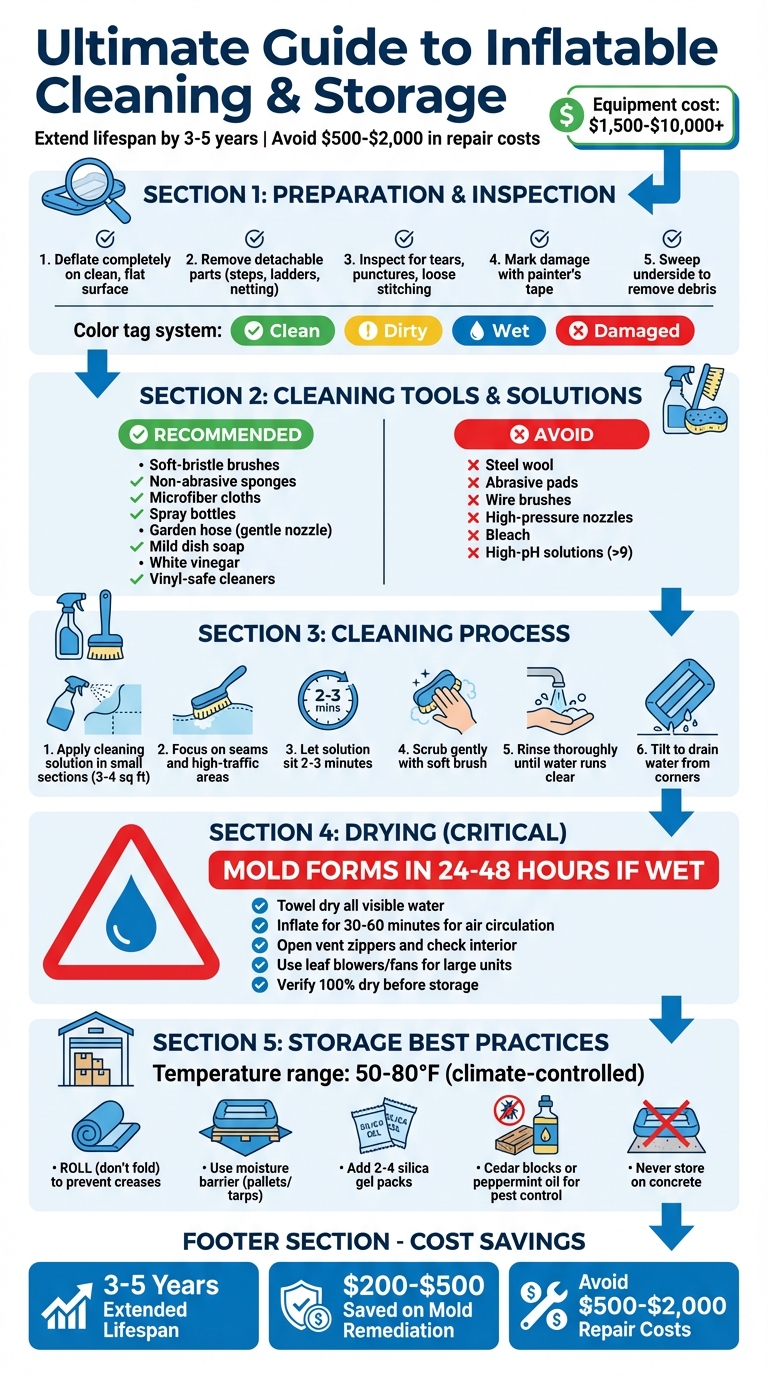
Complete Inflatable Cleaning and Storage Process Guide
Basic Cleaning Tools for Inflatables
Using the right cleaning tools can save you from expensive repairs and extend the lifespan of your inflatables.
Brushes, Sponges, and Cloths
Soft-bristle brushes are perfect for cleaning vinyl and PVC surfaces. They effectively remove dirt and grime without damaging the protective coating.
Use a soft-bristle brush or microfiber cloth to scrub all surfaces. Avoid stiff brushes that can scratch the vinyl coating and compromise waterproofing.
For high-traffic areas like entrances and slides, non-abrasive sponges are a great choice. A double-sided sponge with a soft scrubbing side provides versatility without risking tears in the material. Stay away from steel wool or abrasive pads, as these can cause irreversible damage to the vinyl.
Microfiber cloths and absorbent towels are must-haves for drying. Moisture left behind can lead to mold growth within 24–48 hours, so it’s crucial to dry every corner, including under slide liners and around vent zippers.
| Tool Category | Recommended Type | Avoid These |
|---|---|---|
| Brushes | Soft-bristle brushes, soft brooms | Stiff-bristle brushes, wire brushes, metal tools |
| Sponges | Non-abrasive sponges | Steel wool, abrasive scouring pads |
| Cloths | Microfiber, clean rags, absorbent towels | Dirty rags, abrasive fabrics |
Spray Bottles and Buckets
Spray bottles are excellent for applying cleaning solutions evenly without oversaturating the surface. They’re especially helpful for disinfecting high-touch areas like railings and entrances. Let the solution sit for 2–3 minutes to loosen stains before scrubbing.
Buckets come in handy for larger cleaning jobs, holding your cleaning mixture for deep scrubbing. A common solution includes 3 parts water, 1 part white vinegar, and a drop of mild dish soap. Work in small sections, about 3–4 square feet at a time, to ensure the solution doesn’t dry before you rinse.
Always label your spray bottles to differentiate between cleaners, degreasers, and disinfectants. This avoids accidental mixing and keeps your cleaning process safe and organized.
Rinsing and Drying Equipment
A garden hose with a gentle nozzle is ideal for rinsing away soap and debris. Keep rinsing until the water runs clear – any leftover residue will attract dirt during use. Avoid high-pressure nozzles, as they can damage vinyl coatings and weaken seams.
For drying, leaf blowers are great for large inflatables, as they push water out of tricky spots and improve airflow. Indoors, box fans and dehumidifiers help circulate air and control humidity.
To drain water effectively, use tilting tools like chairs or dollies. Position one under a corner of the inflatable to angle it, directing water toward the exit. Be thorough – check every seam and ensure the inflatable is completely dry before storing.
Deflating a wet bounce house is the single most common cause of mold.
Next, we’ll dive into cleaning solutions tailored for specific inflatable materials.
Cleaning Solutions for Inflatable Materials
Using the right cleaning solution is essential to clean inflatables effectively without causing damage. PVC and vinyl, common materials for inflatables, need products that remove dirt while preserving the protective coating and avoiding discoloration.
PVC and Vinyl Cleaners
Marine-grade PVC cleaners are designed to tackle outdoor grime without harming the material. One example is Vinyl Clean Plus, priced at $26.99 for a 32 oz bottle. This cleaner is particularly effective against chalking, the white residue caused by plasticizer migration. A gallon of this concentrate can cover about 600 square feet, making it a cost-efficient choice for large inflatables.
For tougher messes like grease, adhesives, or tar, citrus-based solvents are a solid option. Dynamite Vinyl Shine Citrus Clean, which costs between $119.99 and $149.99 per gallon, uses natural orange-peel solvents to break down stubborn residues. It’s biodegradable, non-toxic, and has an impressive 5-star rating on Amazon.
Concentrated formulas also offer great value. For instance, a 16 oz bottle of organic concentrate, available for $18.95, can dilute into as much as 48 gallons of cleaner – bringing the cost to under 5 cents per bottle. For particularly stubborn stains, the concentrate can even be applied undiluted instead of the usual 2 teaspoons per gallon.
Once dirt and residues are removed, it’s important to follow up with disinfectants and mildew removers to ensure the inflatable is both clean and safe.
Disinfectants and Mildew Removers
For disinfecting, Simple Green Pro D 3 is a hospital-grade option that kills 99.9% of germs and viruses while being non-toxic and non-corrosive to vinyl. It’s also approved by the U.S. EPA’s Safer Choice Program, making it ideal for inflatables used by kids. Another option, Simple Green d Pro 5, is effective against viruses similar to SARS-CoV-2 on non-porous surfaces.
Mold and mildew can be tackled with products like LA’s Totally Awesome Purpose Concentrated Cleaner, which removes stains without harming vinyl. For a more natural approach, try a mix of one part 3% hydrogen peroxide to two parts water. Apply this solution to the affected area and let it sit for 10 minutes. Alternatively, a 1:1 mix of white vinegar and water works as a natural disinfectant and mold remover.
For quick disinfection, isopropyl alcohol (at least 70%) is a great choice. It evaporates quickly without leaving residue. If organic stains like leaf marks persist, a Mr. Clean Magic Eraser can often do the trick when standard cleaners fall short.
Bleach should generally be avoided due to its potential to damage vinyl. If you must use bleach, ensure the solution’s pH stays between 7 and 9, as higher pH levels can harm the material.
These disinfectants not only clean but also help extend the life of your inflatable.
Household Cleaning Alternatives
You don’t always need specialized products – household items can work wonders too. Original Dawn dish soap mixed with water and white vinegar effectively removes grease, sunscreen, and oily residues from vinyl. A simple recipe involves combining three parts water, one part white vinegar, and a few drops of dish soap in a spray bottle.
White vinegar (4–7% acetic acid) is also great for breaking down mineral deposits and soap scum. For tougher stains or odors, a paste made from baking soda and water can tackle problem areas without requiring aggressive scrubbing.
Another option is Bounce Clean, a plant-based, spray-and-wipe solution that doesn’t require rinsing. At $29.95 per gallon, it’s particularly effective for removing tricky substances like silly string and paint markers from vinyl surfaces.
Here’s a quick comparison of some cleaning solutions:
| Product Type | Best For | Rinse Required? | Cost Efficiency |
|---|---|---|---|
| Deoxidizer (Vinyl Clean Plus) | Removing chalking and soil | Yes | $26.99 per 600 sq ft |
| Citrus Cleaner | Adhesives, grease, tar, gum | Yes | $119.99 per gallon |
| Organic Concentrate | General dirt, cost savings | No (Streak-free) | ~$0.05 per spray bottle |
| Plant-Based Sanitizer | Quick cleans, scuff marks | No | $29.95 per gallon |
| Vinegar & Dawn Mix | All-purpose cleaning | Yes | Minimal (pennies per use) |
Up next, we’ll explore how these cleaning solutions pair with specific inflatable materials for the best results.
Choosing Supplies by Material Type
The material of your inflatable plays a big role in determining which cleaning products are safe and effective. Always check the manufacturer’s recommendations before using any cleaner. Many manufacturers specify which chemicals are compatible with their materials, and ignoring these guidelines could void your warranty. Following proper cleaning techniques can extend the life of an inflatable by 3–5 years.
Timing is just as important as the materials you use. Clean during moderate temperatures to avoid damaging the inflatable. Vinyl, for instance, becomes brittle when the temperature drops below 50°F and softens excessively above 80°F, which can weaken seams during scrubbing. Moderate conditions not only protect the material but also ensure cleaning agents work as intended.
Once you’ve got the basics down, it’s time to choose supplies tailored to specific material types. In addition to general cleaning solutions, don’t forget the specialty tools for certain components. For example, silicone spray is ideal for blower tubes and zippers to keep them from seizing. For slides, lubricants like Armor All, Pledge, or Slide Slick help maintain surface traction and reduce wear. These small steps can go a long way in extending the lifespan of your inflatable and avoiding costly replacements. Improper cleaning and storage can lead to replacement costs ranging from $500 to over $2,000 per unit.
Material-Specific Cleaning Chart
Here’s a quick guide to cleaning various inflatable materials:
| Material Type | Recommended Cleaning Agents | Best Tools | Important Notes |
|---|---|---|---|
| Vinyl / PVC | Mild dish soap, vinegar solution, Simple Green, Dynamite Vinyl Shine | Soft-bristled brushes, microfiber cloths, low-pressure washer (use cautiously) | Most common material; avoid bleach and ammonia. Sensitive to pH levels above 9. |
| Hypalon | Marine-grade cleaners, mild soap solutions | Soft sponges, non-abrasive cloths | Used in high-end inflatables; requires gentler cleaning than standard vinyl. |
| Urethane-Coated Fabrics | Manufacturer-approved cleaners only | Microfiber cloths, soft brushes | Specialized coatings may be damaged by generic cleaners; check compatibility. |
| Metal/Plastic Zippers | Silicone spray lubricant | Spray applicator | Prevents seizing and fabric tearing around zipper areas. |
| Slide Surfaces | Armor All, Pledge, or Slide Slick | Application cloths | Maintains traction and reduces surface wear. |
For storage, consider natural pest deterrents like cedar blocks or peppermint oil sachets. These can help keep rodents from chewing through the vinyl while your inflatables are packed away.
How to Clean Inflatables: Step-by-Step
Preparation and Inspection
Start by laying the inflatable on a clean, flat surface like a paved driveway or a tarp spread over grass. Make sure the unit is fully deflated, allowing you to access every corner and spot any hidden debris that might otherwise go unnoticed while inflated. Detach any removable parts – such as steps, ladders, netting, side rails, or modular art panels – and clean them separately. Use the recommended brushes and cloths to thoroughly clean all areas.
While the inflatable is laid out, inspect it for any signs of damage, like tears, punctures, loose stitching, or worn spots. Mark these areas with painter’s tape so they’re easy to locate for repairs after cleaning. Catching these issues early can save you from expensive fixes later.
Before you begin cleaning, sweep the underside to clear away any dirt or debris. Some rental businesses use a color tag system during inspections to keep track of the unit’s condition: Green for clean, Yellow for dirty, Blue for wet, and Red for damaged or needing repair. This system helps prioritize tasks effectively. Once all debris is cleared and any damage is marked, you’re ready to start cleaning.
Cleaning and Rinsing
Use a spray bottle or a soft-bristled brush to apply your cleaning solution in small sections, paying extra attention to seams and high-traffic areas like entryways and slides.
Rinse thoroughly with a garden hose on a gentle setting, ensuring all cleaning solution is removed. Any leftover soap can attract dirt and leave surfaces sticky, undoing your cleaning efforts. Tilt the inflatable to help drain water from corners, and for stubborn water in slide channels, use absorbent towels to soak it up before moving on to drying.
Drying and Storage
Drying is a critical step – mold can start forming within 24–48 hours if any moisture is left behind when storing the inflatable. Use towels to dry all visible water, then inflate the unit for 30–60 minutes to circulate air and ensure every pocket, including interior areas, is completely dry.
Open vent zippers and check inside for any lingering moisture. Some professionals even climb inside the inflatable to confirm it’s completely dry. Once satisfied, deflate the unit and roll it instead of folding it. Rolling helps distribute stress evenly across the vinyl, while folding can cause permanent creases that may lead to leaks over time.
Store the inflatable in a climate-controlled space with a temperature range of 50–80°F. Avoid placing it directly on concrete, as this can draw moisture from the ground. Use a moisture barrier like pallets or tarps, and add 2–4 large silica gel packs to absorb humidity. To keep rodents away, place cedar blocks or peppermint oil sachets around (not inside) the storage bag. Following these steps can extend the lifespan of your inflatable by 3–5 years and save you $200–$500 in potential mold remediation costs per unit.
Conclusion
Using the right cleaning supplies and sticking to proper maintenance routines can extend the lifespan of inflatables by 3–5 years. Considering that bounce houses typically cost between $1,500 and $5,000, while larger setups like obstacle courses can exceed $10,000, taking care of your investment is essential. Neglecting proper storage and cleaning can lead to damage, with repair costs ranging from $500 to $2,000 per unit.
The key to longevity lies in using vinyl-safe cleaners, rolling instead of folding, and ensuring inflatables are completely dry before storage. Most damage happens during storage, especially if moisture is present, as mold can begin growing within just 24–48 hours.
At Bouncy Rentals USA, we take these maintenance practices seriously. Every inflatable in our fleet is sanitized using EPA-approved disinfectants that eliminate 99.9% of bacteria and viruses. Our three-phase cleaning process includes a pre-event inspection and deep cleaning, on-site maintenance during events, and thorough post-event drying in climate-controlled storage. This ensures your equipment arrives fresh, safe, and ready for use.
Whether you’re renting a bounce house for a backyard birthday or an obstacle course for a company event, you can count on us to provide clean, reliable, and safe equipment. We handle everything – from setup to takedown and maintenance – so you can focus on enjoying your event.
FAQs
How often should I clean my inflatable?
It’s a good idea to clean your inflatable after every use. This helps keep dirt, germs, mold, and stains from building up. Regular cleaning not only keeps the inflatable safe to use but also helps it last longer. If you’re using it for frequent rentals or daily events, make sure to clean it after each occasion. This prevents debris and contaminants from causing damage or becoming tougher to remove later.
What’s the safest way to remove mold spots?
To clean mold spots off inflatables without causing damage, use a gentle cleaning solution such as vinegar mixed with water or a cleaner specifically designed for inflatables. Apply the solution using a soft cloth or sponge. Avoid harsh chemicals like bleach unless explicitly recommended, as they can harm the material. Make sure to wear gloves for skin protection, carefully wipe the affected areas, and dry the inflatable completely afterward. This helps prevent mold from returning and reduces potential health risks.
Can I clean an inflatable with a pressure washer?
Using a pressure washer to clean an inflatable bounce house isn’t the best idea. The strong water pressure can easily harm the material if you’re not extremely cautious. A better approach? Stick to gentler cleaning methods like hand washing with a mild detergent. Use soft brushes or microfiber cloths to scrub away dirt without risking damage. These options are much safer and help keep your inflatable in good shape.