Inflatable sports tournaments and games are a fun way to engage communities and bring people together, but getting the word out can be tricky. Here’s a quick guide to promoting these events effectively:
- Social Media Campaigns: Use platforms like Facebook, Instagram, and TikTok to share visuals, create event pages, and run targeted ads. Leverage trending hashtags and geotargeting to reach local audiences.
- Partner with Local Businesses: Collaborate with schools, PTAs, restaurants, and event planners to expand your reach. Offer sponsorship opportunities and referral programs to incentivize participation.
- Email Marketing: Send segmented, personalized emails with compelling offers and clear calls to action. Use reminders and referral incentives to boost sign-ups.
- Work with Influencers: Team up with local influencers and athletes to promote your event. Offer incentives for social media posts, giveaways, and event-day promotions.
- Photo Opportunities and Contests: Set up photo zones and run hashtag contests to encourage attendees to share their experiences online, amplifying your event’s visibility. For more planning tips, check out our guide to inflatable obstacle course rentals.
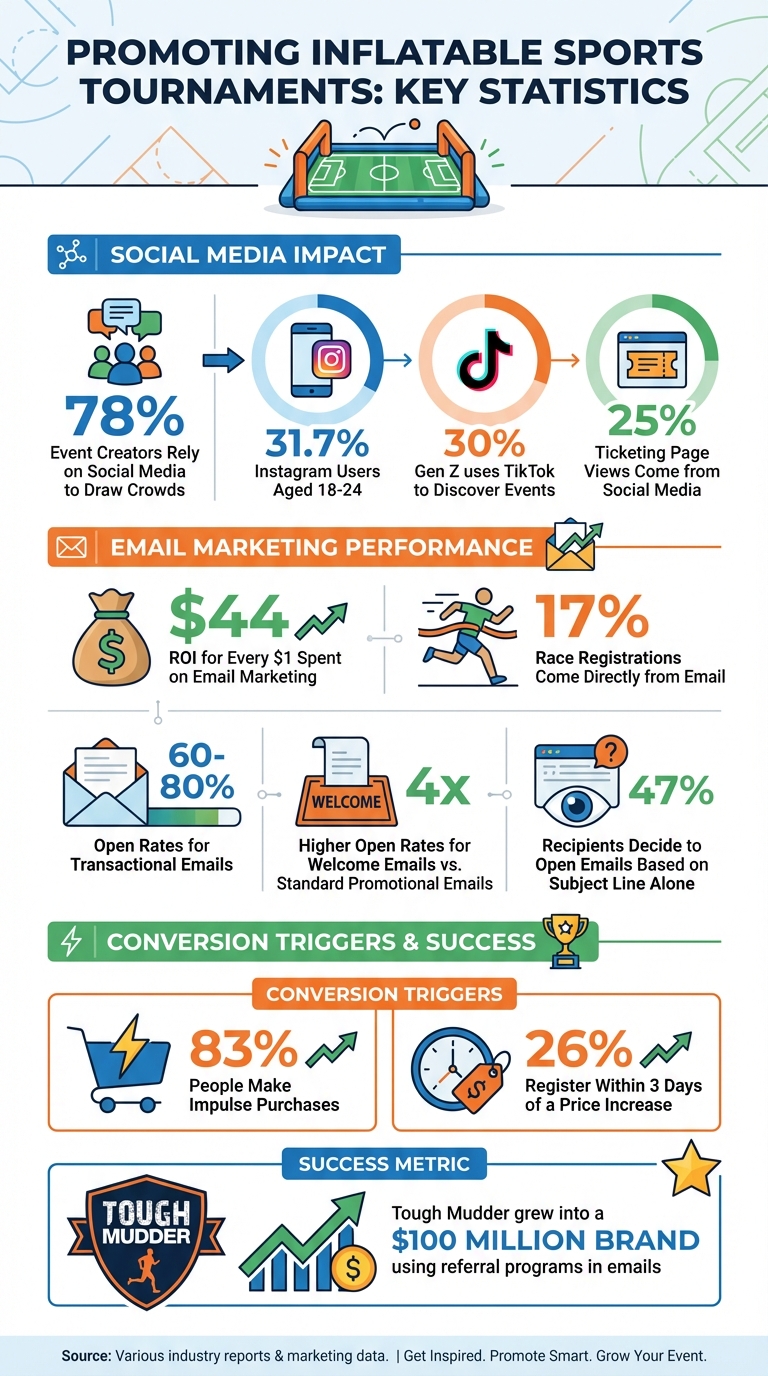
Key Statistics for Promoting Inflatable Sports Tournaments
1. Use Social Media Campaigns
Social media plays a huge role in boosting attendance – 78% of event creators rely on it to draw crowds. The key is choosing the right platforms and using them effectively to connect with your audience.
Facebook is ideal for local outreach. Join community groups like "Moms of [Your City]" or "Party Planners" to share event setup photos and registration details. Creating an event page with RSVP options and regular updates can encourage bookings. Since Facebook is great for reaching parents and local organizations, it’s a solid choice for building local awareness.
Instagram is all about visual storytelling. Post eye-catching Reels, like time-lapse videos of event setups or behind-the-scenes clips, to build excitement. With 31.7% of Instagram users aged 18–24, it’s especially effective for engaging younger audiences. Use Stories with countdown stickers to create urgency. As Britteney Floyd-Mayo, CEO of Trap Yoga Bae, advises:
"Own a feeling, a color, or a mood".
Your Instagram account should capture the energy and vibe of your event, making people eager to experience it in person. TikTok, on the other hand, takes this energy to the next level.
TikTok is perfect for grabbing viral attention. Almost 30% of Gen Z uses TikTok to discover events. To stand out, use trending sounds and create dynamic, authentic videos. Raw, unpolished content often performs better on this platform.
When posting, stick to 3–5 focused hashtags. Combine broad tags like #InflatableFun with niche ones like #ObstacleCourseRace and location-specific tags like #DallasEvents. A unique branded hashtag for your event, such as #SpringBounce2026, can help consolidate all related content into one searchable spot. For paid ads, use geotargeting to focus on people near your event and retargeting pixels to reach those who visited your page but didn’t register. Start small, test different visuals and headlines with A/B testing, and scale up once you know what works. Each platform’s tailored approach ensures your event gets noticed and registrations come rolling in.
2. Partner with Local Businesses and Organizations
Building strong local connections can take your community engagement to the next level. By teaming up with local businesses and organizations, you can tap into their established networks of families and event-goers. Schools, PTAs, daycares, and youth groups are perfect partners since they often host events where inflatable tournaments are a huge hit. When a trusted school or community center endorses your event, it adds a layer of trust that boosts your promotional efforts.
Think about cross-promoting with family-friendly spots like restaurants, cafes, or party supply stores to widen your reach. For instance, you could work with a local restaurant to create "Tournament Meal Deals" or partner with a photographer to offer professional action photo bundles. These kinds of packages not only simplify planning for attendees but also bring extra business to your partners. Event planners and DJs can also be valuable allies – they often have connections to corporate events and large gatherings.
Sponsorships are another win-win strategy. You could offer your inflatable equipment at a discounted rate for school fundraisers or charity events in return for promotion in newsletters or on social media. Local businesses might also sponsor your tournament by displaying their logos on banners or event materials. This not only boosts your credibility but can also help cover event costs.
Referral programs are another way to keep the momentum going. Offer partners a commission or exclusive discounts for every attendee they bring to your tournament. You could also co-host community fairs, where each partner contributes something – like inflatables, food, or music. These collaborative events generate buzz and help establish your tournament as a key part of the community.
3. Use Email Marketing
Email marketing delivers an impressive ROI – $44 for every $1 spent. In 2023, 17% of all race registrations on the RunSignup platform came directly from their built-in email system. That’s a big portion of sign-ups you don’t want to overlook.
Transactional emails (like registration confirmations) boast open rates between 60% and 80%, and welcome emails perform even better, with open rates four times higher than standard promotional emails. To maximize your results, keep subject lines under 60 characters and use numbers or action-oriented words – 47% of recipients decide to open emails based on the subject line alone.
Segment and Personalize Your Emails
Segmentation is key to sending relevant content. For instance, the BMW Dallas Marathon Festival segmented their audience to target past participants with personalized messages, doubling their click-through rate compared to non-segmented campaigns. Create groups like new participants, returning athletes, and inactive subscribers, and tailor your message to each group. Use merge tags to personalize emails with names or location-specific details. Combining segmentation with timely offers can drive immediate action.
Use Offers to Drive Conversions
Discounts and limited-time deals can significantly boost registrations. For example, 83% of people make impulse purchases, and 26% register within three days of a price increase. Send reminders one week and 24 hours before a price hike, and include clear calls to action like "Register now to save 25%." Avoid vague buttons like "Click Here".
Tough Mudder took this a step further by introducing a referral program in their emails. Participants who recruited two friends earned a free race entry, a move that helped the company grow into a $100 million brand.
Stay Compliant and Test Your Strategy
To comply with CAN-SPAM laws, include a clear unsubscribe link and your physical mailing address in every email. Set up automated follow-ups for recipients who haven’t opened recent emails, and experiment with different subject lines to see what resonates. Adjust your email frequency to keep your content engaging and fresh.
Ultimately, every email should encourage registration. Whether it’s through timely offers, personalized messaging, or referral programs, your email campaigns should align with your overall event promotion strategy. Automating follow-ups and testing variations will help refine your approach over time.
4. Work with Influencers and Athletes
Expanding your promotional efforts by teaming up with influencers can amplify your message through trusted voices. By collaborating with local influencers and athletes, you can tap into audiences that traditional marketing might not reach. Social media plays a big role here, driving about 25% of all ticketing page views. Local personalities – like personal trainers, parent bloggers, or fitness coaches – can offer the kind of social proof that turns curious followers into active participants.
When choosing influencers, focus on engagement rather than sheer follower numbers. Micro-influencers, for instance, often deliver better results because their audiences are more connected and responsive. Look for individuals whose content and followers align with your tournament’s target audience, such as local fitness enthusiasts, family-oriented creators, or sports coaches.
Offer incentives to these collaborators, such as free tournament entries, VIP perks, or monetary compensation, in exchange for social media posts, reviews, or event-day promotions. Here are a few examples of successful influencer collaborations:
- In December 2023, sports influencer Rick Gehman (RickRunGood) partnered with Splash Sports to promote a golf contest. He sweetened the deal by giving away a 2004 PLAYERS Championship flag, complete with a Certificate of Authenticity.
- In August 2024, sports personality Taylor Mathis introduced an NFL Survivor pool on Splash Sports, offering a "special surprise" to the first 100 people who joined through her custom invite link.
Interactive giveaways can also work wonders. Encourage followers to tag their friends for a chance to win prizes like free tickets, branded merchandise, or exclusive meet-and-greet opportunities. For instance, in May 2023, NASCAR driver Denny Hamlin promoted his "#DHBracketChallenge" by offering VIP access to unlimited races for two years to anyone who submitted a perfect bracket.
To maximize impact, plan your influencer campaigns strategically. Launch promotions about two weeks before registration opens, update followers a week out, and send "last chance" reminders one to three days before registration closes. This timeline pairs well with your broader social media and email marketing efforts, adding a layer of genuine engagement.
"A shout-out from a popular influencer can be just as valuable as a monetary prize." – Splash Sports
5. Set Up Photo Opportunities and Contests
Adding a visual element to your digital strategy can take the excitement around your tournament to the next level.
Use the bold colors and fun designs of your inflatables to create branded photo zones. Add backdrops, props, and themed signage to encourage attendees to snap and share photos. These zones aren’t just fun – they’re shareable moments waiting to happen.
Take it a step further with a simple hashtag contest. Encourage participants to follow your social media account, tag a friend, and post their photos or videos for a chance to win prizes like discounts on future rentals or exclusive raffle items. Brands like SeedProd, WPForms, and OptinMonster have seen impressive results with similar strategies.
"A social media photo contest could be the easiest way to turn followers into active participants. It’s also a smart way to grow your audience and get more visibility." – Stacey Corrin, Writer, RafflePress
These contests not only build engagement but also amplify the fun, high-energy vibe of your inflatable tournaments.
For an extra boost, offer instant rewards – like free cotton candy or popcorn – when attendees post live updates about your event. It’s a quick way to turn your guests into enthusiastic promoters of your brand.
Conclusion
Promoting inflatable sports tournaments doesn’t have to be complicated. By combining strategies like social media campaigns, local partnerships, email marketing, influencer collaborations, and photo contests, you can create a buzz that drives participation. Tools like geotargeted ads, local SEO, and personal outreach help build trust and connect with your audience effectively.
Consistency is the foundation of success. Keep an eye on metrics like ad ROI, email open rates, and referral numbers to measure progress. Use event photos and testimonials to fine-tune your approach and let participants spread the word through contests and referral programs. This method not only increases registrations but also boosts the credibility of your event.
When it comes to equipment, quality matters. Bouncy Rentals USA offers commercial-grade inflatables designed to withstand heavy use, along with extras like cotton candy machines, popcorn makers, and dunk tanks to elevate the fun. Their team takes care of delivery, setup, and safety, so you can focus on creating an event participants will rave about.
With smart marketing and reliable equipment, you’re set to plan a tournament that combines digital strategies and authentic community involvement – setting the stage for growing attendance and unforgettable experiences.
FAQs
Which social platform works best for my local audience?
Facebook stands out as a top choice for connecting with a local audience, thanks to its extensive reach and emphasis on community interactions. Platforms like Instagram and TikTok also shine when it comes to showcasing eye-catching visuals and videos, especially for inflatables in action. For the best results, focus on Facebook to foster community engagement, and complement it with Instagram to enhance visibility and draw in local customers.
How do I find sponsors and partners in my area?
To kick things off, look into local businesses, community groups, and venues that match the interests of your tournament’s audience. Building relationships with these organizations is key. Offer them something valuable in return, like increased brand exposure or opportunities for joint promotions.
When reaching out, put together a strong proposal that clearly outlines the benefits of sponsorship. Highlight things like visibility at the event or the chance to engage with the local community.
Take it a step further by connecting directly – reach out personally, attend local events, and focus on creating partnerships that have long-term potential. The goal is to create a win-win situation that works for everyone involved.
What should I track to know my promotion is working?
Tracking the right metrics can give you a clear picture of your event’s performance. Pay attention to attendance growth, as it shows how well your event is attracting more participants over time. Keep an eye on social media engagement, including likes, shares, and comments, to measure how effectively your online efforts are resonating with your audience.
Don’t forget to monitor press coverage, as it can amplify your event’s visibility. Dig into the numbers for participant attendance and ticket sales, which provide direct insight into your event’s success. Additionally, look at the reach of your promotional campaigns to evaluate their impact.
Finally, ask attendees how they found out about the event. This feedback can reveal which promotional channels are driving the most traffic, helping you refine your future strategies.