Inflatable sports tournaments are a fun way to bring people together for games and activities using air-filled structures. These events work for all ages and are perfect for schools, companies, or community gatherings. Here’s what you need to know to organize one:
- Venue: Choose a flat, debris-free space with nearby electrical outlets. Ensure enough room for inflatables and safe movement.
- Equipment: Pick inflatables based on the age group and event type. Options include obstacle courses, human foosball, and multi-game setups.
- Schedule: Plan games within a 4-hour window, with short sessions for competitive activities. Use time slots to keep things organized.
- Safety: Follow rules like removing shoes, supervising activities, and securing inflatables properly. Monitor weather conditions closely.
- Extras: Add concessions, prizes, and decorations to enhance the experience.
Partnering with rental companies can simplify logistics, from setup to cleanup, ensuring your event runs smoothly.
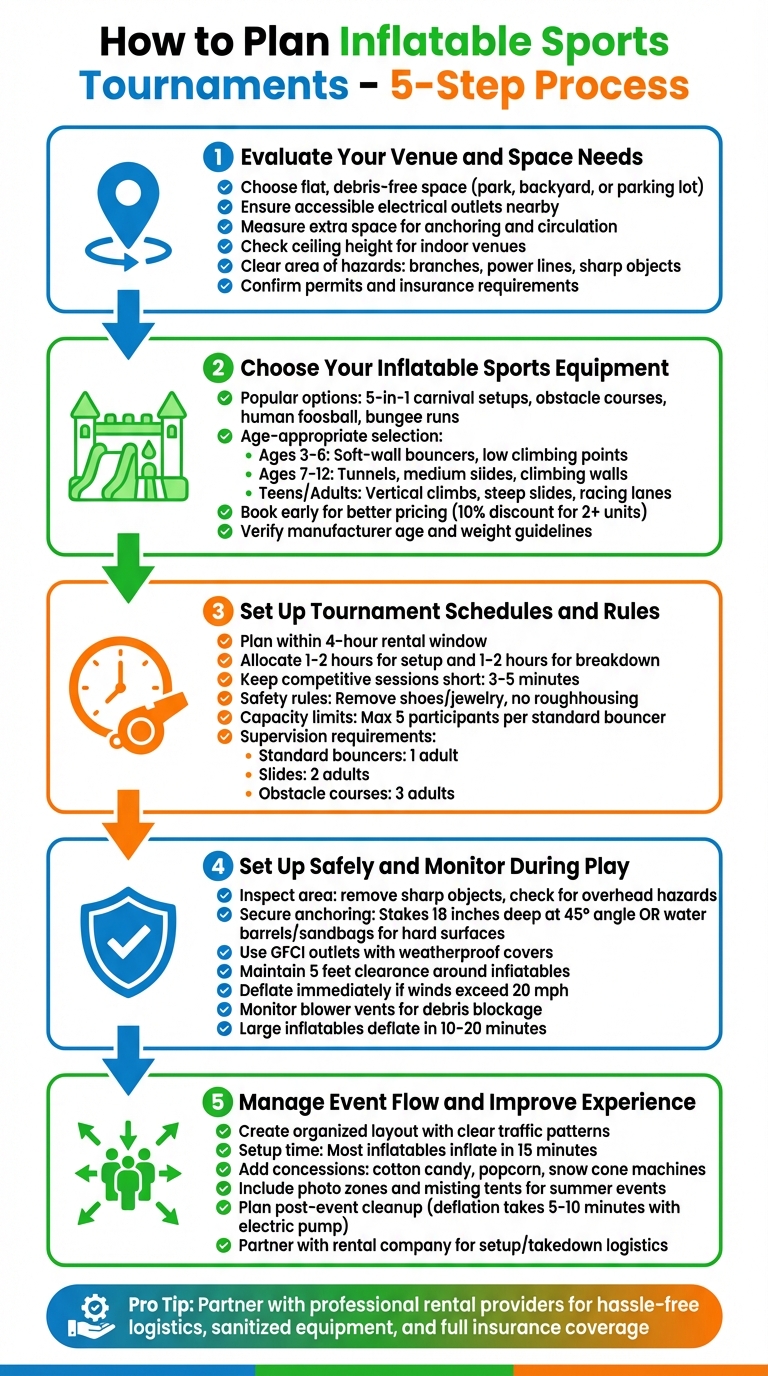
5 Steps to Plan a Successful Inflatable Sports Tournament
Step 1: Evaluate Your Venue and Space Needs
Before diving into inflatable tournaments, take a close look at your venue to make sure it meets all the spatial and safety requirements.
Pick the Right Location
Choose a flat, open space like a park, large backyard, or parking lot. The ground should be level and free of debris – no slopes or uneven terrain that could cause the inflatable to shift.
You’ll also need accessible electrical outlets near the setup area to keep industrial blowers running continuously.
Measure Space for Each Inflatable
Inflatables need more room than their actual footprint. You’ll need extra space for anchoring, staff to move around, and safe circulation.
Keep in mind that different sports require different-sized setups. A soccer inflatable, for instance, takes up much more space than one for volleyball. If you’re hosting a large group, you’ll also need enough internal space so players can move comfortably and safely. For indoor locations, check the ceiling height to ensure participants can jump and move freely without restrictions.
Check Safety and Access Points
"Site selection is essential to your inflatable’s safety. Keep them away from areas with low-hanging branches, power lines, and bushes that could poke holes or get in the way of your setup." – MVP Visuals
Make sure the setup area is clear of snow, leaves, sharp sticks, or anything else that could cause punctures or tripping hazards. On rocky terrain, placing old carpet beneath the inflatable can help cushion potential risks.
Confirm that the delivery paths are accessible. Gates, doorways, and pathways should be wide enough to accommodate rolled-up inflatables and transport equipment. These units are heavy, so you’ll likely need multiple people to move them safely.
For anchoring, grass and dirt are ideal for metal stakes (about 15 inches long and 0.6 inches wide). If you’re working with hard surfaces like parking lots or driveways, you’ll need water barrels or sandbags instead.
Plan clear entrance and exit points that remain unobstructed by spectators. Position blower units in locations where they’re not easily tampered with by unauthorized individuals. Lastly, check if your venue requires permits, fire department inspections, or liability insurance before the event.
Step 2: Choose Your Inflatable Sports Equipment
Once you’ve settled on your venue, the next step is picking the inflatables that match your tournament’s theme, the ages of your participants, and your budget.
Popular Inflatable Sports Games
There’s a wide range of inflatable games to choose from, so you can create an engaging and varied lineup. A 5-in-1 carnival setup is a great option, combining games like basketball, darts, ring toss, soccer, and tic-tac-toe. These are perfect for school carnivals or festivals where you need to keep large groups entertained and organized. For corporate gatherings, inflatables like human table football and bungee runs bring a mix of competition and team-building fun.
For events with lots of participants, inflatable obstacle courses – complete with tunnels, climbing walls, and racing lanes – are always a hit. Hosting a summer event? Floating water volleyball courts and water slides can turn any pool or lake into an exciting tournament space. For older participants, interactive light battle arenas equipped with sensors offer a fresh, tech-inspired take on inflatable sports.
Customize Your Rental Package
Bouncy Rentals USA offers rental packages tailored to your event’s size and needs. They handle everything from delivery to setup and breakdown, making the process hassle-free. If you’re renting multiple inflatables, you can often snag a 10% discount when booking two or more units. Schools and non-profits may qualify for additional discounts or perks like custom table covers.
Planning ahead is key, especially during busy seasons like spring and summer. Booking early not only improves availability but also helps you secure better pricing. Be sure to confirm all the details in your quote and double-check the measurements of your venue. Inflatables often look smaller in photos than they actually are, so accurate sizing is crucial.
Age-Appropriate Options
To ensure everyone has a safe and enjoyable experience, it’s important to choose inflatables suited to the age range of your participants.
- Ages 3–6: Opt for soft-wall bouncers with low climbing points and simple designs to keep things safe and fun.
- Ages 7–12: Tunnels, medium-sized slides, and climbing walls offer just the right amount of excitement.
- Teens and adults: Go for inflatables with vertical climbs, steep slides, or competitive racing lanes that bring a greater challenge.
Always check the manufacturer’s age and weight guidelines before finalizing your choices. For events with mixed age groups, multi-game inflatables are a smart pick – they provide something for everyone in one setup.
Step 3: Set Up Tournament Schedules and Rules
Build Your Game Schedule
Plan your event to fit within a 4-hour rental period. Allocate 1–2 hours before the tournament for delivery and setup, and another 1–2 hours afterward for breaking down and picking up equipment.
For competitive games like laser tag or water tag, keep sessions short – around 3–5 minutes – to maintain high energy levels. If you’re using obstacle courses, timed runs with a stopwatch can help establish rankings while keeping wait times short. For activities like side-by-side racing lanes, head-to-head competitions can double the number of participants moving through at once. If you’re running multiple inflatables, assign specific time slots for each bracket or divide the area into zones. To balance out the physical intensity, mix in skill-based games like soccer darts or basketball shoots, giving participants a chance to catch their breath between rounds.
Once the schedule is set, focus on creating clear rules to promote both safety and fairness.
Define Tournament Rules
To prevent injuries or equipment damage, participants should remove shoes, jewelry, and any sharp objects before entering [8,9]. Roughhousing, pushing, wrestling, or climbing on inflatable walls should not be allowed. For slides and obstacle courses, enforce a "one at a time" rule for each lane or staircase to avoid collisions, and require participants to slide feet-first to reduce the risk of head injuries.
Standard bouncers should have no more than five participants at a time, though adjustments may be necessary based on the size and weight of the players. Supervision is key and varies by inflatable type:
- Standard bouncers: 1 adult supervisor
- Inflatable slides: 2 adults (one at the top, one at the bottom)
- Obstacle courses: 3 adults (stationed at the start, middle, and end)
As Hero Kiddo Inflatables points out:
"Inflatables should be deflated and secured during high winds, storms, or adverse weather conditions to prevent accidents and damage".
Make sure every participant receives a quick safety briefing before entering the play area. This should cover the rules, the importance of respecting opponents, and the need to follow staff instructions at all times [8,9].
With safety and rules in place, the next step is to track scores and recognize winners.
Track Scores and Award Prizes
For timed runs, use stopwatches, or set up point-based systems for games like soccer darts or basketball shoots. If you’re hosting arena-style games, consider using Interactive Play Systems (IPS) with light-reactive sensors, which can automatically track scores and eliminate the need for manual counting.
Designate a volunteer to record scores promptly to keep the tournament running smoothly. For larger events, wristbands with assigned time slots can help organize groups and ensure everyone gets a fair turn.
Small prizes like ribbons, medals, or certificates can add an extra layer of excitement and motivation. Displaying a scoreboard or leaderboard throughout the event allows participants to monitor their progress and see who’s leading in real time. This simple addition keeps the competitive spirit alive and makes the tournament even more engaging.
Step 4: Set Up Safely and Monitor During Play
Prepare the Setup Area
Before inflating any equipment, take a moment to inspect the area thoroughly. Remove any sharp objects like stones, sticks, or loose metal that could pose a danger. The ground should be level and free of overhead risks such as power lines, tree branches, or fences. If you’re working on a rough or rocky surface, lay down an old carpet or a heavy-duty tarp to shield the inflatable from punctures.
Check every anchor point, zipper, and blower opening to ensure they’re secure. Velcro and zipper vents must be tightly closed to maintain proper air pressure. Once the inflatable is set up, secure it with ground stakes driven into the ground at a 45-degree angle, at least 18 inches deep. If you’re on a hard surface like a parking lot, use alternatives such as water barrels, sandbags (2–3 per side), or cinder blocks. Make sure there’s at least 5 feet of space around the inflatable for safe entry and exit.
For electrical safety, use GFCI (Ground Fault Circuit Interrupter) outlets and weatherproof covers for all blowers and extension cords. Also, confirm that all equipment has been properly cleaned and sanitized before use. As Happy Jump advises:
"Safety should always come first when choosing an inflatable obstacle course. Look for commercial-grade vinyl that’s strong and puncture-resistant".
Once the area is ready, assign trained staff to oversee operations.
Assign Staff and Supervisors
With the setup complete, it’s time to ensure proper supervision. Designate a trained supervisor for each inflatable to enforce safety rules and monitor participants. Supervisors should separate participants by age and weight to minimize the risk of collisions.
It’s essential for supervisors to familiarize themselves with the manufacturer’s manual, including details on operating pressures and emergency deflation procedures. If an inflatable starts to lose air or looks deformed, supervisors should immediately stop play and help participants exit safely. After high winds, they should double-check all anchor points to confirm that stakes or weights remain secure. Additionally, blower intake vents should be inspected regularly to ensure they aren’t blocked by debris like leaves or trash, which can affect air pressure.
As MVP Visuals highlights:
"Constant and reliable supervision of the inflatable is a key recipe for a safe event".
Plan for Weather Changes
Keep a close eye on weather conditions throughout the event to maintain safety. If wind speeds exceed 20 mph, inflatables can become unstable and should be deflated immediately. Be prepared to deflate all units quickly in case of high winds or lightning. Large inflatables typically take 10–20 minutes to deflate completely.
On extremely hot days, consider using water-based inflatables to help participants stay cool. Make sure the equipment is made from UV-resistant materials to withstand intense sunlight.
Step 5: Manage Event Flow and Improve the Experience
With the equipment set up and the schedule ready to roll, it’s time to focus on keeping things running smoothly and making sure attendees have a great time.
Arrange Layout and Traffic Patterns
Set up inflatables in a way that allows for easy movement and avoids bottlenecks. For example, placing large inflatable arches or tunnels at entry points helps create an organized and welcoming entrance. These structures can also serve as clear markers at key transition areas, guiding participants through different parts of the event.
Create meeting spots with unique inflatable features or branded arches so groups can easily find each other. Inflatable tunnels can add excitement for athletes making their entrance, while also offering shaded walkways for spectators. To keep main walkways clear, set up photo zones – like 3D mascot displays or winners’ booths – off to the side. For summer events, misting tents are a must-have to keep everyone cool. As Brit Gillespie from Six Flags points out:
"The guests love the misting tent during the hot weather."
Most inflatables are quick to set up, typically taking about 15 minutes. Once the layout is ready, you can focus on adding some fun extras to elevate the experience.
Add Concessions and Extra Features
Pair inflatables with classic concession equipment like cotton candy, popcorn, or snow cone machines to create a lively atmosphere. Companies like Bouncy Rentals USA offer a variety of these add-ons. Place concession stands in convenient locations but away from the main activity areas to avoid crowding.
To appeal to different age groups and interests, consider adding sports inflatables such as soccer fields, batting cages, or air racer games. These typically inflate in just 5–10 minutes and should be securely anchored with stakes and D-rings for safety. You can also enhance the event’s look by incorporating themed decorations, like balloon garlands or color schemes that match your tournament branding.
Once the fun is over, a well-planned cleanup ensures everything wraps up smoothly.
Handle Post-Event Cleanup
Work with your rental provider ahead of time to plan for a quick and efficient takedown. Set aside a specific time for restoring the venue to its original state, and confirm with Bouncy Rentals USA that all equipment will be removed from designated areas. Large inflatables can usually be deflated with an electric pump in just 5–10 minutes.
After deflating the equipment, do a walkthrough to pick up any trash and clean the inflatables using mild soap and water. Allow them to air-dry before storing. Keeping open communication with your rental team throughout the event will make the cleanup process much easier and ensure a smooth wrap-up.
Conclusion
Organizing an inflatable sports tournament involves several key steps: evaluating your venue, selecting the right equipment, scheduling games, ensuring a safe setup, and keeping the event running smoothly. When done right, these steps create a memorable experience that’s both fun and safe for everyone involved.
Handling logistics can feel overwhelming, but working with a professional rental provider makes things much easier. Bouncy Rentals USA takes care of setup and takedown, offering sanitized, commercial-grade equipment that’s fully insured. Their team can help you choose inflatables suited to different age groups and design an event layout that keeps participants engaged – whether it’s a school field day, a community fundraiser, or a corporate team-building event.
FAQs
How many inflatables do I need for my group size?
When deciding how many inflatables to rent, you’ll want to consider your group size, the available event space, and how many people you expect to attend. A good guideline is to have at least one inflatable for every 10–15 participants. This helps prevent long lines and keeps the fun moving. For bigger crowds, think about adding variety with options like bounce houses, slides, or obstacle courses. This way, everyone has something to enjoy, and the event runs smoothly.
What power setup do I need for the blowers?
When powering inflatable blowers, you’ll need a generator with at least 2,000 watts for a single blower. If your setup includes multiple blowers or larger inflatables, you should consider a generator rated at 4,000 watts or higher.
To ensure smooth operation and avoid overloading the generator, always include a safety margin. Adding about 20% to your total wattage requirement provides extra reliability, which is especially important during events like inflatable sports tournaments.
What weather conditions should cancel inflatable play?
Adverse weather conditions – like high winds, heavy rain, or thunderstorms – are a no-go for inflatable play. These conditions can make inflatables unstable and unsafe, putting participants at risk. It’s essential to keep a close eye on weather forecasts and be prepared to postpone or cancel events if such weather is on the horizon. Safety should always come first.