
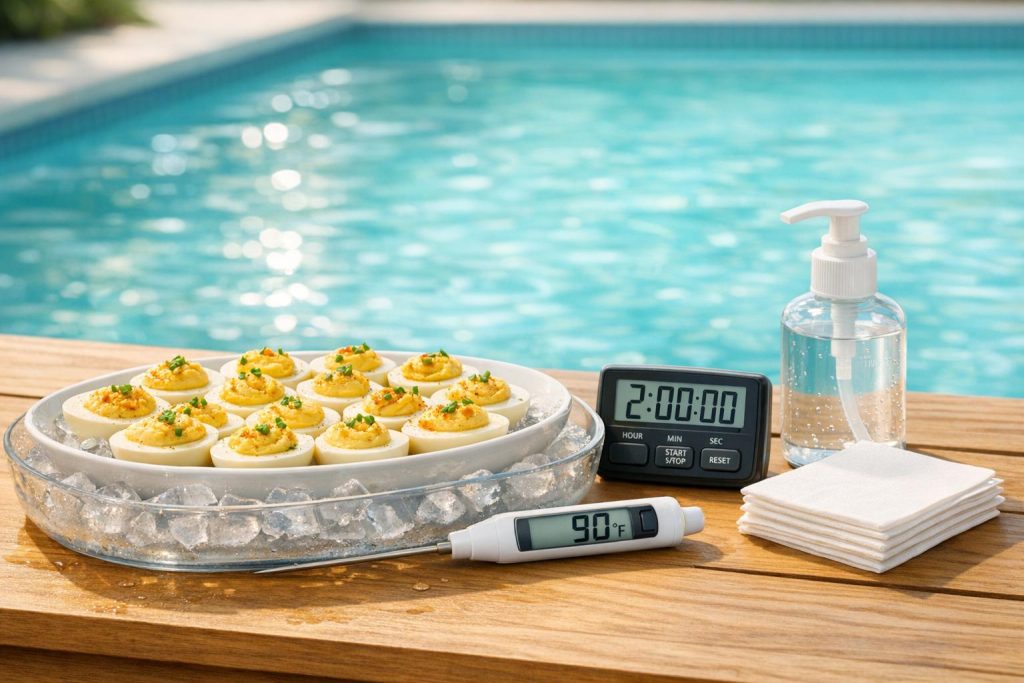
Warm weather can make pool parties fun, but it also creates risks for food safety. While you focus on inflatable pool setup and guest comfort, don’t overlook the impact of heat on your menu. Bacteria grow quickly in the "Danger Zone" (40°F–140°F), and high temperatures can turn perishable foods into health hazards. Here’s what you need to know to keep your guests safe:
- Bacteria Multiply Fast: At 90°F or higher, food should not sit out for more than 1 hour.
- High-Risk Foods: Mayonnaise-based salads, ground meats, dairy-heavy desserts, and protein-rich dishes spoil quickly.
- Temperature Control: Cold foods must stay below 40°F, and hot foods above 140°F. Use ice baths, coolers, or chafing dishes.
- Cross-Contamination Risks: Keep raw and cooked foods separate, and wash hands and utensils thoroughly.
- Safe Cooking: Use a thermometer – burgers need to reach 160°F, chicken 165°F.
When in doubt, throw it out. Follow these steps to avoid foodborne illness and enjoy your pool party stress-free.
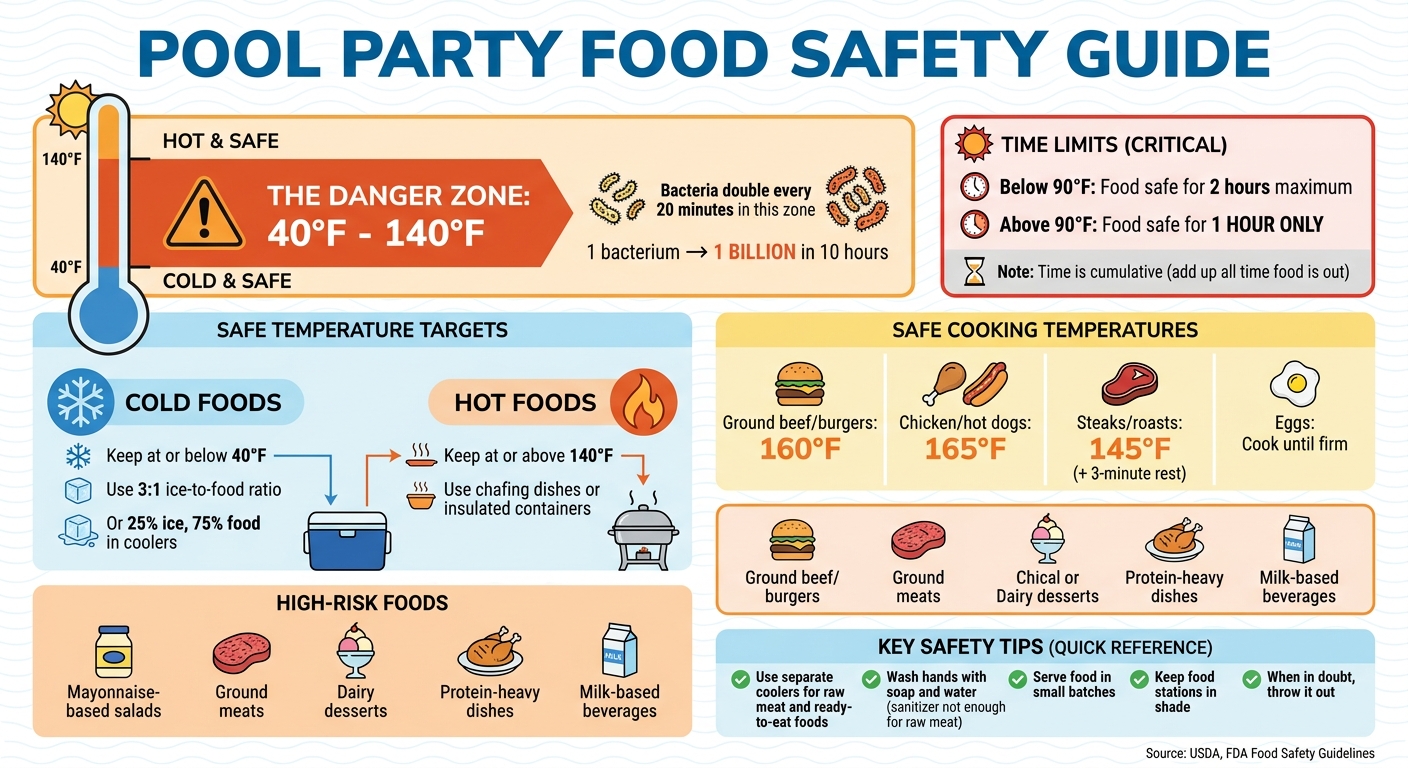
Pool Party Food Safety Guide: Temperature Danger Zones and Time Limits
The Danger Zone: How Heat Speeds Up Bacterial Growth
At pool parties, the danger zone – temperatures between 40°F and 140°F – becomes a serious concern. Within this range, bacteria can multiply at an alarming rate, doubling every 20 minutes. In just 10 hours, a single bacterium can grow into over a billion.
When temperatures rise above 90°F, which is common at summer gatherings, the safe window for leaving perishable foods out drops from two hours to just one hour. Federal guidelines are clear: "If the temperature is above 90°F, food should not be left out more than 1 hour". Keep in mind that this time is cumulative. For example, if your potato salad sits out for 45 minutes, is refrigerated, and then brought out again for another 30 minutes, it has already exceeded the safety limit.
The real danger lies in the fact that contamination is undetectable. Harmful bacteria like Salmonella are completely odorless, colorless, and tasteless, even when present in dangerous amounts. To make matters worse, some bacteria, such as Staphylococcus aureus, produce toxins that remain hazardous even after reheating. These risks are well-supported by scientific research on how temperature impacts bacterial growth.
Research on Temperature and Foodborne Illness
Studies show that high summer temperatures create the perfect breeding ground for foodborne pathogens like Salmonella, E. coli O157:H7, Campylobacter, and Listeria monocytogenes. These bacteria thrive in warm, moist, protein-rich foods such as meats, dairy products, and dishes with mayonnaise. The fastest bacterial growth occurs between 60°F and 125°F, a range that overlaps with the broader danger zone. Peak reproduction happens around 98°F, which is often the ambient temperature at summer pool parties.
The USDA emphasizes that "leaving food out too long at room temperature can cause bacteria (such as Staphylococcus aureus, Salmonella Enteritidis, Escherichia coli O157:H7, and Campylobacter) to grow to dangerous levels that can cause illness". Without proper refrigeration to keep foods below 40°F, buffet tables and outdoor setups essentially become incubators for harmful bacteria.
Pool Party Foods Most at Risk
When it comes to pool parties, the combination of warm temperatures and outdoor dining can make certain foods more prone to spoilage. Knowing which items are most vulnerable is crucial to keeping your guests safe and your party enjoyable. Pairing food safety with the best water slides for summer parties ensures a complete and worry-free event. Here’s a closer look at foods that need extra care.
Foods That Spoil Quickly in Heat
Mayonnaise-based salads like potato salad, pasta salad, egg salad, and coleslaw are particularly risky. These dishes are often linked to Staphylococcus aureus outbreaks. The concerning part? This bacterium produces heat-stable toxins, which means reheating won’t make contaminated food safe again. A bowl of potato salad left out too long can quickly become a breeding ground for bacteria.
Ground meats – think burgers and sliders – are another high-risk category. The grinding process mixes bacteria from the surface into the entire batch of meat, increasing the chance of contamination with E. coli O157:H7. To ensure safety, burgers should reach an internal temperature of 160°F. Don’t rely on color alone; a burger that "looks done" might not be safe.
Protein-heavy dishes such as fried chicken, roast beef, ham, deviled eggs, and baked beans also encourage bacterial growth. Similarly, dairy-based desserts like cream pies are risky due to their mix of eggs and dairy, which creates an ideal environment for bacteria to thrive.
Beverages and Heat Sensitivity
Drinks can also be affected by the heat, especially milk-based beverages and fruit juices. These should be kept below 40°F to prevent spoilage. To maintain their safety, serve them directly on ice or in a shallow container surrounded by an ice bath.
"As food heats up in summer temperatures, bacteria multiply rapidly." – FDA
Research-Backed Tips for Managing Food Safety
To address the heat-related risks previously discussed, consider these practical, research-supported strategies for keeping food safe during your pool party.
Maintaining Proper Food Temperatures
Temperature control is essential when it comes to food safety. To prevent bacterial growth, cold foods should be kept below 40°F, while hot foods need to stay above 140°F.
For cold foods, aim for a 3:1 ice-to-food weight ratio or use a cooler filled with 25% ice or gel packs and 75% food. This ensures that perishable items remain chilled effectively.
Hot foods require a slightly different approach. During transport, insulated containers can help retain heat temporarily. For serving, consider using chafing dishes with fuel canisters or placing grilled items on the cooler side of the grill to maintain warmth without overcooking. Always double-check temperatures with an instant-read thermometer to ensure they remain in the safe range.
Setting Up Food Stations for Safety
Beyond managing temperatures, the layout of your food stations can significantly reduce risks. Start by keeping all food stations and coolers in the shade, away from direct sunlight. This simple adjustment not only extends the life of your ice but also helps maintain safe temperatures for your food.
Use separate coolers for beverages and perishable items. Since drink coolers are opened frequently, keeping perishable foods in a dedicated cooler minimizes temperature fluctuations. For cold dishes like salads, place serving bowls directly on ice or nest them in a larger pan filled with ice. Be sure to drain melted water and replace it with fresh ice regularly.
Finally, serve food in small batches. Keep the majority of your food stored in temperature-controlled conditions and replenish serving dishes as needed. This reduces the time food is exposed to potentially unsafe conditions.
Food Safety Methods Comparison Table
| Method | Food Type | Pros | Cons | Time Limit |
|---|---|---|---|---|
| Coolers with Ice/Gel Packs | Cold | Portable; holds large quantities | Heavy; requires a 3:1 ice-to-food ratio | 1–2 hours depending on temperature |
| Ice Baths (Nested Pans) | Cold | Keeps food cold while serving | Needs frequent draining and fresh ice | 1–2 hours; must stay ≤ 40°F |
| Insulated Containers | Hot | Retains heat without electricity | Heat gradually drops; no active heat source | 1–2 hours; must stay ≥ 140°F |
| Chafing Dishes/Grill Side | Hot | Provides active heat to maintain warmth | Can overcook food if not monitored | 1–2 hours; must stay ≥ 140°F |
Preventing Cross-Contamination in Warm Weather
Warm weather brings higher humidity and temperatures, creating the perfect conditions for bacteria to multiply. This makes cross-contamination a bigger concern, especially during outdoor gatherings. For example, as ice melts in shared coolers, juices from raw meat packaging can seep into the water, potentially contaminating drinks or ready-to-eat foods. Similarly, humid conditions keep surfaces damp, making it easier for bacteria like Salmonella or E. coli to spread from raw meat to shared grilling surfaces or cutting boards. These risks highlight the importance of following strict food safety and hygiene practices.
Safe Handling of Raw and Cooked Foods
In hot and humid weather, even small hygiene mistakes can lead to contamination. To avoid this:
- Keep raw and cooked foods separate: Never use the same plates, utensils, or cutting boards for raw and cooked foods unless they’ve been thoroughly washed.
- Pack smart: Store raw meat, poultry, and seafood in sealed plastic bags and place them at the bottom of the cooler to prevent juices from dripping onto other items. Use separate coolers for beverages and perishable foods.
- Be cautious with marinades: If a marinade has touched raw meat, don’t reuse it for basting or saucing unless it’s been boiled first.
- Rinse produce properly: Wash all fruits and vegetables under running water before packing them, even those with rinds like melons.
Handwashing and Hygiene Practices
Proper hand hygiene is just as critical as food storage, especially in outdoor settings where running water may not be readily available. While hand sanitizer is convenient, it’s not effective for cleaning hands after handling raw meat. Here’s how to maintain hygiene:
- Wash hands thoroughly: Use soap and water to scrub hands for at least 20 seconds. If running water isn’t available, set up a portable handwashing station with a large water jug, a hands-free spigot, liquid soap, and paper towels.
- Encourage frequent handwashing: Remind everyone to wash their hands after handling raw meat, touching cooler handles, or before eating. Place handwashing supplies in visible spots, like near the grill or buffet table, to make it easy for guests to clean up.
- Have alternatives ready: For quick cleanups when hands aren’t visibly dirty, provide moist disposable towelettes. However, these are not a substitute for proper handwashing when dealing with raw meat.
Safe Cooking and Holding Practices for Poolside Grilling
Cooking Temperatures for Common Pool Party Foods
When grilling by the pool, it’s not just about flavor – it’s about safety. Cooking food to the right internal temperature is essential, and the only reliable way to check is with a calibrated thermometer. Here’s what you need to know:
- Ground beef burgers: Cook to an internal temperature of 160°F.
- Steaks and roasts: Aim for 145°F, followed by a three-minute rest.
- Chicken and hot dogs: These need to reach 165°F.
- Eggs: Cook until both the yolk and white are firm.
As Andy Hirneisen, MA, a Distinguished Extension Educator, wisely puts it:
"The only way to determine whether food is cooked properly is to use a calibrated food thermometer. There is no level of training or experience that can replace measuring food’s internal temperature with a thermometer."
To ensure accuracy, insert the thermometer into the thickest part of the meat, steering clear of any bones or fat. Once the proper temperature is reached, the next step is keeping the food warm and safe for serving.
Keeping Grilled Foods Safe for Serving
After grilling, it’s crucial to maintain the heat. Grilled foods should stay at 140°F or higher until they’re served. If you’re not serving immediately, transfer the food to a cooler area while ensuring it stays at or above 140°F. For extended holding, wrap the food and place it in an insulated container.
Keep a close eye on how long food is held. If the outdoor temperature exceeds 90°F, serve the food within one hour. For lower temperatures, you have a bit more flexibility but should still monitor closely. If using chafing dishes, double-check with a thermometer that they’re keeping the food at a safe 140°F or higher.
And remember the USDA’s golden rule:
"When in doubt, throw it out".
Ensuring proper cooking and holding practices not only keeps everyone safe but also lets you focus on enjoying the party! If you’re looking for more ways to keep guests entertained, check out our guide to inflatable water slides for your next event.
Conclusion
Throwing a pool party is all about fun, but keeping your food safe is just as important. Warm weather creates the perfect environment for bacteria to thrive, and with millions of foodborne illness cases reported annually, food safety should never be an afterthought.
Here’s what matters most: keep cold foods at or below 40°F and hot foods at or above 140°F. Use a reliable food thermometer to confirm cooking temperatures – ground beef should hit 160°F, and poultry needs to reach 165°F. Don’t rely on color alone to judge doneness; it’s not always accurate and could lead to serious risks.
Avoid cross-contamination by following these simple steps:
- Use separate coolers for raw meats and ready-to-eat foods.
- Clean any platters or utensils that touched raw meat with hot, soapy water before reusing them.
- Wash your hands thoroughly with soap and water after handling raw meat – hand sanitizer isn’t enough.
And remember the USDA’s golden rule:
"When in doubt, throw it out." – USDA Food Safety and Inspection Service
If food has been sitting out too long or you’re unsure about its temperature, it’s better to toss it than risk anyone getting sick. By sticking to these straightforward practices, you’ll not only keep your guests safe but also make your party a stress-free success. Pair these safety tips with great entertainment from Bouncy Rentals USA, and you’re all set for an unforgettable poolside celebration!
FAQs
What foods are safest to serve in extreme heat?
When dealing with extreme heat, it’s best to stick to foods that are less likely to spoil. Options like fresh fruits – think watermelon or berries – are great choices. For other items, ensure they are properly cooked, chilled, or stored to minimize risk. To prevent bacterial growth, keep perishable foods at safe temperatures: below 41°F or above 140°F. Always follow food safety practices to handle and store food correctly.
How can I keep food cold without constant fridge access?
To keep food safe and prevent bacteria from multiplying, use insulated coolers with plenty of ice or ice packs to maintain a temperature of 40°F or lower. When packing raw or perishable foods, ensure about 25% of the cooler is filled with ice or ice packs. Always place the cooler in an air-conditioned part of the vehicle instead of the trunk. To avoid cross-contamination, seal food securely and store it at the bottom of the cooler, where temperatures stay the coldest.
What’s the best way to pack coolers to prevent leaks and contamination?
To keep food safe and prevent leaks or contamination, fill any empty spaces in your cooler with ice, ice packs, or gel packs. This helps maintain a steady cold temperature and slows down bacteria growth.
For extra safety, use separate coolers for perishable foods and drinks. This reduces the risk of cross-contamination. Place the cooler in a shaded area, keep it out of direct sunlight, and try to limit how often you open it. These steps will help ensure your food stays fresh and safe to eat.
